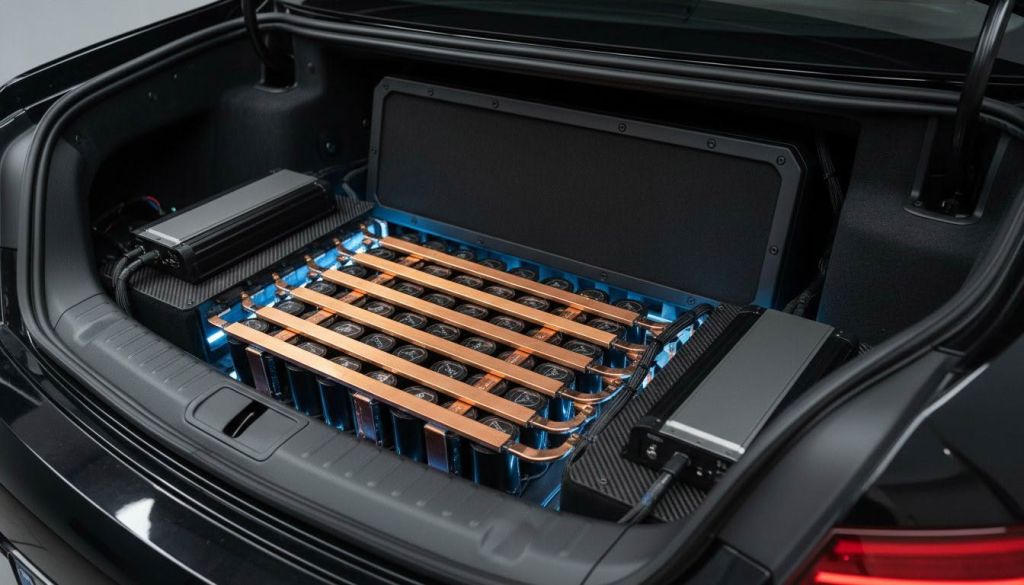
No products in the cart.
No products in the cart.
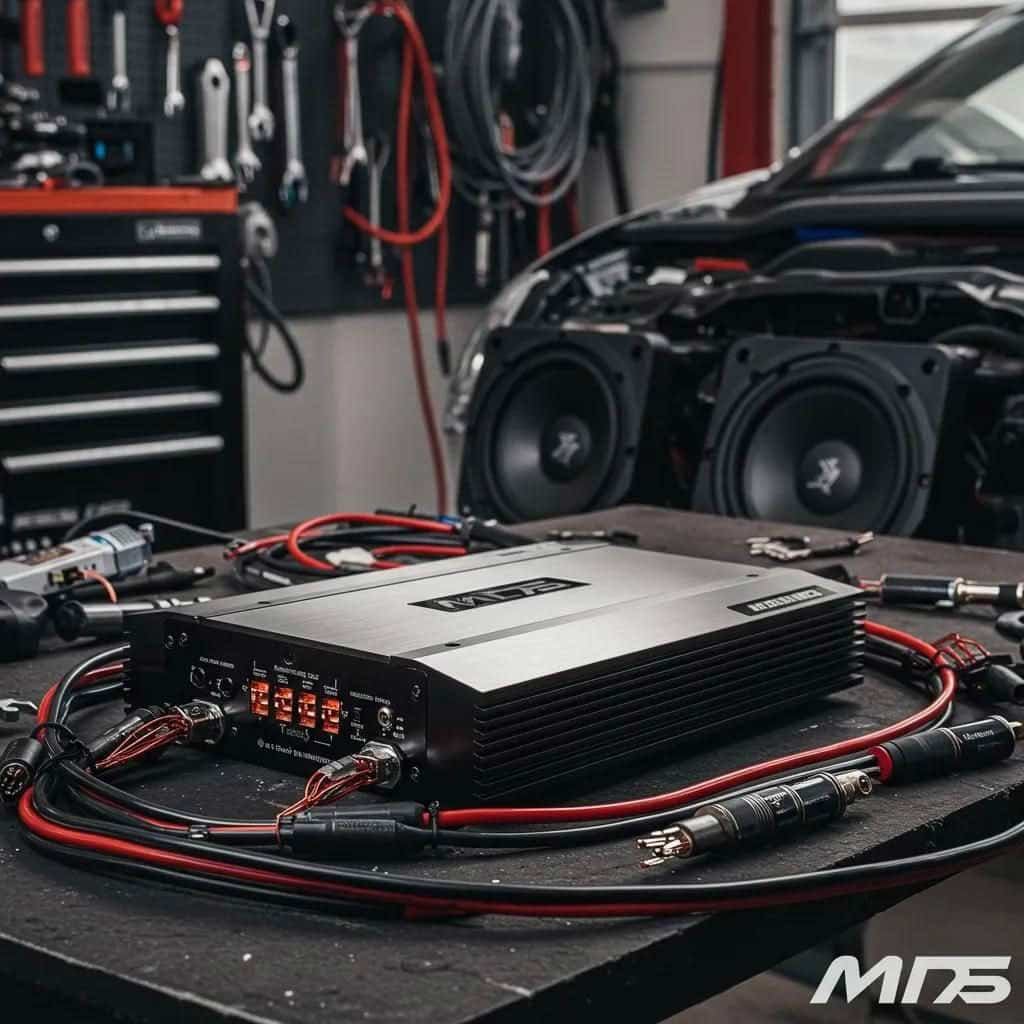
Buy a car amplifier wiring kit when its conductor material, cable size, lengths and fuse protection suit your amplifier and vehicle route. Choose separate components when a packaged kit cannot meet that layout, especially with several amplifiers or a rear battery bank. A wattage label alone cannot establish compatibility: power-wire selection depends on current draw and cable length (amplifier connection principles).
Start with the amplifier manual's power-cable and external-fuse requirements. Record the intended speaker load as well: the output figure relevant to your installation is the continuous rating at that load. If the amplifier choice is still open, use the car amplifier guide to settle channels and speaker matching before buying wiring.
A kit advertised by watts needs more context. Amplifier output power is delivered to speakers, while the battery supplies input power, including losses. Different amplifier efficiencies therefore change electrical demand. Write the amplifier model, intended load, supply voltage and manufacturer's wiring recommendation beside your shortlist rather than matching two large wattage labels.
Measure the actual route from the battery connection to the amplifier mounting position. Include bends, entry through the vehicle body and enough length to make supported connections. A straight-line measurement across the cabin is not the installation route. For multiple amplifiers, plan the shared feed and distribution before ordering a single-amplifier package (installation planning primer).
American Wire Gauge, or AWG, describes conductor size: a lower number means a larger conductor. Among 8, 4 and 2 AWG options, 2 AWG is the largest. Choose between them using current demand, route length and the cable manufacturer's specifications, rather than assigning each gauge a universal amplifier wattage (wire sizing explanation).
Oxygen-free copper, abbreviated OFC, and copper-clad aluminium, abbreviated CCA, are different conductors. CCA has greater resistance at the same diameter. A copper sizing recommendation therefore cannot automatically be applied to a same-gauge CCA kit. Insulation thickness does not establish how much conducting metal is inside.
For your shortlist, write down these three details together:
These details make a gauge comparison useful because they identify the conductor you are actually buying.
Separate power-path components can suit a build whose cable lengths and connections differ from a packaged kit. Browse the OFC battery cables when your design calls for those sizes; do not choose them solely because they are larger than a packaged kit's cable.
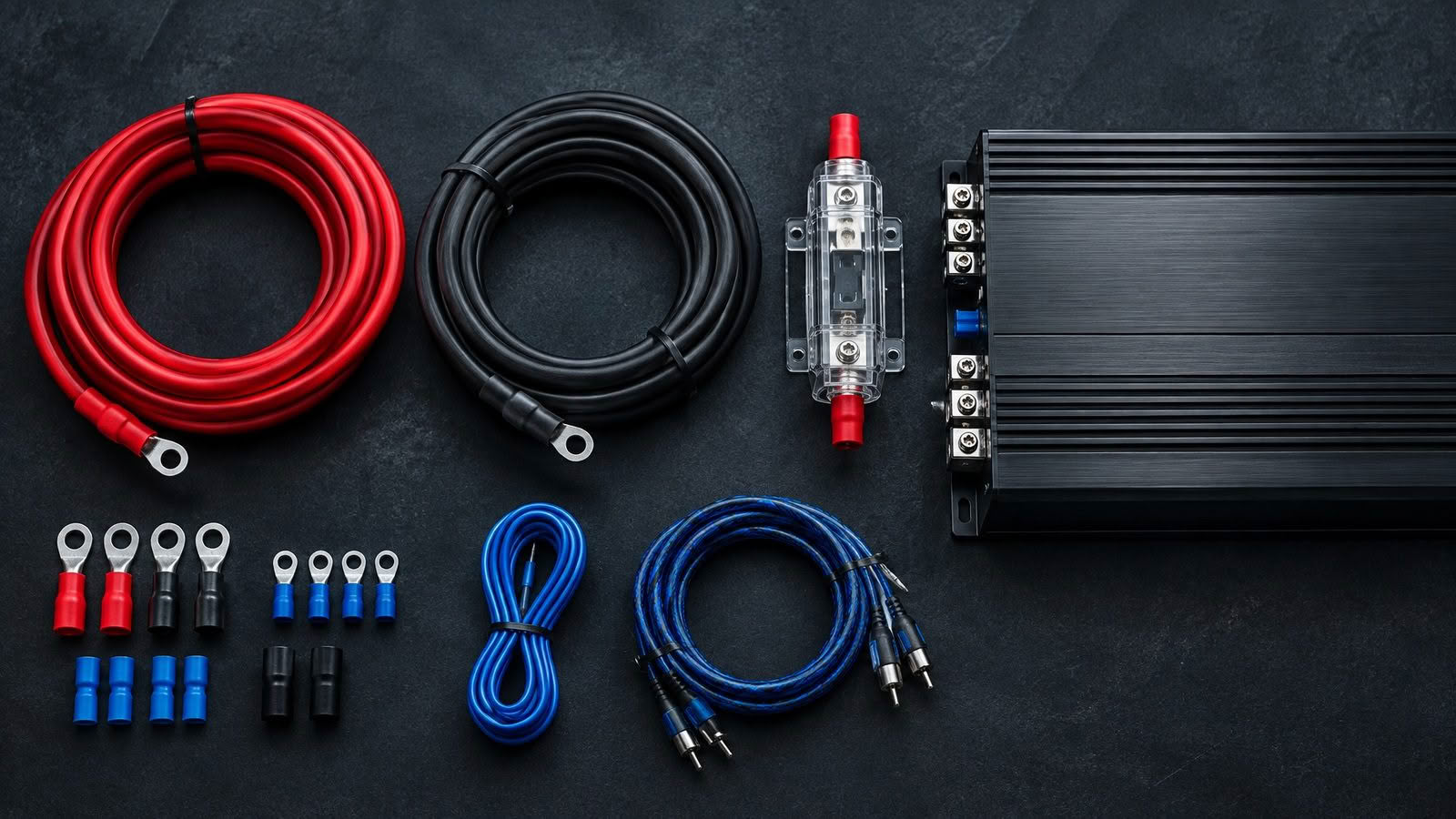
Treat “complete” as a contents description to read, rather than a promise that the package fits every vehicle. Power wiring, signal wiring and speaker wiring do different jobs. An amplifier needs its electrical supply and return path as well as a suitable audio connection, so list each separately before deciding a package covers the installation.
Use this shopping checklist against the vehicle layout:
A package containing power cable does not necessarily solve the audio connection. RCA leads suit compatible preamp outputs; a factory head unit may need a different connection arrangement. The remote turn-on wire controls switching and is not the amplifier's main supply.
For a cabin-speaker upgrade, use the two-channel amplifier selection guide to decide stereo or supported bridged operation before specifying the output-side wiring. That decision keeps a subwoofer installation and a stereo speaker installation from being treated as the same job.
The supply fuse protects the wiring during a fault. An amplifier's onboard fuse does not protect the cable running upstream from the battery. Put appropriately rated protection close to the source, and provide suitable branch protection where distribution changes to a smaller conductor. An unprotected short can overheat wiring and cause a fire (fuse protection principles).
Do not increase fuse amperage to compensate for repeated fuse failures. Find the fault or mismatch instead. The fuse must suit the conductor it protects, while the amplifier's specified protection requirements still apply. A holder and a fuse also need to be physically compatible; matching an amperage number alone does not establish that fit.
Fuse voltage rating and interrupting rating are separate specifications. Interrupting rating describes the fault current a fuse can safely stop at its rated voltage. For a high-current battery installation, have the protection selected for the actual source and circuit, rather than assuming every automotive-looking fuse is equivalent (fuse application guide).
A suitable amplifier wiring kit needs an adequate ground conductor, not only a substantial positive lead. Ground is a high-current connection too. Plan a secure return connection to suitable vehicle metal, using the amplifier manufacturer's requirements, and include terminal fit in the purchase decision.
Route wiring away from sharp edges and protect passages through metal. Secure the cable so trim, moving parts and normal vehicle use cannot pinch it. Before installation, follow the vehicle's isolation procedure; hybrid and electric vehicle systems require appropriately qualified help. Leave unfamiliar vehicle electrical work to a professional installer.
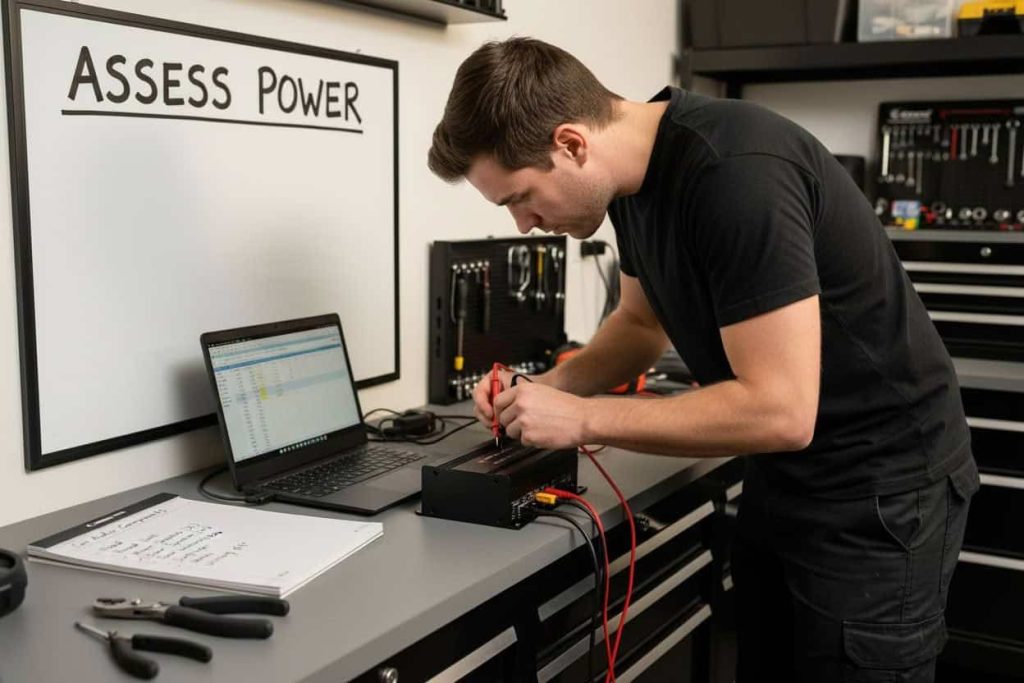
A system powering on is not a test of the whole power path. Under load, voltage can be lost through cable resistance or poor connections. Measuring at the supply and amplifier helps locate that loss rather than treating every low-voltage symptom as a reason to buy more battery capacity (voltage and resistance explanation).
For a New Zealand order, compare the delivered purchase, including any extra connections and installation labour. Read dispatch timing and delivery charges before arranging the work. Keep the product description and receipt with your installation records, particularly the conductor specification and supplied fuse details (online purchase guidance).
Choose a packaged kit for a straightforward installation when every required component fits. Choose a component-built power path when cable lengths, distribution or connections differ from the package. Do not pay for an assortment of parts you cannot use while leaving the necessary protection outside the budget.
Evolution Lithium offers car audio installation accessories. With your cable route, conductor size and protection requirements established, browse the car audio installation accessories.
Not automatically. The amplifier's ground lead and the vehicle's battery-to-chassis connection are different parts of the return path. Assess the existing vehicle connections as part of the installation rather than assuming the packaged ground lead upgrades all of them.
Only when the existing feed, protection and distribution suit the combined demand. Adding an amplifier can require a larger shared feed or another separately protected supply, so reassess the complete power route before reusing it.
A wiring kit supplies connections; it does not change the amplifier's rated operating limits. Suitable wiring can reduce avoidable supply losses, but it cannot turn a lower-rated amplifier into a higher-rated one.