No products in the cart.
No products in the cart.

No products in the cart.
No products in the cart.
You may need a second battery if you want more playing time with the engine off, or your amps need a nearby supply of current during heavy bass. But if the real problem is a bad earth, tired starting battery or too little charging output, another battery can leave you with the same problem and less money.
That is why “how many watts are you running?” is only the start of the conversation. A quick demo in the driveway, music on the way to work and an afternoon parked up playing bass ask very different things of the same equipment.
Before ordering anything, find out where the voltage is being lost and when it happens. That tells you whether to spend on wiring, charging, a rear bank or a combination of them.
Start with the track and listening level that bring on the problem. If the lights dim halfway through a long bass note, a voltage reading with the volume down will not tell you much.
Park safely outside, apply the handbrake and keep clear of moving engine parts. Keep the listening test brief and protect your hearing. You do not need a full-volume test tone to begin diagnosing an everyday voltage problem.
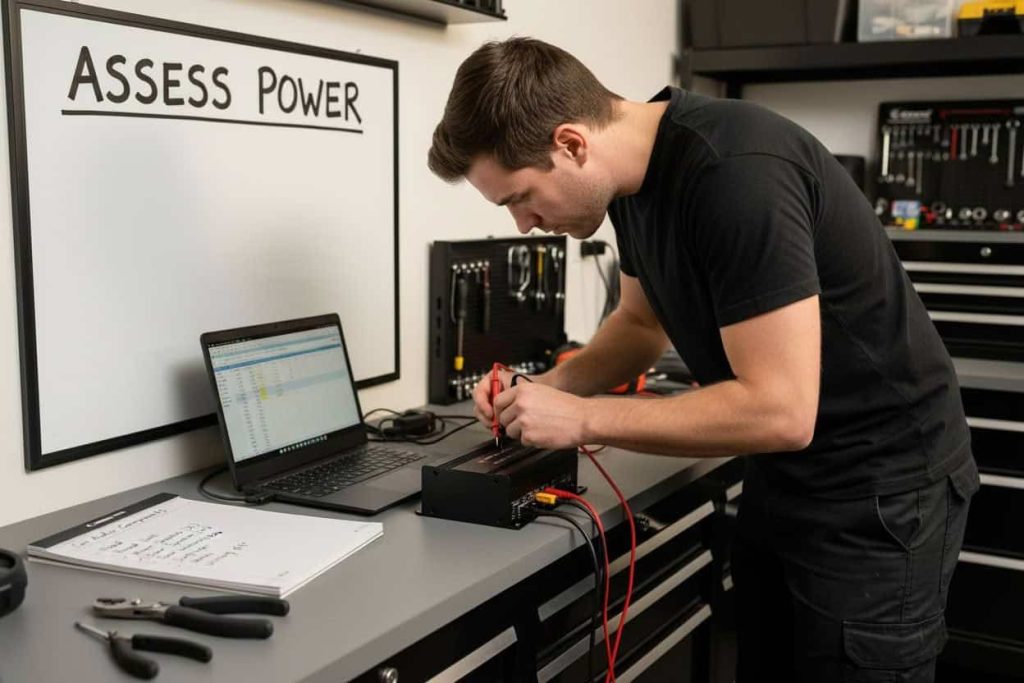
With the engine warm, check voltage at the starting battery and at the amplifier terminals. Compare readings with the sounds muted, then playing the same passage at the same level. Two meters make the comparison easier; if you have one, repeat the passage under the same conditions. A fast meter or logger is better at catching short dips than a slow dashboard display.
Do not put a normal multimeter in current mode across the battery. These checks use its voltage setting.
Investigate the path between them first: power cable, earth return, crimps, fuse holders and distribution blocks. A loose connection or poor earth can waste voltage before it reaches the amp.
A rear bank may help supply short bursts locally, but adding one before fixing a bad connection leaves that fault in place. Hot terminals or fuse holders need attention, not another battery hiding the symptoms.
Now look at the supply side as well. Check the starting battery’s condition, charging behaviour and how much current the alternator can actually provide once hot. The number printed on an alternator is not a promise of that output at idle.
These readings narrow the search; they do not diagnose every fault on their own. The useful question is whether the drop is mostly between the battery and amp, or happening across the system.
Your setup might be happy on the road and struggle when you pull up to give someone a demo. At idle, the alternator may have less output available, while the amp still wants current every time the bass holds.
A suitable rear bank can cover that gap for a while. It cannot cover it forever.
For example, if the vehicle and audio together use 50A more than the alternator is supplying, the batteries provide that missing 50A. Keep doing it and their stored energy runs down. More capacity extends the session; it does not remove the need to recharge.
That is a different problem from a brief dip on a kick drum. Tell whoever is sizing your bank whether you want short demos, long low-bass tracks or engine-off listening. “Daily use” can mean very different things to different bassheads.
A correctly chosen bank near the amps gives you a shorter path for the current it supplies. Depending on the installation, that can help hold voltage during demanding passages and add useful reserve.
There are two separate things to buy here:
A compact high-current bank can be useful for a demanding system without being the best choice for hours of parked listening. A large camping battery can offer plenty of capacity yet have a discharge rating too low for your amp.
Ask for the finished bank’s continuous current rating and charging requirements. Ah alone does not answer the question.
If your starting battery tests well, voltage at the amp stays within its operating requirements, and you have enough playing time for how you use the car, there may be no reason to add another bank.
There is no reliable wattage line where every car suddenly needs a second battery. Charging output, wiring, amp efficiency and listening habits all change the answer.
Sort the basics before spending: sound battery terminals, properly sized cable, clean earth connections and suitable fuse hardware. An upgrade to the main charging and earth cables may be worthwhile if testing shows those paths are restrictive. It should suit the vehicle, including any battery-current sensors.
If the existing setup does the job, keep your money for an upgrade you will actually benefit from.
This catches people out. If both batteries remain connected while you play with the engine off, the audio can draw energy from both. Putting another battery in the boot does not automatically leave the front one ready to start the car.
If protecting your starting reserve is part of the goal, the installation needs an appropriate way to separate the supplies. That arrangement must also suit the charging system and battery types.
Do not directly parallel an LTO bank with an AGM starting battery. A relay can connect or disconnect a cable, but it does not change one chemistry’s charging requirements into another’s.
For the cable layout and protection details, use our guide to wiring a second car-audio battery safely.
Before picking a chemistry, find out what voltage your vehicle holds and whether it changes as you drive. Then check the exact battery and every connected amp or processor against that charging setup.
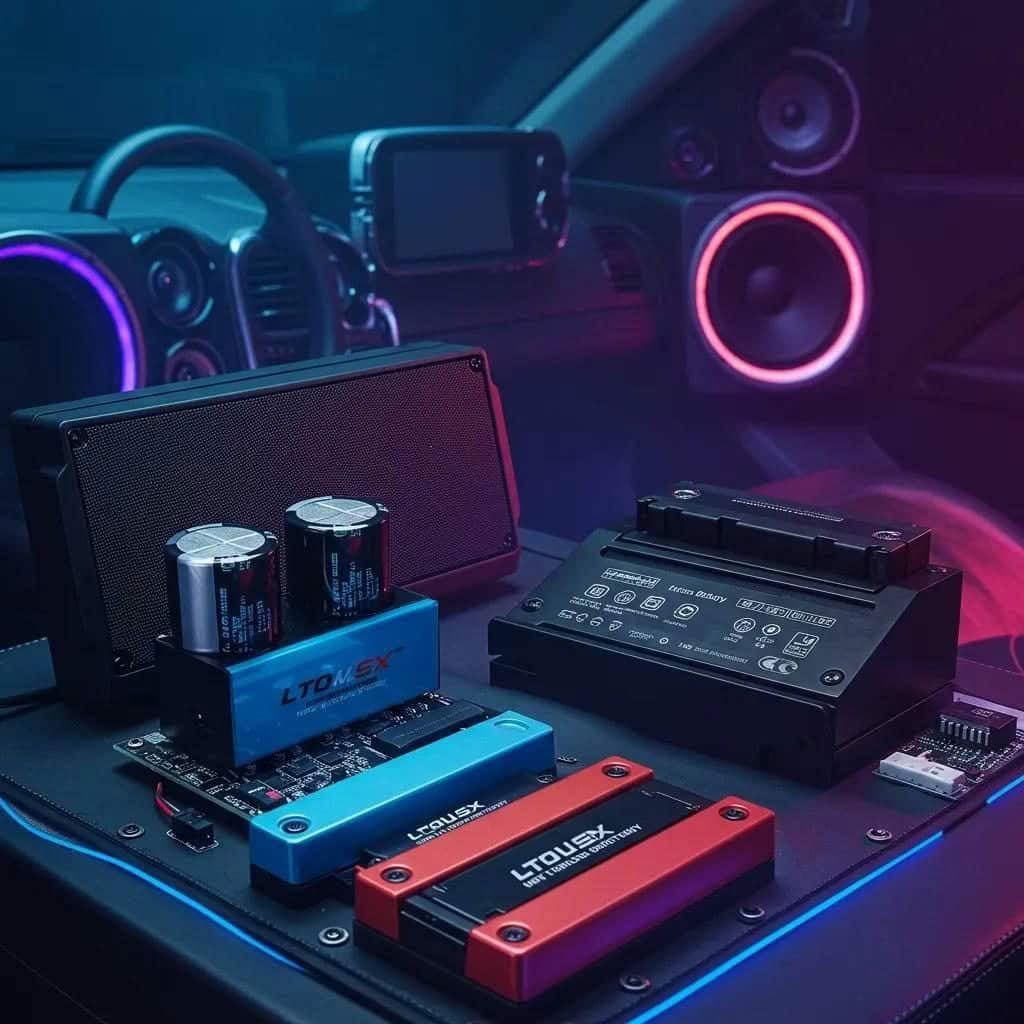
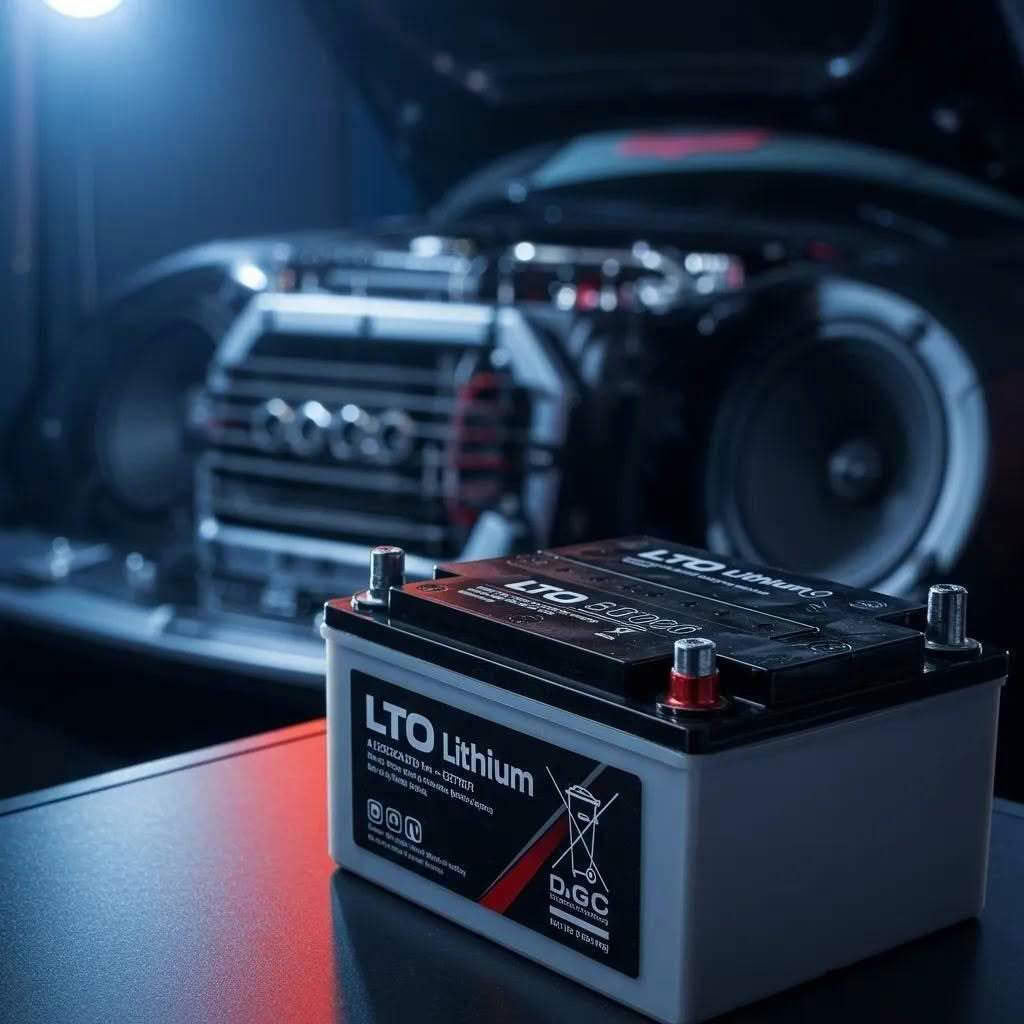
AGM can remain a practical option where a compatible lead-acid system already meets the load and budget. High-current LiFePO₄ can suit conventional-voltage daily and demo builds. SCiB LTO offers another route for demanding current delivery, with the finished bank configured around compatible charging.
For a broader comparison, see our AGM, LiFePO₄ and LTO battery guide for car-audio systems. There is no need to turn this decision into a chemistry contest: choose the bank that suits the job.
Toshiba’s high-power SCiB cell specifications show why the platform is relevant to high-power applications. Those are cell specifications; the finished bank still needs suitable connections, hardware and current ratings. Evolution Lithium builds the bank using Toshiba SCiB cells.
Charging deserves the same attention as discharge. Lithium can place a demanding load on an alternator during recharge. Victron’s guidance on charging lithium batteries from an alternator explains why the charge path must be designed for the application. A suitable DC-DC charger can regulate charging where needed, but its output also limits how quickly the rear bank is replenished.
Start with your amp models, the load they are wired to and the voltage they actually see. Use genuine RMS specifications rather than the biggest number on the box.
The planning formula is:
Current in amps = amplifier output in watts ÷ (voltage × efficiency).
A 3,000W RMS amp at 15.0V and an assumed 80% efficiency needs about 250A to produce that output. At a lower supply voltage, the calculated current requirement increases for the same output.
That is a full-output estimate, not a claim that your system constantly draws 250A on music. It gives you a useful starting point, alongside measured performance and available charging current. Our guide to calculating car-amplifier current from RMS power explains the method.
Use the car-audio battery and alternator sizing calculator to work through your figures.
Estimate engine-off runtime: divide usable battery capacity in amp-hours by the average current measured at the bank with the engine off. For example, 40 usable Ah at an average 40A is roughly one hour before allowing a reserve. Use a realistic listening level, include any accessories drawing from the bank, and stay within the bank and amplifier voltage limits.
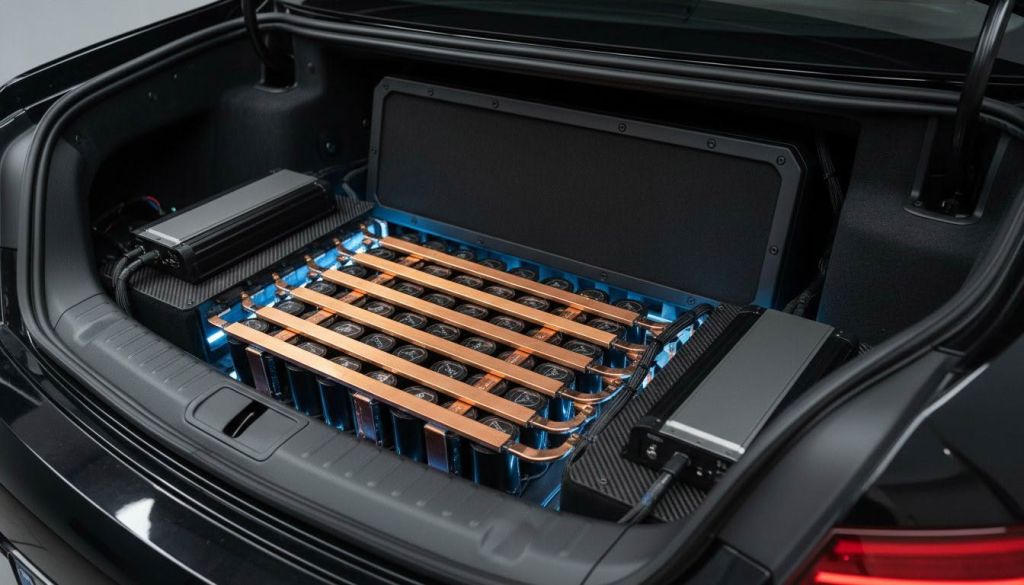
Mount the lithium bank securely in the boot or another suitable protected rear/interior location, away from engine-bay heat. Protect exposed terminals and keep the high-current path to the amps properly sized.
Where a cable can be fed by batteries at both ends, provide appropriate fuse protection at both sources. The fuse must suit the cable and installation, including the available fault current.
If the design permits a direct parallel connection, follow the correct charging or pre-charge procedure before connecting the bank. A similar voltage reading does not make incompatible battery types suitable partners.
An active balancer helps manage differences between cell-group voltages. It does not replace cable fuses, correct charging or checking the bank’s limits.
Measure first. Dimming can accompany a supply problem or voltage lost through the wiring. Comparing front-battery and amplifier readings under the same load gives you a better starting point than buying from the symptom alone.
A bank may help, but check hot alternator output and vehicle demand at idle. If the battery repeatedly supplies more energy than the charging system replaces, you also need to address charging or reduce the load.
Only if inadequate supply is the cause and the upgrade fixes it. Heat, speaker wiring, load impedance and amplifier faults can also cause protect mode. Follow the amp manufacturer’s troubleshooting guidance.
It may help an amp deliver more consistent output if poor voltage was holding it back. If the supply is already adequate, another battery does not guarantee more output or a higher SPL score.
Buy a second battery when you can explain what you need it to do: supply current near the amps, extend playing time, or both.
If the problem is a poor earth or not enough charging, address that too. You will get a better result from a bank matched to the whole setup than from the biggest Ah figure you can afford.
Send Gary your amp models, what load they are wired to, your charging voltage and when the problem shows up. If you have front and rear voltage readings, include those. Tell us whether you want daily listening, engine-off playing time or long demos.
We can help work out whether a bank is the next useful upgrade and which option suits your charging setup. You can also compare our EVE LiFePO₄ and SCiB LTO ranges below.