
7 Best New Zealand Car Audio Batteries (LTO SCiB Picks)
If you are comparing New Zealand car audio batteries for high-discharge systems, the most reliable choice today is a custom bank built on LTO (Lithium Titanate Oxide) SCiB (Super Charge Ion Battery) cells. These banks deliver rapid current bursts, exceptional voltage stability and very fast charging, making them ideal for powerful amplifiers and SPL (Sound Pressure Level) builds as well as daily drivers. Evolution Lithium is a New Zealand (NZ) specialist that hand-assembles genuine Toshiba-based SCiB banks, offers multiple capacities and discharge ratings, and provides straight, practical support.
Short answer first: here are seven strong LTO (Lithium Titanate Oxide) SCiB (Super Charge Ion Battery) picks that cover everything from compact daily installs to competition-level SPL (Sound Pressure Level) power systems — the list includes standard product lines we stock as well as common custom configurations we can build on request.
- 1. Evolution Lithium 3 ampere hour 75C Micro SCiB (Super Charge Ion Battery) Bank — ultra-compact, high burst for small spaces and front-stage power.
- 2. Evolution Lithium 10 ampere hour 75C Compact SCiB (Super Charge Ion Battery) Bank — best small-footprint daily bank; capability varies with configuration and install.
- 3. Evolution Lithium 20 ampere hour 35C Robust SCiB (Super Charge Ion Battery) Bank — daily-driver workhorse; capability varies with configuration and install.
- 4. Evolution Lithium 24 ampere hour 30C Long-Life SCiB (Super Charge Ion Battery) Bank — extended cycle life with stable voltage for mixed music and demo use.
- 5. Scalable 6-series parallel stacks using 10 ampere hour 75C SCiB (Super Charge Ion Battery) cells (custom builds available on request) — paralleling multiple strings for higher burst capacity; Evolution Lithium can hand-assemble to spec and advise on parallel counts.
- 6. 7-series 16-volt Competition SCiB (Super Charge Ion Battery) Bank (custom option available on request) — a competition-oriented build option for amplifiers rated for 16 volt operation; confirm suitability and charging requirements with Evolution Lithium.
- 7. Evolution Lithium Pre-Assembled SCiB (Super Charge Ion Battery) Rack with busbars and balancer — installer-friendly, ready-to-wire solution available on request; Evolution Lithium offers accessories and custom assembly rather than a single off-the-shelf rack SKU.
Why LTO (Lithium Titanate Oxide) over AGM (Absorbent Glass Mat) or standard lead-acid? Lithium titanate offers extremely low internal resistance, high C-rate discharge, and outstanding cycle life, which translates to less voltage sag under load, quicker recovery between bass hits, and a lighter, more compact package. In practice, that means tighter bass, fewer amplifier protect events, and more reliable Demo Day sessions.
Quick Comparison of the 7 Picks
| Pick | Core Capacity per Parallel String (ampere hour) | Discharge C-rate (times capacity) | Calculated Burst Current per String (ampere) | Typical Series Count | Best For |
|---|---|---|---|---|---|
| #1 3 ampere hour 75C Micro Bank | 3 | 75 | 225 | 6-series (about 13.8 volt nominal) | Very tight spaces, front stage, mids-highs amps |
| #2 10 ampere hour 75C Compact Bank | 10 | 75 | 750 | 6-series | Daily builds; capability varies with configuration, wiring and duty cycle |
| #3 20 ampere hour 35C Robust Bank | 20 | 35 | 700 | 6-series | Daily-driver systems; capability varies with configuration and install |
| #4 24 ampere hour 30C Long-Life Bank | 24 | 30 | 720 | 6-series | Extended demo sessions, mixed music use |
| #5 6-series Parallel Stack (custom builds available on request) | 10 per string, scalable by parallel count | 75 | 750 per string; scales linearly | 6-series | Scalable, high-burst builds (custom assembled to spec) |
| #6 7-series 16-volt Competition Bank (custom option on request) | Varies by cell choice | High C-rate, cell dependent | Configuration dependent | 7-series (about 16 volt nominal) — typically a custom build | Competition/16V applications (custom builds; confirm charging/regulation) |
| #7 Pre-Assembled Rack + Busbars (available on request) | Custom | Custom | Custom | 6-series or custom | Pro installers and shops; available as a custom service |
#1 Evolution Lithium 3 ampere hour 75C Micro SCiB (Super Charge Ion Battery) LTO (Lithium Titanate Oxide) Bank
What it is: a tiny, high-discharge 6-series bank built from genuine SCiB (Super Charge Ion Battery) cells rated at 3 ampere hour and 75C (75 times capacity) that packs surprising punch for its size. It is ideal when you need lithium titanate performance but have almost no room to spare behind panels, in a side cubby, or near an amplifier rack.
Why it matters: voltage stability under short, sharp transients keeps small full-range and mid-bass amplifiers happy, avoiding protect trips. LTO (Lithium Titanate Oxide) chemistry brings extremely low internal resistance and long cycle life, so even a micro bank assists the alternator during peaks and recovers quickly between bass notes.
Example: a compact hatch with a 1 to 1.5 kilowatt Class D amplifier on a single twelve-inch subwoofer. The 3 ampere hour bank buffers the electrical system during 200 to 300 ampere spikes, reducing headlight dim and keeping the amplifier above its minimum voltage window.
#2 Evolution Lithium 10 ampere hour 75C Compact SCiB (Super Charge Ion Battery) LTO (Lithium Titanate Oxide) Bank
What it is: a small-footprint bank using 10 ampere hour SCiB (Super Charge Ion Battery) cells at 75C (75 times capacity), commonly arranged as a 6-series pack for about 13.8 volt nominal. It is a sweet spot for daily drivers where space matters but you still need serious current delivery.
Why it matters: at 10 ampere hour and 75C, each parallel string can supply up to about 750 ampere burst current. That headroom translates to steadier voltage during the first two octaves of bass, improved amplifier efficiency, and less clipping on musical peaks.
Example: a ute with a 2.5 kilowatt monoblock plus a four-channel for fronts. Pair the 10 ampere hour bank with a quality alternator upgrade for car audio and appropriate fusing to achieve rock-solid performance without a boot full of lead-acid.
#3 Evolution Lithium 20 ampere hour 35C Robust SCiB (Super Charge Ion Battery) LTO (Lithium Titanate Oxide) Bank
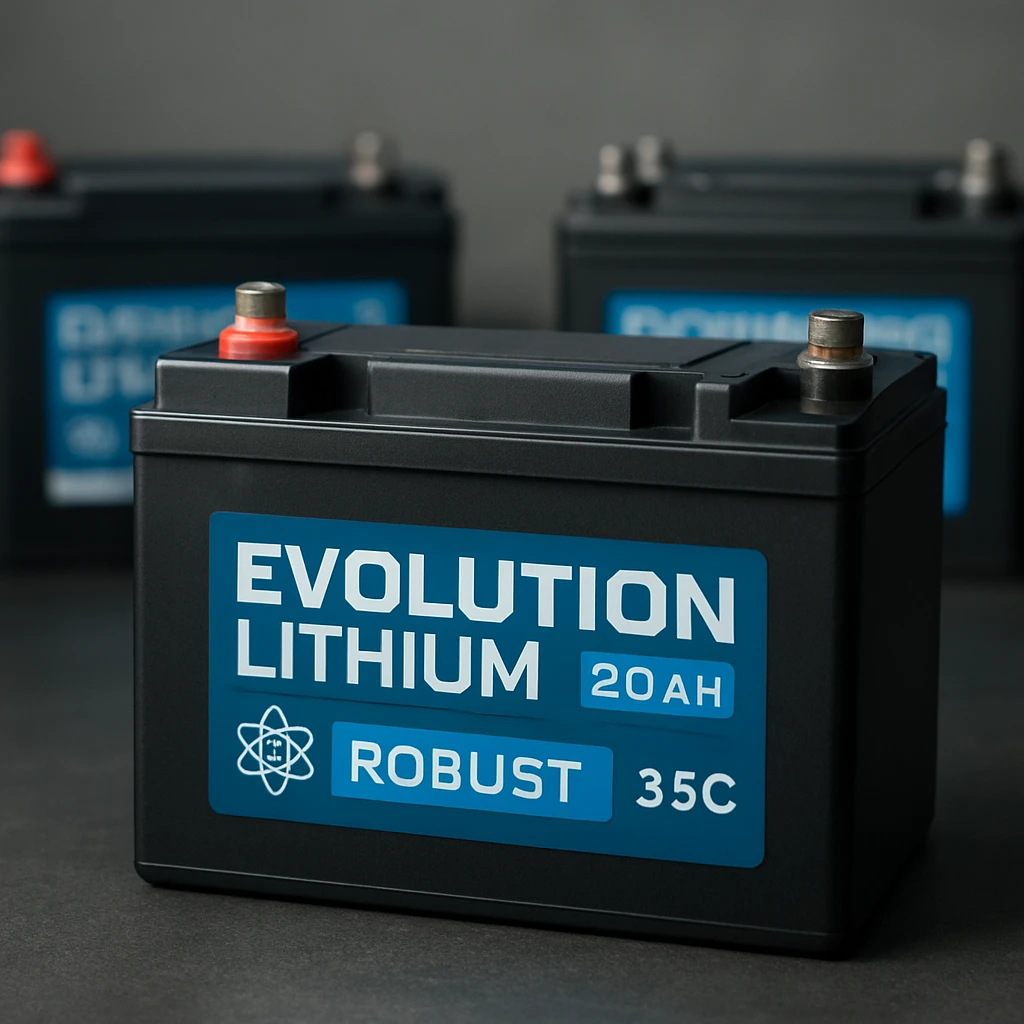
What it is: a daily-driver workhorse based on 20 ampere hour SCiB (Super Charge Ion Battery) cells at about 35C (35 times capacity), normally configured as 6-series. It balances capacity, discharge capability, and size for many mid-power systems; actual capability depends on series/parallel configuration, wiring and duty cycle.
Why it matters: with roughly 700 ampere burst per parallel string, this bank reduces the worst of voltage sag that typically plagues AGM (Absorbent Glass Mat) stacks under heavy bass. The chemistry tolerates fast charging and deep cycling, and Toshiba-published data indicates exceptionally long cycle life compared with conventional lithium-ion.
Example: a sedan running a 5 kilowatt rated monoblock on two high-sensitivity fifteens. The 20 ampere hour bank teamed with copper busbars and a 300 to 370 ampere high-output alternator gives clean bass drops without dimming or thermal overloads.
#4 Evolution Lithium 24 ampere hour 30C Long-Life SCiB (Super Charge Ion Battery) LTO (Lithium Titanate Oxide) Bank
What it is: a 6-series bank using 24 ampere hour SCiB (Super Charge Ion Battery) cells at about 30C (30 times capacity). It is aimed at listeners who demo for long periods and value a little more capacity per string alongside stable output voltage.
Why it matters: the extra ampere hours extend the time the system can sustain heavy program material before warm-up or charge catch-up, while still supporting strong bursts. Lithium titanate’s very low impedance keeps the amplifier rails stiff, which is audible as tighter, more controlled low-end.
Example: a wagon with two 12-inch subwoofers on a 3.5 kilowatt amplifier and plenty of mids-highs power. The 24 ampere hour bank makes back-to-back demo tracks easy without drifting voltage or harsh clipping on crescendos.
#5 6-series Parallel Stack for New Zealand car audio batteries (custom builds available on request)
What it is: a scalable 6-series stack built by paralleling multiple strings of 10 ampere hour SCiB (Super Charge Ion Battery) cells. Each string contributes about 750 ampere burst; add strings to match amplifier demand and duty cycle. Evolution Lithium hand-assembles to spec and provides honest advice on parallel counts. These configurations are provided as custom builds rather than a single off-the-shelf SKU; final capability depends on the number of parallel strings, wiring, fusing and installation details.
Why it matters: parallel scaling lets you size the bank precisely to the system rather than overbuilding with bulky lead. Voltage remains stable because internal resistance drops as you add strings, which improves dynamic headroom and reduces amplifier protect events.
Example (illustrative): an SUV with two monoblocks totaling around 8 kilowatt RMS. A three-parallel 6-series stack offers about 30 ampere hour on paper and up to about 2,250 ampere burst capacity per the cell C-rate, paired with multiple runs of 1/0 AWG (American Wire Gauge) copper and proper fusing. Actual sizing should be confirmed with Evolution Lithium’s guidance.
#6 7-series 16-volt Competition SCiB (Super Charge Ion Battery) LTO (Lithium Titanate Oxide) Bank (custom option available on request)
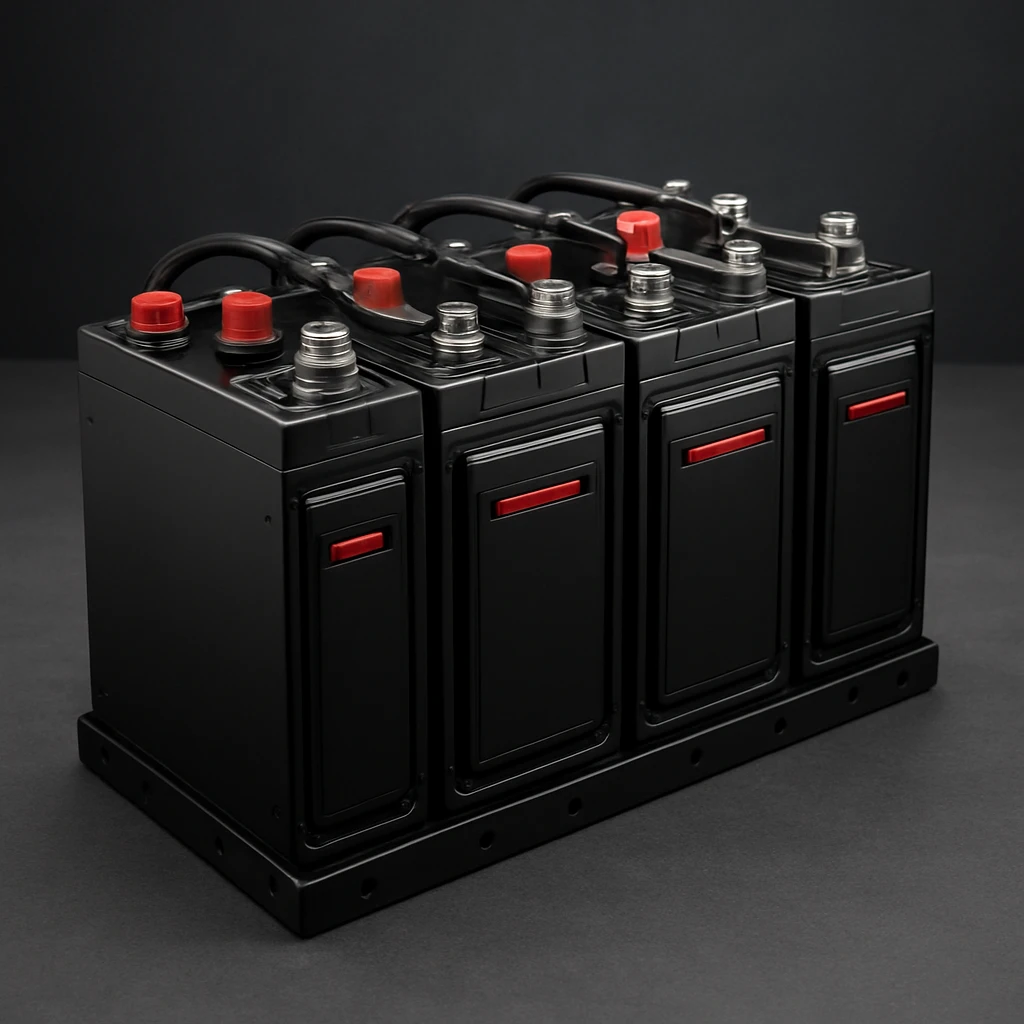
What it is: a purpose-built 7-series pack delivering a nominal 16 volt rail for SPL (Sound Pressure Level) competitors whose amplifiers are rated for 16 volt operation. This is a custom build option rather than a listed standard SKU; Evolution Lithium can discuss feasibility, balancing and suitable charging/regulation for 7-series systems.
Why it matters: many competition amplifiers deliver higher power at 16 volt. A 7-series lithium titanate pack offers flat voltage under extreme burst currents and very fast recharge between burps. It must be paired with a regulator or dedicated charging solution that is 7-series friendly.
Example: a hatch with a single large-frame monoblock on a wall of twelves. The 7-series bank, matched to a properly regulated high-output alternator and a dedicated 16 volt charger, produces consistent scores run after run without drifting voltage. Confirm the approach with Evolution Lithium as this is a custom configuration.
#7 Evolution Lithium Pre-Assembled SCiB (Super Charge Ion Battery) Rack with Copper Busbars and Balancer (available on request)
What it is: a ready-to-wire, hand-assembled bank featuring SCiB (Super Charge Ion Battery) cells in your chosen configuration, solid copper busbars, quality terminals, and an active balancer where required. Evolution Lithium sells the discrete accessories (busbars, balancer/display, fuse holders, lugs) and also offers custom assembly services on request rather than a single pre-packaged rack SKU.
Why it matters: consistent mechanical layout and low-resistance busbars improve current sharing between cells and parallel strings. Evolution Lithium backs the assembly with responsive support, and you can source matched accessories like fuse holders, lugs and other wiring items from the shop.
Example: a professional install bay building multiple vehicles weekly. A pre-assembled rack built to spec drops into an amplifier rack layout, routes to a central distribution block, and connects to a bulkhead fuse within minutes, keeping workflow tight and repeatable. Contact Evolution Lithium to discuss a custom pre-assembled solution.
How to Choose the Right Option for New Zealand car audio batteries
Use this quick decision framework to size your lithium titanate bank accurately and safely.
- Estimate amplifier demand: Peak current ≈ Total RMS (Root Mean Square) power divided by system voltage and divided by amplifier efficiency. For example, 5,000 watt at 13.8 volt and 80 percent efficiency is about 452 ampere.
- Pick a series count: 6-series for daily 13.8 to 15.0 volt systems. 7-series may be used for competition/16V systems but is typically a custom build — confirm amplifier ratings and discuss the approach with Evolution Lithium.
- Select cell capacity and C-rate: 10 ampere hour 75C is compact and strong; 20 to 24 ampere hour options add runtime. Multiply ampere hour by C-rate to understand burst current per parallel string.
- Choose parallel count: match burst current headroom to 1.5 to 2 times your peak current for clean transients. Add more parallel strings for long demo sessions. Evolution Lithium offers pre-purchase sizing advice and a calculator to assist.
- Plan supporting hardware: alternator upgrade for car audio, busbars, distribution blocks, cable size, fuse protection and grounding must all match the bank’s capability.
How the system works
An LTO (Lithium Titanate Oxide) SCiB (Super Charge Ion Battery) bank uses six or seven cells in series to match automotive voltages. Very low internal resistance allows rapid current bursts to flow with minimal voltage sag, which keeps amplifier power supplies operating efficiently. During music peaks, the bank supplements the alternator, then recharges quickly on the next lull. Toshiba SCiB testing shows outstanding cycle life and stable performance across wide temperatures, which is why many installers now treat lithium titanate as the go-to for high-discharge audio.
Why it matters for high-power car audio
- Voltage stability: smaller sag under load than AGM (Absorbent Glass Mat) means cleaner bass and fewer protect trips.
- Current delivery: high C-rate cells deliver hundreds to thousands of ampere bursts for sub-bass transients.
- Efficiency: higher and steadier voltage improves amplifier efficiency, reducing heat and stress.
- Cycle life: lithium titanate’s long life lowers total cost of ownership for daily drivers and demo vehicles.
- Form factor: compact, lightweight banks free up space and simplify mounting near amplifier racks.
Practical installation considerations
- Alternator: size for at least your continuous draw. Many 3 to 6 kilowatt systems benefit from a 240 to 370 ampere high-output unit with an appropriate regulator.
- Copper busbars: use solid copper busbars between cells and parallel strings to ensure equal current sharing and low resistance.
- Distribution: route from the bank to a fused distribution block, then to amplifiers with equal-length runs to balance resistance.
- Cable sizing: for 300 to 400 ampere peaks, use at least one run of 1/0 AWG (American Wire Gauge) oxygen-free copper; for 600 to 900 ampere peaks, consider dual 1/0 AWG or larger cross-sectional area such as 70 to 95 square millimetres.
- Grounding: bond the bank negative to the chassis at a clean, bare-metal point with the same gauge as positive, and add an engine-to-chassis upgrade strap.
- Balancing: include an active 6-series or 7-series balancer across cells for long-term health, especially in multi-parallel stacks.
Safety and electrical design practices
- Fusing: place a high-current fuse within 200 millimetres of the positive terminal of the bank, sized for expected peak current but below cable ampacity.
- Protection at both ends: fuse both ends of any cable that connects two energy sources such as alternator to bank or bank to front battery.
- Isolation and serviceability: include a battery disconnect and insulated covers over busbars to prevent accidental shorts.
- Thermal management: mount banks away from exhaust paths and ensure some airflow around the assembly.
- Charging: verify voltage setpoints for 6-series or 7-series with your alternator regulator and any external charger; follow Evolution Lithium guidance.
Sizing examples and installer quick-reference
| System Size (RMS power, watt) | Estimated Peak Current at 13.8 volt and 80 percent efficiency (ampere) | Recommended Bank Approach | Example Configuration | Cable and Fuse Guidance |
|---|---|---|---|---|
| 2,000 | ≈ 181 | Compact daily (example; actual requirements vary — consult Evolution Lithium) | 6-series, one 10 ampere hour 75C string (illustrative) | Single 1/0 AWG (American Wire Gauge), 200 ampere fuse at bank |
| 5,000 | ≈ 452 | Daily driver, strong bursts (example; actual requirements vary) | 6-series, one 20 ampere hour 35C or two 10 ampere hour 75C parallel strings (illustrative) | One to two 1/0 AWG runs, 300 to 400 ampere fuse at bank |
| 8,000 | ≈ 724 | Heavy daily or mild SPL (example; actual requirements vary) | 6-series, two to three 10 ampere hour 75C parallel strings (illustrative) | Dual 1/0 AWG or 70 square millimetre, 400 to 500 ampere fuse at bank |
| 12,000 | ≈ 1,086 | Competition leaning (example; custom solutions available — consult Evolution Lithium) | 6-series, three to four 10 ampere hour 75C parallel strings or a custom 7-series competition build where appropriate (illustrative) | Dual heavy runs, 500 to 600 ampere fused, pro alternator regulation |
Real-world installer note
On a recent sedan build with a 5 kilowatt monoblock and a strong front stage, swapping a large AGM (Absorbent Glass Mat) trunk battery for a 6-series 20 ampere hour SCiB (Super Charge Ion Battery) bank improved idle voltage during bass peaks by about half a volt, reduced amplifier protect events to zero, and shaved several kilograms of weight. The alternator reached float quickly after each bass line, highlighting how fast lithium titanate recharges compared with lead-acid.
Suggested images to include later
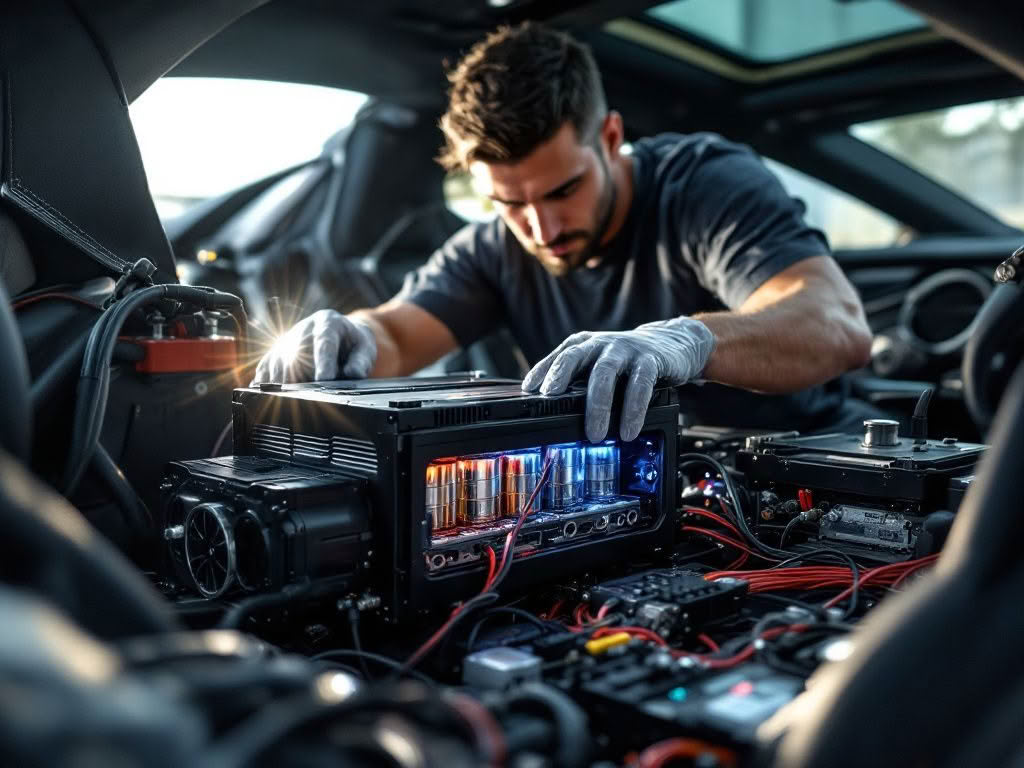
- Close-up of a 6-series SCiB (Super Charge Ion Battery) lithium titanate bank with copper busbars.
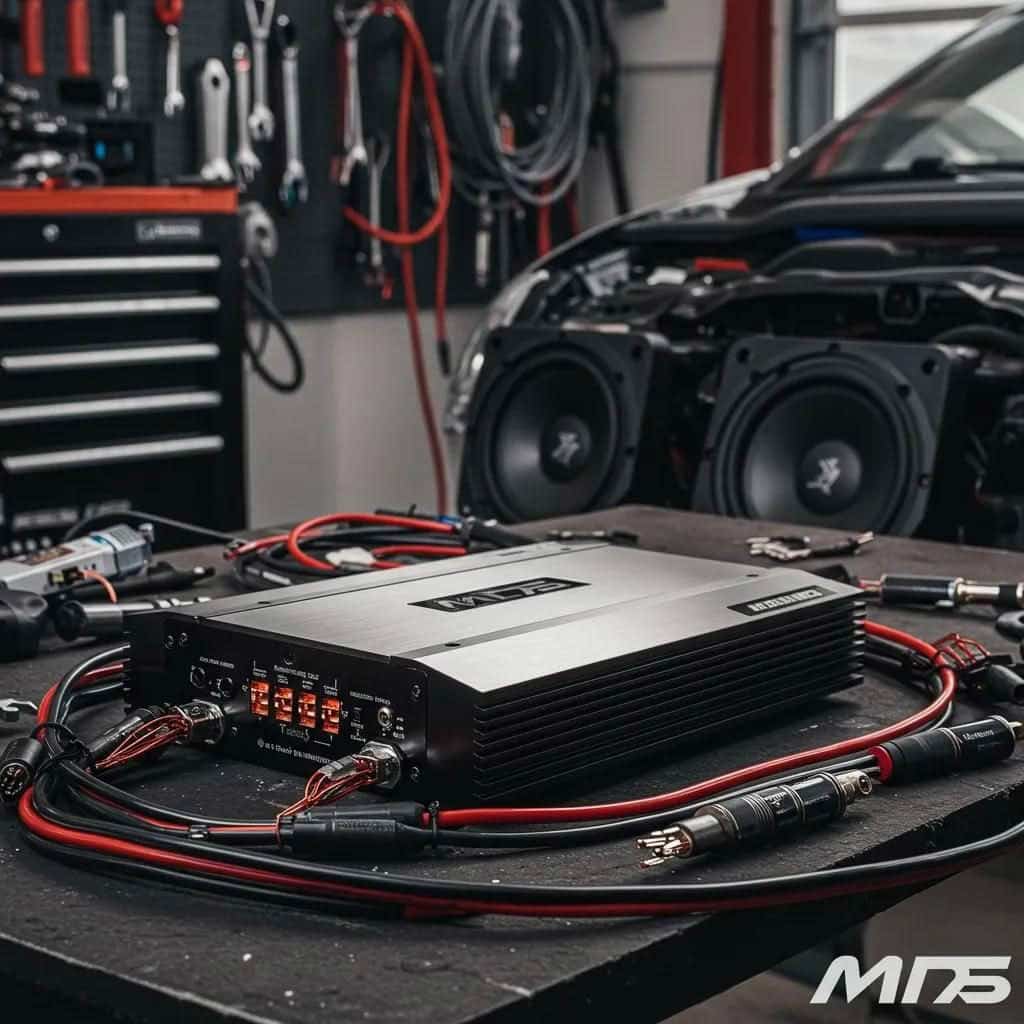
- Amplifier rack showing distribution blocks, equal-length power runs and fusing.
- Diagram of alternator, front battery, rear bank, fuses and grounds.
- Subwoofer enclosure and amplifier layout in a wagon to show realistic cable routing.
Conclusion
The seven picks above show exactly how to match lithium titanate SCiB (Super Charge Ion Battery) capability to your amplifier demand for clean, stable power. In the next 12 months, more New Zealand (NZ) builds will move to compact, high-discharge banks as installers chase voltage stability and weight savings without compromises.
Imagine bass that stays tight even as the volume rises, lights that do not dim, and amplifiers that remain in their efficiency sweet spot. Which configuration will best turn your goals for New Zealand car audio batteries into everyday performance?
Additional Resources
Explore these authoritative resources to dive deeper into New Zealand car audio batteries.
Elevate Your Build with Evolution Lithium Power
Custom-built LTO (Lithium Titanate Oxide) SCiB (Super Charge Ion Battery) lithium banks deliver rapid bursts, stable voltage, fast charging, long life and less bulk for New Zealand (NZ) car-audio enthusiasts.