Best Car Audio Battery in 2026: AGM vs LiFePO₄ vs SCiB LTO for Big Bass
The best car audio battery in 2026 is the battery that holds voltage when the bass hits. For mild systems up to roughly 800–1000W RMS, a quality AGM battery can still do the job if the alternator, cable and grounds are healthy. Once a daily driver pushes past that range, especially with a proper sub amp and regular hard listening, SCiB LTO becomes the stronger choice because car audio is not just about stored amp-hours. It is about current delivery, voltage stability and recovery between bass hits.
LiFePO₄ is a useful lithium chemistry for auxiliary loads, lighter setups and deep-cycle use, but it is not the same thing as a purpose-built LTO lithium bank for car audio. AGM is simple and affordable, LiFePO₄ is lighter and longer lasting, but SCiB LTO is the chemistry that makes the most sense when big bass, clean output and stable voltage matter. No battery will save poor wiring or a weak charging system, but the right battery gives the rest of the build a much stronger foundation.
Quick answer: AGM can work for smaller car audio systems. LiFePO₄ can suit light-to-moderate auxiliary and audio use. For daily drivers, demo builds and serious subwoofer systems where voltage stability matters, a rear-mounted SCiB LTO lithium bank is the strongest direction.
Quick Answer: Which Car Audio Battery Should You Choose?
The right battery depends on real RMS power, how hard the system is played, charging support and how much voltage drop you are willing to accept. Do not choose a battery from peak wattage claims. Choose it from real current demand and voltage behaviour under load.
| System Type | Best Battery Direction | Why |
|---|---|---|
| Factory or mild upgrade | Healthy starting battery or AGM | Current demand is low enough that a simple setup can still work. |
| Up to roughly 800–1000W RMS | Quality AGM can be acceptable | Works if cable size, grounding and alternator health are already sorted. |
| 1000W+ hard daily system | SCiB LTO strongly worth considering | This is where voltage drop and slow recovery start becoming obvious. |
| 3000W+ subwoofer setup | SCiB LTO lithium bank | High-current systems need stronger voltage behaviour than AGM usually provides. |
| Demo or SPL-style build | SCiB LTO lithium bank | Repeated bass hits expose weak batteries, poor grounds and undersized cable fast. |
| Accessory loads plus light audio | LiFePO₄ may suit | Useful where weight, cycle life and auxiliary use matter more than hard transient bass demand. |
| Weak wiring or weak alternator | Fix the electrical system first | No battery can fully compensate for bad cable, poor grounds or poor charging support. |
For a system-specific starting point, use the car audio lithium battery calculator before choosing bank size.
Why Battery Choice Matters for Big Bass
Amplifiers do not create power from nothing. They convert electrical power into audio output. When the electrical system drops under load, the amplifier has less voltage and current to work with. That is when a system can sound flat even though the amplifier looks powerful on paper.
If the voltage folds over, the bass gets lazy. You may hear softer impact, earlier clipping, dimming lights, amplifier protection events or a system that sounds strong for a few seconds and then falls away. That is not always a subwoofer problem. It is often the battery, wiring, alternator or grounding failing to keep up with the current demand.
This is where battery chemistry matters. A big amp-hour number does not automatically mean the battery is good for bass. Car audio needs a battery that can deliver current fast, hold useful voltage under load and recover quickly between hits. For deeper troubleshooting, read Evolution Lithium’s guide to voltage drop in car audio.
AGM Car Audio Batteries: Where They Still Work
AGM batteries are still popular because they are familiar, simple and easy to install. In New Zealand, common car audio AGM options include batteries from brands like Zeroflex, Tunex and SSB. These can make sense for smaller systems, budget builds and daily drivers that are not asking for extreme current.
The important point is not that AGM is bad. It is that AGM has a real limit. A single 12V AGM can be acceptable around the 800–1000W RMS range when the install is healthy. That means proper cable size, clean grounds, a healthy alternator and a system that is not being hammered at full tilt constantly.
Once the system gets bigger, AGM becomes a compromise. You can add more AGM batteries, but you also add weight, space, cost and cable complexity. More AGM can extend reserve, but it does not change the fact that AGM tends to show more voltage drop and recover slower under repeated heavy bass demand compared with a properly matched SCiB LTO bank.
Common AGM Examples in the NZ Car Audio Market
Purpose-built AGM audio batteries are common in New Zealand. Examples include Zeroflex ZF AGM batteries, Tunex TXB car audio batteries and SSB AGM batteries listed through car audio suppliers. These can be useful for moderate systems, especially where the customer wants a familiar 12V drop-in style upgrade.
That does not make AGM the best battery for big bass. It makes AGM the familiar option. For mild systems, that can be enough. For hard daily, demo or SPL-style builds, the question changes from “will it work?” to “will it hold voltage when the amp actually loads up?”
The Real Limit of AGM for Daily Bass Systems
The real limit of AGM is not just capacity. It is voltage behaviour under load. A large AGM battery may look strong on paper, but once the amp starts pulling hard, voltage can still drop quickly. That drop changes how the amplifier performs.
For a daily driver with a mild system, AGM can be a smart budget choice. For a basshead running a proper sub amp, playing loud every day, or demoing regularly, AGM starts to feel like a stepping stone rather than the final answer. The more you push the system, the more obvious the difference becomes.
AGM takeaway: AGM can work up to roughly 800–1000W RMS in a healthy daily setup. Above that, especially with regular hard bass use, SCiB LTO becomes the stronger long-term choice.
LiFePO₄ Batteries for Car Audio: Useful, But Not the Same as LTO
LiFePO₄ is often sold as “the lithium upgrade,” and in many applications it is a good chemistry. It is lighter than AGM, usually offers better cycle life, and can be useful for auxiliary power, camping setups, fridge loads, inverters and moderate audio use.
For car audio, the issue is not that LiFePO₄ is bad. The issue is that it is often not the best match for repeated high-current bass hits. Many common 12V LiFePO₄ batteries are built around deep-cycle auxiliary use rather than hard transient amplifier demand. That matters if your goal is not just runtime, but strong voltage when the bassline hits repeatedly.
LiFePO₄ can suit low-to-moderate RMS systems and mixed accessory/audio setups. It becomes less attractive when the main goal is maximum voltage stability during repeated subwoofer hits. That is where LTO separates itself.
Where LiFePO₄ Makes Sense
LiFePO₄ makes sense when weight saving, cycle life and auxiliary use are the priority. If the vehicle is running accessories, camping gear, moderate audio and general 12V loads, LiFePO₄ can be a useful choice.
It is less ideal when the system is built around aggressive bass, high RMS output and repeated current spikes. A basshead battery needs to handle short, brutal current demand without folding over. That is the job SCiB LTO is better suited for.
LiFePO₄ takeaway: LiFePO₄ is a good lithium chemistry for many auxiliary uses. For serious car audio where transient current and voltage recovery matter most, SCiB LTO is the stronger option.
SCiB LTO Battery Banks for Car Audio
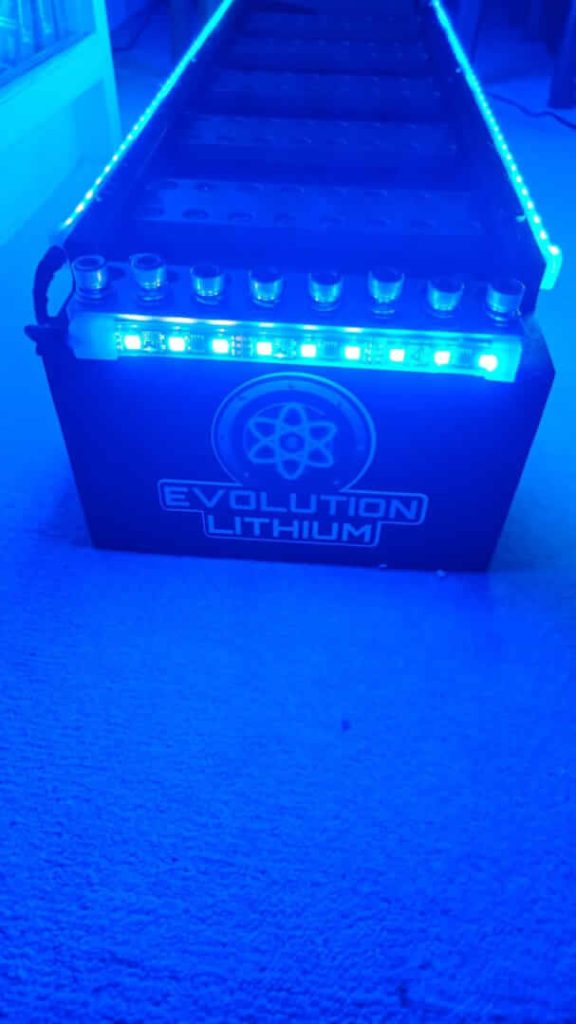
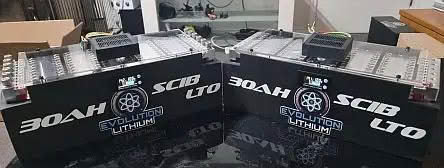
SCiB LTO is where the article changes from general battery advice to serious car audio. LTO stands for Lithium Titanate Oxide. Evolution Lithium focuses on SCiB-based LTO battery banks because they suit high-current car audio systems, daily drivers, demo builds and SPL-style setups where voltage behaviour matters.
A SCiB LTO battery bank should not be judged like a normal AGM battery. The amp-hour number does not tell the whole story. What matters is how the bank behaves when the amplifier loads hard. Can it deliver current quickly? Can it hold useful voltage? Can it recover between hits? Can it do that repeatedly without the system feeling weak after a few bass-heavy tracks?
For 6S SCiB LTO systems, Evolution Lithium commonly works around a practical car audio voltage window of roughly 15.0V–16.2V, with 15.6V–15.9V being the preferred charging range for strong system behaviour. This is not the same as old 12V AGM thinking. If you are upgrading into LTO, the charging voltage, alternator setup, cable, fusing and rear-bank mounting all need to match the build.
To go deeper into the chemistry, read understanding LTO battery technology. For complete application guidance, see LTO battery banks for car audio.
Why SCiB LTO Suits Bassheads
SCiB LTO suits bassheads because it is built around the behaviour car audio actually needs: current delivery, voltage stability and recovery. When the amp pulls hard, the bank needs to respond quickly. When the bassline hits again, it needs to be ready again. That is where LTO feels different from stacking heavy AGM batteries.
For a daily driver that gets played hard, stable voltage is not just about numbers on a meter. It changes how the system feels. Bass stays tighter. The amp has a stronger electrical foundation. The system is less likely to feel strong for one hit and soft on the next.
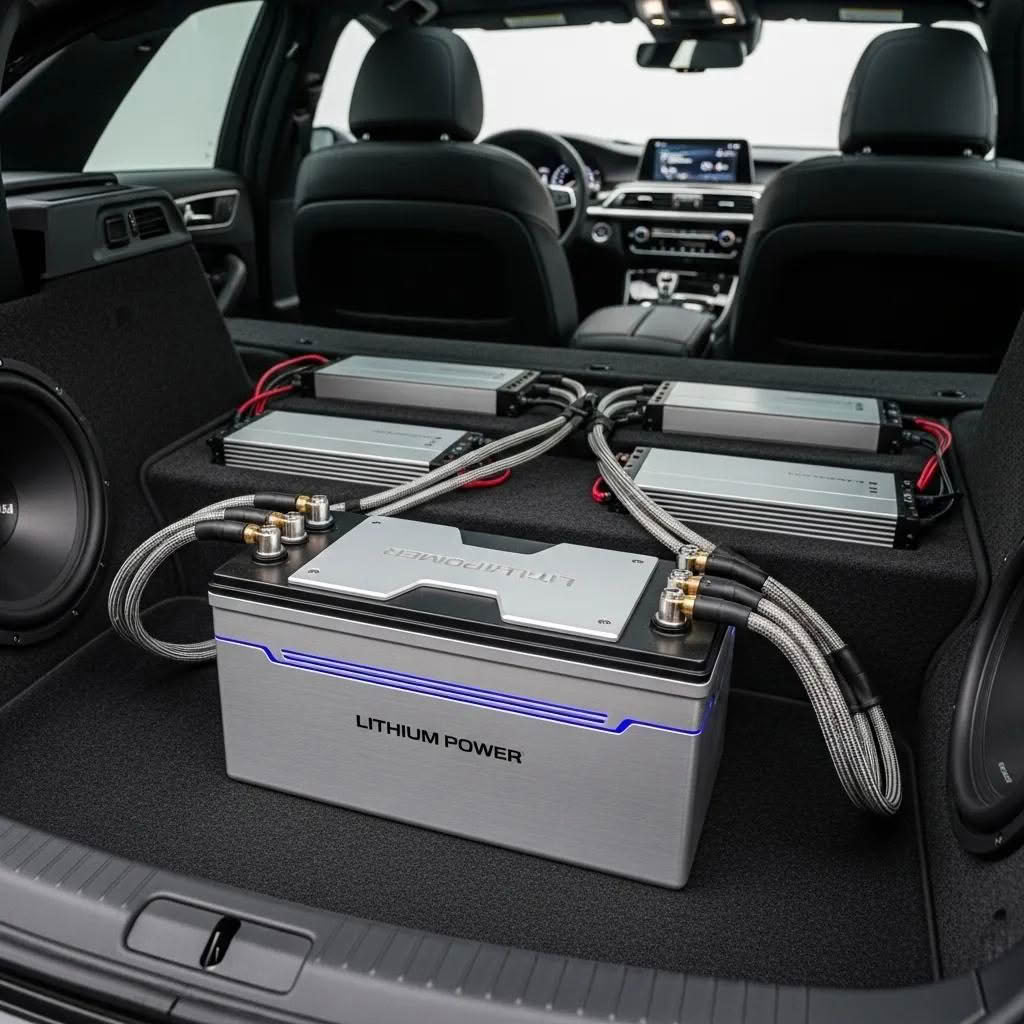
The other advantage is packaging. A rear-mounted SCiB LTO bank can support serious car audio without filling the vehicle with heavy batteries. It still needs proper wiring and charging support, but it gives the build a stronger base than chasing more AGM capacity.
Explore Evolution Lithium’s SCiB LTO lithium battery banks if you are building around stable voltage and serious amplifier demand.
AGM vs LiFePO₄ vs SCiB LTO: Real-World Comparison
For car audio, the best chemistry is not decided by one spec. You need to compare how each option behaves in a real vehicle, feeding a real amplifier, with real bass-heavy music.
| Battery Type | Best For | Voltage Under Bass Load | Weight / Space | Basshead Verdict |
|---|---|---|---|---|
| AGM | Mild systems, budget builds, simple daily installs. | Acceptable at lower RMS, but shows more voltage drop as demand increases. | Heavy and bulky when stacked. | Good within limits, not the best long-term path for serious bass. |
| LiFePO₄ | Auxiliary loads, weight saving, light-to-moderate audio use. | Better than AGM in many uses, but not the strongest transient-discharge choice. | Lighter than AGM. | Useful lithium option, but not the same as LTO for hard car audio. |
| SCiB LTO | Hard daily systems, demo builds, SPL-style setups, large subwoofer amps. | Strong voltage behaviour and fast recovery under repeated bass hits. | Compact for the current support it provides. | Best choice when big bass and stable voltage are the goal. |
If you want the broader chemistry comparison, read LTO vs AGM vs LiFePO₄.
How to Choose the Right Battery for Your RMS Power
RMS power matters because it gives you a better idea of real amplifier demand than peak ratings. Peak wattage is mostly marketing. RMS is closer to what the electrical system has to support when the system is actually working.
Do not treat the numbers below as hard laws. Treat them as a practical starting point for daily drivers and bass builds.
| System RMS / Use | Battery Direction | Practical Reason |
|---|---|---|
| Factory to mild upgrade | Healthy starter battery or AGM | Current demand is usually manageable. |
| Up to roughly 1000W RMS | Quality AGM can work | Best when wiring, grounds and alternator are already healthy. |
| 1000W–3000W hard daily | SCiB LTO strongly worth considering | This is where repeated bass demand starts exposing AGM limits. |
| 3000W+ system | SCiB LTO recommended | Voltage support becomes more important than simply adding AGM weight. |
| Demo / SPL-style use | SCiB LTO | Repeated high-current hits need strong recovery and low voltage drop. |
For bank selection, use the car audio lithium battery calculator or read the detailed guide to sizing lithium batteries for car audio systems.
What the Battery Will Not Fix
A better battery gives the system a stronger foundation, but it does not fix every electrical problem. If the install is weak, even a strong lithium bank can look worse than it is.
A car audio battery will not fully fix:
- undersized power cable,
- poor or painted grounds,
- weak alternator output,
- cheap fuse holders,
- loose lugs or poor crimps,
- wrong charging voltage,
- amplifier clipping,
- bad gain settings,
- a poor enclosure or weak subwoofer setup.
If the system voltage is weak at the amplifier but strong at the battery, the problem is the current path. Start with wiring SCiB LTO lithium banks, then check high-output alternator compatibility with LTO and the full complete power setup for car audio.
Installation and Reliability Essentials
Whichever battery you choose, the install decides whether the system performs properly. A strong battery connected through weak cable and poor grounds will still disappoint. For lithium, installation discipline matters even more.
For Evolution Lithium SCiB LTO banks, mount the bank in the boot or rear cabin. Do not mount lithium under the bonnet. Keep the battery secure, protected and close to the amplifier current path where practical.
- Use OFC cable. Main power and ground paths need proper copper cable for serious current.
- Fuse close to the battery. Source-side fusing protects the vehicle and cable.
- Keep grounds short and clean. Paint, rust and weak bolts create voltage loss.
- Check charging voltage. LTO systems need a charging setup that suits their working voltage.
- Use voltage monitoring. Watch what the system does under real bass load.
- Use an active balancer where relevant. Keep the bank managed correctly for long-term consistency.
- Test at the amplifier terminals. That is the voltage the amp actually sees.
For safe placement, read the lithium battery trunk install guide. If your vehicle needs higher LTO charging voltage, read upgrading your vehicle for an LTO lithium battery.
Why This Beats a Generic “Top 10 Batteries” List
Most car audio battery lists focus on product names, physical size, cranking amps or claimed max amperage. That can be useful when shopping for a simple battery replacement, but it does not answer the bigger basshead question: will the battery hold up when the amplifier pulls hard?
For serious car audio, the battery is not chosen like a normal starter battery. You are not just trying to crank the engine. You are trying to keep the amplifier fed during repeated bass hits, stop voltage from collapsing, and avoid the system feeling strong for one track and weak on the next.
That is why this guide focuses on chemistry and behaviour first. AGM, LiFePO₄ and SCiB LTO can all be useful in the right context. But if the goal is big bass, clean voltage and serious daily reliability, SCiB LTO is the direction that best matches the job.
Extended FAQs: Best Car Audio Battery in 2026
What is the best car audio battery in 2026?
For serious bass systems, the best car audio battery in 2026 is a properly installed SCiB LTO lithium bank. AGM can still work for smaller systems, and LiFePO₄ can suit some auxiliary and moderate audio uses, but SCiB LTO is the strongest choice when voltage stability, current delivery and recovery under bass load matter.
Is AGM good for car audio?
AGM can be good for mild car audio systems, budget builds and daily drivers around the lower RMS range. A quality AGM battery can support a smaller amplifier when the wiring, grounds and alternator are healthy. It becomes a compromise once the system gets louder, heavier and more demanding.
Is a 100Ah AGM enough for 1000W RMS?
A 100Ah AGM can be enough for around 1000W RMS in a healthy daily setup, but it is near the practical upper range for a single AGM if the system is played hard. Expect more voltage drop during sustained bass than you would see from a properly matched SCiB LTO bank.
Is LiFePO₄ better than AGM for car audio?
LiFePO₄ is usually lighter than AGM and can offer better cycle life. It can be a better choice for auxiliary power and light-to-moderate audio use. For aggressive bass systems, SCiB LTO is still the stronger car audio chemistry because it is better suited to repeated high-current transient demand.
Is LTO better than LiFePO₄ for car audio?
For serious car audio, yes. LTO is better suited to high-discharge, fast-recovery use where the amplifier demands hard current repeatedly. LiFePO₄ is useful in many 12V applications, but SCiB LTO is the better fit when the priority is stable voltage during bass-heavy use.
When should I move from AGM to LTO?
Move from AGM to LTO when the system is above roughly 1000W RMS and is played hard regularly, or when voltage drop, soft bass, dimming lights or amplifier protection become a problem. For 3000W+ systems, demo builds and SPL-style setups, SCiB LTO should be treated as the serious battery direction.
What is the best battery for subwoofers?
For smaller subwoofer systems, AGM can work. For large subwoofer amps and hard daily bass, a SCiB LTO lithium bank is the better choice because it supports the high-current demand and voltage recovery that subwoofer amplifiers need.
Does a bigger Ah battery mean louder bass?
No. More amp-hours can give more reserve or runtime, but it does not automatically mean louder or cleaner bass. Voltage stability, current delivery, wiring, grounding and charging support matter more than Ah alone. A smaller SCiB LTO bank can outperform a larger AGM setup in serious car audio because it behaves better under load.
Will a lithium battery stop voltage drop?
A lithium battery can help reduce voltage drop, but only when the rest of the install is correct. If the cable is undersized, grounds are poor, fuse holders are weak or the alternator cannot keep up, voltage drop can still happen. Measure voltage at the battery and amplifier under load to find the real bottleneck.
Can I use LTO in a daily driver?
Yes. LTO is well suited to daily-driver car audio systems when the bank is installed correctly, charged correctly and mounted in the boot or rear cabin. It is especially useful for daily systems that are played hard and need consistent voltage rather than short bursts of performance.
Where should a lithium car audio battery be mounted?
A lithium car audio battery should be mounted in the boot or rear cabin, not under the bonnet. Keep it secure, protected from movement, and close to the amplifier current path where practical. This improves safety and helps keep high-current cable runs shorter.
What else do I need besides the battery?
You need proper OFC cable, correct fuse holders, clean grounds, secure mounting, voltage monitoring, suitable charging support and amplifier settings that are not forcing the system into clipping. The battery is important, but the whole electrical path decides the final result.
More FAQs: Car Audio Batteries, Capacitors and Dual Battery Setups
Which is better for car audio: a capacitor or a battery?
For serious car audio, a battery is usually the better upgrade. A capacitor can help with very short bursts of demand, but it does not store enough usable energy to support a large amplifier for long. If your lights dim when the bass hits, a capacitor may hide part of the symptom, but it will not fix a weak battery bank, poor wiring, bad grounds or an alternator that cannot keep up.
A proper rear lithium bank gives the amplifier real current support. It can help protect the starting battery, improve voltage stability and give the system a stronger electrical foundation. For mild systems, a capacitor may help smooth small voltage dips. For big bass, daily demos or higher RMS systems, battery support matters more.
How many watts do I need for my car stereo?
Start with real RMS power, not peak or max wattage. Add up the RMS rating of your amplifiers, then consider how the system is actually used. A small daily system, a hard daily subwoofer setup and a demo build all place different demands on the electrical system.
As a practical guide, systems up to roughly 800–1000W RMS may still work on a good AGM setup if the wiring, grounds and alternator are healthy. Once the system moves beyond that range and is played hard, SCiB LTO becomes a much stronger direction. For larger systems, use the battery calculator and plan the alternator, cable, fusing and grounding at the same time as the battery bank.
Where should I install a second battery for car audio?
For a lithium car audio battery bank, install it in the boot or rear cabin, close to the amplifiers where practical. Do not mount an Evolution Lithium SCiB LTO bank under the bonnet. Engine bay heat, vibration, moisture and crash exposure make the bonnet area the wrong place for this type of lithium battery setup.
The battery must be securely mounted so it cannot move during braking, cornering or heavy bass vibration. Keep the terminals protected, keep fuse holders accessible, and make sure the cable path is protected wherever it passes through metal or near sharp edges.
How much does it cost to install a dual battery car audio system?
The cost depends on the battery type, bank size, cable length, fuse hardware, mounting method, labour and whether the charging system also needs upgrades. A basic AGM support battery setup can be relatively affordable, but a proper lithium car audio setup costs more because the battery bank, OFC cable, fuse holders, copper lugs, mounting and charging strategy all need to be done correctly.
Do not price the job from the battery alone. The supporting parts matter. Cheap cable, weak fuse holders, bad crimps or poor grounding can waste the performance of a good battery. For a serious bass build, it is better to budget for the full electrical path than to buy a strong battery and connect it through weak hardware.
Will dual batteries hurt my alternator?
Dual batteries do not automatically hurt an alternator, but the full system demand can overwork a weak charging system if it is not planned properly. The alternator has to recharge the battery bank while also running the vehicle and supporting the audio system. If the audio system is pulling more current than the alternator can replace, the bank will slowly fall in voltage and the alternator may be pushed hard for long periods.
The safe answer is to match the alternator, battery bank, charging voltage and wiring to the system. If the vehicle is running a serious SCiB LTO setup, especially above normal factory charging voltage, the charging path needs to be planned properly. A stronger battery helps the system, but it does not remove the need for suitable alternator output and clean wiring.
Technical references
For SCiB LTO cell technology and intended operating characteristics, see Toshiba’s SCiB LTO battery information. Use the finished bank’s documented limits and measured vehicle voltage when planning a car-audio system.
Conclusion: The Best Battery Is the One That Holds Voltage When the Bass Hits
AGM batteries still work when the system is mild and the budget matters. LiFePO₄ is useful when weight, cycle life and auxiliary power are the priority. But for serious car audio, especially daily drivers and demo builds that push real RMS power, SCiB LTO is the strongest battery direction.
The reason is simple: big bass needs voltage stability under load. If the battery drops under load, the amplifier struggles. If the current path is weak, the system feels weak. If the voltage recovers quickly and the install is built properly, the amplifier has a stronger foundation to work from.
Choose the battery around how the system is really used. For small systems, AGM can be enough. For mixed accessory use, LiFePO₄ may fit. For hard daily bass, large sub amps and clean output under load, a rear-mounted SCiB LTO lithium bank is the better long-term answer.
Start with Evolution Lithium’s car audio lithium battery products or use the battery calculator to match your system before guessing.
Evolution Lithium
7 Soper Lane, Springlands, Blenheim, Marlborough, New Zealand
Phone: +64 22 073 1730 | Email: sales@evolutionlithium.co.nz
Open 24/7 — evolutionlithium.co.nz