Best Car Battery for Subwoofers: Choose the Right Setup

The best car battery for subwoofers matches the amplifier’s real current demand, the vehicle’s charging output and the listening time you expect. A healthy AGM starting battery can suit a mild system. For high-power daily systems, demos and SPL builds, a correctly specified rear SCiB LTO bank can support repeated bass peaks when the alternator, cable, grounds and fusing are designed as one electrical system.
Choose a Subwoofer Battery Around the Complete Electrical System
Before buying a battery, record the amplifier’s credible RMS output, final impedance, likely efficiency, normal listening time, alternator output at the RPM you use, running voltage, existing starting battery, cable route and mounting space. These details separate a modest daily system from a long demo or SPL build and prevent a generic wattage category from driving the decision.
- Continuous current: the finished bank, cable, fuse holders, connections and return path must suit the expected current, not only a brief burst.
- Usable energy: capacity affects reserve and recovery time when demand exceeds charging supply.
- Charging compatibility: the alternator, charger, amplifier, DSP, head unit and vehicle electronics must tolerate the intended voltage.
- Installation: a lithium bank belongs securely in the rear cabin or boot, never under the bonnet.
Estimate Amplifier Current Before Choosing Capacity
Use RMS power as a planning input, then account for voltage and efficiency. A useful Class D estimate is amplifier DC input current = RMS output ÷ (system voltage × efficiency). A 5,000 W RMS Class D amplifier at 15.8 V and an assumed 80% efficiency needs about 396 A at continuous full output: 5,000 ÷ (15.8 × 0.80). That is a planning figure, not a battery-only current, fuse rating or promise of real music draw.
Music load changes with track content, volume, impedance rise, temperature and tuning. Compare the estimate with alternator output at the relevant engine speed, normal vehicle loads and the time available for recovery. Use the car-audio battery and alternator sizing guide for the system calculation, then check the result at the amplifier terminals under a controlled load.
AGM, LiFePO4 or SCiB LTO for a Subwoofer System?
AGM, LiFePO4 and SCiB LTO can each suit different roles. Select the chemistry from measured demand, voltage compatibility, packaging, budget and required reserve instead of a broad “best battery” claim. Battery University’s lithium-ion chemistry overview explains power, energy-density and life trade-offs, while Toshiba’s SCiB cell range shows why the exact cell platform matters.
| Part of the system | Best use | What to check |
|---|---|---|
| AGM starting battery | Engine starting and ordinary vehicle electrical loads | Starting reserve, vehicle charging requirements and condition |
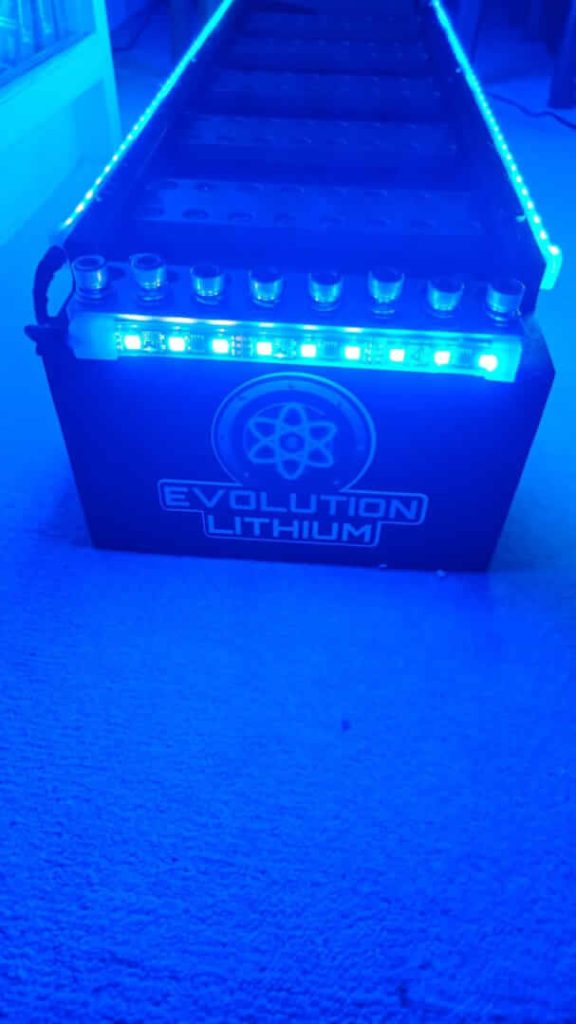
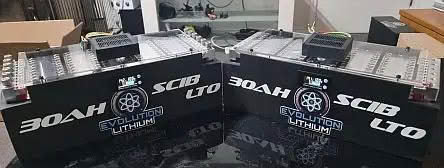
| SCiB LTO rear bank | High-current amplifier support in the rear cabin or boot | Finished-bank current capability, charging range, mounting and cable protection |
| Alternator and charging path | Replacing the energy used by the system | Loaded voltage, output at operating RPM, cable loss and component compatibility |
AGM can be practical for a moderate daily setup. LiFePO4 can be useful where its voltage range, charge profile and current capability suit the completed system. SCiB LTO is often appropriate for demanding car audio where high current and repeated recovery matter, but the finished bank must still be matched to the exact cell model, configuration and installation.
Finished-Bank Capacity Matters More Than Cell Ah
A cell’s Ah rating describes one cell, not the completed car-audio bank. Series groups establish voltage; parallel rows add capacity and current capability. Compare the finished bank’s continuous discharge capability, voltage range, intended runtime and charging requirements rather than choosing from Ah alone. A smaller high-discharge bank may support stronger short peaks, while a larger capacity-focused bank may offer more reserve.
Use the car-audio lithium battery calculator for amplifier RMS, alternator and runtime planning as a starting point. Then match the recommendation to measured alternator support and the bank’s supplied limits before ordering.
Diagnose Voltage Drop Before Buying More Battery
A falling dashboard reading does not prove that the battery is undersized. Measure source-bank voltage and amplifier supply voltage at the same moment, then measure across the positive and negative paths. If the source is stable but the amplifier is low, investigate cable size, terminals, grounds, fuses or distribution. If voltage is low at the source too, assess alternator output, average demand and stored-energy reserve together.
Follow the step-by-step car-audio voltage-drop diagnostic guide before increasing capacity. A bank can delay a symptom during a short peak; it cannot correct a sustained charging deficit.
Set Charging Voltage and Install the Bank Safely
For an applicable 6S SCiB LTO bank, normal high-performance daily charging is commonly about 15.6–15.9 V. The 16.8 V figure is an absolute maximum, never a routine target. Confirm the exact bank instructions and every connected component’s voltage rating before changing alternator regulation or charger settings. An active balancer can help keep cell groups aligned, but it does not replace compatible charging, cable protection or correct installation.
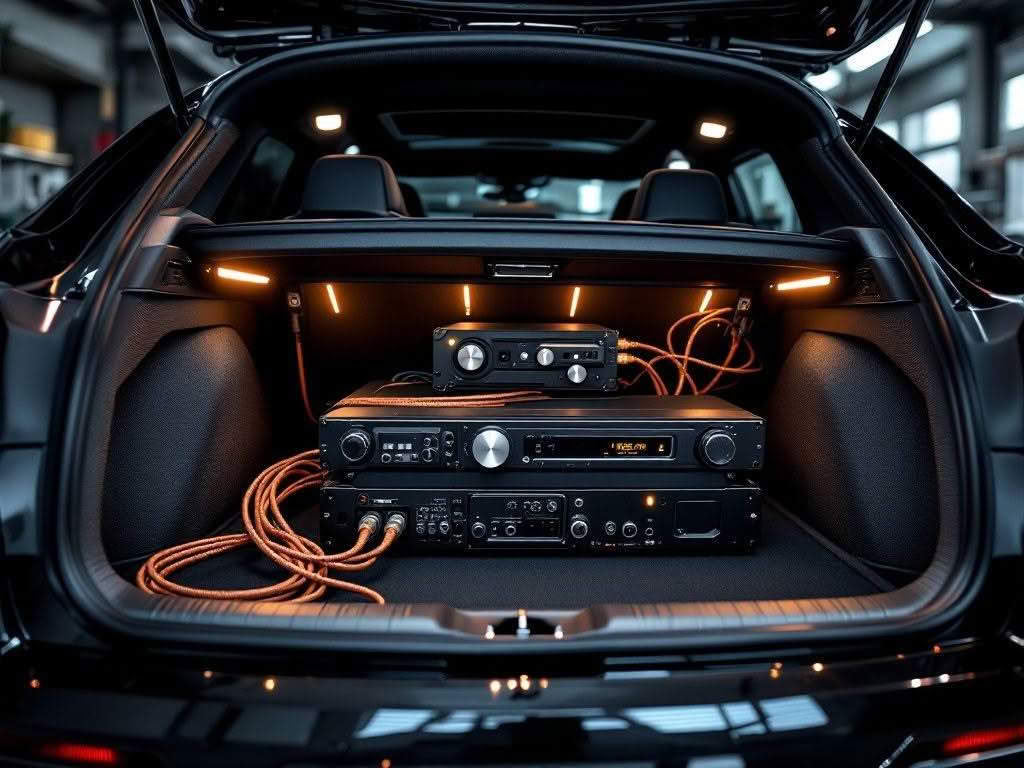
- Mount the bank so it cannot move under braking, cornering or vibration.
- Fuse each positive energy source close to its terminal and keep unfused cable lengths short.
- Use conductor size, lugs, grounds and fuse hardware that suit the full installed current path.
- Protect cable through metal with grommets and keep it clear of heat, sharp edges, moving parts and airbags.
- After commissioning, retest charging voltage and voltage at the amplifiers with a controlled load.
Use the rear lithium battery mounting and cable-routing guide alongside the two-battery car-audio wiring guide when the vehicle retains a front starting battery and rear audio bank.
Conclusion: Select the Battery From the Measured Build
The best battery for subwoofers is not automatically the largest or highest-Ah option. Start with amplifier RMS, system voltage, alternator output, realistic playing time and voltage-drop testing. Then choose a finished bank with suitable continuous discharge capability, safe charging behaviour and secure rear mounting. This gives daily, demo and SPL systems a dependable electrical plan instead of a temporary fix for an unresolved problem.
Subwoofer Battery FAQs
How many amp-hours do I need for a subwoofer?
There is no reliable Ah-only answer. Size the finished bank from amplifier RMS, efficiency, operating voltage, continuous discharge capability, alternator support and the required playing time.
Can a second battery replace a high-output alternator?
No. A battery covers the difference when demand temporarily exceeds generation, but that energy must be replaced. A larger bank can extend reserve; it cannot solve a continuing alternator energy deficit.
Where should a lithium subwoofer battery be installed?
Install it securely in the boot or rear cabin, with protected terminals and correctly fused cable. Do not install an Evolution Lithium bank under the bonnet.
Get a Subwoofer Battery Matched to Your System
Browse Evolution Lithium’s SCiB LTO battery-bank options, start with the calculator, then send the vehicle, alternator output, amplifier RMS, final impedance, current cable size and intended use through the configuration contact form for a bank recommendation matched to the completed build.