

Monoblock and 4-channel amplifiers do not have an inherent sound-quality ranking. A correctly designed amplifier operating within its limits can reproduce its intended frequency range cleanly. The practical difference is how many channels are available, which speakers they are intended to power and how the amplifier fits the system.
For most systems, sound quality is affected more by installation, speaker selection, enclosure design, crossover settings, gain structure, signal quality and available electrical supply than by the words “monoblock” or “4-channel” on the chassis.
What a Monoblock Amplifier Does
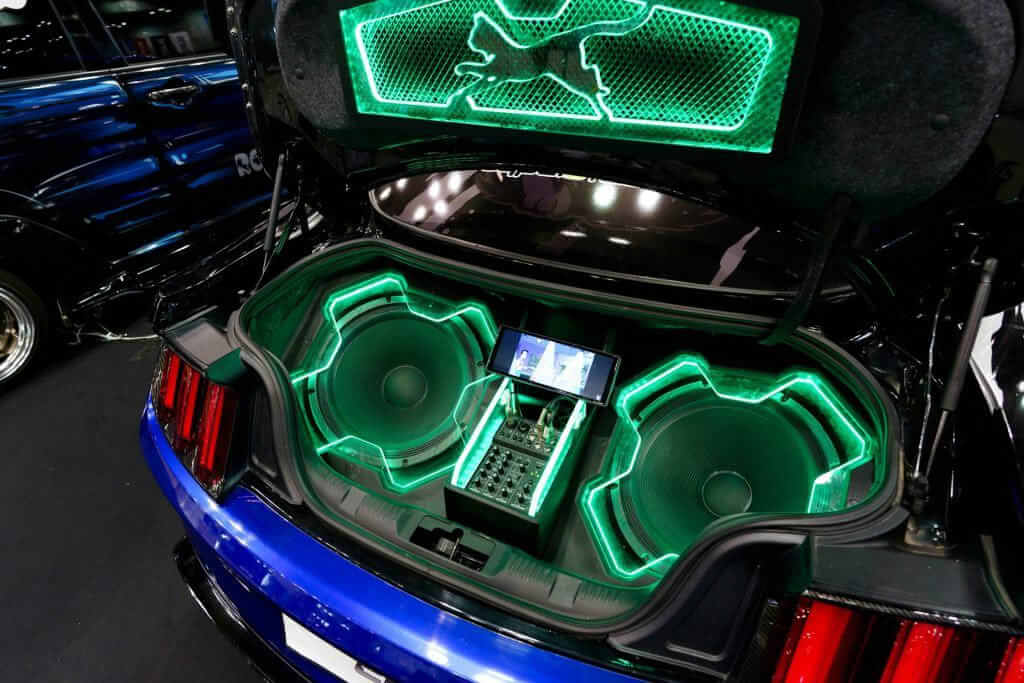
A monoblock has one amplified output channel. In car audio it is normally used for subwoofers, where left and right low-frequency information is combined and high output may be required. Many modern monoblocks use Class D topology for efficiency and compact size.
Multiple subwoofers can be connected to one monoblock only when their combined voice-coil wiring produces an impedance within the amplifier’s rated range. The amplifier manual, not a generic wiring pattern, determines the safe load.
What a 4-Channel Amplifier Does
A 4-channel amplifier provides four separate outputs. A common arrangement powers left and right front speakers plus left and right rear speakers. Other configurations may be possible, including active front stages or bridged channels, but only when supported by the model.
Bridging two channels produces a mono output with different impedance requirements. Never assume a bridged channel can run the same low load as an unbridged stereo channel.
Which Delivers Better Sound?
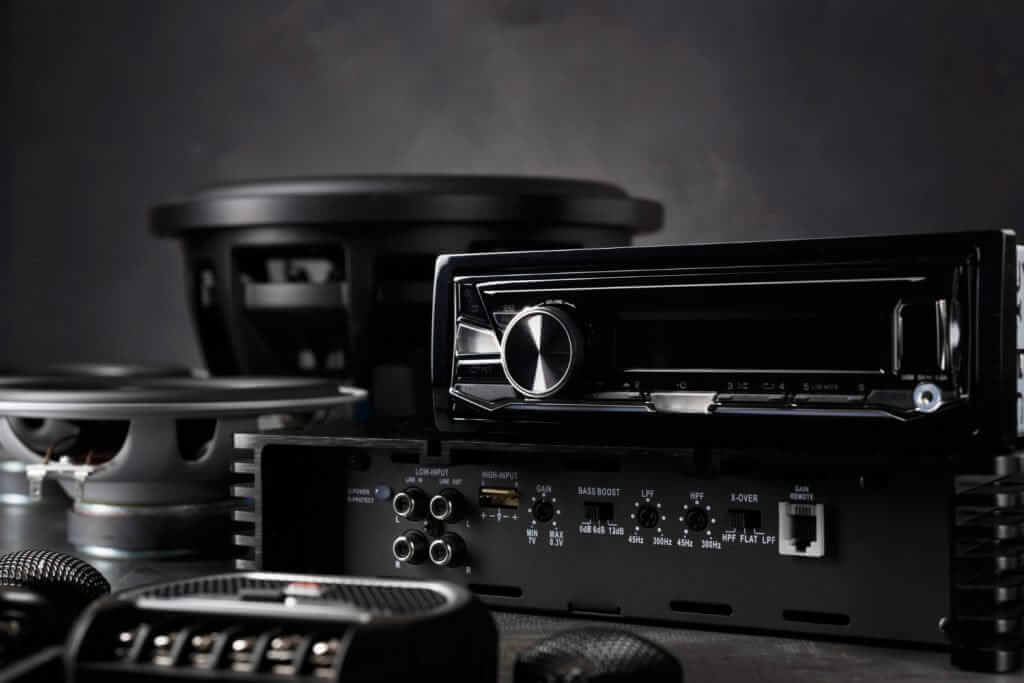
Neither type automatically sounds better. Compare the measured output and features of the specific models at the intended load. Useful specifications include RMS power, signal-to-noise ratio, frequency response, distortion at rated output, crossover range and protection functions.
For subwoofers
A suitable monoblock is normally the better tool because it provides one dedicated low-frequency channel, often with the power and filter controls required for the subwoofer stage.
For full-range speakers
A 4-channel amplifier is normally the better tool because it retains left-right information and allows separate speaker channels. It also makes level and crossover adjustment easier when front and rear speakers have different requirements.
RMS Power, Impedance and Headroom
Use RMS ratings at the intended impedance. Peak or maximum figures are not a reliable basis for matching. The speaker’s thermal rating is only one limit; mechanical excursion, enclosure design, high-pass filtering, programme material and clipping also affect how much power it can accept.
There is no automatic rule that an amplifier must be 1.5 or 2 times the speaker RMS rating. Extra headroom can be useful when gain and limiters are set correctly, but it can also damage a driver when the system is misconfigured.
Installation Has a Major Effect
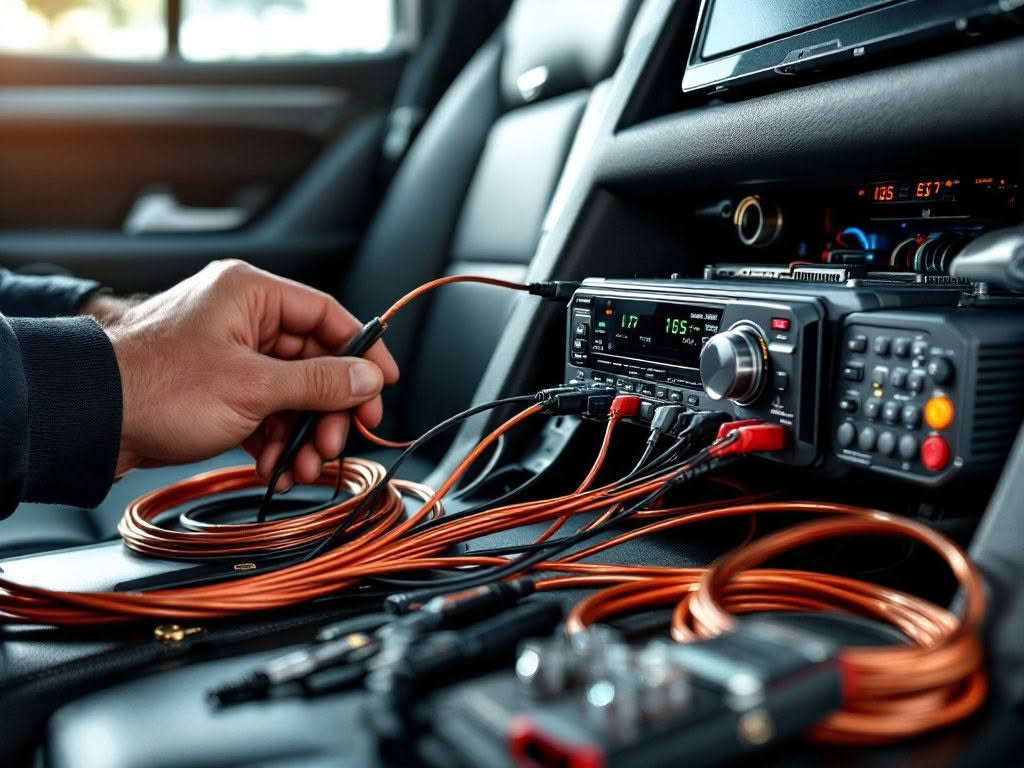
- Use cable sized for expected current and cable length.
- Fuse the positive supply to protect the conductor and connected hardware.
- Use secure, low-resistance power and ground connections.
- Keep signal wiring away from noise sources where practical.
- Set gain from source output and required clean amplifier voltage, not by ear alone.
- Apply high-pass and low-pass filters appropriate to the drivers and enclosure.
Voltage should be measured at the amplifier terminals under load. A battery upgrade cannot correct a poor ground, undersized cable, incorrect impedance or a clipped source signal.
A Practical System Choice
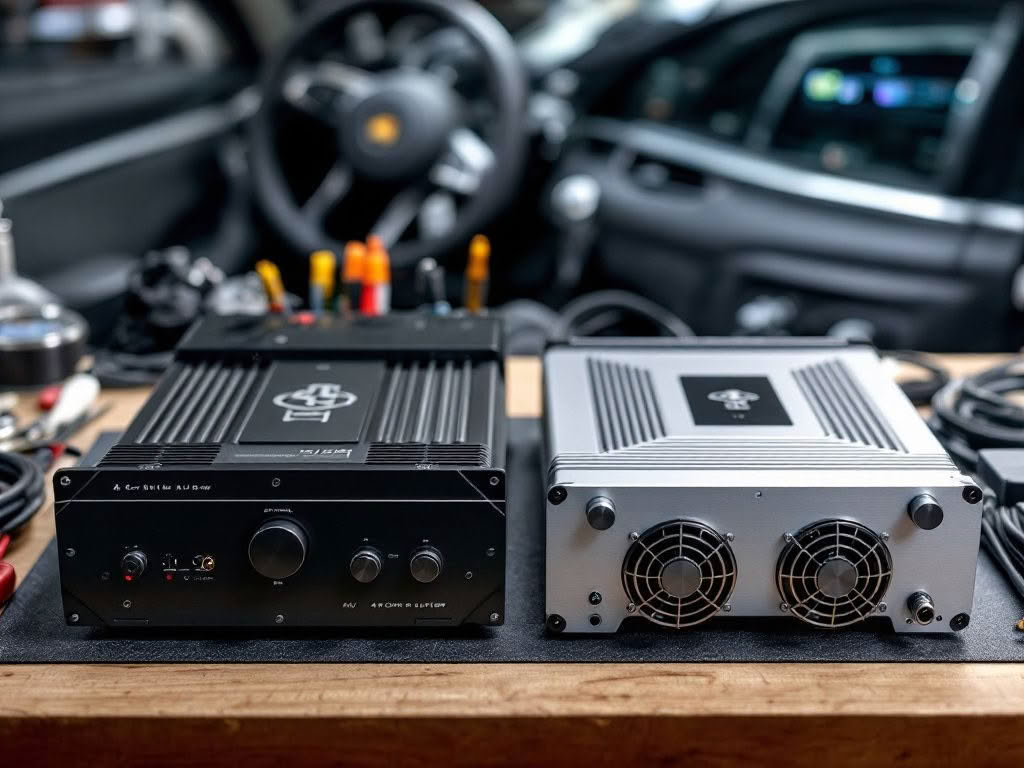
Use a monoblock when the task is a dedicated subwoofer channel. Use a 4-channel amplifier when the task is several full-range speakers. If the system includes both, using one of each is often the clearest design.
Choose the equipment from the actual speaker layout, final impedance, required RMS output, electrical capacity and available installation space. See the amplifier selection guide for a configuration comparison and the RMS power guide for matching detail.