SCiB Car Audio Batteries in New Zealand | Evolution lithium

The Best Subwoofer Battery for Your Needs: Lithium Car Audio Batteries Explained

The best subwoofer battery is the one that can hold voltage when your amplifier pulls hard current. For small systems, a healthy starting battery or AGM upgrade may be enough. For serious subwoofer setups, daily demo vehicles, SPL builds, and high-RMS car audio systems, a lithium car audio battery bank is usually the stronger direction because it can deliver current faster, recover quicker, and keep amplifier voltage more stable under load.

Subwoofers are demanding because bass does not pull power gently. Large amplifiers create heavy current spikes every time the bass hits. If the battery, alternator, cable, grounding, and fuse hardware cannot keep up, voltage drops. When voltage drops, the amplifier loses headroom, bass becomes softer, clipping becomes more likely, and the system stops performing like it should.

This guide explains how subwoofer batteries work, why voltage stability matters, how AGM, LiFePO₄, and SCiB LTO compare, and how to size a battery bank around real RMS power instead of marketing numbers. It also covers installation, charging, wiring, maintenance, and the common mistakes that stop even good batteries from performing properly.

Quick answer: For a mild subwoofer system, AGM can still work. For a high-power daily or demo build, SCiB LTO is the stronger choice because it delivers high current, recovers quickly, and holds voltage better under repeated bass hits. The battery is only one part of the system though — alternator output, wiring, fusing, and grounding still decide the final result.

Why Does Your Subwoofer Need a Dedicated Battery?

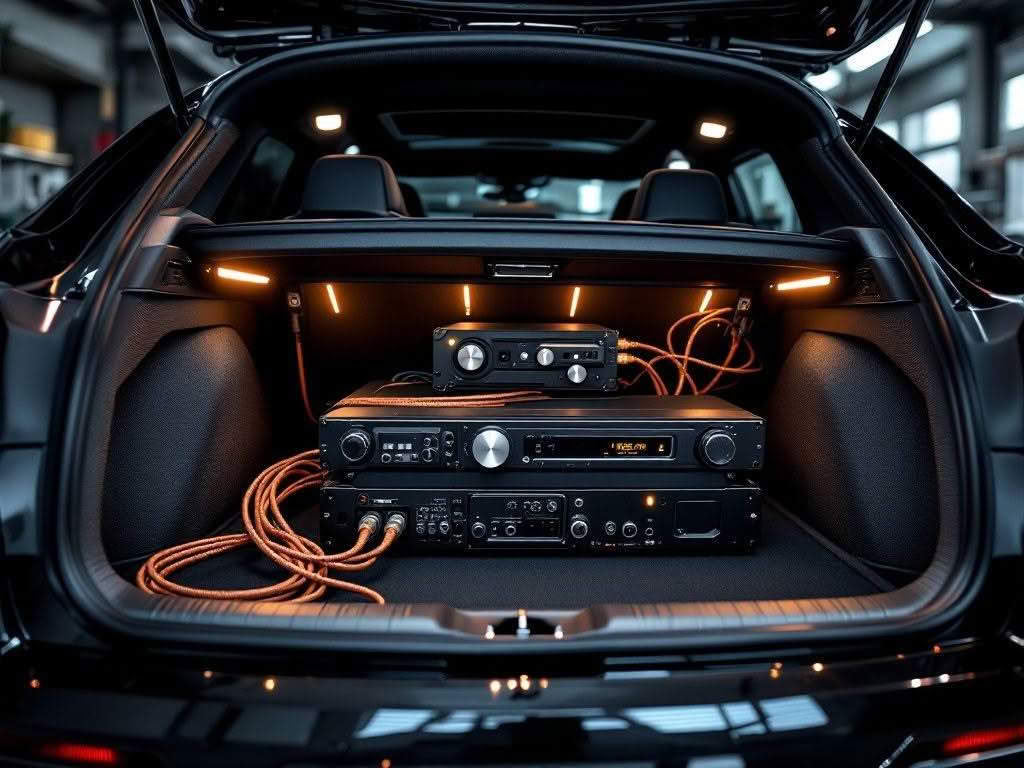
A dedicated subwoofer battery works as a local energy reservoir for your amplifier. Instead of forcing the starter battery and alternator to handle every bass hit alone, a rear-mounted battery bank can supply high-current bursts closer to the amplifier. This helps reduce voltage drop and gives the amplifier a stronger electrical foundation.

In a normal vehicle, the factory electrical system is designed for starting, lighting, fuel pumps, fans, computers, and standard accessories. It is not designed around thousands of watts of bass. Once you add a large subwoofer amplifier, the electrical demand can become much higher than the vehicle was originally built to support.

A dedicated car audio battery can help with:

  • reducing voltage drop during bass hits,
  • supporting amplifier current demand,
  • reducing stress on the starter battery,
  • improving bass consistency,
  • helping the system recover between heavy notes,
  • giving demo and SPL systems more electrical reserve.

For serious systems, the battery should be treated as part of a full electrical system, not as a magic fix by itself. The amplifier, alternator, battery bank, power cable, ground path, fuse holders, and voltage settings all need to work together.

What Role Does a Battery Play in Car Audio Performance?

A battery in a car audio system supplies current when the amplifier demands more power than the alternator can instantly provide. This is especially important for subwoofer amplifiers because bass notes create short, heavy current events.

When the amplifier pulls current, the battery helps keep voltage from dropping too far. Better voltage support means the amplifier can stay closer to its intended output. Poor voltage support means the amplifier has less electrical pressure behind it, which can lead to weaker output, more clipping, and inconsistent bass.

Think of the electrical system as a chain. The alternator makes current, the battery stores and buffers current, the cable carries current, and the amplifier turns that current into output. If any part of that chain is weak, the subwoofer system will not perform properly.

How Does Voltage Stability Affect Subwoofer Sound Quality?

Voltage stability directly affects how clean and consistent your bass sounds. When voltage is strong, the amplifier has more headroom and can reproduce bass transients with better control. When voltage drops, the amplifier can lose output, clip earlier, and sound compressed or strained.

Common signs of weak voltage support include:

  • headlights dimming when bass hits,
  • amplifier protection mode,
  • bass sounding strong at first then softening,
  • voltage dropping heavily at the amplifier terminals,
  • distortion or clipping at volume levels that used to sound clean,
  • the system feeling inconsistent between songs or demo runs.

If the subwoofer setup sounds lazy or unstable, the problem is not always the subwoofer or amplifier. In many cases, the electrical supply is not keeping up. For a deeper explanation, read Evolution Lithium’s guide to how voltage drop affects car audio performance.

What Are the Limitations of Lead-Acid and AGM Batteries?

Lead-acid and AGM batteries are familiar, affordable, and still useful in the right system. A quality AGM battery can be a practical upgrade for a mild subwoofer setup, especially if the vehicle only has a small amplifier and the alternator, wiring, and grounds are healthy.

The limitation is high-current abuse. AGM batteries are heavy, slower to recover, and more prone to voltage drop under repeated heavy bass hits. Stacking AGM batteries can increase reserve, but it also adds weight, space, wiring complexity, and slower recharge behaviour.

AGM can still make sense for:

  • small daily systems,
  • basic subwoofer upgrades,
  • budget-first builds,
  • systems around mild RMS power,
  • vehicles where lithium charging has not been planned.

AGM becomes less attractive as power climbs. Once the system is played hard, voltage recovery becomes just as important as stored capacity. That is where lithium car audio batteries, especially SCiB LTO, become much more useful.

What Types of Subwoofer Batteries Are Available?

The main battery types used in subwoofer systems are standard lead-acid, AGM, LiFePO₄, and SCiB LTO. Each type has a different balance of cost, weight, charge speed, discharge ability, cycle life, and installation requirements.

Battery TypeBest UseStrengthWeaknessCar Audio Verdict
Standard lead-acidStarting and light accessory useCheap and commonPoor for repeated deep/high-current audio useNot ideal for serious subwoofer systems
AGMMild to moderate audio systemsFamiliar, sealed, affordableHeavy and slower to recoverUseful within limits
LiFePO₄Auxiliary loads and moderate audioLighter than AGM, good cycle lifeNot the same transient current behaviour as LTOGood for some systems, not the strongest for abuse-heavy bass
SCiB LTOHard daily, demo, SPL, high-RMS subwoofer systemsFast charge, high discharge, strong voltage recoveryHigher upfront cost and lower energy densityBest suited to serious car audio abuse

What Makes Lithium Batteries Better for Subwoofer Systems?

Lithium batteries are attractive for car audio because they can deliver more usable performance with less weight and faster recovery than traditional lead-based batteries. The exact benefit depends on the lithium chemistry, but the general improvement over AGM is clear once the system becomes demanding.

Lithium advantages can include:

  • lighter weight,
  • faster charge recovery,
  • better usable voltage under load,
  • longer cycle life,
  • less voltage drop in high-current use,
  • more flexible bank design for serious installs.

The important point is that not all lithium is the same. LiFePO₄, NMC, and LTO are different chemistries with different strengths. For high-power subwoofer systems, SCiB LTO is especially useful because it is built around fast input/output and repeated high-current cycling.

How Does SCiB LTO Differ From LiFePO₄ and Other Lithium Types?

SCiB LTO stands apart because it is not simply trying to store the most energy in the smallest space. It is designed to move current in and out quickly while handling repeated charge and discharge cycles extremely well. That is why it suits subwoofer systems that are played hard.

LiFePO₄ can be a good lithium option for auxiliary loads, camping setups, marine systems, and moderate car audio. NMC can be useful where energy density matters, such as EV packs and portable electronics. But high-power car audio is different. It punishes batteries with rapid current draw, fast recovery demands, vibration, heat, and repeated cycling.

SCiB LTO is strong where subwoofer systems are hardest on batteries:

  • fast alternator charge acceptance,
  • strong current delivery,
  • excellent recovery between bass hits,
  • long cycle life,
  • high abuse tolerance,
  • stable behaviour in hard-use systems.

For more detail on the chemistry, read understanding LTO battery technology.

Why Choose Evolution Lithium SCiB LTO Batteries for Subwoofers?

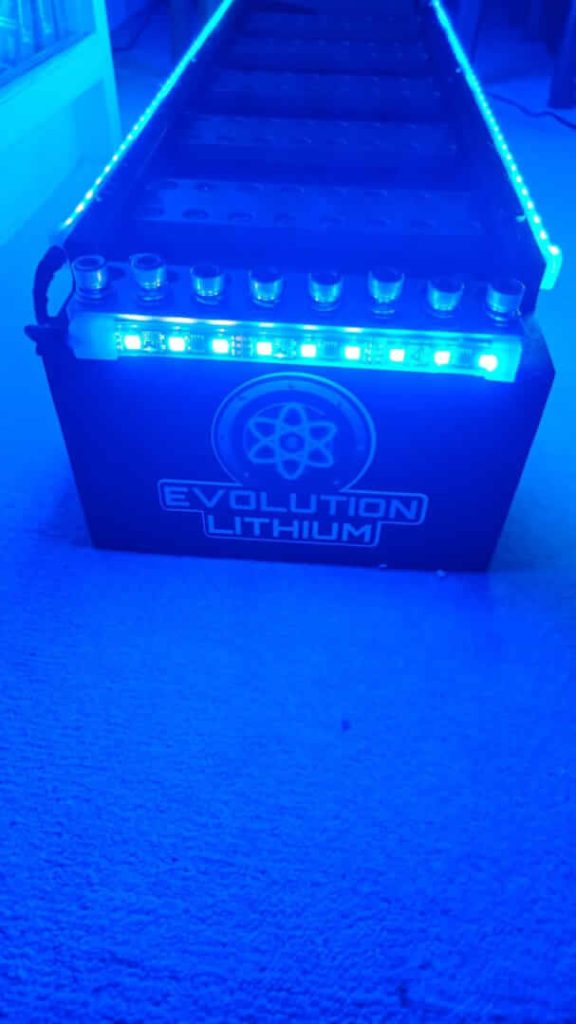
Evolution Lithium specialises in SCiB LTO battery banks for high-performance car audio systems. The goal is not just to provide a battery with a large Ah number. The goal is to build banks that support real amplifier current demand, hold voltage under load, and recover quickly in daily, demo, and SPL-style use.

Evolution Lithium SCiB LTO banks are designed for:

  • high-power daily drivers,
  • subwoofer systems with large amplifiers,
  • demo vehicles,
  • SPL-style builds,
  • New Zealand and Australian car audio enthusiasts,
  • installers who need practical battery guidance rather than guesswork.

The real advantage is stable voltage under hard use. A properly matched SCiB LTO bank gives the amplifier a stronger electrical base, so the system is less likely to sound strong for one hit and weak on the next.

Explore Evolution Lithium’s SCiB LTO lithium battery banks for current bank options.

Which Evolution Lithium Battery Sizes Suit Car Audio?

Evolution Lithium bank sizing depends on cell type, amplifier power, alternator output, voltage target, and how the system is used. A small daily system does not need the same bank as a demo vehicle or SPL build.

Common SCiB LTO bank families include:

Bank FamilyCommon Bank SizesTypical Use
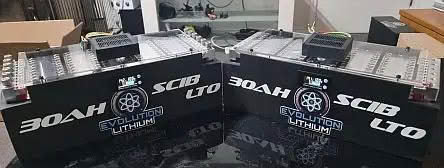
2.9Ah SCiB cell banks15Ah, 30Ah, 45Ah, 60Ah, 90AhHigh-current daily, demo, and SPL-style builds
10Ah SCiB cell banks40Ah, 60Ah, 80Ah, 100AhPowerful daily drivers and large demo systems
20Ah SCiB cell banks80Ah, 100Ah, 120Ah, 160Ah, 200AhCapacity-focused banks and longer demo/runtime use
Plannano 24Ah LTO banks48Ah, 72Ah, 96Ah, 120AhLarge-format LTO setups where capacity and packaging matter

These bank sizes should not be compared by Ah alone. A smaller high-discharge SCiB bank can sometimes support more real amplifier demand than a larger lower-discharge bank. Current capability, voltage behaviour, alternator support, and runtime goals all matter.

For a practical starting point, use the car audio lithium battery calculator.

How Do You Size the Best Subwoofer Battery?

To size a subwoofer battery properly, start with real RMS power, not peak power. Peak wattage is usually marketing. RMS power gives a better idea of what the electrical system needs to support.

For SCiB LTO car audio banks, Evolution Lithium commonly uses 15.8V as a realistic calculation voltage because it sits in the strong working range for a 6S SCiB setup. For realistic amplifier support, class D amplifier efficiency is commonly estimated around 80%.

Simple SCiB sizing chain:
Bank Ah × C-rate = current capability
Current × 15.8V = electrical watts
Electrical watts × 0.80 = approximate class D RMS support

Example: a 30Ah SCiB bank using 2.9Ah cells at 40C continuous:

  • 30Ah × 40C = 1,200A current capability
  • 1,200A × 15.8V = 18,960W electrical power
  • 18,960W × 0.80 = approximately 15,168W realistic class D RMS support

This does not mean every 30Ah bank should be paired with a 15,000W amplifier in every vehicle. The alternator, cable, grounds, fuse hardware, amplifier efficiency, impedance rise, runtime, and how hard the system is played still matter. The calculation shows battery-side capability, not the whole install.

Subwoofer Battery Sizing by Real Use

The table below gives a practical direction for daily and demo systems. It is not a replacement for exact system design, but it helps avoid the common mistake of choosing a battery only by Ah or only by amplifier label wattage.

System TypeBattery DirectionWhy
Mild subwoofer upgradeHealthy starter battery or AGMCurrent demand may be low enough for a simple setup
Up to around 1000W RMSQuality AGM can still workUseful if wiring, grounds, and alternator are healthy
1000W–3000W hard dailySCiB LTO worth consideringVoltage drop and recovery begin to matter more
3000W–10000W RMSSCiB LTO recommendedHigh-current support becomes a major part of performance
Demo or SPL buildSCiB LTO bank matched to amplifier and alternatorRepeated hard use needs fast recovery and stable voltage
Engine-off playLarger capacity bank requiredRuntime matters more when alternator support is unavailable

For more detailed sizing help, read a complete guide to sizing lithium batteries for car audio systems.

What Vehicle Electrical Factors Affect Battery Choice?

The right battery depends on the rest of the electrical system. A strong lithium bank can only perform properly if the current path around it is built to match.

Important vehicle factors include:

  • alternator output,
  • charging voltage,
  • power cable size,
  • grounding quality,
  • fuse holder quality,
  • amplifier current demand,
  • vehicle electronics compatibility,
  • how often the system is played hard,
  • whether the system is played with the engine off.

If the alternator cannot keep up, the battery bank will slowly fall in voltage during hard play. If the cable is undersized, voltage at the amplifier can be weak even when the battery voltage looks fine. If the grounds are poor, the system may behave inconsistently and be difficult to diagnose.

For alternator planning, read high-output alternator compatibility with LTO.

How Do You Install a Subwoofer Battery Safely?

Installation matters as much as battery choice. A strong battery connected through weak cable, poor grounds, or cheap fuse hardware will not perform properly and can become unsafe.

For Evolution Lithium SCiB LTO banks, mount the bank in the boot or rear cabin. Do not mount lithium under the bonnet. The engine bay is hot, exposed, dirty, wet, and full of vibration. A lithium car audio bank should be secured in a safer rear location close to the amplifier current path where practical.

Subwoofer Battery Installation Checklist

  • Disconnect power safely. Isolate the vehicle before working on high-current wiring.
  • Use correct OFC cable. Cable must match the amplifier and battery current demand.
  • Fuse close to the battery. Source-side fusing protects the cable and vehicle.
  • Secure the battery properly. The bank must not move under braking, cornering, or bass vibration.
  • Protect cable runs. Use grommets or protection wherever cable passes through metal.
  • Keep grounds clean and short. Paint, rust, and weak bolts create voltage loss.
  • Use quality lugs and crimps. Poor terminations create heat and voltage drop.
  • Monitor voltage. Check voltage at the battery and amplifier under real load.
  • Use an active balancer where relevant. A balanced bank stays more consistent over time.

For safe rear-mount guidance, read the lithium battery trunk install guide.

Which Accessories Improve a Subwoofer Battery Setup?

The battery is only one part of the install. The supporting hardware decides whether the system can actually use the battery’s current capability.

Useful accessories include:

  • proper OFC power cable,
  • matching ground cable,
  • quality fuse holders,
  • ANL or CNL fusing suited to system current,
  • solid copper lugs,
  • bus bars where appropriate,
  • distribution blocks for multi-amplifier systems,
  • terminal covers,
  • secure mounting hardware,
  • voltage monitoring,
  • active balancer where relevant.

Cheap electrical hardware can waste the performance of an expensive battery. If a fuse holder, lug, or ground point creates resistance, voltage drops before the amplifier ever gets to use the battery’s power.

For wiring details, read wiring SCiB LTO lithium banks.

How Should You Charge and Maintain an LTO Subwoofer Battery?

SCiB LTO batteries tolerate fast charge and repeated cycling extremely well, but they still need the correct voltage and a proper system design. Strong chemistry does not replace good installation practice.

For 6S SCiB LTO, a practical charge range is about 14.8V to 16.2V. Evolution Lithium’s preferred daily charging area is normally around 15.6V to 15.9V because it gives strong usable charge without pushing into the very top of the voltage range. The absolute 6S maximum is 16.8V, but that should not be treated as the normal daily target.

Good maintenance includes:

  • checking terminal tightness,
  • inspecting cable for heat or abrasion,
  • checking fuse holders,
  • monitoring voltage during real bass load,
  • keeping the bank mounted securely,
  • using an active balancer where relevant,
  • not allowing the system to live in a low-voltage state.

If you need to raise vehicle charging voltage for LTO, read upgrading your vehicle for an LTO lithium battery.

Real-World Benefits of a Proper SCiB LTO Subwoofer Battery

In a real build, the benefit of SCiB LTO is consistency. A well-sized bank helps the system stay strong across more than one bass hit, more than one song, and more than one demo run.

Real-world benefits include:

  • less voltage drop under load,
  • faster recovery between bass hits,
  • better amplifier stability,
  • more consistent demos,
  • less weight than stacking multiple AGM batteries,
  • longer service life under repeated cycling,
  • stronger electrical support for high-RMS systems.

The difference is not just theoretical. If the amplifier voltage is more stable, the system usually feels tighter, harder, and more predictable. That is why SCiB LTO is so popular in high-power car audio.

Common Mistakes When Choosing a Subwoofer Battery

The wrong battery choice usually comes from focusing on one number while ignoring the rest of the system. A large Ah rating does not automatically mean strong voltage. A big amplifier label does not automatically mean the electrical system is ready. A lithium battery does not automatically fix bad cable.

Common mistakes include:

  • choosing by peak watts instead of RMS power,
  • buying based on Ah alone,
  • ignoring alternator output,
  • using undersized cable,
  • using poor grounds,
  • mounting lithium under the bonnet,
  • running weak fuse holders,
  • assuming a capacitor replaces a battery,
  • not measuring voltage at the amplifier,
  • expecting the battery to fix clipping or bad tuning.

For full-system planning, read complete power setup for car audio.

Frequently Asked Questions About Subwoofer Batteries

What makes a good subwoofer battery?

A good subwoofer battery can supply high current, hold voltage under bass load, recover quickly, and match the system’s RMS power and runtime needs. For serious car audio, discharge capability and voltage behaviour are more important than Ah alone.

What is the best battery for a subwoofer system?

For mild systems, AGM can still work. For serious daily, demo, or SPL-style systems, SCiB LTO is usually the stronger choice because it handles high-current discharge and fast recovery better than traditional AGM setups.

How many amp-hours do I need for car audio?

That depends on RMS power, amplifier efficiency, alternator support, and how long the system is played hard. Do not size by Ah alone. A smaller high-discharge SCiB LTO bank may support more amplifier demand than a larger lower-discharge battery. Use the battery calculator for a better starting point.

Can I use a deep-cycle battery for my subwoofer?

A deep-cycle lead-acid or AGM battery can work for moderate systems, but it is not ideal for repeated high-current bass hits. It will usually be heavier, slower to recover, and more prone to voltage drop than a properly matched lithium car audio battery.

How do I wire a second battery for car audio?

A second battery needs correct power cable, ground cable, source-side fusing, secure mounting, and a safe charging strategy. For high-current systems, cable size and fuse placement are critical. Lithium banks should be mounted in the boot or rear cabin, not under the bonnet.

Is lithium better than AGM for car audio?

For high-power systems, yes. Lithium can offer better voltage stability, faster recovery, lighter weight, and longer cycle life. AGM can still work for smaller systems, but serious subwoofer builds usually benefit from lithium, especially SCiB LTO.

Can I use a normal lead-acid charger on a lithium car audio battery?

Do not assume a lead-acid charger is suitable for lithium. Lithium batteries need the correct voltage and charge behaviour. SCiB LTO systems especially need charging planned around the bank configuration and target voltage range.

What are signs my subwoofer battery is not keeping up?

Signs include heavy voltage drop, dimming lights, bass getting weaker during a song, amplifier protection, distortion at lower-than-expected volume, slow voltage recovery, and poor voltage at the amplifier terminals during load.

Can a capacitor replace a subwoofer battery?

No. A capacitor can help smooth very short voltage dips, but it does not replace real battery support. For serious bass, the system needs proper battery capacity, current delivery, alternator support, cable, and grounding.

Where should I mount a lithium subwoofer battery?

Mount a lithium subwoofer battery in the boot or rear cabin, close to the amplifier current path where practical. Do not mount an Evolution Lithium SCiB LTO bank under the bonnet. Secure the bank properly and protect the terminals and cable runs.

Will a second battery hurt my alternator?

A second battery does not automatically hurt an alternator, but a large audio system can overwork a weak charging system. The alternator must be able to recharge the bank while supporting the vehicle and amplifier. Serious systems should be planned around alternator output and charging voltage.

What should I do if my battery is not holding charge?

Check voltage with a meter, inspect terminals, confirm the charger or alternator is working correctly, and look for heat, loose connections, damaged cable, or weak grounds. If the battery voltage drops quickly under load and does not recover properly, the battery or charging system needs further testing.

Conclusion: The Best Subwoofer Battery Is the One That Holds Voltage

The best subwoofer battery is not simply the biggest battery you can fit in the vehicle. It is the battery that matches your amplifier demand, supports real RMS power, recovers quickly, and stays in a useful voltage range while the system is being played hard.

AGM batteries can still work for mild systems. LiFePO₄ can be useful for moderate and auxiliary setups. But for serious car audio, SCiB LTO is the chemistry that best matches repeated high-current bass abuse. It charges quickly, delivers current hard, holds voltage better, and gives large subwoofer systems a stronger electrical base.

The battery still has to be part of a complete system. Use proper OFC cable, strong grounds, quality fuse hardware, suitable alternator output, secure mounting, and correct charging voltage. Do that, and a properly matched lithium car audio battery can completely change how consistent and controlled your subwoofer system feels.

Explore Evolution Lithium’s SCiB LTO lithium battery banks or use the car audio lithium battery calculator to choose the right starting point for your build.

Evolution Lithium
7 Soper Lane, Springlands, Blenheim, Marlborough, New Zealand
Phone: +64 22 073 1730 |
Email: sales@evolutionlithium.co.nz
Open 24/7 — evolutionlithium.co.nz

without interruptions. Discover our range of Evolution Lithium products today to elevate your audio setup.

Scroll to Top