Best Lithium Battery For Car Audio NZ in New Zealand

For New Zealand car audio builds, the best lithium battery is a correctly sized SCiB LTO bank matched to the amplifier’s real RMS current draw, alternator output, wiring and listening duty cycle. A 30Ah bank can suit some systems, but it is not a universal wattage rating; use our car audio lithium battery calculator for an initial sizing estimate, then confirm the finished specification before purchase.
What Makes a Battery Right for Car Audio?
Amplifiers draw current in bursts that a factory starting battery was never built to deliver. A car audio battery steps in when the stock battery and alternator can’t keep pace with the current demand of a high-power sound system. That gap between what an amplifier asks for and what the factory electrical system can supply is where most bass-heavy setups start running into trouble.
A strong sound system depends on more than watts printed on an amplifier’s box. We tell every New Zealand installer we work with the same thing: your build is only as strong as its power supply. Whether the vehicle is a daily commuter carrying a modest two-channel amp or a dedicated SPL competition car, the battery carries the load when demand spikes.
Can the wrong battery damage my system?
Yes. A mismatched setup causes voltage drops, headlights that dim on every bass hit, and amplifiers that clip or slip into protect mode mid-song. Left unaddressed, those symptoms can damage equipment over time, not just sound quality. Learn how to diagnose and reduce car audio voltage drop in high-power systems.
Choosing the right lithium battery for car audio starts with matching output capability to actual demand, not just headline wattage. But a battery upgrade alone will not fix a weak foundation. The battery stores energy; the alternator generates it while the engine runs. Both need to work together with the wiring, grounds, and fusing.
Getting the battery for car sound system builds right means treating the whole electrical chain as one system, not a single part swapped in isolation.

How Much Battery Do You Need for 3K–30K RMS?
A properly installed 30Ah SCiB LTO bank covers most systems between 3,000W and 10,000W RMS. Higher-output builds need proportionally larger banks, and the jump is not gradual. We treat this scaling as a practical car audio battery NZ sizing framework, built from real installs rather than spec-sheet guesswork.
Amp hours alone never tell the full story. The real question is whether the bank, the alternator, the charging voltage, and the wiring can deliver the amplifier’s actual current draw without excessive voltage drop under a heavy bass hit. A 30Ah bank paired with a weak alternator fails just as fast as an undersized battery paired with a strong one.
Here is how we break down the bands for New Zealand builds:
Does 30Ah Really Cover Systems Up to 15,000W RMS?
Sometimes, but not as a blanket 15,000W rating. The right bank depends on the amplifiers’ actual current draw, impedance, alternator output, cable losses and listening duration. Confirm the final bank specification, charging voltage and wiring before committing to a high-power build.
What Happens If I Undersize My Battery?
Undersizing shows up fast, usually as voltage drop during heavy bass passages or SPL runs. The amplifier starts pulling more current than the bank can supply cleanly, and output suffers before anything actually fails.
Once a build crosses into 15,000W to 20,000W RMS, we move customers to a 45Ah bank rather than stacking multiple smaller units. For 20,000W to 30,000W RMS systems, stepping into a 60Ah bank keeps the same margin intact. This is the sizing logic we apply whenever a lithium battery for car audio replaces an aging AGM setup in a New Zealand vehicle.

Why Choose Lithium Over AGM for Car Audio?
Lithium chemistry outperforms AGM once amplifier demand exceeds what a lead-acid bank can sustain through repeated bass hits. AGM remains the stronger option for daily-driven systems needing a proven, budget-conscious car audio battery with dependable voltage recovery. For New Zealand builds chasing serious SPL numbers or multi-amp setups, lithium supplies headroom that AGM simply cannot match.
We measure every car audio battery nz installers bring to us against one question: can it hold voltage steady across thousands of bass hits without excessive voltage drop? AGM batteries earn their reputation for balance—solid performance, long service life, and dependable reliability across most everyday builds. Lithium batteries exist for a different job: pushing maximum power output in advanced, high-watt systems where AGM starts running out of runway.
A properly specified lithium battery for car audio relies on lithium-based cells instead of traditional lead-acid plates. That construction shift changes the equation. Expect far less weight sitting behind the seat, faster recharge between demo runs, stronger voltage under sustained load, and a longer working life when the system is wired and charged correctly.
Is AGM or Lithium Better for Car Audio in NZ?
Neither chemistry wins outright; the right pick depends on system size and use case. For New Zealand car audio builds, we typically narrow the practical choice to AGM, LiFePO4/LFP, or Lithium Titanate Oxide banks such as Toshiba SCiB. AGM handles moderate systems well, while LFP and SCiB LTO chemistries suit high-current, competition-grade rigs.
The best battery for car audio is not one single product. It is a high-performance AGM or lithium unit matched to the amplifier’s real current draw, built for strong power supply and steady voltage under load. That matching process, not brand loyalty to one chemistry, is what separates a reliable battery for car sound system installations from one that fails on the show floor.

What Are the Pros of Lithium Battery Banks?
Lithium battery banks solve the voltage collapse that plagues high-power systems during heavy bass passages. Reserve capacity increases, voltage drop shrinks, and amplifiers keep delivering clean power instead of clipping under load. For New Zealand SPL competitors and installers pushing serious wattage, that stability changes what a system can actually do on demo day.
A properly matched car audio battery gives the whole electrical system somewhere to draw from besides the alternator alone. Voltage drop decreases, amplifier efficiency improves, and output stays cleaner through sustained bass hits rather than suffering voltage drop with every kick drum hit. We see this most clearly in vehicles running multiple amplifiers. The factory battery and charging system simply can’t keep pace with peak current demand.
Lithium battery for car audio applications can hold a more predictable voltage window when the bank and charging system are correctly matched. For a 6S SCiB LTO bank, a typical day-to-day charging target is about 15.6V–15.9V; 16.8V is the absolute maximum. Confirm the finished bank’s instructions and amplifier voltage limits before changing a regulator or charger. Stable voltage helps amplifiers perform closer to their rated output under load.
Does a Lithium Bank Really Improve Bass Output?
Yes—voltage stability is the mechanism behind it, not magic. When voltage holds steady through a bass note instead of suffering voltage drop, amplifiers reproduce that note with more control and less distortion. That’s the practical benefit installers across New Zealand report when clients move from AGM to lithium.
What Makes Lithium Better for SPL Use?
Reserve capacity under sustained load is the deciding factor. A car audio battery NZ competitors trust for SPL work needs to recover quickly between hits. Lithium chemistry generally does that faster than lead-acid alternatives:
- Reduced voltage drop during sustained bass demands
- Faster recovery between high-current pulses
- More consistent output across a full demo run
What Are the Trade-Offs to Consider?
Trade-offs in selecting a car audio battery center on chemistry, sizing, and how well the pack matches a vehicle’s charging system. Lithium is not one product family. Starter batteries, deep-cycle units, and high-discharge audio banks each use different cell designs built for different jobs, and swapping one for another risks a bank that cannot deliver current when the bass hits hardest. A best lithium battery for car audio setup is rarely interchangeable with one designed to crank an engine.
Matching chemistry to the alternator and charger matters as much as choosing the cells themselves. We check every lithium battery for car audio install against a vehicle’s existing charging voltage before recommending a bank for New Zealand systems. A mismatch here undermines even the highest-quality cells.
Does a bigger amp-hour rating mean better performance?
Not automatically. A properly sized car stereo battery is never simply the unit carrying the largest Ah number on the label. Sizing depends on discharge current and how the alternator recharges the bank between bass notes, not on raw capacity alone.
What voltage should a system hold during heavy bass?
Systems need to stay above roughly 15.0V during sustained bass passages. Dropping below that threshold means giving away performance, no matter how large the battery for car sound system looks on paper.
Enthusiasts and installers across New Zealand should weigh these factors together:
- Chemistry fit: starter, deep-cycle, or high-discharge design
- Charging compatibility: alternator output and charger settings
- Sizing logic: discharge current and voltage stability over raw Ah rating
- Installation quality: wiring, grounds, and fusing supporting the bank
Best battery for car audio outcomes come from balancing all four factors, never from chasing a single spec on a spec sheet.
Who Should Upgrade to a Lithium Car Audio Battery?
Car audio enthusiasts running amplifiers beyond factory-battery capacity see the clearest gains from switching to lithium. SPL competitors, demo builders, and custom installers pushing high-RMS systems across New Zealand fall squarely into that group, since sustained bass passages multiply the load on a vehicle’s electrical system. As amplifier power climbs, that electrical system works harder to keep pace, and a stock starting battery hits its ceiling fast. Once a build demands more current than a factory car audio battery can comfortably deliver, moving to a dedicated lithium battery for car audio setup becomes one of the smartest reliability upgrades available.
Several builder profiles benefit most from making the switch:
- SPL competitors chasing stable voltage through sustained bass hits
- Demo installers running multiple amplifiers for daily showcase vehicles
- DIY installers stepping up from a basic AGM battery for car sound system
- Drivers noticing dimming headlights or amp clipping during bass-heavy tracks
Does every car audio system need a lithium upgrade?
Modest, single-amp builds rarely push a factory battery to its limits, so lithium isn’t mandatory for every setup. Selecting the right car stereo battery still matters, though. The wrong choice risks system failures, damaged equipment, and compromised sound quality.
How do experienced installers decide what to install?
Seasoned builders, including SPL and demo competitors, size lithium systems around true RMS power rather than headline wattage claims. They weigh current demand, charging capability, and voltage stability together before selecting a car audio battery nz shoppers can trust. That approach, more than chasing the single best battery for car audio on paper, separates systems that hold up at competition volume from ones that fold under sustained bass.
How Do You Install and Maintain It Safely?
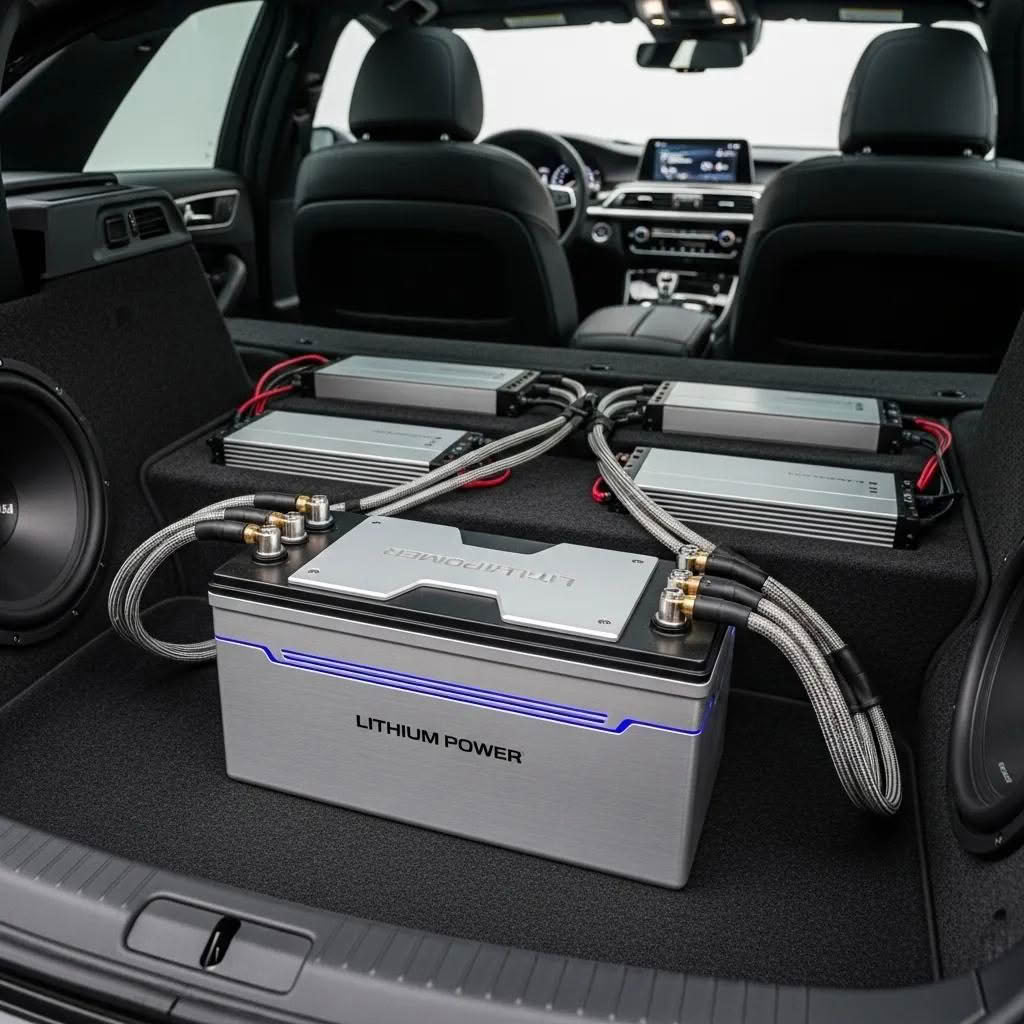
Correct placement determines whether a lithium bank performs safely or becomes a liability. Rear cabin or boot mounting keeps the pack away from engine heat and moisture. It should never sit under the bonnet. For New Zealand installers working across daily drivers, utes, and dedicated SPL builds, this single placement decision shapes the rest of the install.
Adding a secondary battery, rather than replacing the starter battery outright, remains one of the most reliable ways to hold voltage steady under heavy bass load. This approach protects the factory starter battery from deep discharge while giving the amplifiers a dedicated, stable power source. We treat this as the standard configuration for a car audio battery nz builders can trust through repeated SPL runs or long demo sessions.
What Goes Wrong in a DIY Lithium Install?
Poor fusing and weak grounding cause many of the problems seen in beginner installations. Voltage drop under bass hits, overheated terminals and inconsistent amplifier output often trace back to these two issues rather than the battery itself.
What Does a Correct Install Actually Cover?
A complete installation addresses three areas in sequence:
- Isolator selection — separates the starter and audio circuits so one battery cannot drain the other.
- Fuse placement — protects wiring runs at both the battery and distribution block.
- Grounding practice — establishes a clean, low-resistance return path for full current flow.
Getting these three elements right turns a lithium battery for car audio from a promising upgrade into a dependable one. We walk New Zealand customers through each stage so the install holds up under real SPL. Daily-driving conditions, not just on paper.
What’s the Verdict for NZ Car Audio Builds?
Chemistry choice comes down to matching, not maximizing. A properly sized bank paired with the right alternator and charging voltage beats a bigger battery bolted onto a mismatched system every time. We built our New Zealand buyer’s guide around that principle, cutting through the noise. Builders across the country can pick a lithium battery for car audio with confidence rather than guesswork.
Our sizing philosophy stays consistent whether we’re speccing a modest daily-driver setup or a full SPL competition build. The goal was never to sell the biggest number on the shelf. It’s to make sure the bank, alternator, wiring, and charging voltage all work as one system.
How much battery does a serious SPL build need?
For the heaviest 30k–40k RMS builds we see in New Zealand’s competition scene, a 90Ah bank sets the serious-system benchmark. Anything less can create voltage drop exactly when the amplifiers demand the most current.
What actually makes a battery “the best” for car audio?
Voltage stability decides it, full stop. A best battery for car audio keeps voltage steady under load, supports consistent amplifier output, and lets the sound system perform at its full potential rather than clipping on the hardest hits.
Our recommendation for New Zealand builders:
- Match bank capacity to real amplifier current draw, not guesswork.
- Confirm alternator output and charging voltage before finalizing the system.
- Treat 90Ah as the reference point for the most demanding SPL setups.
Technical references
For SCiB LTO cell technology and operating characteristics, see Toshiba’s SCiB LTO battery information. Use the documented limits for the finished bank and measured vehicle voltage when planning a car-audio system.
Conclusion
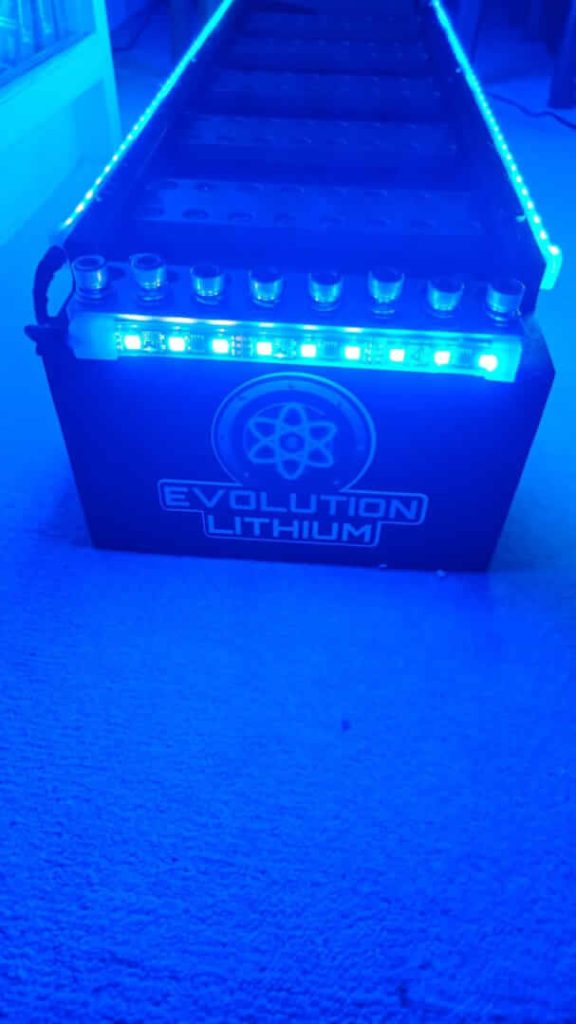
The best lithium battery for car audio in NZ is the bank matched to measured current demand, alternator output, charging voltage, wiring and installation location—not the biggest Ah number. Start with the Evolution Lithium SCiB LTO battery range, then send your RMS power, impedance, alternator output and charging voltage for a configuration check. Mount the bank in the rear cabin or boot, use correct fusing and cable sizing, and confirm the final limits before the first high-load test.