
Where to Buy a Car Audio Battery in New Zealand: A Practical Guide
The best place to buy a car audio battery in New Zealand is a supplier that can verify the cell type, bank configuration, charging limits, current capability and installation requirements for your vehicle. A low price or a large Ah number is not enough evidence that a bank will suit a high-current amplifier.
What to Check Before Choosing a Supplier
- Published technical data: Confirm nominal voltage, maximum voltage, capacity, current ratings and test conditions.
- Charging compatibility: Make sure the supplier explains how the bank should be charged in your vehicle and what the amplifier can accept.
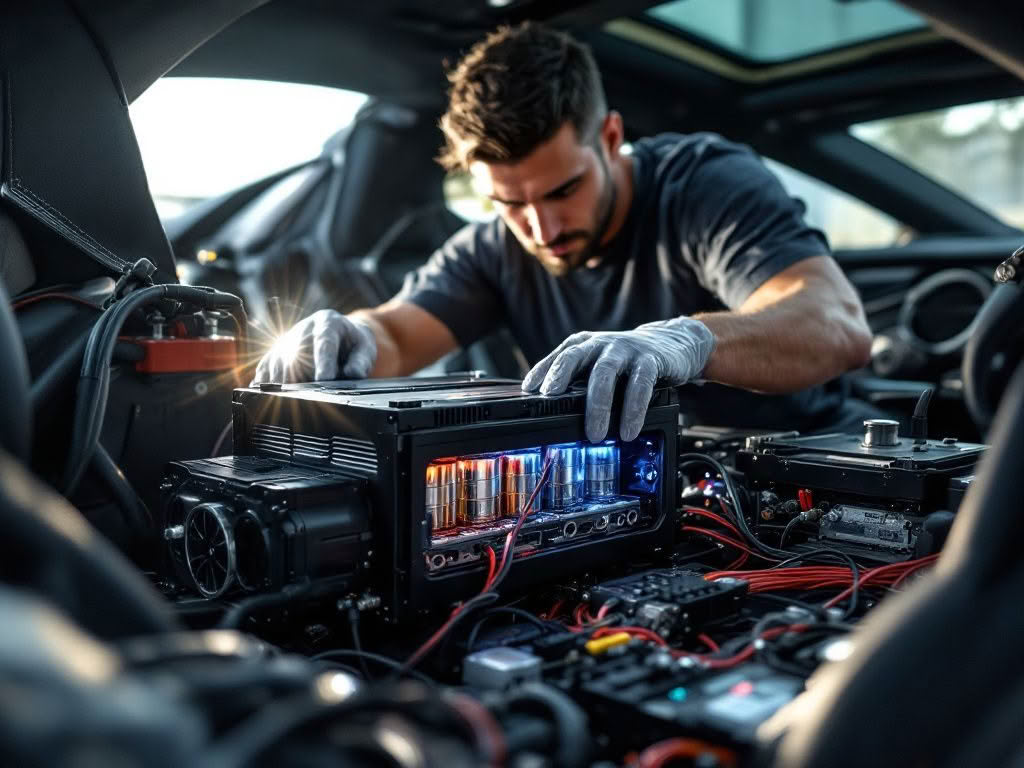
- Installation guidance: Check cable sizing, fuse placement, terminal protection, mounting and whether a separate starting battery needs isolation.
- Support after purchase: The supplier should be able to help with commissioning, voltage testing and fault diagnosis, not only the sale.
- Local fitment: Confirm dimensions, terminal orientation and the intended rear-cabin or boot location before ordering.
Which Battery Chemistry Suits Your System?
AGM
AGM can be suitable for a moderate daily system that stays within the factory charging range. It is familiar and widely supported, but it is heavier and may recover more slowly under repeated high-current demand.
LiFePO4
LiFePO4 can work well where its voltage and charging requirements match the vehicle and amplifier. Do not assume that every lithium bank can use the same regulator settings.
SCiB LTO
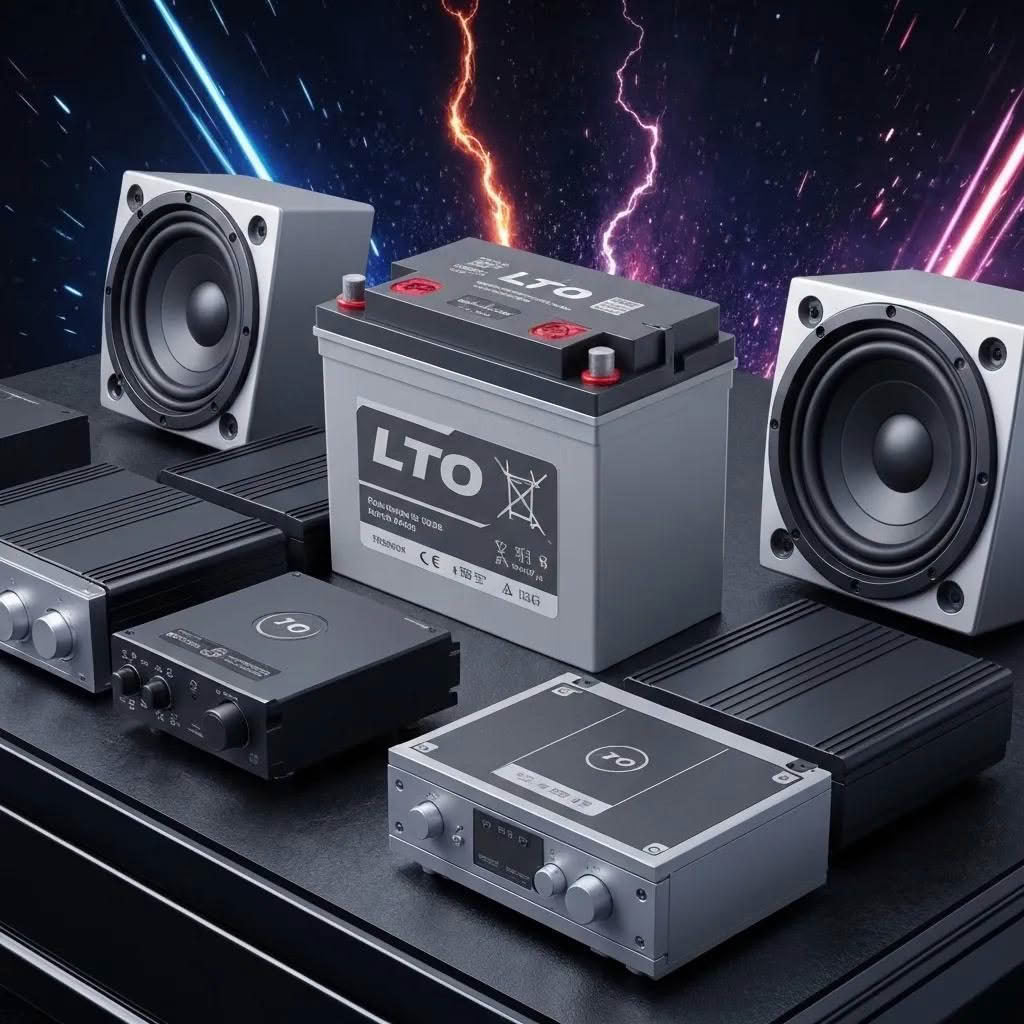
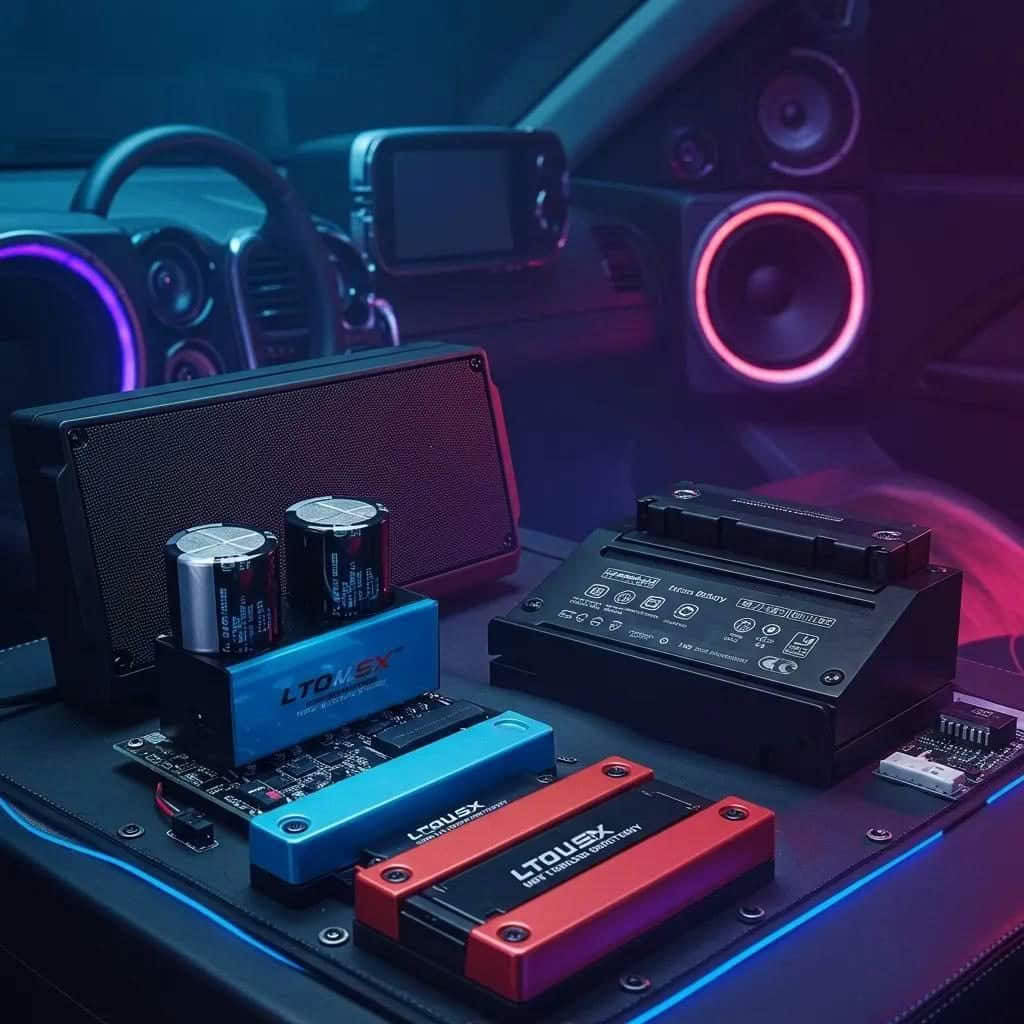
SCiB LTO is commonly chosen for high-current car audio because the cell technology supports strong charge and discharge performance. For an applicable 6S Toshiba SCiB LTO bank, normal day-to-day charging is commonly about 15.6 to 15.9 volts and 16.8 volts is the absolute maximum. Follow the exact bank instructions.
Match the Battery to the Vehicle
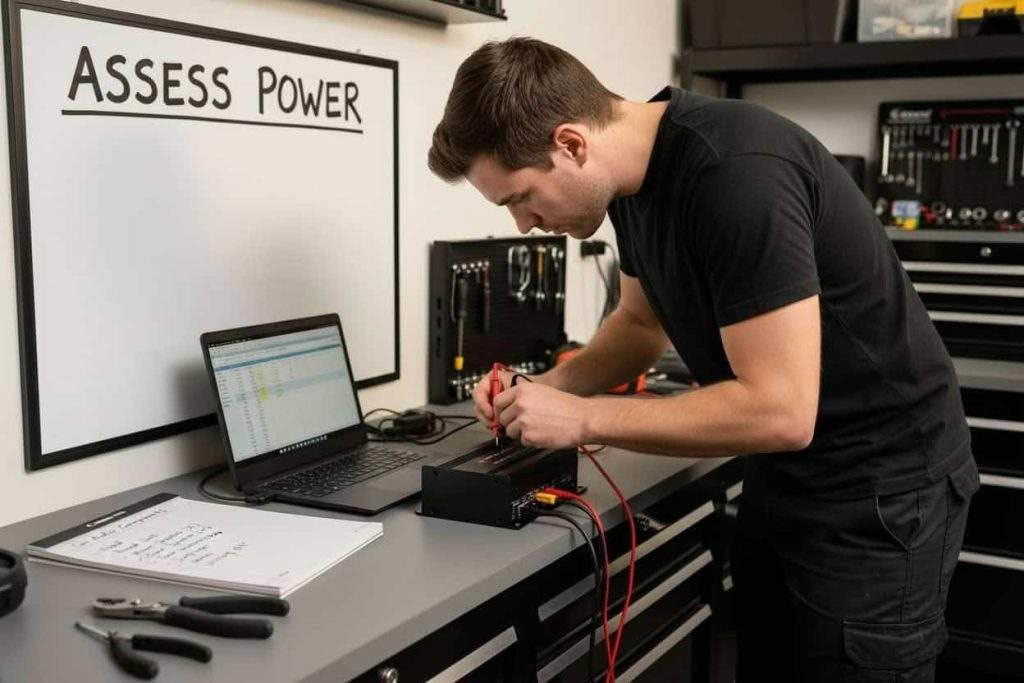
Measure voltage at the starting battery or rear bank and at the amplifier while the system is under load. If voltage is stable at the source but lower at the amplifier, investigate cable resistance, grounds, fuse holders and distribution before buying another battery. If both readings decline during a long session, compare alternator output, state of charge and total current demand.
- Keep lithium banks in a secure rear-cabin or boot location, never under the bonnet.
- Use correctly sized positive and negative cables for the full round-trip run.
- Fuse each positive energy source close to its terminal.
- Use protected cable routes, sound crimps and verified ground points.
Why Local Support Matters in New Zealand
New Zealand installations often combine factory alternators, limited boot space, long cable runs and mixed daily/SPL use. A local specialist can discuss those constraints, confirm the charging setup and help commission the system under load. That practical support is more useful than a generic promise that one battery suits every car.
Conclusion
Choose a New Zealand battery supplier that provides clear specifications, compatible charging advice, safe installation guidance and support after the sale. For high-current car audio, the supplier should help match the bank to the amplifier, alternator, cable path and vehicle rather than recommending capacity in isolation.
For help with voltage-drop testing and battery-bank selection, read our car-audio voltage-drop guide or contact Evolution Lithium.