How to Build an SPL Competition Car Audio System
A competitive SPL car audio system is a complete vehicle setup, not a collection of maximum-power parts. The class rules, vehicle cabin, enclosure, subwoofers, amplifiers, charging system, lithium battery bank, wiring and repeatable test routine must all work together.
Choose the SPL Event and Class First
There is no single worldwide SPL rule set. Use the current rulebook published by the organisation running the event, plus any supplementary instructions from the promoter. Do not rely on an old forum post or another competitor’s summary.
For example, the official 2026 IASCA SPL rules divide vehicles by format and class, with different equipment and voltage provisions. The official 2026 EMMA rulebook specifies designated music, installation requirements and measurement procedures for ESPL. These examples show why a build cannot be described as “class legal†without naming the event and checking its current rules.
| Confirm before the build | Why it changes the design |
|---|---|
| Organisation, format and class | Defines the equipment and modification limits |
| Voltage limit | Controls charging strategy and amplifier compatibility |
| Battery and alternator rules | Affects available current and placement |
| Enclosure position and size | Controls usable cabin volume and loading |
| Measurement signal and duration | Changes thermal and energy demand |
| Microphone and vehicle position | Changes the frequency and configuration that score best |
Set a Clear SPL System Goal
Decide whether the vehicle is a dedicated peak-score build, a music-format competitor or a daily system that also enters events. A narrow peak can suit a short test-tone format, while a music-format build needs useful output across a wider band and stronger thermal control.
- Record the target class and its hard limits.
- Set a realistic score goal and total budget.
- Choose whether daily sound quality and cargo space must be retained.
- List the amplifier RMS power, operating voltage and minimum safe impedance.
- Reserve budget for the enclosure, electrical system, protection and testing.
Measure the Vehicle Before Choosing the Enclosure
The vehicle is part of the acoustic system. Cabin volume, body shape, seat position, hatch or boot opening, enclosure direction and panel movement all affect the measured result. Do not assume that a frequency or box alignment that works in another vehicle will transfer directly.
Measure the available width, height, depth, loading access and service space. Check the rules before removing trim, moving seats, sealing openings or adding structural bracing. Secure every enclosure and component for normal driving as well as competition use.
Match Subwoofers, Amplifiers and Impedance
Choose the subwoofer and amplifier as a system. Check the driver’s recommended enclosure range, coil configuration, thermal rating and mechanical limits. Confirm that the final wired impedance is within the amplifier manufacturer’s specification at the intended supply voltage.
More amplifier power is not useful when the enclosure is inefficient, the impedance rises sharply, the signal clips or the electrical system cannot hold voltage. Plan around measured behaviour rather than a marketing maximum.
| Component | Check | Common mistake |
|---|---|---|
| Subwoofer | Coils, enclosure range, excursion and thermal limits | Choosing by peak wattage alone |
| Amplifier | RMS output, voltage range, impedance and protection behaviour | Wiring below the rated load |
| Signal chain | Clean source, crossover, gain and test signal | Using bass boost to hide poor alignment |
| Cooling | Airflow and recovery between runs | Repeating tests while heat soaked |
Design the SPL Enclosure Around the Cabin
A rigid, well-sealed enclosure usually produces a larger and more repeatable gain than simply adding amplifier power. Model net volume, driver displacement, port area, port length, expected power and cone excursion before construction. Then test the completed enclosure in the actual vehicle.
Ported enclosure
A ported design is common for SPL and music-format builds because it can produce strong output around its tuning range. Port area and flare shape must control air speed without consuming impractical enclosure volume.
Bandpass enclosure
A correctly modelled bandpass system can concentrate output in a chosen range, but small construction or tuning errors can move the response. It is less forgiving and should be built around measured goals.
Rigid construction and service access
Use suitable material thickness, bracing, secure fasteners and airtight joints. Allow access to wiring, subwoofer fasteners and service points without dismantling the entire vehicle.
Size the Alternator and Lithium Battery Bank Together
The alternator supplies energy while the engine is running. The battery bank supports demand that the charging system cannot meet instantly. A larger battery can reduce short-duration voltage drop, but it cannot replace energy indefinitely or correct undersized cable and poor grounds.
This is a planning estimate. The actual current depends on the signal, impedance rise, amplifier behaviour and measured system voltage. Use the car audio lithium battery and alternator calculator to compare assumptions, then verify the finished system with suitable meters.
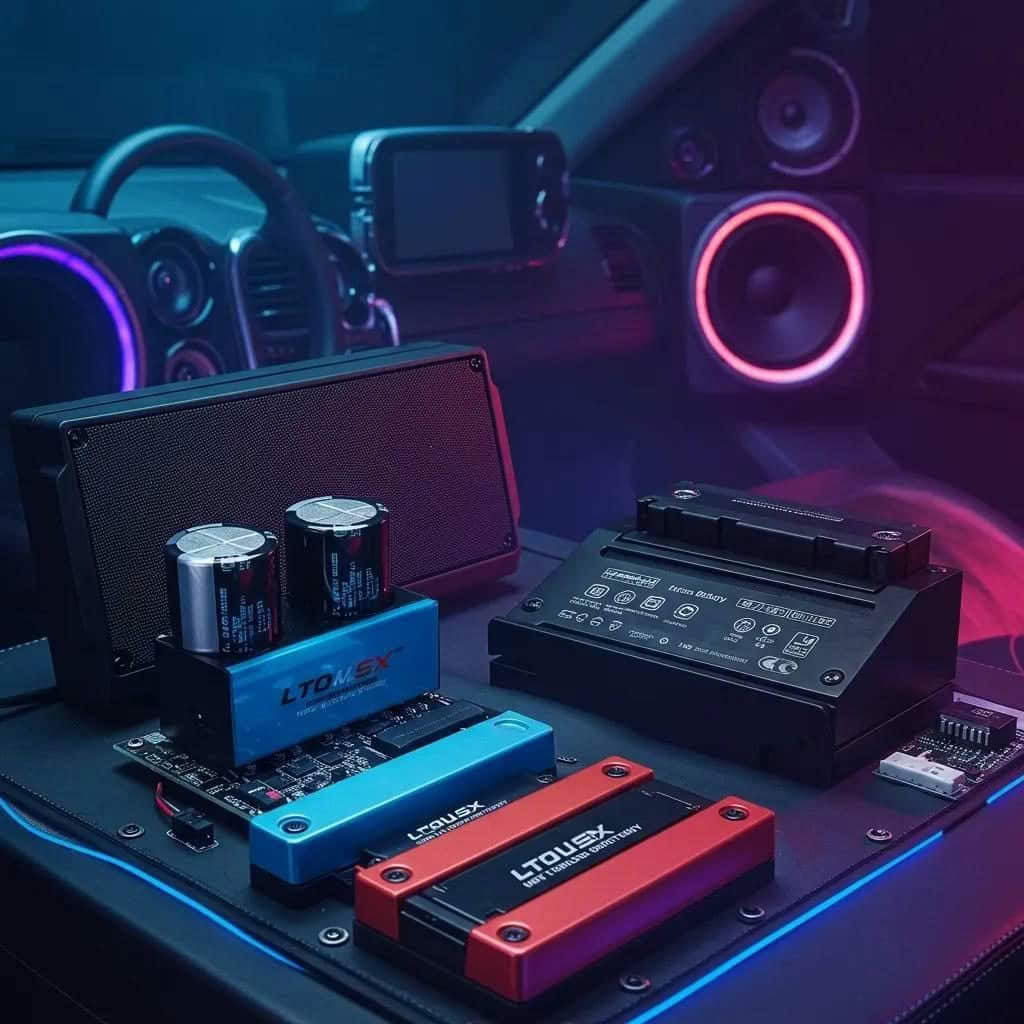
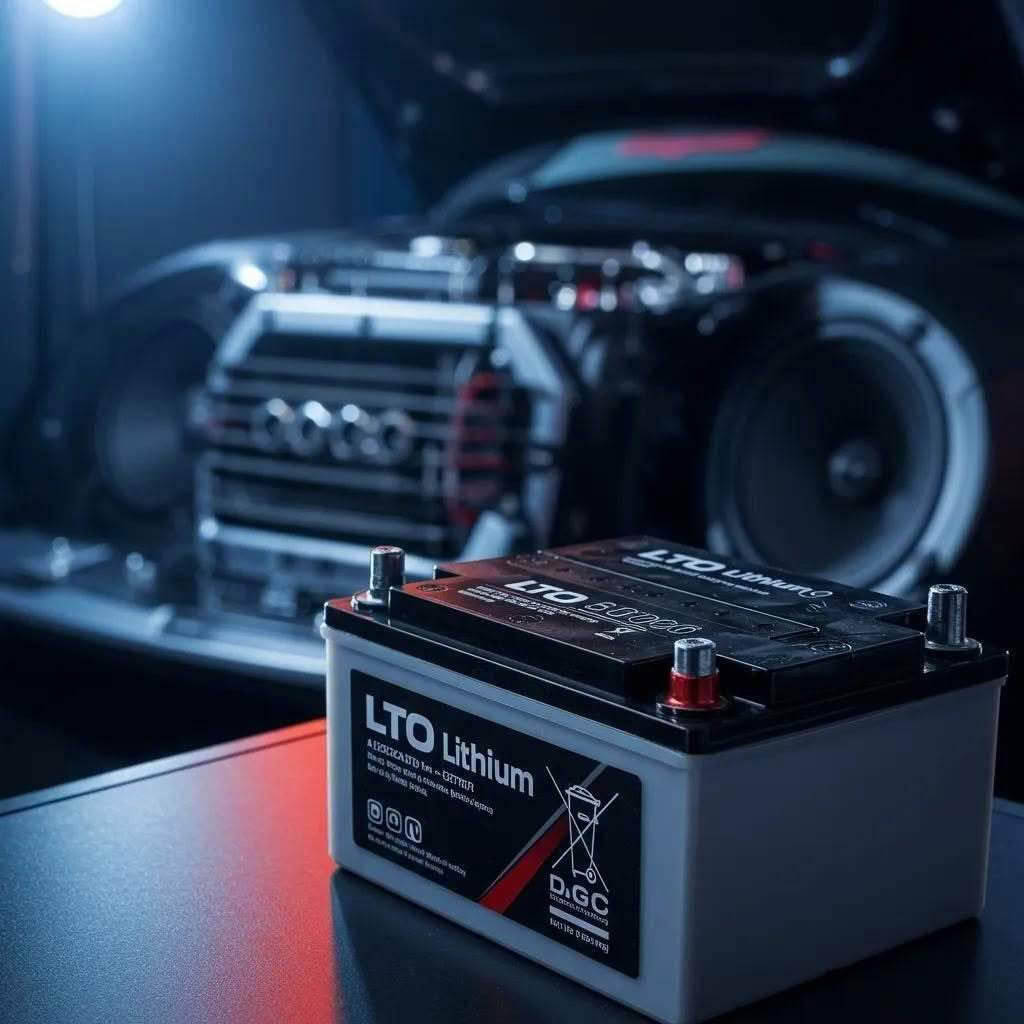
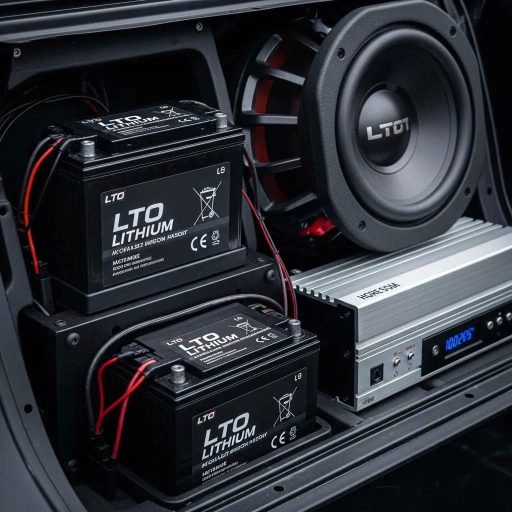
For a 6S Toshiba SCiB LTO bank, follow the instructions supplied with the bank. Evolution Lithium’s usual 6S charging range is approximately 15.6 to 15.9 volts, while 16.8 volts is the absolute cell-based maximum, not the normal daily target. Every connected amplifier and vehicle component must also tolerate the selected voltage.
- Use a high-output alternator only after checking hot output, idle output, pulley speed, regulator control and vehicle fitment.
- Install lithium in the rear cabin or boot, not under the bonnet.
- Use short, protected current paths with cable and terminals sized for the real load.
- Fuse conductors close to each source where required by the design and event rules.
- Use an active balancer and monitor individual cell behaviour.
See the high-output alternator sizing guide and the LTO battery-bank wiring guide for the detailed electrical checks.
Install for Low Resistance and Safe Inspection
Route positive and negative conductors away from heat, sharp edges, moving parts and fuel systems. Protect every metal pass-through with a suitable grommet or bulkhead fitting. Crimp with the correct die, insulate exposed conductive parts and secure the bank, amplifiers and distribution hardware to strong mounting points.
Label fuses, isolation points and voltage limits. Keep a wiring diagram with the vehicle so a judge or technician can understand the system without guessing.
Use a Controlled SPL Test and Tuning Process
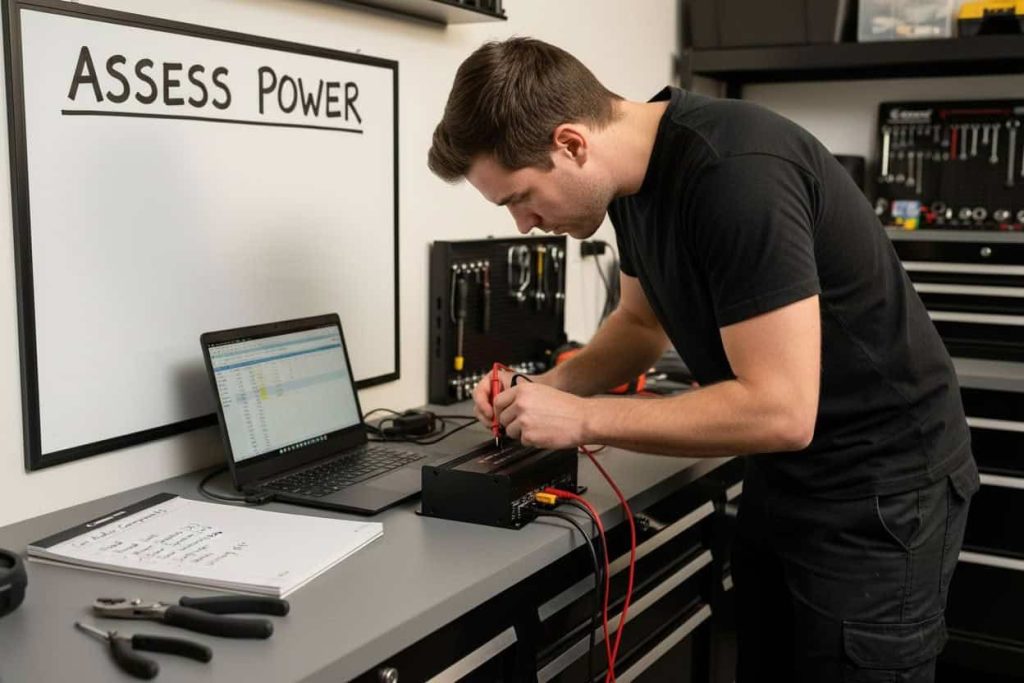
Do not begin with an open-ended full-power run. Establish a baseline at reduced level, then increase in measured steps while recording frequency, score, voltage at the amplifier, current, temperature and protection behaviour.
- Check resting voltage, cell balance, fasteners and fuse condition.
- Run a low-level frequency sweep to locate the useful response range.
- Test in 1 Hz steps around the strongest area using the same vehicle position.
- Change one variable at a time and record the result.
- Confirm voltage at both the battery bank and amplifier during the same run.
- Repeat the best setup only after temperatures and charge state are comparable.
Prepare a Repeatable Competition-Day Checklist
| Area | Verify before entering the lane |
|---|---|
| Rules | Current class, voltage, signal, duration and vehicle-position requirements |
| Electrical | Charge state, cell balance, voltage limits, fuses, lugs and cable condition |
| Enclosure | Fasteners, seals, port clearance and mounting |
| Amplifiers | Gain, filters, cooling and protection status |
| Vehicle | Seat, window, door and microphone configuration |
| Safety | Hearing protection, controlled test area, extinguisher if required and safe isolation |
| Spares | Correct fuses, terminals, tools, meter and documented settings |
SPL Competition System FAQ
Is a test-tone SPL build suitable for daily music?
Sometimes, but a narrow peak, extreme impedance choice and short thermal duty cycle can make a dedicated meter build unsuitable for normal listening. State the daily-use requirement before the enclosure and amplifier are selected.
Is more battery capacity always better for SPL?
No. The bank must provide enough current and energy for the format, but extra capacity adds cost, weight and space. Cell capability, voltage, wiring resistance and alternator recovery matter alongside Ah.
What is the best SPL competition battery system in New Zealand?
Choose the bank from the event class, amplifier RMS and final impedance, expected run length, alternator recovery and every component’s permitted voltage. The right system is not a fixed Ah figure: it uses a documented cell platform and configuration with suitable continuous and burst current, stable loaded voltage, safe connections and a legal installation for that event.
Should I use a 12-volt or higher-voltage setup?
Use the voltage permitted by the class and supported by every connected component. A higher voltage is not automatically better when it creates equipment, charging or compliance problems.
What should I change first when the score is inconsistent?
Standardise the charge state, temperature, signal, frequency, microphone position and vehicle configuration. Then check voltage drop and connection temperature before changing hardware.
Conclusion: Build for a Repeatable Score
The best SPL competition system is the one that fits its class, uses the vehicle efficiently and repeats its result without unsafe voltage, heat or mechanical stress. Lock the rules first, model the enclosure, size the electrical system from realistic demand and keep a disciplined test log.
For current bank specifications and configuration options, compare the Evolution Lithium SCiB LTO battery banks.