

LTO vs AGM vs LiFePO4: Which is Best?
LTO vs AGM vs LiFePO4: Exquisite Comparison for the Discerning Car Audio Enthusiast
Choosing the right battery for a car audio system subtly transforms performance, lifespan and the character of the sound itself. This piece offers an artisanal comparison of three leading chemistries — Lithium Titanate Oxide (LTO), Absorbent Glass Mat (AGM) and Lithium Iron Phosphate (LiFePO4) — so you can discern their virtues and limits for high‑current audio use. Expect a measured look at performance, longevity, cost and suitability, framed to help you make a considered, bespoke choice.
Key Takeaways
- LTO batteries offer exceptional cycle life and rapid charging, ideal for high-current car audio systems.
- AGM batteries provide good safety and vibration resistance but have shorter cycle life and moderate performance.
- LiFePO4 batteries balance performance and safety with stable voltage and moderate longevity for audio applications.
- Battery chemistry directly impacts voltage stability and current delivery, affecting overall audio system performance.
- Properly matching battery capacity to amplifier power ensures consistent sound quality and prevents voltage drops.
- Selecting batteries with appropriate C-rates enhances voltage stability during peak audio demands.
- Professional installation with correct wiring, fusing, and grounding improves system reliability and sound quality.
- Diagnosing voltage drop and audio clipping involves monitoring voltage, inspecting wiring, and testing alternator output.
- Upgrading alternators and wiring supports lithium battery requirements, maintaining voltage stability and system efficiency.
Comparison of LTO, AGM, and LiFePO4 Batteries for Car Audio Enthusiasts
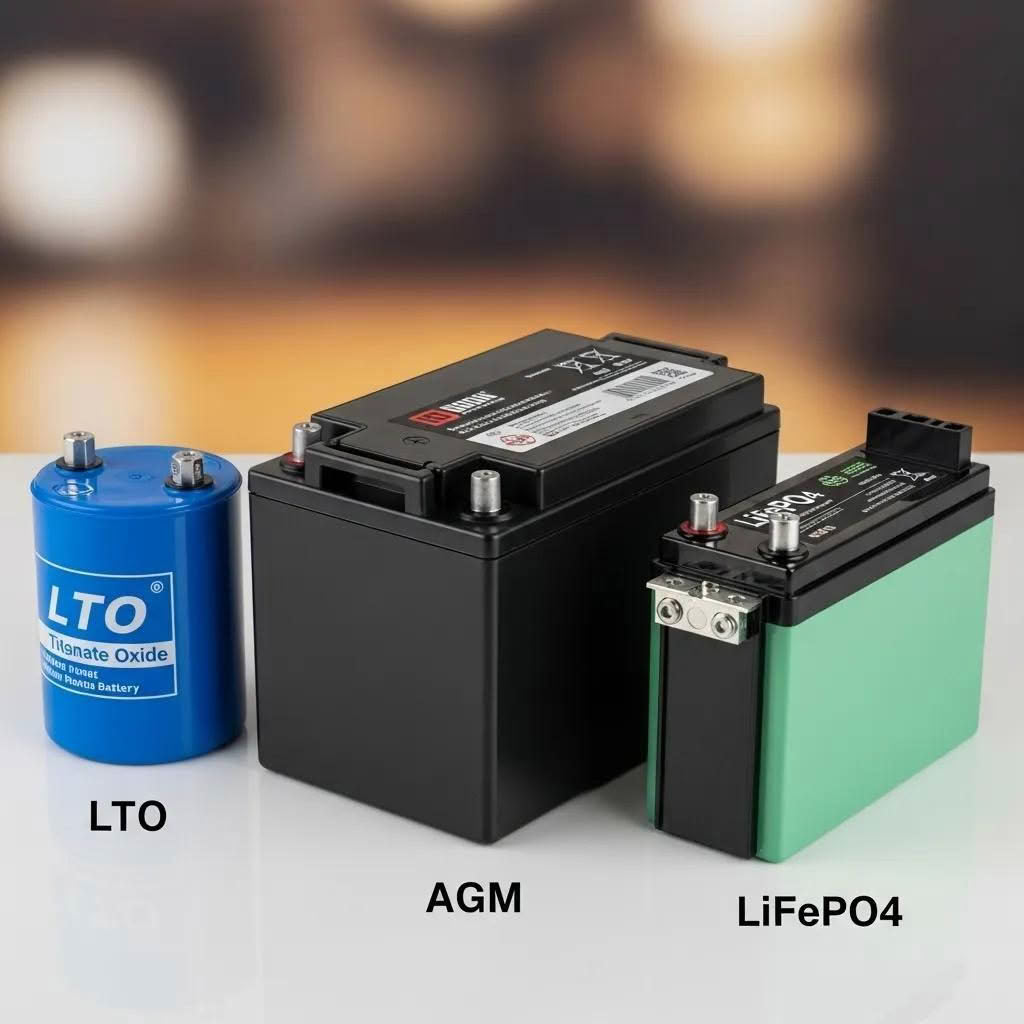
When you weigh LTO, AGM and LiFePO4, the conversation centres on performance, longevity and cost. Each chemistry brings distinct strengths that suit different audio roles — from instant, high‑current delivery to steady, reliable duty over many years. The right choice depends on whether you prioritise transient headroom, long-term economy, physical package constraints, or installation simplicity.
- Performance: LTO batteries excel in high discharge rates and rapid charging capabilities, making them ideal for high-current audio systems. AGM batteries offer good performance but may not match the instantaneous power delivery of LTO. LiFePO4 batteries provide a balanced performance, suitable for moderate power demands. In practice, LTO will best preserve transient detail during heavy bass hits, while LiFePO4 gives stable, predictable performance for multi‑component systems.
- Longevity: LTO batteries boast the longest cycle life, often exceeding 20,000 cycles, which is significantly higher than AGM and LiFePO4 batteries. AGM batteries typically last around 500 to 1,000 cycles, while LiFePO4 batteries can reach up to 2,000 to 3,500 cycles, depending on usage and maintenance. When lifecycle cost is considered, the initial premium for LTO can be offset by fewer replacements and reduced downtime.
- Cost: While LTO batteries are generally more expensive upfront, their longevity can lead to lower total cost of ownership over time. AGM batteries are more affordable initially but may require more frequent replacements. LiFePO4 batteries fall in between, offering a good balance of cost and longevity. Consider also ancillary costs: lighter lithium chemistries can reduce required vehicle modifications and mounting hardware, while heavier lead‑acid options may require reinforced mounts.
| Battery Type | Performance | Longevity | Cost |
|---|---|---|---|
| LTO | Excellent | 20,000+ cycles | High |
| AGM | Good | ~500-1,000 cycles | Moderate |
| LiFePO4 | Balanced | ~2,000-3,500 cycles | Moderate |
This distilled comparison frames each chemistry so you can choose the option that best complements your system’s demands and your expectations for longevity and cost. Practical selection is often guided by the intended use case: show competition, daily driving with heavy listening, or occasional high‑power sessions.
What Distinguishes LTO, AGM, and LiFePO4 Batteries in Car Audio Applications?
LTO, AGM and LiFePO4 each carry a distinct technical temperament. Knowing those differences lets you match a battery’s character to the subtleties of your audio rig.
LTO batteries are prized for rapid charging and very high discharge capability. They deliver crisp bursts of current with minimal voltage sag, a quality that preserves transient detail when your system demands peak power. This translates to tighter low end and reduced amplifier strain during rapid dynamics.
AGM batteries rely on absorbent glass mats to offer sealed, maintenance‑free operation with strong vibration resistance. They are a dependable, pragmatic choice, though they can show their limits under sustained, extreme loads. Their sealed construction simplifies mounting and reduces maintenance, which is why they remain popular in many vehicle installations.
LiFePO4 strikes a poised balance: steady voltage, robust thermal stability and a resistance to thermal runaway that makes them a sensible, safe option for many installations seeking reliable, long‑term service. LiFePO4’s flatter voltage discharge profile helps amplifiers remain in their optimal operating window for longer, reducing clipping and audible compression during extended play.
Choosing between them requires weighing the premium of instant performance against routine serviceability and overall lifecycle expense. LTO suits the enthusiast prioritising peak performance and near‑indestructible cycle life; LiFePO4 suits those wanting predictable behaviour and improved safety; AGM remains attractive for its simplicity and lower entry cost.
How Does Battery Chemistry Influence Voltage Stability and Current Delivery?
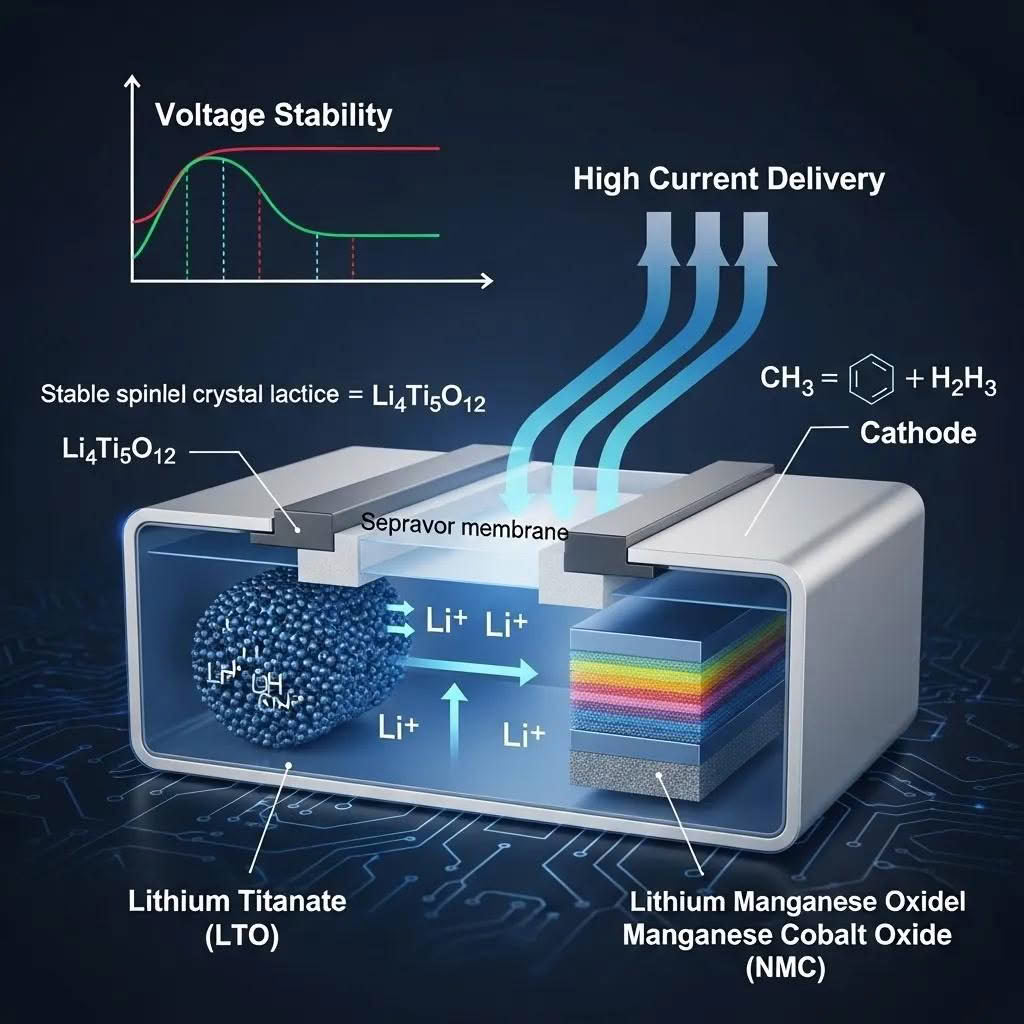
Chemistry defines how a battery breathes under load. LTO’s lithium titanate composition enables rapid charge and discharge cycles while holding voltage firm — an attribute that favours high‑current audio work where steady power is essential. Its low internal resistance allows the battery to supply short, powerful bursts without appreciable sag.
Lead‑acid AGM chemistry can show measurable voltage drop under heavy draw, which may dull dynamics during peaks. By contrast, LiFePO4 maintains a flatter voltage curve under load, helping amplifiers perform without interruption. The practical consequence is that systems powered by LiFePO4 or LTO often clip less and produce cleaner transient response than those relying solely on AGM under the same load.
Temperature and state of charge also interact with chemistry: LiFePO4 tends to be more tolerant of elevated temperatures and shallow state‑of‑charge variations, while lead‑acid chemistries degrade more rapidly if left discharged. These behaviours inform charging strategy and storage practice when building an audio‑centric power system.
Research into specialised power supply topologies further demonstrates how tailored supply design complements battery choice to achieve low‑noise, high‑efficiency audio operation. Matched supplies and filters reduce switching noise that can otherwise couple into sensitive audio paths; pairing such circuits with a battery chemistry that presents low impedance under load yields the cleanest results.
High-Efficiency, Low-Noise Power Supply for Automotive Hi-Fi Audio
ABSTRACT: This paper presents proposals and simulations for a high‑efficiency, high‑power switching power supply tailored to hi‑fi audio amplifiers in automotive settings. It emphasises automotive‑specific constraints, notably the need to operate from low input voltages. The article outlines the main topology and its parameters, aiming for very high efficiency across the operating spectrum and elevated power density. Because the design targets high‑current use, thermal management becomes a key performance consideration. Secondary goals address high‑end audio demands: rapid response to load changes and low output voltage noise. As switched‑mode supplies often produce high output noise, the proposed approach includes a solution in the form of a low‑noise output filter.
Design of high efficiency, low noise power supply for automotive audio systems, J Morgos, 2021
What Are the Unique Characteristics of LTO, AGM, and LiFePO4 Technologies?
Each chemistry carries defining virtues that suit particular tastes and technical needs. Below are practical notes to help match real‑world installations to chemistry traits.
- LTO Batteries: Known for their exceptional cycle life and rapid charging capabilities, LTO batteries are ideal for high-performance audio systems. They can handle high discharge rates without significant voltage drop, making them perfect for demanding applications. Where quick recharge between events is necessary, LTO offers a unique advantage.
- AGM Batteries: AGM batteries are sealed and maintenance-free, providing excellent safety and vibration resistance. They are a popular choice for many car audio enthusiasts due to their reliability and affordability, though they may not perform as well under extreme conditions. Their simplicity makes them suitable for installations where minimal system complexity is desired.
- LiFePO4 Batteries: Offering a balance between performance and safety, LiFePO4 batteries provide stable voltage output and are less prone to thermal runaway. They are suitable for moderate power demands and are increasingly favored for their longevity and safety features. Their relatively light weight and compact form factor also simplify system packaging.
When choosing among these technologies, also consider practicalities such as available mounting space, vehicle weight limits, charging system compatibility and whether you need rapid recharge between sessions.
How to Elegantly Match Battery Capacity to Amplifier Power for Optimal Performance?
Choosing the right capacity ensures your amplifier receives clean, sustained power so the music remains unblemished. A measured calculation prevents voltage sag and preserves tonal integrity. Consider both continuous RMS draw and the short-lived peak currents that occur during musical transients.
What Is the Refined Method for Calculating Ah Capacity Relative to RMS Power?
To calculate the required amp-hour (Ah) capacity of a battery relative to the root mean square (RMS) power of an amplifier, use the following formula:
- Determine the RMS Power: Identify the RMS power rating of your amplifier.
- Calculate Current Draw: Use the formula: Current (A) = Power (W) / Voltage (V). For a 12V system, if your amplifier is rated at 600W RMS, the current draw would be 50A.
- Calculate Ah Requirement: Multiply the current draw by the desired runtime in hours. For example, if you want 2 hours of runtime, you would need a battery with at least 100Ah capacity.
This practical method ensures the battery can sustain your amplifier’s demand, avoiding drops that would dull dynamics or introduce distortion. In real installations, allow additional headroom for inefficiencies, alternator support and accessory loads — plan for slightly higher capacity than the bare calculation to avoid deep discharges that shorten lifecycle.
How Does C-rate Affect High-Current Car Audio Battery Selection?
The C‑rate tells you how swiftly a battery can be charged or discharged relative to its capacity. For high‑current audio, it’s a critical characteristic to match to your system’s transient needs. A battery with insufficient C‑rate will show voltage collapse during peaks even if its nominal Ah looks adequate.
- Definition of C-rate: The C-rate is defined as the rate at which a battery is charged or discharged. A 1C rate means the battery will be fully charged or discharged in one hour.
- Recommended C-rates: For car audio systems, a C-rate of 1C to 2C is typically recommended to ensure that the battery can handle the high current demands of amplifiers without overheating or experiencing voltage drops. Practical selection depends on burst current requirements as well as sustained loads.
- Effects on Voltage Stability: A higher C-rate allows for better voltage stability during peak audio demands, ensuring that the amplifier receives consistent power for optimal performance. Batteries with low internal resistance and appropriate C‑rates will preserve dynamic nuance under demanding passages.
Understanding C‑rate helps you select a battery that responds with the requisite immediacy during musical transients. Also, match the charger or alternator capability to the battery’s charging C‑rate to avoid bottlenecks when topping up between sessions.
Which Artisanal Installation Practices Enhance Wiring, Fusing, and Grounding?
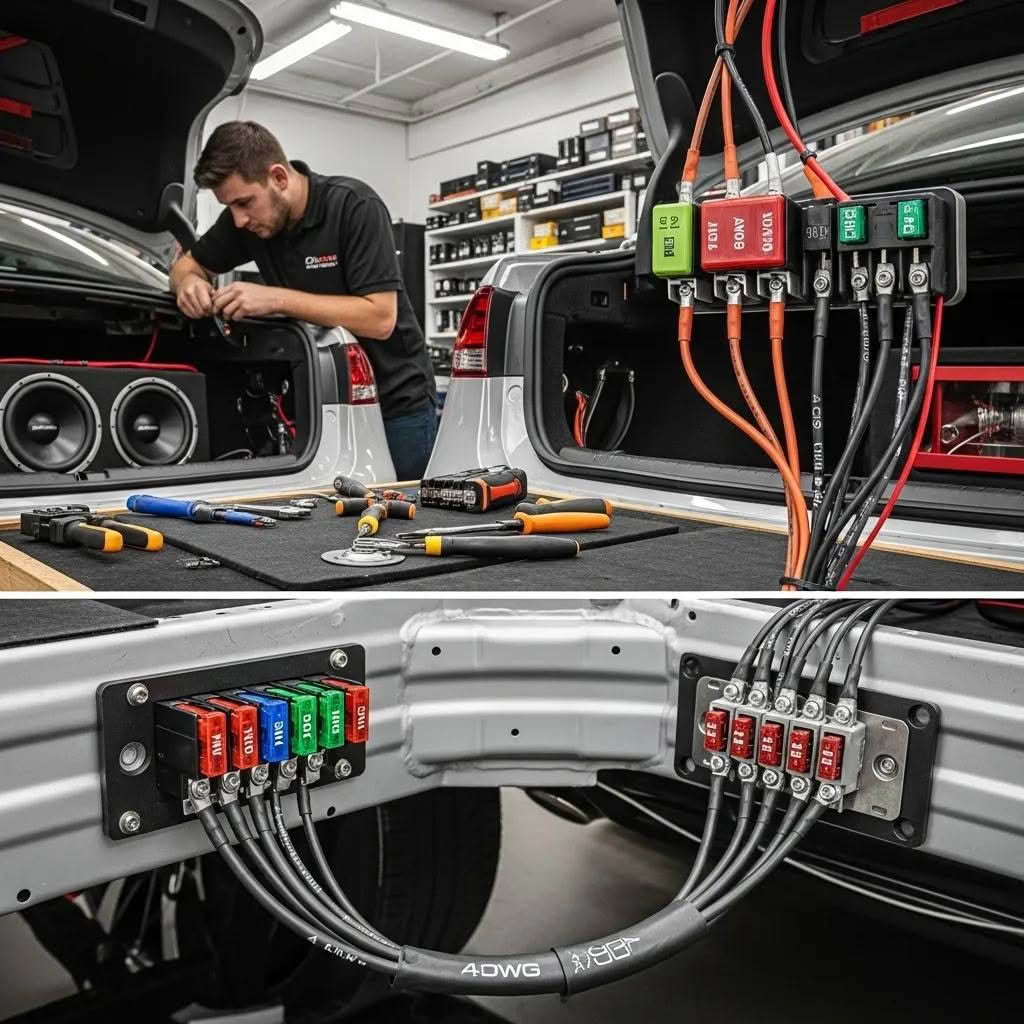
What Are the Bespoke Wiring Gauge and Fuse Ratings for Lithium Battery Systems?
When installing lithium battery systems, selecting the appropriate wiring gauge and fuse ratings is essential for safety and performance. Wire sizing should consider both continuous current and short duration surge currents from amplifiers.
- Wiring Gauge: Use a wire gauge that can handle the maximum current draw of your system. For high-current applications, 4 AWG or 0 AWG wiring is often recommended to minimize voltage drop and heat generation. Consider the length of the run: longer runs increase voltage drop and may necessitate a heavier gauge.
- Fuse Ratings: Select fuses that match the current draw of your system. A fuse rated for 125% of the maximum current draw provides adequate protection while allowing for safe operation. Place primary fuses as close to the battery positive terminal as practical to protect the wiring between the battery and first connection point.
These bespoke choices — robust conductors and correctly sized fuses — help maintain voltage integrity and protect the system under peak demand. Use quality terminals, solder where appropriate, and avoid unnecessary connectors that add resistance.
How Does Proper Grounding Elevate Audio System Stability and Longevity?
Proper grounding is a critical aspect of car audio installation that can enhance system stability and longevity. A poor ground introduces noise, reduces available current and can create intermittent faults that are hard to trace.
- Choosing Grounding Points: Select grounding points that are clean, bare metal surfaces to ensure a solid connection. Avoid using painted or rusted surfaces, as these can introduce resistance and noise into the system.
- Surface Preparation for Grounding: Clean the grounding surface thoroughly to remove any dirt, paint, or corrosion. This ensures a reliable connection that minimizes voltage drop and noise.
- Testing and Maintenance of Ground Connections: Regularly inspect and test grounding connections to ensure they remain secure and free from corrosion. This proactive approach helps maintain system performance over time.
Attend to grounding with the same care you afford your speakers; a clean, stable ground reveals finer detail and prolongs component life. Where possible, run a dedicated ground strap from the audio system’s main distribution point to the chassis rather than sharing grounds with other heavy loads.
How Can Voltage Drop and Audio Clipping Be Diagnosed and Mitigated with Finesse?
Voltage drop and clipping mar the listening experience. Diagnosing them precisely lets you apply corrective measures that restore the music’s clarity and impact. A systematic approach separates electrical faults from tuning or amplifier issues.
What Are the Sensory Signs of Voltage Instability in High-Current Audio Systems?
Several sensory signs can indicate voltage instability in high-current audio systems:
- Headlight Dimming: If headlights dim when the audio system is at peak volume, it may indicate insufficient power supply or voltage drop.
- Audible Distortion: Distortion in sound quality, especially at high volumes, can signal that the amplifier is not receiving adequate power.
- Amplifier Protection Activation: Many amplifiers have built-in protection circuits that activate when voltage drops too low, cutting off power to prevent damage.
Noticing dimming lights, audible strain or protection trips gives you early warning to address power instability before it damages components. Keep a log of when issues occur — during idling, acceleration or when accessories engage — to help pinpoint causes.
Which Troubleshooting Techniques Preserve the Purity of Sound?
To maintain sound quality and prevent audio clipping, several troubleshooting techniques can be employed:
- Measuring Voltage: Use a multimeter to measure voltage at the amplifier during peak audio demands. This helps identify any significant drops that may affect performance. Record readings at idle, under acceleration and with the alternator at operating speed.
- Inspecting Wiring: Regularly inspect all wiring connections for signs of wear, corrosion, or loose connections that could introduce resistance. Pay special attention to terminal crimps, ring terminals, and distribution blocks.
- Testing Alternator Output: Ensure that the alternator is functioning correctly and providing sufficient voltage to the battery and audio system. An underperforming alternator can lead to voltage drops during high-demand situations. Consider temporary bench tests or in‑vehicle load tests to verify output.
Measure, inspect and test: a disciplined diagnostic routine preserves tonal purity and prevents recurring faults. If tests show borderline figures, improve wiring, upgrade the alternator or add a supplementary battery bank to stabilise supply under load.
What Are the Understated Advantages of SCiB and LTO Battery Technologies?
Both SCiB (Super Charge Ion Battery) and LTO technologies offer unique advantages that make them appealing for car audio applications. Their engineering focuses on rapid energy transfer and longevity rather than minimal cost, which suits high‑performance systems.
- Rapid Charging Capabilities: SCiB batteries can be charged to 80% in about 15 minutes, making them ideal for users who require quick turnaround times. This speed benefits competitors and daily users who wish to top up between short drives.
- High Discharge Rates: Both SCiB and LTO batteries can handle high discharge rates without significant voltage drop, ensuring consistent performance during peak audio demands. This resilience translates directly into improved transient reproduction and reduced amplifier stress.
- Long Cycle Life: With cycle lives exceeding 20,000 cycles, LTO batteries provide exceptional longevity, reducing the need for frequent replacements. The extended cycle life is particularly valuable where batteries are cycled deeply and often.
For those who prize speed and endurance, SCiB and LTO present a compelling, refined option — fast to top up and patient over many cycles. Their specialised capabilities make them particularly suitable for competitive or very high duty‑cycle installations.
How to Gracefully Upgrade Alternator Strategies for High-Current Car Audio Systems?
Upgrading alternator strategies is essential for ensuring that car audio systems receive adequate power, especially in high-current applications. The alternator is the system’s primary energy source while the engine runs; harmonising its output with battery choice and wiring is key.
What Numerical Guidelines Govern Alternator Output for Lithium Battery Compatibility?
When upgrading alternators for lithium battery compatibility, consider the following guidelines:
- Voltage and Current Ratings: Ensure that the alternator can provide sufficient voltage (typically 14.4V) and current output to meet the demands of the audio system.
- Compatibility Considerations: Lithium batteries may require specific charging profiles, so select an alternator that can accommodate these needs without overcharging or damaging the battery.
- Examples of Suitable Alternator Specifications: Look for alternators rated for at least 200A to support high-current audio systems effectively.
Choose an alternator with the right voltage and ample current — often 14.4V and ≥200A — so your lithium batteries charge correctly and your system stays composed under demand. When upgrading, account for pulley ratios, regulator type and available space; some alternator upgrades require additional mechanical adjustments.
How Do Alternator Enhancements Sustain Voltage Stability and System Efficiency?
Enhancing alternator performance is crucial for maintaining voltage stability and system efficiency in car audio applications. The alternator, wiring and voltage regulation must work together to supply both immediate audio demands and battery charging needs.
- Upgrading Wiring: Use high-quality, low-resistance wiring to connect the alternator to the battery and audio system. This minimizes voltage drop and improves overall efficiency.
- Improving Grounding: Ensure that the alternator is properly grounded to reduce resistance and improve performance. A solid ground connection is essential for optimal operation.
- Selecting Appropriate Cable Gauges: Use appropriately sized cables to handle the current demands of the audio system. This prevents overheating and ensures reliable power delivery.
Strengthen the wiring, refine grounding and select generous cable gauges; these measured upgrades keep voltage stable and the music unflinching. Also consider adding a secondary charging path or battery isolator where multiple battery banks are fitted, to prevent parasitic drains and ensure the starter battery remains charged.
Which Battery Type Embodies the Pinnacle of Heritage and Performance for Car Audio?
When evaluating the best battery type for car audio, LTO batteries often emerge as the top choice due to their exceptional performance and longevity. Their ability to handle high discharge rates and rapid charging makes them ideal for high-power audio systems, ensuring consistent sound quality and reliability. If your priority is ultimate transient control and minimal maintenance across many years, LTO represents a compelling, if premium, option.
How Does Cycle Life Reflect the Artisan Craftsmanship Behind Each Battery?
Cycle life is a critical factor in battery performance, reflecting the craftsmanship and technology behind each type. LTO batteries, with their impressive cycle life of over 20,000 cycles, showcase advanced engineering and materials that prioritize longevity and reliability. In contrast, AGM and LiFePO4 batteries, while effective, typically offer cycle lives of around 500 to 3,500 cycles, emphasizing the importance of selecting the right battery for specific applications. Cycle life should be weighed against typical usage patterns: a high-cycle chemistry returns value when batteries are cycled frequently; a lower‑cycle option may be acceptable for infrequent heavy use.
What Testimonials and Case Studies Illuminate Real-World Excellence?
Real-world testimonials and case studies highlight the effectiveness of LTO and SCiB battery technologies in high-current audio applications. Users report significant improvements in sound quality and system reliability, particularly in competitive audio environments where performance is paramount. In workshops and events where batteries are stressed repeatedly over short intervals, LTO and SCiB installations show fewer service issues and more stable voltages compared with conventional options.
Case studies often emphasise reduced amplifier protection trips, more consistent SPL readings during contests, and lower long‑term maintenance costs. These qualitative benefits, while experiential, inform many enthusiasts’ decisions when cost can be amortised over many years of service.
Where Can Discerning Enthusiasts Find Bespoke LTO and SCiB Battery Solutions?
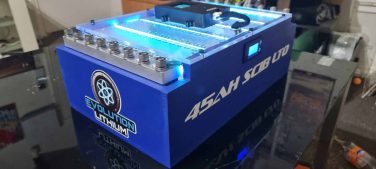
For those seeking high-performance battery solutions, Evolution Lithium specializes in advanced lithium battery systems tailored for high-current car audio applications. Their focus on LTO and SCiB battery banks ensures that enthusiasts have access to cutting-edge technology designed for optimal performance. When sourcing bespoke solutions, insist on reputable suppliers who provide clear specifications, installation guidance and post‑sale support.
What Product Specifications Define the Artisan’s Choice in Battery Banks?
When selecting battery banks, consider the following specifications:
- Charge and Discharge Rates: Look for batteries that can handle high charge and discharge rates to support demanding audio systems.
- Cycle Life and Voltage Stability: Prioritize batteries with long cycle lives and stable voltage output to ensure consistent performance over time.
- Safety and Thermal Stability: Choose batteries that incorporate safety features to prevent overheating and ensure reliable operation.
Attend to charge/discharge capability, cycle life and thermal safeguards — these specifications define a battery that will serve reliably and sound exquisite over time. Also verify physical dimensions, terminal type and mounting options to ensure a smooth installation process.
Frequently Asked Questions
What factors should I consider when choosing a battery for my car audio system?
When selecting a battery for your car audio system, consider factors such as performance, longevity, cost, and compatibility with your audio equipment. Performance relates to the battery’s ability to deliver high current and maintain voltage stability during peak demands. Longevity refers to the number of charge cycles the battery can endure before its capacity diminishes. Cost is important for budget considerations, while compatibility ensures that the battery meets the specific power requirements of your amplifier and audio components. Also weigh installation complexity, weight and space constraints, and the expected duty cycle of your system.
How can I ensure my battery installation is safe and effective?
To ensure a safe and effective battery installation, follow best practices for wiring, fusing, and grounding. Use the appropriate wire gauge to handle the maximum current draw, and select fuses rated for 125% of the maximum current to protect your system. Ground connections should be made to clean, bare metal surfaces to minimize resistance. Regularly inspect all connections for wear or corrosion, and ensure that the battery is securely mounted to prevent movement during driving. Finally, follow the battery manufacturer’s charging recommendations and, where applicable, use compatible battery management systems or isolators to safeguard both starter and auxiliary banks.
What maintenance is required for car audio batteries?
Maintaining car audio batteries involves regular inspections and cleaning. Check for corrosion on terminals and clean them with a mixture of baking soda and water if necessary. Ensure that connections are tight and secure. For AGM and LiFePO4 batteries, monitor the state of charge and avoid deep discharges. If using LTO batteries, ensure they are charged properly to maintain their longevity. Additionally, periodically test the battery’s voltage and performance to catch any issues early. Store batteries at an appropriate state of charge if they will be unused for extended periods, and avoid exposing them to prolonged extreme temperatures.
Can I mix different types of batteries in my car audio system?
Mixing different types of batteries in a car audio system is generally not recommended. Each battery type (LTO, AGM, LiFePO4) has distinct charging and discharging characteristics, which can lead to imbalances and performance issues. If you must combine batteries, ensure they are of the same type and capacity to avoid complications. It’s best to consult with a professional to assess compatibility and ensure optimal performance of your audio system. In multi‑battery installations, use dedicated isolators or battery management systems to prevent unwanted cross‑charging and ensure tailored charging profiles.
What are the signs that my car audio battery needs to be replaced?
Signs that your car audio battery may need replacement include diminished sound quality, frequent voltage drops, and difficulty starting the audio system. If you notice that your headlights dim when the audio system is at peak volume, or if the amplifier’s protection circuit activates, these are indicators of insufficient power supply. Additionally, if the battery fails to hold a charge or shows physical signs of damage, such as swelling or leakage, it should be replaced immediately. Regular voltage testing and cycle count tracking can reveal gradual degradation before acute failures occur.
How do I choose the right battery capacity for my audio amplifier?
To choose the right battery capacity for your audio amplifier, calculate the required amp-hour (Ah) capacity based on the amplifier’s RMS power rating. Use the formula: Current (A) = Power (W) / Voltage (V). Multiply the current draw by the desired runtime in hours to determine the necessary Ah capacity. This ensures that the battery can adequately support the amplifier’s power needs, preventing voltage drops and maintaining sound quality during operation. Factor in additional loads, environmental losses and a margin of safety to avoid deep cycles that shorten battery life.
What are the benefits of using lithium batteries over traditional lead-acid batteries?
Lithium batteries, such as LTO and LiFePO4, offer several advantages over traditional lead-acid batteries. They provide higher energy density, allowing for more power in a smaller, lighter package. Lithium batteries also have longer cycle lives, often exceeding 2,000 cycles, compared to lead-acid batteries, which typically last only 500 to 1,000 cycles. Additionally, lithium batteries can handle higher discharge rates and have faster charging capabilities, making them ideal for high-performance car audio systems. Their improved thermal stability and lower self-discharge also simplify long-term ownership and reduce maintenance.
Conclusion
Selecting the right battery elevates the entire audio experience. By understanding the distinctive merits of LTO, AGM and LiFePO4, you can make a refined choice that marries performance, safety and longevity. Invest with care and your system will reward you with steadier voltage, truer dynamics and enduring reliability — a quietly exquisite result. Plan your installation holistically: choose the chemistry that suits your usage profile, match the battery to your charging system and wiring, and maintain the installation with periodic inspections for the best long‑term outcome.