

Car Audio Battery Comparison: Which Is Best for You?
There is no single best battery chemistry for every car audio system. The right choice depends on amplifier demand, alternator output, listening time with the engine off, available space, weight and budget. AGM, LiFePO4 and SCiB LTO can all work when the bank, charging system, cable and fusing are matched correctly.
For a useful comparison, focus on measurable electrical requirements rather than choosing from amplifier wattage alone. Check voltage at the battery bank and amplifier during playback, estimate current demand, and confirm how much charging capacity remains after the vehicle’s normal electrical loads.
Quick Car Audio Battery Comparison
How the Chemistries Behave
AGM
AGM is a sealed lead-acid design that is familiar to most automotive installers. It can be a practical option for a moderate system, especially when initial cost matters. Its limitations become more apparent as current demand rises: the battery is heavy, terminal voltage falls further under load, and repeated deep discharge can shorten its useful life.
LiFePO4
LiFePO4 generally provides more usable energy for its weight than lead-acid and can suit daily systems that need longer playback time. Do not assume every LiFePO4 pack is interchangeable. Confirm the pack voltage, allowable charge range, continuous and burst current ratings, operating temperature limits and the manufacturer’s installation requirements.
SCiB LTO
Toshiba SCiB LTO cells are suited to applications where low resistance and repeated high-current delivery matter. A SCiB cell is nominally 2.4 V with a 2.8 V maximum, making a six-cell series bank 14.4 V nominal with a 16.8 V absolute maximum. For Evolution Lithium six-cell banks, the preferred charging range is approximately 15.6–15.9 V, with a common operating range of about 15.9–14.3 V. The charging system must be checked against the exact bank specification.
Match the Battery to the Use Case
A daily driver does not automatically require LiFePO4, and an LTO installation does not automatically require a high-output alternator. The decision should follow measured demand, charge voltage and duty cycle.
Measure Demand Before Choosing
Amplifier RMS output is not the same as current drawn from the electrical system. For a rough Class D estimate:
Current ≈ amplifier RMS ÷ efficiency ÷ system voltage
For example, 3,000 W ÷ 0.80 ÷ 15.8 V is approximately 237 A at full output. Music is dynamic, so real average demand varies with programme material, gain structure and listening level. Use this estimate as a starting point, then confirm with voltage and current measurements.
The car audio lithium battery calculator and the battery sizing guide can help establish a practical starting point.
Alternator, Wiring, Fusing and Cell Balance
The alternator must support the vehicle’s normal demand, average audio demand and battery recharge requirement without operating beyond its safe thermal capability. Upgrade it when measurements show the existing unit cannot maintain the intended operating voltage or replenish the bank. See the high-output alternator compatibility guide for the checks that matter.
A Big 3 upgrade can reduce resistance in the main charging and grounding paths, but it does not create additional alternator output. Use cable sized for the current, length, installation method and acceptable voltage drop. Install fuses close to each energy source and size them to protect the cable and connected hardware—not from the battery’s theoretical current capability alone.
An active balancer helps keep series-connected cells at similar voltages. It does not replace correct charging, fusing, cable protection, temperature monitoring or routine inspection.
Installation and Maintenance
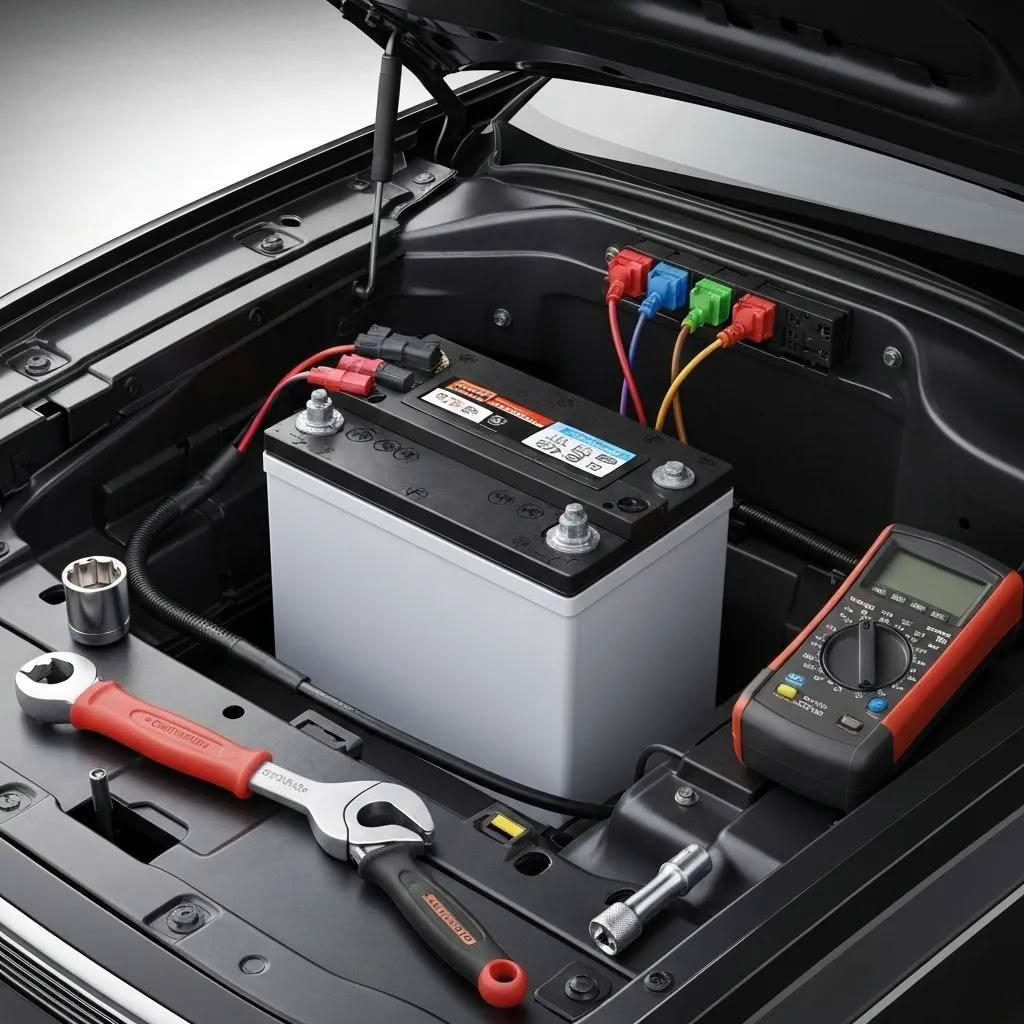
- Install a lithium bank in the rear cabin or boot, not under the bonnet.
- Secure the bank in a suitable enclosure and protect the terminals from accidental contact.
- Use correctly crimped terminals, suitable cable and fusing close to each power source.
- Keep positive and negative cable paths appropriately sized and inspect all high-current connections.
- Measure total-bank voltage and individual cell voltages, particularly after installation or heavy use.
- Follow the battery and charging-system specifications rather than relying on a generic lithium setting.
The SCiB LTO wiring guide and boot installation guide cover these points in more detail.
Evolution Lithium SCiB Cell Options
Evolution Lithium banks use cell families that can be combined in parallel to reach the required finished-bank capacity. A cell’s amp-hour rating is not automatically the capacity of the complete bank.
- 2.9 Ah / 3 Ah SCiB cells: 40C continuous, 75C burst and approximately 0.80 mΩ internal resistance per cell.
- 10 Ah SCiB cells: 35C continuous, 75C burst and approximately 0.50 mΩ internal resistance per cell.
- 20 Ah SCiB cells: 12C continuous, 30C burst and approximately 0.60 mΩ internal resistance per cell.
The appropriate cell and parallel count depend on current demand, runtime, available space, charging capacity and budget. View the SCiB LTO battery range or contact Evolution Lithium with your amplifier RMS, alternator output, normal charge voltage and intended use.
Frequently Asked Questions
Which battery chemistry is best for a daily car audio system?
There is no universal answer. AGM can suit a moderate system, LiFePO4 can suit weight- and runtime-focused applications, and SCiB LTO can suit high-current systems. Confirm the charge profile and measured demand before choosing.
Does fitting lithium fix every voltage problem?
No. Battery resistance is only one part of the system. Alternator capacity, cable resistance, grounds, fuse holders, connections, tuning and average current demand can all contribute to voltage drop.
Can SCiB LTO be charged by a factory alternator?
Sometimes, but compatibility must be measured rather than assumed. Confirm the vehicle’s actual charging-voltage behaviour, available alternator current and the bank’s specified operating range.
Should a lithium car audio battery go under the bonnet?
No. Evolution Lithium recommends installing the bank in the rear cabin or boot in a secure, protected enclosure.
Choose From Measurements, Not Labels
The best battery is the one that safely supports the system’s real current and runtime requirements while remaining compatible with the vehicle’s charging system. Measure voltage and demand, calculate the required capacity, and design the alternator, wiring and fusing as one complete electrical system.