

Yes—lithium batteries can be an excellent choice for car audio when the chemistry, bank size, charging system, wiring and intended use all match. They are not an automatic fix for every electrical problem. A correctly designed lithium bank can reduce voltage drop under heavy amplifier demand, supply high current and save space or weight, but poor cable, weak grounds, an undersized alternator or incorrect charging settings still need to be corrected.
What Lithium Can Improve
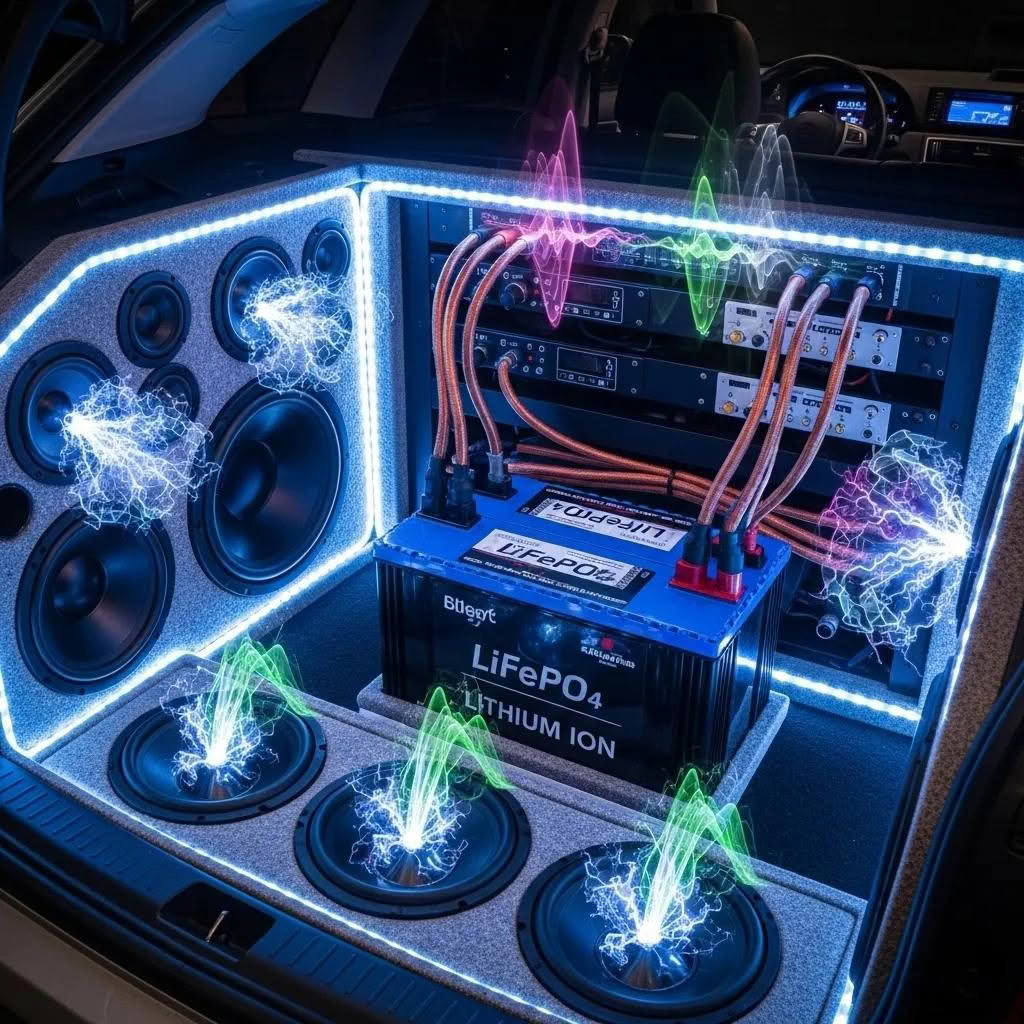
The useful advantages come from the characteristics of the exact cells and the completed bank—not from the word “lithium” alone.
- Lower internal resistance: helps the bank hold voltage more effectively during heavy current demand.
- High current capability: suitable cells can support demanding amplifiers without requiring a very large lead-acid bank.
- Fast charge acceptance: useful when the alternator and charging strategy are compatible with the bank.
- Lower weight and compact packaging: the actual saving depends on the lithium chemistry, enclosure and required capacity.
- Long service life: achievable when voltage, temperature, cell balance and installation conditions remain within specification.
A more stable supply can help an amplifier operate closer to its intended voltage during musical peaks. It does not create extra amplifier power by itself, and the improvement should be judged from measured voltage at the amplifier terminals rather than a promised decibel gain.
What Lithium Cannot Fix
A lithium bank will not repair undersized cable, loose terminals, poor chassis grounds, incorrect gain settings, clipping, or an alternator that cannot meet the vehicle’s average electrical demand. Measure voltage at the bank and at the amplifier while the system is loaded. A large difference between those two points usually indicates resistance in the wiring, connections or protection hardware.
AGM, LiFePO4 and SCiB LTO Compared
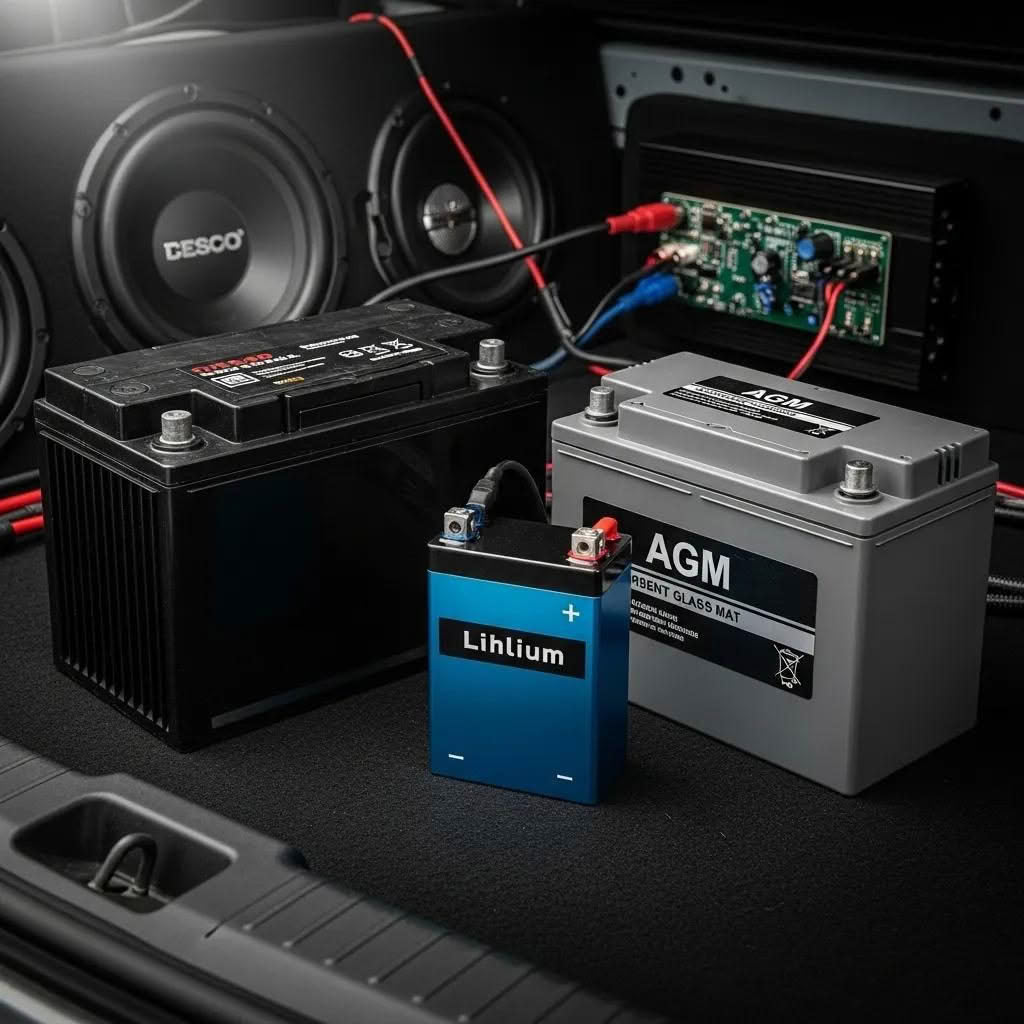
| Battery type | Strengths | Points to check |
|---|---|---|
| AGM | Lower entry cost and familiar charging compatibility | Heavy, with greater voltage drop under high current and less usable capacity at demanding loads |
| LiFePO4 | Good energy density, useful cycle life and lower weight | Verify the pack’s charge voltage, current rating and compatibility with the vehicle |
| Toshiba SCiB LTO | Very high current capability, fast charge acceptance and long cycle life | Lower energy density, higher initial cost and a charging system that must suit the bank voltage |
Battery University’s lithium-ion chemistry overview is a useful independent reference for general LTO characteristics such as its nominal cell voltage, fast-charge capability and lower energy density. For exact Toshiba SCiB limits and bank settings, use the relevant Toshiba cell documentation and the instructions supplied for the completed bank.
When Lithium Is a Good Fit
- The system shows measured voltage drop during high current demand.
- The amplifiers need more current than a practical AGM bank can provide.
- Weight or available installation space matters.
- The vehicle is used for repeated demos, competition runs or demanding daily listening.
- The alternator, regulator or charging method can operate within the selected bank’s voltage range.
When Lithium Is Not Yet the Right Fix
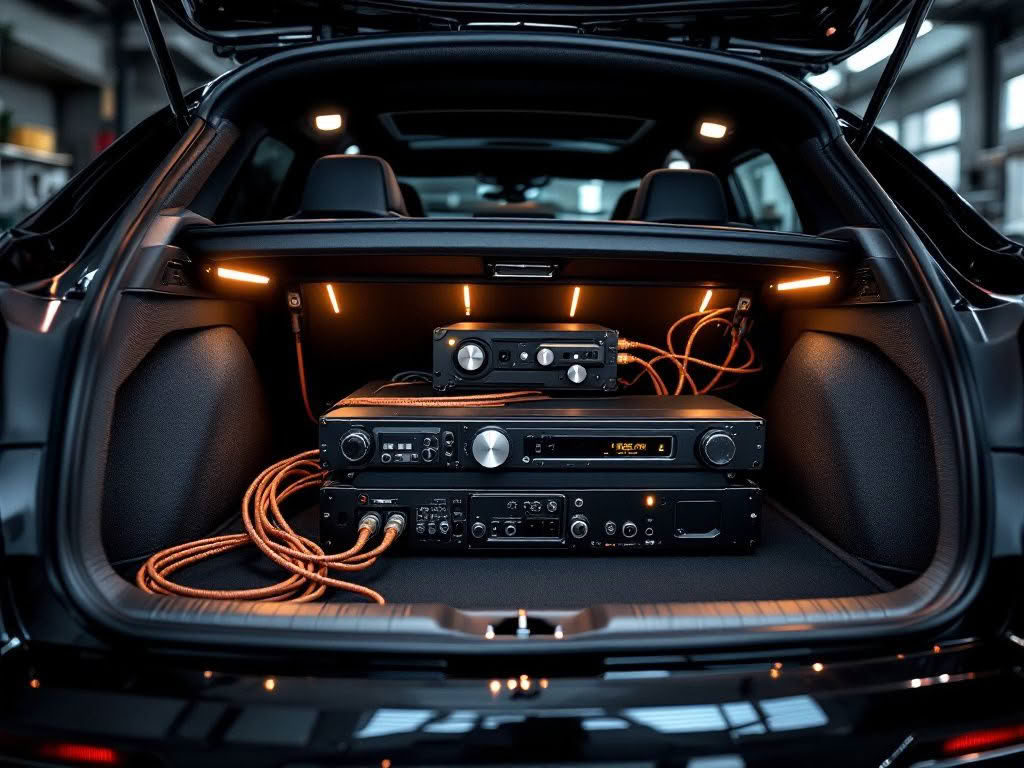
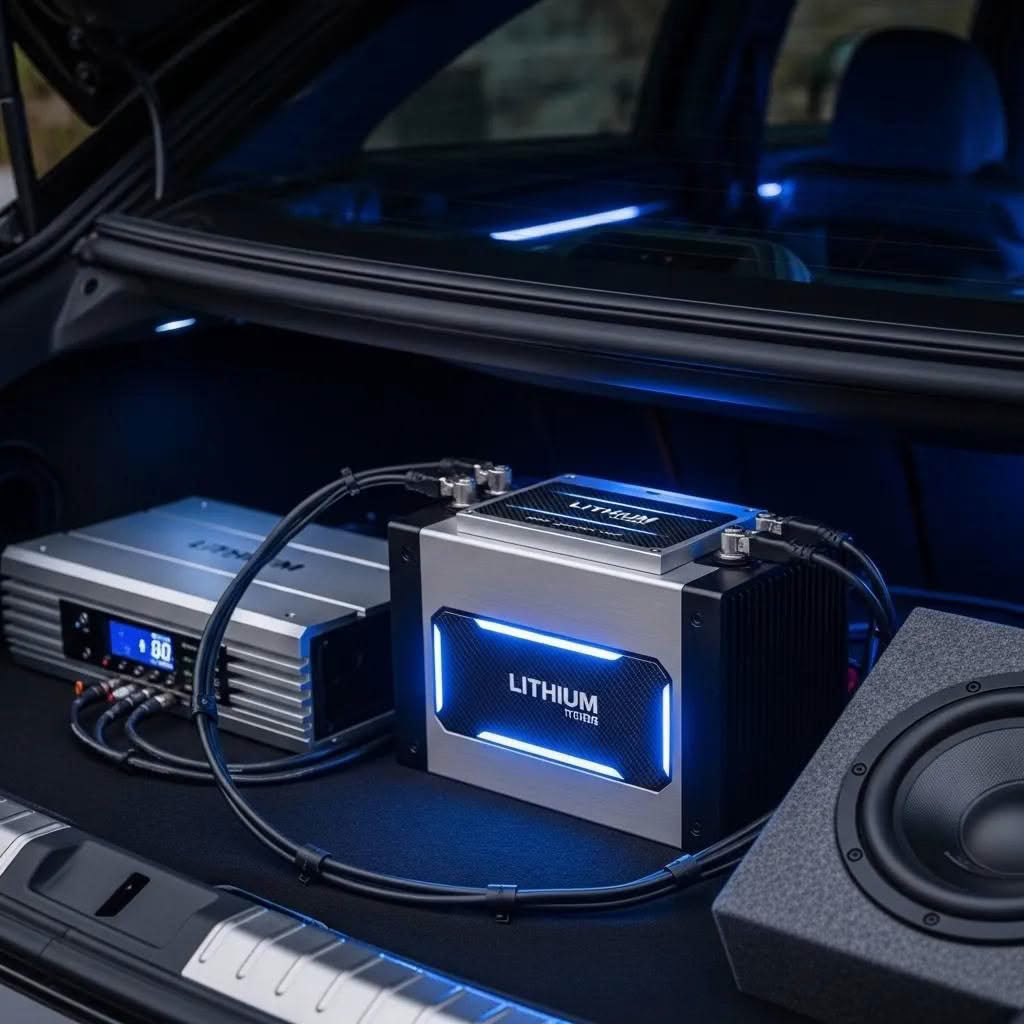
If a mild system already maintains voltage, the extra cost may not be justified. Correct wiring and grounding faults before buying more battery capacity. Do not install a chemistry whose charging window is incompatible with the vehicle, and do not place a lithium car-audio bank under the bonnet. Evolution Lithium banks should be mounted securely in the rear cabin or boot, away from heat, impact and loose cargo.
How to Estimate Current Demand
Start with amplifier RMS output, expected efficiency and operating voltage:
Estimated current = amplifier RMS watts ÷ efficiency ÷ voltage
For example, a 2,000 W Class D amplifier at 80% efficiency and 15.8 V has a theoretical full-output demand of about 158 A: 2,000 ÷ 0.80 ÷ 15.8 ≈ 158 A. Music is dynamic, so real average draw depends on the programme material, impedance, gain setting and listening pattern. The battery must also have enough amp-hour capacity for the required runtime and sufficient continuous and burst current capability for the load.
Use the Evolution Lithium battery calculator for an initial estimate, then check the result against the detailed car-audio battery sizing guide.
Installation and Protection
- Use correctly sized oxygen-free copper cable for the current and total circuit length.
- Keep positive and negative paths short, secure and properly terminated.
- Place suitable circuit protection close to the battery positive terminal.
- Choose the fuse to protect the cable and connected hardware; do not size it only from the battery’s maximum current capability.
- Use branch protection where conductors reduce in size or feed separate equipment.
- Use an active balancer that matches the chemistry and series count. Its job is cell balance; it does not replace correct fusing, charging control or system monitoring.
- Check individual cell voltage as well as total bank voltage, both at rest and under load.
See the boot installation guide, SCiB LTO wiring guide and alternator compatibility guide before installation.
SCiB LTO Voltage Context
Toshiba SCiB LTO cells are 2.4 V nominal with a 2.8 V maximum cell voltage. A 6S bank is therefore 14.4 V nominal with a 16.8 V absolute maximum. For Evolution Lithium car-audio use, the preferred charge range is approximately 15.6–15.9 V, with a common operating window of about 15.9–14.3 V. Every amplifier, alternator, regulator and accessory connected to the bank must be compatible with the actual system voltage.
Frequently Asked Questions
Are lithium batteries good for every car-audio system?
No. They are most useful when high current capability, voltage stability, weight or repeated cycling matters and the charging system is compatible.
Does fitting lithium mean I need a larger alternator?
Not automatically. Compare the vehicle’s measured electrical demand with available alternator output at the engine speeds you actually use. Battery capacity cannot replace insufficient average charging output indefinitely.
Can I connect AGM and lithium banks together?
Do not combine different chemistries casually. Their resting voltages and charging behaviour can differ, so the system needs a deliberately engineered isolation and charging strategy.
Can a lithium car-audio bank go under the bonnet?
No. Install it securely in the rear cabin or boot where it is protected from engine-bay heat and mechanical damage.
Conclusion
Lithium is a strong car-audio power option when it solves a measured need and the complete electrical system is designed around the selected cells. Size the bank from realistic current and runtime requirements, verify charging compatibility, protect the conductors correctly and monitor individual cell condition. That approach delivers a safer and more predictable result than choosing a battery from amplifier wattage alone.