
How Many Batteries Do I Need for a 3000W, 5000W, or 10,000W Car Audio System
If you want consistent power delivery and voltage stability in serious car audio, the right battery banks, a well-planned lithium bank car audio layout, and properly matched car audio batteries are non-negotiable. Here is the short answer many installers and SPL (Sound Pressure Level) competitors need now: for a 3000W system, plan on one 6S LTO (Lithium Titanate Oxide) SCiB (Super Charge ion Battery) bank sized around 30–40Ah (Ampere-hour) with a 180–220A (Ampere) alternator, or 40–60Ah if your alternator is smaller. For 5000W, you will typically want 60–80Ah of high C (Capacity multiple) LTO in 6S with a 250–320A alternator; budget 100Ah if the alternator is weak or you play long demos engine-off. For 10,000W, target 120–160Ah of 6S LTO with at least a 320–370A alternator or dual alternators, and consider 180–240Ah for SPL burps and extended demos. These ranges reflect real-world amplifier efficiency, musical crest factor, and wiring losses, and they are what we recommend at Evolution Lithium for reliable daily and competition builds in New Zealand and Australia.
Prefer to count “batteries” the classic way? As a rule of thumb, each 6S LTO bank at 30–40Ah can replace one large AGM (Absorbent Glass Mat) 12V unit while delivering far better current bursts and less voltage sag. So, 3000W equals roughly one high-performance 6S LTO bank; 5000W equals two; 10,000W equals three to four, depending on alternator output and how hard you play. Because music is dynamic, many daily drivers are stable with the lower bound, while demo and SPL builds benefit from the upper bound and additional copper, distribution, and airflow.
Prerequisites and Tools
Before sizing or installing, gather the right measurements, parts, and safety gear. A careful plan prevents melted lugs, nuisance amplifier protection, and unpredictable voltage drop under bass hits.
- Electrical measurements
- Clamp meter capable of DC (Direct Current) measurement
- True RMS (Root Mean Square) multimeter with min/max capture
- Data logger or oscilloscope for voltage sag analysis (optional)
- Power infrastructure
- Primary cable: 1/0 AWG (American Wire Gauge) OFC (Oxygen-Free Copper) minimum; 2/0–4/0 AWG for 10kW+ systems
- ANL (Automotive Networked Link) or CNL (Ceramic Non-Limiting) fuses and blocks, sized to cable ampacity
- Copper busbars and distribution blocks with proper spacing and insulation
- Battery system components
- 6S LTO (Lithium Titanate Oxide) SCiB (Super Charge ion Battery) bank(s) matched to your target Ah and C rating
- Cell balancing solution for 6S (balancer or BMS (Battery Management System) with balance function)
- Quality lugs, heatshrink, ferrules, and anti-oxidation compound
- Safety and install
- Eye protection and insulated tools
- Torque wrench for busbar and ground points
- Grommets and abrasion protection for firewall penetrations
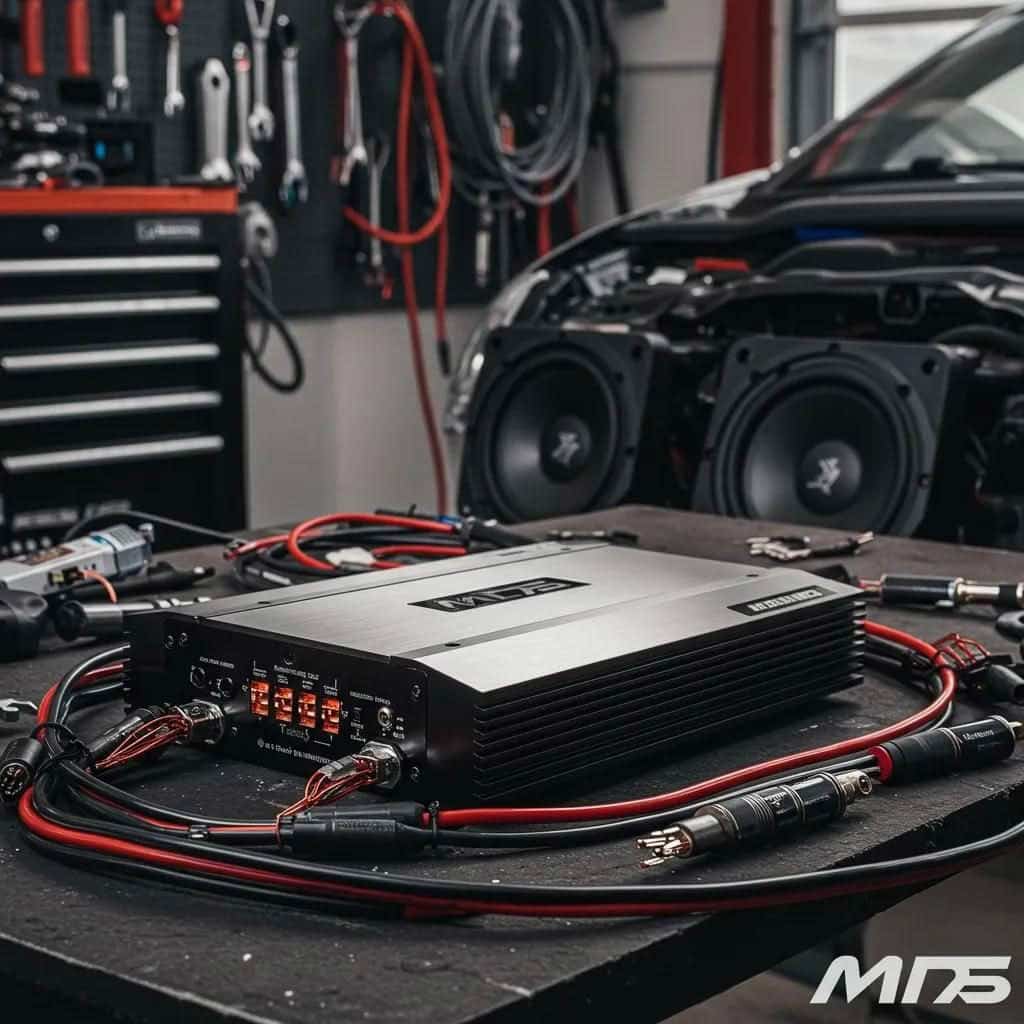
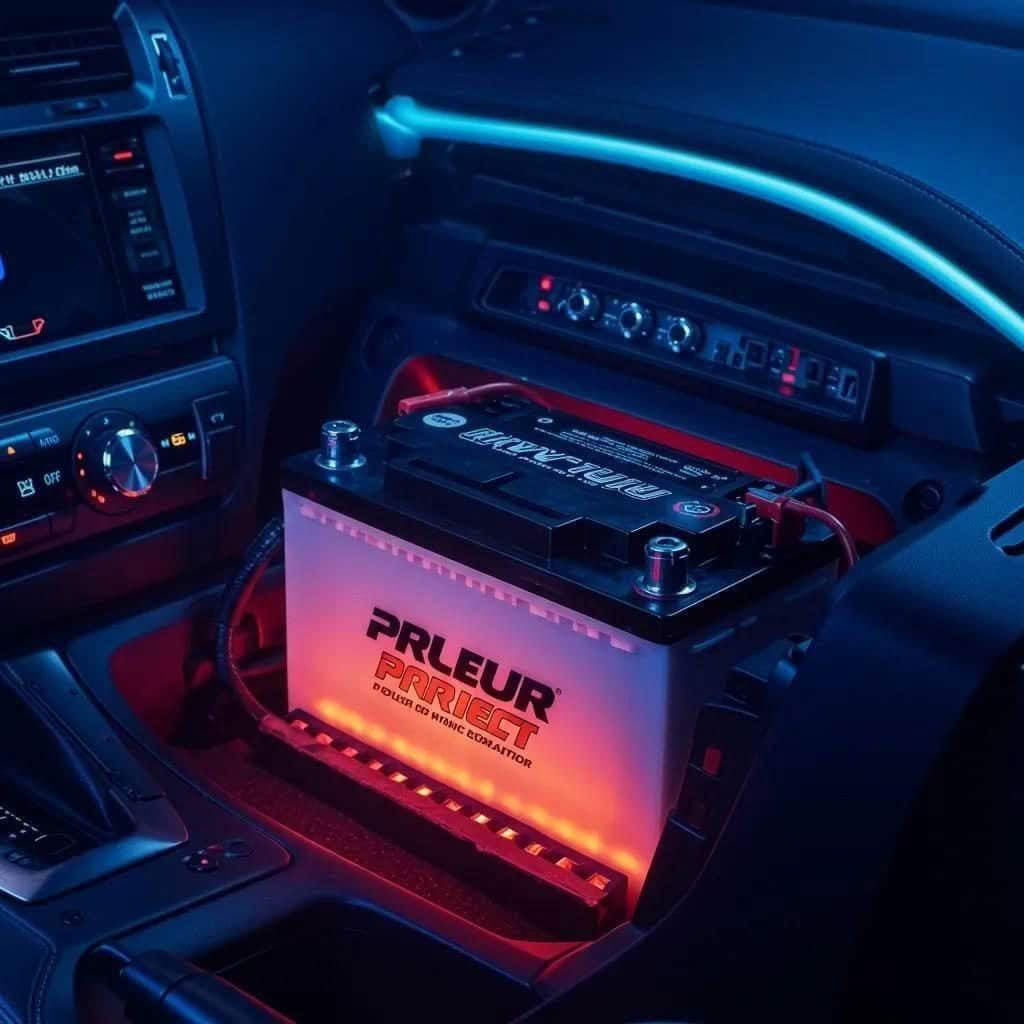
Suggested images to reinforce concepts: a 6S LTO SCiB bank with copper busbars, amplifier rack with dual 1/0 AWG runs, a distribution block layout with fusing, and a clamp meter on an amplifier feed during a 40Hz test tone.
Step 1: Understand How the System Works and What Dictates Battery Count
Amplifiers convert DC (Direct Current) from the charging system into audio power with a certain efficiency, typically 70–85 percent under load. The alternator supplies much of the steady-state current; the battery bank covers transient peaks and stabilizes voltage during heavy bass passages. When the alternator cannot meet instantaneous demand, the battery bank prevents deep voltage dips that trigger amplifier protection or cause audible compression and distortion. Because traditional lead-acid or AGM (Absorbent Glass Mat) car audio batteries have internal resistance that rises under high load and at lower temperatures, they suffer notable voltage sag at the exact moment your subwoofer system demands current.
LTO (Lithium Titanate Oxide) SCiB (Super Charge ion Battery) excels here. The chemistry’s very low internal resistance, extreme cycle life, and ability to charge rapidly at vehicle voltages make it ideal for SPL (Sound Pressure Level) power systems and daily setups that push amplifiers hard. A 6S arrangement (six cells in series) pairs naturally with alternator charging around 14.2–14.8V (Volt), keeping per-cell voltage in a safe, efficiency-friendly range. In practice, the size and number of banks you need depend on three factors: your amplifier’s true continuous power, alternator output at engine speed, and your musical duty cycle (how long you sustain heavy bass). With that in mind, we calculate current next.
Step 2: Calculate Real Current Draw and Burst Demand
Start with a conservative math model, then verify with a clamp meter and logging. Current draw is approximately output power divided by system voltage and efficiency: I_total ≈ P_out / (V_system × η). For example, with 75 percent efficiency at 14.4V, a 3000W amplifier can demand about 278–290A when driven hard. On music, average current is lower, but transients can exceed this number briefly. Alternators typically deliver 60–80 percent of their rated output at idle and low cruise, so a “250A” alternator might only provide 150–200A where you actually use it. Your battery bank must comfortably cover the delta while holding voltage above your amplifier’s protection threshold, commonly around 11.0–11.5V under load for many designs.
Use the table below as a planning baseline. It assumes 75 percent amplifier efficiency and targets 14.4V operation. Treat these as sizing anchors and refine after you measure your actual vehicle at the volumes you enjoy.
| Amplifier Power (RMS (Root Mean Square)) | Approx. DC Current at 14.4V, 75% η (Ampere) | Daily-Driver LTO (Lithium Titanate Oxide) Capacity Target (6S) | Demo/SPL (Sound Pressure Level) LTO Capacity Target (6S) |
|---|---|---|---|
| 3000W | ~280–300A | 30–40Ah (Ampere-hour) | 40–60Ah |
| 5000W | ~460–480A | 60–80Ah | 80–100Ah |
| 10,000W | ~930–960A | 120–160Ah | 180–240Ah |
Note that if your system operates closer to 13.2V under load or uses an amplifier with lower efficiency on your box rise and program material, the required current climbs further. That is another reason why LTO SCiB banks from Evolution Lithium, with their exceptional voltage stability, feel “bigger” than lead-acid in the same space: they hold the line when it matters.
Step 3: Choose Chemistry and Architecture for Battery Banks and Lithium Bank Car Audio
For high-discharge car audio, not all chemistries behave equally. Lead-acid and AGM (Absorbent Glass Mat) are affordable and easy to source, but their voltage stability drops sharply at high current. LiFePO4 (Lithium Iron Phosphate) offers great cycle life and energy density but is less happy with extreme burst current at cold temperatures, and many systems need a BMS (Battery Management System) with specific charge constraints. LTO (Lithium Titanate Oxide) SCiB (Super Charge ion Battery), used by Evolution Lithium, is engineered for ultra-fast charge, very high C-rate, wide temperature tolerance, and outstanding safety—with reference testing published by Toshiba that underpins the chemistry’s stability. In real installs, that translates to harder-hitting bass with less sag and faster recovery between notes.
Most car audio builds use 6S LTO to align with common alternator voltages. Parallel banks add capacity and lower effective internal resistance. For example, a single 6S 10Ah (Ampere-hour) 75C (Capacity multiple) SCiB set can deliver up to 750A in short bursts; two in parallel double both Ah and burst capability. Evolution Lithium offers hand-assembled options using genuine Toshiba cells in several capacities and discharge ratings, such as 3Ah 75C, 10Ah 75C, and 20Ah 35C, allowing you to tailor a compact, lightweight pack that fits your rack or spare-wheel well while maintaining safe margins.
| Chemistry | Voltage Stability Under Load | Burst Capability | Cycle Life | Weight/Size vs Output | Notes for Car Audio |
|---|---|---|---|---|---|
| Lead-Acid / AGM (Absorbent Glass Mat) | Fair to Poor at high A (Ampere) | Moderate | Low to Moderate | Heavy / Bulky | Works, but sags; multiple units needed; sensitive to heat |
| LiFePO4 (Lithium Iron Phosphate) | Good | Good, less at low temps | High | Light / Compact | Needs BMS (Battery Management System); charge set-points matter |
| LTO (Lithium Titanate Oxide) SCiB (Super Charge ion Battery) | Exceptional | Exceptional (very high C-rate) | Very High | Compact for the output | Ideal for SPL (Sound Pressure Level) and daily high-discharge; rapid charging from stock alternator |
Step 4: Size Capacity and C-Rate for Voltage Stability
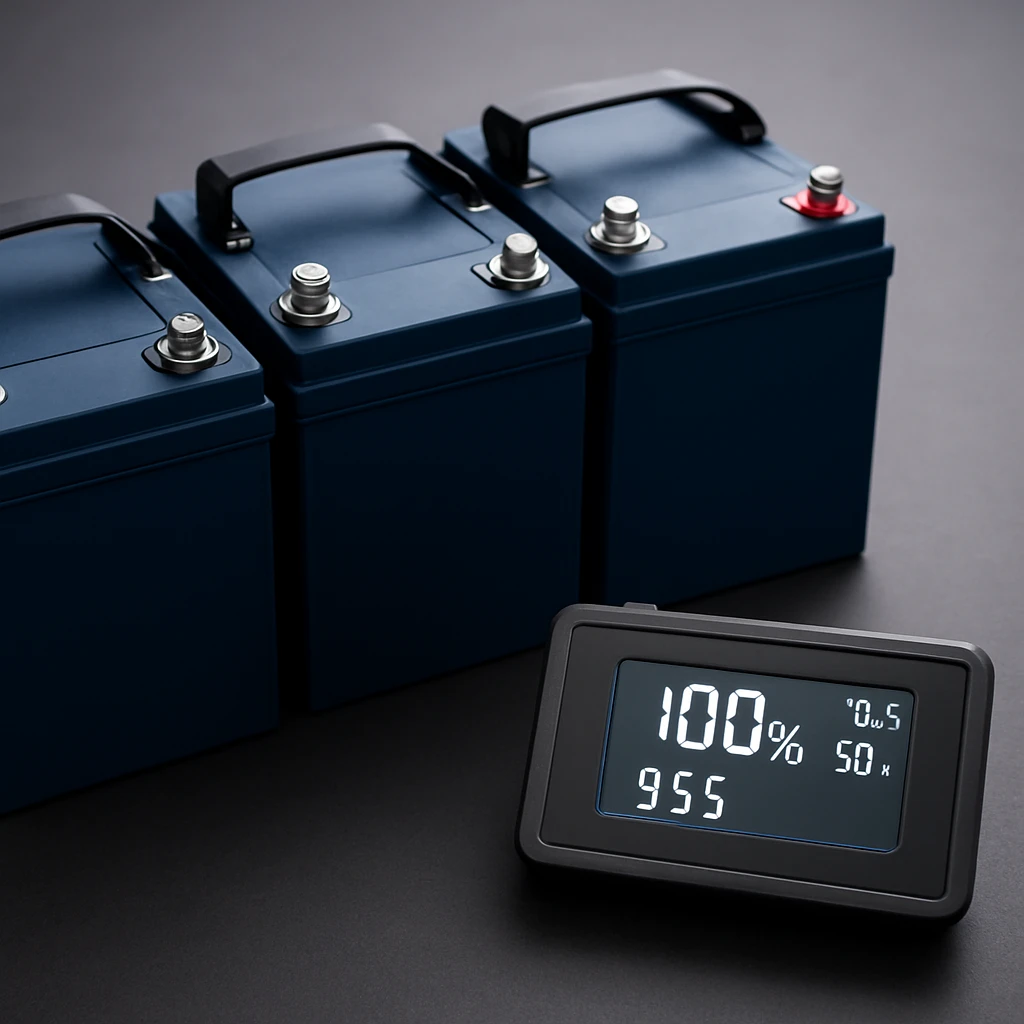
Now convert your power target into an actionable bill of materials. Because LTO (Lithium Titanate Oxide) SCiB (Super Charge ion Battery) banks deliver extreme current relative to their Ah (Ampere-hour), sizing is about balancing steady-state demand, transient headroom, and your alternator’s real output. The quick picks below assume good copper, clean grounds, and healthy alternator voltage. Each “bank” refers to one 6S LTO unit assembled as a usable 12V-class pack. Where we specify modules, consider Evolution Lithium’s hand-assembled options using genuine Toshiba SCiB cells in the listed capacities and C ratings.
| System Power | Baseline Alternator | Recommended LTO (6S) Capacity | Example Configuration | “How Many Batteries?” Guide |
|---|---|---|---|---|
| 3000W | 180–220A | 30–40Ah daily; 40–60Ah demo | Three to four 10Ah 75C sets paralleled, or two 20Ah 35C sets | 1 compact 6S bank (30–40Ah) for daily; 1 larger 6S bank (~50Ah) for demos |
| 5000W | 250–320A | 60–80Ah daily; 80–100Ah demo | Six to eight 10Ah 75C sets, or four to five 20Ah 35C sets | 2 robust 6S banks (30–40Ah each); add a third for long demos |
| 10,000W | 320–370A+ (dual ideal) | 120–160Ah daily; 180–240Ah SPL (Sound Pressure Level) | Twelve to sixteen 10Ah 75C sets, or six to eight 20Ah 35C sets | 3–4 high-capacity 6S banks; SPL teams often use 5–6 |
Real-world example 1: a 5000W monoblock in a Hilux daily driver with a measured 14.3V at cruise and 260A alternator runs two parallel 6S 35Ah LTO banks from Evolution Lithium. With 1/0 AWG OFC (Oxygen-Free Copper) front to back and copper busbars, voltage on a 40Hz sweep stays between 13.8–14.2V, and the clamp meter peaks around 420A. Real-world example 2: a 10kW SPL burp build uses four 6S 40Ah banks and a 370A alternator. On short burps, voltage drop is limited to 0.6–0.8V, keeping amps out of protect while delivering the peak score.
Step 5: Plan Charging and Alternator Upgrades for Car Audio
Your charging system is the backbone of voltage stability. Alternators rarely produce their headline rating at idle; budget 60–80 percent at cruise and less at idle unless you have a high-output unit. For 3000W, many late-model vehicles with a 180–220A alternator and one 30–40Ah 6S LTO (Lithium Titanate Oxide) bank are fine. At 5000W, a 250–320A alternator is strongly recommended. At 10,000W, plan a 320–370A unit or dual alternators with appropriate brackets and belt wrap. Smart alternators found in many New Zealand and Australian vehicles may reduce voltage at cruise; consider an external regulator solution or a quality DC-DC (Direct Current to Direct Current) charger if your platform demands it.
Keep charge voltage LTO-friendly. A 6S LTO SCiB (Super Charge ion Battery) bank is comfortable on typical 14.2–14.8V automotive charging, resulting in roughly 2.35–2.45V per cell under charge. Avoid overshoot: ensure grounds are clean, sense wires are correct, and any external regulation is stable. If you bench-charge or top-balance, use a 6S-capable charger and a balancer rated appropriately, and never bypass fuses during charging. One advantage of LTO is rapid absorption; the bank comes off “recovery” quickly between bass notes, helping your amplifiers stay in their sweet spot.
Step 6: Wiring, Fuse Protection, and Layout Best Practices
High current is unforgiving. Design for low resistance and fault containment. Use 1/0 AWG (American Wire Gauge) OFC (Oxygen-Free Copper) as a minimum for 3000–5000W, and 2/0 or even 4/0 for 10,000W paths depending on length. Keep parallel runs equal length and gauge for current sharing. Land positive and negative on copper busbars sized for expected peak current with generous margins; Evolution Lithium’s banks pair well with solid copper busbars and properly torqued M8 hardware. Ground to the chassis at factory points that are stripped, cleaned, and protected against corrosion, or run dedicated negative back to the front when practical for noise and resistance control.
Fuse everything that leaves a battery positive. Mount primary fuses within 180–200mm of each battery bank, size them to protect the cable, and add downstream protection for branch circuits at distribution blocks. Choose ring lugs that fit stud sizes without slop, crimp with a hex die, and seal with adhesive heatshrink and anti-oxidation compound. Route cables away from sharp edges and heat; use grommets through the firewall. Label everything so fault-finding is fast. If you run multiple amplifiers, separate sub and mids/highs distribution; it makes diagnostics easier and reduces shared impedance issues under hard bass loads.
- Big 3 upgrade: alternator positive to battery positive, engine block to chassis, and battery negative to chassis, all in 1/0 AWG minimum.
- Use star washers and proper torque on all ground and busbar fasteners.
- Maintain symmetry: parallel banks should see equal cable length and identical fuse values.
- Provide airflow around banks and amplifiers; heat increases resistance and shortens component life.
Step 7: Install, Test, and Tune for System Efficiency
After installation, verify that your electrical performs to plan. With the engine at your normal demo RPM, play a 40–50Hz sine sweep and note voltage at the amplifier inputs, the rear bank terminals, and the front battery. If the rear is dropping more than 0.2–0.3V compared to the bank, investigate your ground path and connectors. Use a DC (Direct Current) clamp meter on the main feed to confirm current draw aligns with expectations from Step 2’s math. Observe amplifier protect indicators; if they trip under load, check that voltage at the amp never falls below its specified minimum.
On music at your typical volume, log voltage for two to three songs. Healthy LTO (Lithium Titanate Oxide) SCiB (Super Charge ion Battery) designs will bounce back between kick drum hits and hold above 13V on daily systems of 3000–5000W. If you see sustained low 12s, re-check alternator output at that engine speed and consider adding capacity or upgrading the alternator. Finally, set amplifier gains correctly with an oscilloscope or a true RMS (Root Mean Square) DMM (Digital Multimeter) and a reference tone, and confirm that head unit EQ (Equalizer) or DSP (Digital Signal Processor) settings do not clip the input stage; clean input signals reduce wasted heat and make every Ampere count.
Common Mistakes to Avoid
- Undersizing the alternator: relying on batteries to do the alternator’s job leads to hot banks and sagging voltage during longer demos.
- Mixing chemistries: pairing lead-acid/AGM (Absorbent Glass Mat) with LTO (Lithium Titanate Oxide) can create unequal charging and stress one side of the system.
- No balancing: skipping 6S cell balancing on LTO SCiB (Super Charge ion Battery) banks risks drift over time, cutting capacity and lifespan.
- Weak grounds: a shiny positive path with a poor chassis return still sags and introduces noise; treat the negative path as equal priority.
- Wrong fuse sizing or placement: fuses protect cable, not gear; place them close to every battery positive and match to conductor ampacity.
- Long single runs: for 10,000W, consider dual parallel runs of 1/0 AWG or step up to 2/0–4/0 to reduce voltage drop on long vehicles.
- Ignoring temperature: high under-bonnet heat increases resistance; insulate and allow airflow around banks and busbars.
Why Evolution Lithium’s LTO SCiB Banks Solve the Real-World Problems
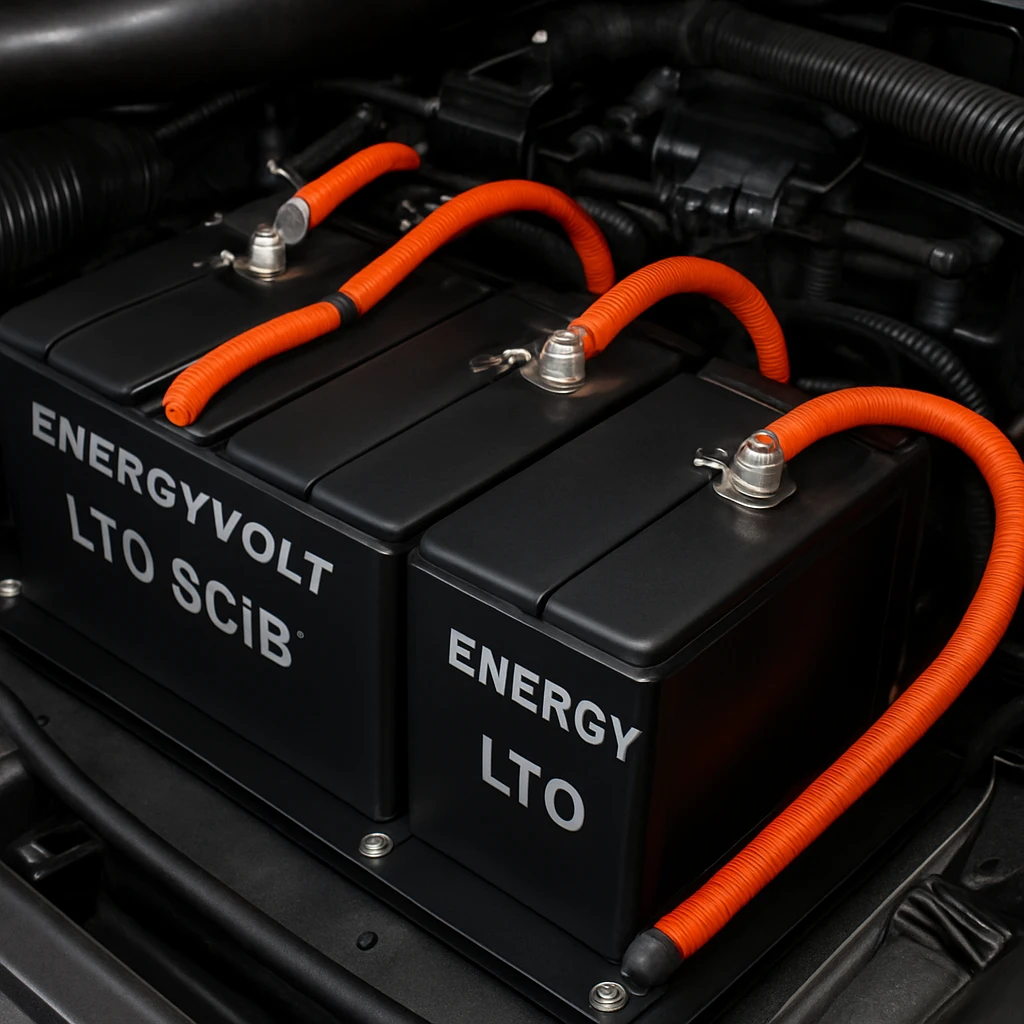
Traditional lead-acid and AGM (Absorbent Glass Mat) car audio batteries are bulky, heavy, and prone to voltage sag when your amplifier hits hardest. Evolution Lithium’s custom-built LTO (Lithium Titanate Oxide) SCiB (Super Charge ion Battery) banks attack the root cause with ultra-low internal resistance, high burst-discharge ratings (e.g., 3Ah 75C, 10Ah 75C, 20Ah 35C), rapid charging, and long cycle life validated by Toshiba’s safety testing for the SCiB technology. In daily drivers and SPL (Sound Pressure Level) builds alike, you get compact, lightweight packs that hold voltage under punishing loads with fewer parallel “batteries” than older chemistries would require.
Because Evolution Lithium hand-assembles units and supports them with responsive advice, you can spec a bank that fits your vehicle footprint and your style of play. From copper busbars and distribution planning to matching alternators and accessories, their team helps you aim for minimal voltage drop and clean, dependable power delivery. For New Zealand customers, the online shop streamlines purchase and support while keeping your build local and well-documented.
Quick Reference: At-a-Glance Answer Table
| Target System | Recommended “Battery” Count (6S LTO Banks) | Alternate Count Using AGM (Absorbent Glass Mat) | Notes |
|---|---|---|---|
| 3000W | 1 bank (30–40Ah), 1 larger bank (50Ah) for demos | 1–2 large AGM Group 31 units with Big 3 upgrade | LTO holds voltage better; AGM may need two for similar stability |
| 5000W | 2 banks (30–40Ah each); add a third for long demos | 2–3 large AGM | Alternator upgrade to 250–320A advised |
| 10,000W | 3–4 banks (40Ah each) daily; 5–6 for SPL | 4–6 large AGM | Dual alternators or 320–370A; heavy-gauge wiring essential |
Installer Insights and Practical Notes
- Test at your demo RPM. Many alternators rise 0.3–0.5V (Volt) between idle and 1500–1800 RPM, materially changing results.
- Keep battery banks physically close to amplifiers. Every extra metre of cable can add measurable drop at 300–900A (Ampere).
- Use distribution blocks that accept dual 1/0 AWG inputs on monoblocks with dual power lugs; it halves current density per lug.
- Torque-check all fasteners after the first week of bass. Thermal cycling loosens hardware.
- If you demo engine-off, increase Ah (Ampere-hour) capacity by 25–50 percent over the “daily” numbers.
Final Check: Are You in the Right Range?
Revisit the question: how many batteries do you need for 3000W, 5000W, or 10,000W? With LTO (Lithium Titanate Oxide) SCiB (Super Charge ion Battery), most daily builds land at roughly one, two, and three to four 6S banks respectively, sized 30–40Ah each for daily driving, and larger for demos. If in doubt, prioritize voltage stability over raw Ah by choosing higher C (Capacity multiple) modules and excellent copper work; a well-wired 60Ah LTO often outperforms a sloppily wired 100Ah system. Evolution Lithium can help you tune that balance for your vehicle and your listening habits.
Common Questions and Safety/Electrical Design Practices
Do I need a BMS (Battery Management System) on LTO?
For 6S automotive use with alternator charging in the 14.2–14.8V range, many LTO banks run safely without a full BMS, but cell balancing is still important. Use a robust 6S balancer and monitor per-cell voltages periodically. If you add bench charging or unique charge profiles, a BMS with balance and logging is helpful.
What about LiFePO4 (Lithium Iron Phosphate)?
LiFePO4 is excellent for energy storage but is more sensitive to cold and charge voltage window. For extreme burst current and SPL (Sound Pressure Level), LTO (Lithium Titanate Oxide) typically delivers superior voltage stability.
How should I fuse?
Fuse to the cable, not to the amplifier rating. Place a fuse within 180–200mm of every battery positive, and fuse each branch at the distribution block based on the downstream conductor. Carry spares and inspect after hard demo sessions.
Power that does not sag is what makes bass feel effortless, and properly sized battery banks, designed as a lithium bank car audio system, dictate both power delivery and voltage stability. Imagine your amps seeing rock-solid voltage on every drop, with hand-assembled LTO (Lithium Titanate Oxide) SCiB (Super Charge ion Battery) banks doing the heavy lifting. What would your system score or sound like if your electrical finally matched your amplifier potential?
Additional Resources
Explore these authoritative resources to dive deeper into battery banks, lithium bank car audio, power delivery, voltage stability, car audio batteries.
Unlock Stable Car Audio Power with Evolution Lithium
Custom-built LTO (Lithium Titanate Oxide) SCiB (Super Charge ion Battery) banks deliver rapid bursts, stable voltage, fast charging and long life for New Zealand enthusiasts and installers.