
Ultimate Lithium-Titanate (LTO) Batteries Guide
If you want rock-solid voltage and instant current for high-power car audio, Lithium titanate oxide (LTO) batteries are the most stable, abuse-tolerant option you can install today. They use lithium titanate anodes that charge fast, deliver huge burst current, and hold voltage through brutal bass hits that make traditional lead-acid and AGM (Absorbent Glass Mat) sag. For daily drivers, installers, and SPL (Sound Pressure Level) competitors, that means louder and cleaner output with less electrical stress. In short: LTO (Lithium Titanate Oxide) solves the biggest pain in car audio power delivery. This guide explains how the chemistry works, how to size and wire a bank, what to avoid, and how Evolution Lithium in New Zealand builds hand-assembled SCiB (Super Charge ion Battery) banks that survive punishment and keep amplifiers happy.
Fundamentals of Lithium titanate oxide (LTO) batteries
What makes LTO (Lithium Titanate Oxide) different
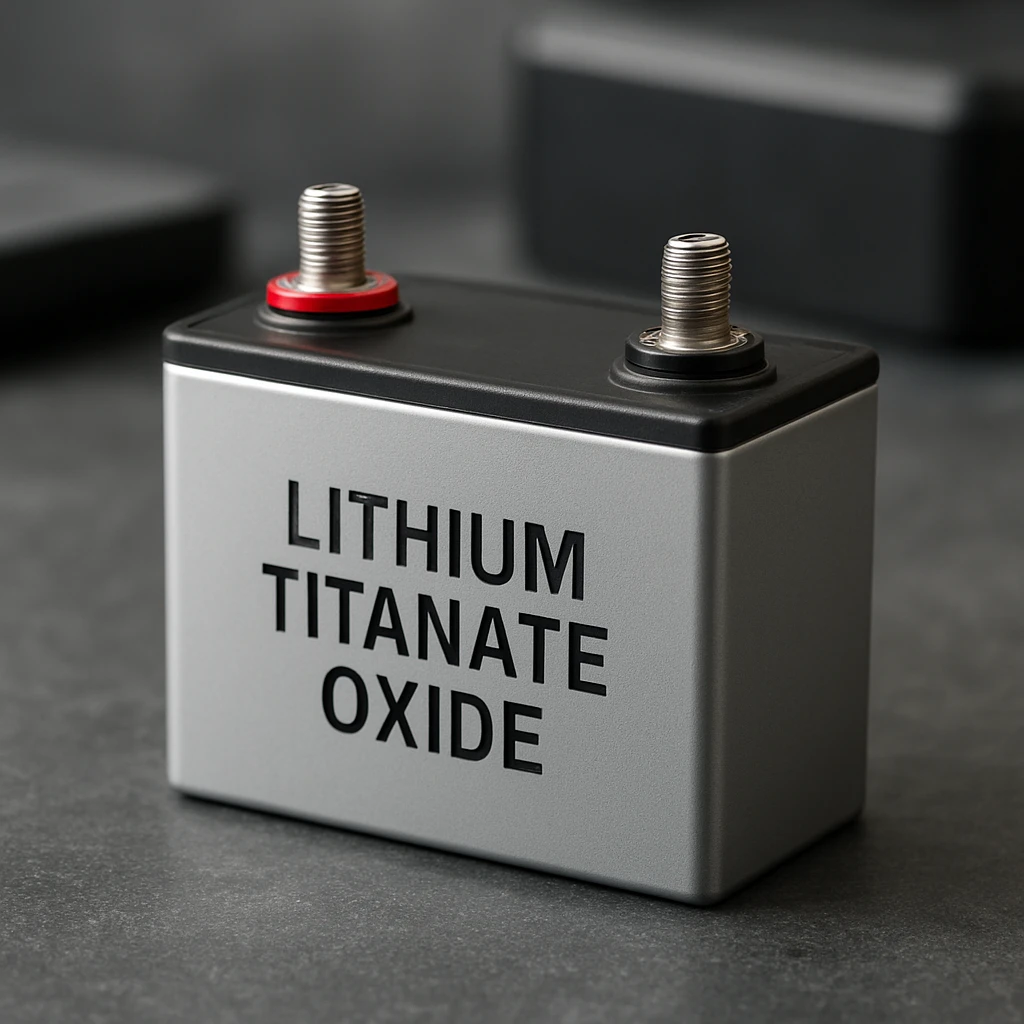
LTO (Lithium Titanate Oxide) replaces the graphite anode you see in typical lithium-ion with lithium titanate spinel, dropping per-cell nominal voltage to about 2.3 to 2.4 volts and slashing internal resistance. In practice, that means extremely high charge acceptance and discharge capability with far less heat. For car audio, you usually configure six cells in series for a 13.8 to 14.4 volt system that pairs directly with an automotive alternator. Unlike lead-acid and AGM (Absorbent Glass Mat), LTO tolerates high C-rate (Capacity-rate) charging and discharging and maintains voltage during sudden current spikes, so your amplifiers see a flatter supply rail and produce more consistent output. Manufacturer test data for SCiB (Super Charge ion Battery) indicates cycle life commonly above 10,000 cycles at moderate depth of discharge, which fits both daily use and competition duty cycles.
Key electrical traits that matter in car audio
- Low internal resistance and high C-rate (Capacity-rate): rapid current bursts with minimal voltage sag.
- Wide temperature tolerance: better charging acceptance at low temperatures than most lithium chemistries.
- Long cycle life: commonly 10,000 to 20,000 cycles to 80 percent capacity under moderate use.
- Stable voltage window: 6S (Six-Series) packs align well with 13.8 to 14.4 volt automotive systems.
- Safety behavior: inherently robust against thermal runaway compared with many lithium-ion systems.
Quick comparison for installers
| Attribute | LTO (Lithium Titanate Oxide) | LFP (Lithium Iron Phosphate) | AGM (Absorbent Glass Mat) Lead-Acid |
|---|---|---|---|
| Nominal Cell Voltage | 2.3 to 2.4 volts | 3.2 to 3.3 volts | 2.0 volts |
| Typical 12–14 V Pack | 6S (Six-Series) | 4S (Four-Series) | 6 cells (Six Cells) |
| Energy Density | 50 to 80 Wh/kg | 90 to 160 Wh/kg | 30 to 50 Wh/kg |
| Cycle Life (to ~80 percent) | 10,000 to 20,000+ | 2,000 to 5,000 | 300 to 800 |
| Charge Acceptance | Up to 35C continuous; 75C burst (product-dependent; see Evolution Lithium SCiB specifications) | ~0.5C to 3C (Capacity-rate) | ~0.2C to 0.3C (Capacity-rate) |
| Cold-Weather Charging | Strong relative performance | Limited below 0°C | Moderate |
| Voltage Sag Under 300 A (Ampere) Load | Very low | Low to moderate | High |
| Safety/Tolerance | Excellent, robust behavior | Good | Good, but heavy and vent-prone |
Numbers above are typical ranges from manufacturer literature and installer experience. Exact results depend on cell brand, temperature, state of charge, wiring, and amplifier duty cycle.
How it works
How the system works in a vehicle
An LTO (Lithium Titanate Oxide) bank for car audio is usually built from SCiB (Super Charge ion Battery) prismatic or cylindrical cells arranged 6S (Six-Series), often with parallel strings to increase capacity. Rigid copper busbars tie cells together, and the bank connects to the vehicle charging system at the front battery or to a dedicated rear distribution block. The alternator regulates chassis voltage; with a healthy alternator for car audio, the bank charges rapidly after each bass hit. A balancing strategy keeps cell voltages aligned, either via a full BMS (Battery Management System) or passive top-balancing hardware with monitoring. Fusing at the battery and at each amplifier branch protects against short circuits and wiring faults.
Why it matters for high-power car audio
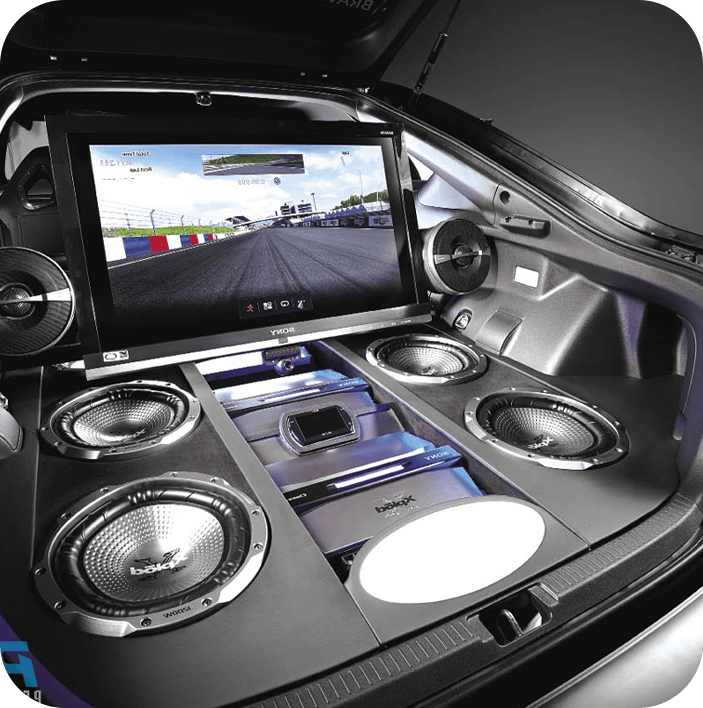
Amplifiers are happiest with a flat, stiff supply. When voltage sags, class D (Class Digital) efficiency falls and clipping rises, hurting output and potentially spiking distortion. LTO (Lithium Titanate Oxide) minimizes sag during transient peaks, so SPL (Sound Pressure Level) systems hold score and musical systems sound cleaner. Compared with AGM (Absorbent Glass Mat), you can pull hundreds to thousands of amperes for short bursts with less heat and faster recovery. That steadier voltage also eases stress on alternators and reduces dimming even with extreme subwoofer transients. In daily drivers, you notice tighter bass and fewer electrical gremlins during night driving with lights, HVAC (Heating, Ventilation, and Air Conditioning), and wipers running.
Electrical performance in real numbers
- Nominal pack: 6S (Six-Series) ≈ 13.8 to 14.4 volts under charge; safe peak near 16.2 volts if 2.7 volts per cell, though many set lower for longevity.
- Internal resistance: often a few milliohms per cell, enabling 500+ A (Ampere) bursts from modest-capacity banks.
- Cycle life: SCiB (Super Charge ion Battery) test data often shows 80 percent capacity after 10,000 cycles at moderate depth, far exceeding typical car ownership.
- Charge acceptance: banks can absorb high current immediately after a bass drop, reducing recovery time between hits.
Sizing your bank: quick estimator
Use this rule of thumb: Current draw ≈ Amplifier RMS (Root Mean Square) power ÷ (System voltage × efficiency). For class D (Class Digital) sub amplifiers, 70 to 85 percent efficiency is typical under load. Then size capacity so the bank’s C-rate (Capacity-rate) and alternator can cover peaks without excessive sag. The table below shows approximate figures.
| Amplifier RMS (Root Mean Square) Power | Estimated Current at 13.8 V (Volt), 75 percent Efficiency | Recommended LTO (Lithium Titanate Oxide) Bank | Alternator Suggestion |
|---|---|---|---|
| 1 kW (Kilowatt) | ~97 A (Ampere) | 6S (Six-Series) 10 to 20 Ah (Ampere-hour) | Stock ok; 120+ A (Ampere) preferred |
| 3 kW (Kilowatt) | ~217 A (Ampere) | 6S (Six-Series) 20 to 40 Ah (Ampere-hour) | 180 to 240 A (Ampere) |
| 5 kW (Kilowatt) | ~362 A (Ampere) | 6S (Six-Series) 30 to 60 Ah (Ampere-hour) | 240 to 320 A (Ampere) |
| 8 kW (Kilowatt) | ~580 A (Ampere) | 6S (Six-Series) 40 to 80+ Ah (Ampere-hour) | 320 to 400+ A (Ampere) |
| 12 kW (Kilowatt) | ~870 A (Ampere) | 6S (Six-Series) 80 to 120+ Ah (Ampere-hour) | 400 to 500+ A (Ampere) |
These are starting points for music-heavy use. Burp or sweep competition may demand more bank or multiple alternators. Evolution Lithium’s 3 Ah (Ampere-hour) 75C (Capacity-rate), 10 Ah (Ampere-hour) 75C (Capacity-rate), and 20 Ah (Ampere-hour) 35C (Capacity-rate) Toshiba SCiB (Super Charge ion Battery) cell options enable compact banks that comfortably handle those transient currents with excellent voltage stability.
Best practices
Practical installation considerations
- Cell count and voltage: Most builds use 6S (Six-Series) for 13.8 to 14.4 volts. If your vehicle idles above 14.4 volts, consider voltage control or a 5S (Five-Series) pack for longevity.
- Series and parallel: Increase capacity by paralleling 6S strings. Keep cable lengths equal and busbars symmetrical to share current evenly.
- Copper busbars: Use solid copper busbars or heavy lugs and a rear distribution block. Target very low resistance and short runs.
- Cable sizing: For rear runs, use 1/0 AWG (American Wire Gauge) or 2/0 AWG (American Wire Gauge) oxygen-free copper for 250 to 400 A (Ampere) continuous. For 500+ A (Ampere) peaks, consider dual 1/0 AWG (American Wire Gauge) runs.
- Fuse protection: Place a main fuse within 200 mm of the bank and again at the front battery or firewall pass-through. Fuse each amp branch per its expected current.
- Grounding: Bond the bank to chassis with the same gauge as the positive lead. Scrape paint to bare metal and use star washers for bite.
- Balancing: Top-balance cells before first use. Maintain with a BMS (Battery Management System) or passive balancers and regularly verify individual cell voltages.
- Precharge: Use a precharge resistor when connecting to large capacitor banks or big amplifiers to avoid inrush sparks and relay pitting.
- Mounting: Secure cells in a compression frame or enclosure. Avoid vibration points and provide strain relief on heavy cables.
Safety and electrical design practices
- Voltage limits: Keep charge targets conservative. Many installers cap 6S (Six-Series) at ~14.4 volts for daily use to extend life.
- Thermal awareness: LTO (Lithium Titanate Oxide) handles cold well, but monitor temperature near amplifiers and enclosures to avoid heat soak.
- Short-circuit planning: Assume anything metal can short. Protect every conductor leaving the bank with an appropriately sized fuse.
- Service disconnect: Add a properly rated manual disconnect or fuse link you can remove during service or transport.
- Inspection cadence: Re-torque busbars after the first week of driving. Check for discoloration, smells, or warm spots under load.
Wiring gauge and fuse quick reference
| Conductor | Typical Continuous Current (≤3 m run) | Suggested Main Fuse | Notes |
|---|---|---|---|
| 4 AWG (American Wire Gauge) | 100 to 125 A (Ampere) | 100 to 125 A (Ampere) | Short runs only to small amps |
| 1/0 AWG (American Wire Gauge) | 250 to 300 A (Ampere) | 250 to 300 A (Ampere) | Common rear battery feed |
| 2/0 AWG (American Wire Gauge) | 350 to 400 A (Ampere) | 350 to 400 A (Ampere) | High-power main feed |
| Dual 1/0 AWG (American Wire Gauge) | 450 to 600 A (Ampere) | 2× 250 to 300 A (Ampere) | Split into dual fused runs |
These are conservative automotive figures for short runs with quality copper. Always confirm with cable manufacturer data and your expected duty cycle.
Alternator strategy for LTO (Lithium Titanate Oxide)
- Target charging voltage that suits 6S (Six-Series): 14.2 to 14.4 volts is a good daily range.
- High-output units: For 3 to 5 kW (Kilowatt) systems, 240 to 320 A (Ampere) alternators reduce recovery time. For 8+ kW (Kilowatt), consider dual units.
- Big 3 upgrade: Upgrade chassis-to-engine, alternator-to-battery, and battery-to-chassis with 1/0 AWG (American Wire Gauge) minimum.
- Idle speed: Consider a mild idle increase for competition when legal and safe.
Real-world example: compact daily 5 kW (Kilowatt)
A daily driver in Auckland runs a 5 kW (Kilowatt) class D (Class Digital) sub amp and 1.5 kW (Kilowatt) mids/highs. The installer selected a 6S (Six-Series) 40 Ah (Ampere-hour) LTO (Lithium Titanate Oxide) bank using 10 Ah (Ampere-hour) 75C (Capacity-rate) SCiB (Super Charge ion Battery) cells in parallel strings, a 280 A (Ampere) alternator, dual 1/0 AWG (American Wire Gauge) runs to the rear, and a copper busbar distribution. Main fusing is 2×300 A (Ampere) at the front and 2×300 A (Ampere) within 200 mm of the rear bank. The result is 14.2 to 14.4 volts at idle with bass hits dropping to ~13.9 volts, minimal dimming, and cleaner headroom during long demos.
Common mistakes
- Mixing chemistries in parallel: Do not parallel LTO (Lithium Titanate Oxide) with lead-acid or AGM (Absorbent Glass Mat). Different rest voltages and resistance cause cross-currents and heat.
- Skipping balancing: Unbalanced cells drift under high current and temperature, risking over- or under-voltage. Always top-balance and monitor.
- Under-fusing or no fusing: A shorted run can total a vehicle. Fuse as if something will fail tomorrow.
- Using undersized cable: Voltage stability depends on the whole path, not only the bank. Size for both continuous current and burst current.
- No precharge: Directly slamming a bank into large input capacitors can arc and pit connectors. Use a resistor-based precharge.
- Poor grounds: Paint, rust, or skinny grounds cause heat and sag. Mirror the positive path with equal or larger grounding.
- Charging too high: Chasing 16+ volts for a few tenths of a dB can shorten life. Daily drivers should stay near 13.8 to 14.4 volts on 6S (Six-Series).
- Ignoring alternator limits: Even LTO (Lithium Titanate Oxide) cannot help if the alternator cannot keep up. Size charging to your average current draw.
- Loose hardware: High pulse currents magnify small resistances. Re-torque and use proper compression hardware.
Tools/Resources
Installer toolkit checklist
- Calibrated DMM (Digital Multimeter) for pack and cell voltage checks.
- DC (Direct Current) clamp meter rated 600+ A (Ampere) to capture live draws.
- Balance charger or cell top-balancing harness for initial setup.
- Torque wrench with insulated sockets for busbar hardware.
- Precharge resistor assembly and safe disconnects.
- Thermal camera or contact probes for hot-spot hunting.
- Quality crimping tools and lugs for 1/0 AWG (American Wire Gauge) and 2/0 AWG (American Wire Gauge).
- Data logger or voltage monitor in the dash for real-time sag tracking.
Simple planning workflow
- Calculate current from RMS (Root Mean Square) amplifier power and realistic efficiency.
- Choose 6S (Six-Series) capacity so discharge C-rate (Capacity-rate) stays within cell specs during peaks.
- Match alternator output to average load; add overhead for accessories and lights.
- Lay out cable paths to minimize length and avoid heat sources.
- Specify fusing at the source and each branch.
- Top-balance cells and precharge on first power-up.
- Log voltage under music and refine settings and wiring as needed.
Where Evolution Lithium fits
Evolution Lithium in New Zealand builds custom LTO (Lithium Titanate Oxide) SCiB (Super Charge ion Battery) banks specifically for car audio. Options include 3 Ah (Ampere-hour) 75C (Capacity-rate), 10 Ah (Ampere-hour) 75C (Capacity-rate), and 20 Ah (Ampere-hour) 35C (Capacity-rate) genuine Toshiba cells, hand-assembled with attention to busbar integrity and layout. The banks excel at high burst discharge for powerful amplifiers and SPL (Sound Pressure Level) builds, recharge rapidly from upgraded alternators, and hold voltage with less sag than lead-acid or AGM (Absorbent Glass Mat). You also get responsive support, honest configuration advice, and safety information grounded in Toshiba SCiB (Super Charge ion Battery) testing, plus compatible amplifiers and accessories available in the online shop for New Zealand customers.
Suggested visuals to include in your build log
- Close-up of an LTO (Lithium Titanate Oxide) bank with copper busbars and compression hardware.
- Amplifier rack showing short, fused distribution to each amp.
- Alternator upgrade with heavy-gauge Big 3 wiring.
- Voltage monitor screenshot comparing idle vs. full-tilt bass hits.
- Grounding point prep: bare metal, star washer, and anti-corrosion spray.
Quick FAQ for common decisions
Do I need a BMS (Battery Management System)? For daily drivers, yes. At minimum, use reliable top-balancing and cell monitoring. Can I keep my front lead-acid battery? Yes, but do not hard-parallel different chemistries without isolation. Many installers keep the OEM (Original Equipment Manufacturer) starter at the front and run the LTO (Lithium Titanate Oxide) bank as the primary audio supply at the rear using appropriate relays or isolators. What charge voltage should I run? Daily: 14.2 to 14.4 volts on 6S (Six-Series). Competition burp setups may push higher, with life trade-offs.
Conclusion
Build your system around stable voltage and instant current, and your amplifiers will reward you with louder, cleaner output and cooler running.
Imagine the next 12 months: faster demo recovery, higher and more repeatable SPL (Sound Pressure Level) scores, and fewer electrical failures because your power stage is engineered, not guessed.
What changes will you make this week so your amplifiers finally see what Lithium titanate oxide (LTO) batteries can really deliver?
Additional Resources
Explore these authoritative resources to dive deeper into Lithium titanate oxide (LTO) batteries.
Drive Serious Bass with Evolution Lithium LTO (Lithium Titanate Oxide) SCiB (Super Charge ion Battery) Banks
Get custom-built LTO (Lithium Titanate Oxide) SCiB (Super Charge ion Battery) car-audio banks delivering burst current, stable voltage, fast charge, long life and less bulk for New Zealand builds.