
High Output Alternator for Car Audio NZ: Benefits, Sizing & Upgrade Guide
A high output alternator for car audio becomes worthwhile when the vehicle’s existing charging system cannot keep up with the average electrical demand of the amplifiers while still powering the vehicle and recharging the battery bank. For a serious daily, demo or SPL system, the alternator is the part of the electrical system that generates energy while the engine is running. The battery stores energy and covers the difference when amplifier demand temporarily exceeds what the alternator can supply.
The important number is not simply the largest amperage printed on the alternator. A 320A alternator does not necessarily produce 320A at idle, and two alternators with the same maximum rating can behave very differently at low engine speed. Idle output, alternator RPM, heat management, regulator compatibility, charging voltage, belt drive and vehicle fitment all matter.
For high power car audio, the goal is therefore not to buy the biggest alternator available. It is to install enough usable charging capacity to support the vehicle’s normal electrical load, cover a useful share of the amplifier’s average current demand and recharge the lithium battery bank between heavy bass passages.
A properly matched high amp alternator can improve voltage recovery, reduce how heavily the battery bank is discharged during engine-on playback and make a high power system more repeatable. It cannot fix undersized cable, poor grounds, restrictive fuse holders or an incorrectly configured charging voltage.
What Is a High Output Alternator?
A high output alternator is an alternator designed to provide more electrical current than the factory unit while maintaining the required charging voltage.
The factory alternator is normally sized around the original equipment fitted to the vehicle, including:
- Engine management
- Fuel system
- Cooling fans
- Lighting
- HVAC blower
- Vehicle control modules
- Factory audio
- Battery charging
Once a large aftermarket amplifier is added, the electrical demand can move far beyond what the original charging system was designed to support.
A high output alternator increases the amount of current available while the engine is running.
It does not continuously force its maximum rated current through the vehicle. Electrical loads draw the current they require, while the regulator controls charging voltage. Mechman makes the same distinction in its high output alternator technical and installation FAQ, noting that increased alternator capacity does not mean the alternator is constantly producing maximum output.
What Are the Benefits of a High Output Alternator for Car Audio?
The main benefit of a high output alternator for car audio is increased charging capacity while the engine is running.
For a high power system, that creates four practical advantages.
1. More Current Available for the Amplifiers
Every amp the alternator can supply to the audio system is an amp that does not have to come entirely from stored battery energy.
This becomes increasingly important as amplifier output moves into several kilowatts.
A large lithium bank can supply enormous short duration current, but if the alternator is too small to recover the energy being removed, the state of charge will gradually fall during extended playback.
2. Faster Battery Recovery Between Bass Hits
During a heavy bass transient, amplifier demand can exceed the current the alternator is supplying at that moment.
The battery bank fills the gap.
When demand falls again, available alternator current can recharge the bank.
Increasing useful alternator output increases the amount of current available for that recovery, provided the battery, charging voltage and wiring can accept it.
3. Less Dependence on Stored Battery Energy
A battery is not an unlimited power source.
If a system continually consumes more energy than the alternator replaces, adding battery capacity mainly increases how long it takes before voltage and state of charge fall.
A stronger alternator addresses the generation side of the equation.
4. Better Voltage Recovery During Extended Playback
If insufficient alternator capacity is causing the electrical system to discharge during playback, increasing charging capacity can substantially improve voltage recovery.
However, a bigger alternator is not a universal cure for voltage drop.
If the amplifier sees significantly less voltage than the battery because of resistance in the cables, grounds, terminations or fuse holders, the current path needs to be corrected first.
Use our guide to diagnosing voltage drop in a high power car audio electrical system before assuming the alternator is the only problem.
Alternator vs Battery: What Does Each One Actually Do?
Understanding the difference between the alternator and battery is one of the most important parts of designing a large car audio electrical system.
| Component | Primary Job | What It Cannot Do |
|---|---|---|
| Alternator | Generate electrical energy while the engine is running | Supply unlimited current regardless of RPM, temperature and design |
| Lithium battery bank | Store energy and supply high current when demand exceeds generation | Create new energy or keep itself charged indefinitely |
Consider a simplified example.
Assume the vehicle and audio system suddenly require 500A during a heavy bass passage, while the alternator is supplying 250A at that moment.
500A demand − 250A alternator contribution = approximately 250A supplied by the battery bank
When the bass demand falls, the alternator again has spare capacity available to recharge the bank.
This is why a high output alternator and a capable lithium bank complement each other rather than replacing each other.
For a more detailed explanation of when generating capacity becomes the limiting factor, see our guide to when a lithium car audio system actually needs an alternator upgrade.
Do You Actually Need a High Output Alternator?
You need to consider a high output alternator when the system’s average electrical consumption during engine-on use consistently approaches or exceeds the charging current the existing alternator can provide after the vehicle’s own electrical load is accounted for.
There is no universal wattage or “extra 50 amps” threshold that applies to every vehicle.
A vehicle fitted from the factory with a large alternator has far more charging headroom than a vehicle with a small OEM unit.
Signs that the charging system deserves investigation include:
- Battery state of charge steadily falling while driving and playing the system
- Voltage declining during extended bass-heavy playback
- Slow lithium bank recovery after demanding sessions
- Large voltage differences between idle and cruising RPM
- Repeated alternator overheating or belt issues
- Factory alternator operating close to its available output for long periods
Do not buy an alternator until you have also checked:
- Battery condition and state of charge
- Main positive cable
- Ground return path
- Fuse holders and connections
- Alternator belt and tensioner
- Charging voltage
- Voltage directly at the amplifier under load
A poor ground can make a healthy alternator look inadequate. Our proper grounding techniques for high current car audio systems explains how to check the return path before replacing expensive charging components.
How Many Amps Does a High Power Car Audio Amplifier Need?
Start with genuine RMS output, operating voltage and amplifier efficiency.
A useful full-output current estimate is:
Current ≈ Amplifier RMS Power ÷ (System Voltage × Amplifier Efficiency)
Using 15.8V and an estimated 80% efficiency for a Class D amplifier gives the following theoretical continuous full-output figures:
| Amplifier RMS | System Voltage | Assumed Efficiency | Approx. Full Output Current |
|---|---|---|---|
| 3,000W | 15.8V | 80% | 237A |
| 5,000W | 15.8V | 80% | 396A |
| 10,000W | 15.8V | 80% | 791A |
| 20,000W | 15.8V | 80% | 1,582A |
These numbers are not normal music averages.
They represent an approximate electrical requirement if the amplifier were actually producing its full rated RMS output continuously.
Real music has a varying duty cycle. Bass-heavy demos, rebassed tracks and test tones can create substantially higher average demand than ordinary music.
Crutchfield demonstrates this difference in its electrical planning guide for 2000W plus car audio amplifiers, where amplifier power, system voltage, efficiency and music duty cycle are considered separately rather than treating rated RMS as constant battery draw.
For battery-side planning, use our SCiB LTO battery sizing guide for 3000W to 30000W plus car audio systems.
Why a 320A Alternator Does Not Give Your Amplifier 320A
An alternator’s rated amperage belongs to the entire vehicle electrical system.
If a 320A alternator were genuinely producing 320A at a particular engine speed, the vehicle itself still needs current.
As a simple hypothetical example:
| Alternator output | 320A |
| Vehicle electrical load | 60A |
| Remaining theoretical current | 260A |
That remaining current may then be shared between the amplifiers and recharging the battery bank.
The 60A vehicle figure above is only an example. Real vehicle demand changes constantly as cooling fans, headlights, HVAC, fuel pumps and electronic systems switch on and off.
The key point is:
Alternator rating − vehicle demand = the current potentially available to the audio system and battery charging.
Even that is only true when the alternator is actually producing its rated output.
Rated Alternator Output vs Idle Output
For car audio, alternator output at idle can be more important than the headline maximum rating.
An alternator is driven by the crankshaft through a belt and pulley system. When engine RPM falls, alternator shaft speed also falls. Available current generally changes with alternator speed.
This matters because bassheads often use their systems:
- Parked at meets
- During demonstrations
- In traffic
- At traffic lights
- During SPL preparation
A published Delco Remy example demonstrates why the two ratings should not be confused. Its 12V 40SI range includes 240A, 275A, 300A and 320A models, but Delco lists the respective idle outputs at 160A, 180A, 190A and 190A. The Delco Remy 40SI output specifications therefore show a real case where moving from a 300A to a 320A headline rating does not increase the published idle figure.
That does not mean a heavy-duty 40SI is the right alternator for a car audio build. It demonstrates the engineering point:
Maximum amperage and idle amperage are different specifications.
Mechman makes the same point for stereo-focused applications, specifically noting that idle output matters because large systems are often played while the vehicle is parked or operating at low RPM.
Why Alternator RPM and Pulley Size Matter
Alternator shaft speed is determined by engine RPM and pulley ratio.
Alternator RPM = Engine RPM × Crank Pulley Diameter ÷ Alternator Pulley Diameter
A smaller alternator pulley can increase alternator shaft speed at a given engine RPM, which may improve low RPM output.
But there are limits.
The pulley, belt, tensioner and alternator all have operating-speed and mechanical limits. A smaller pulley also changes belt speed and the mechanical load placed on the drive system.
This is why vehicle-specific alternator packages often include pulley and belt instructions rather than treating the alternator as a universal electrical part.
Hot Output Matters as Well as Cold Output
A car audio alternator can spend long periods under substantial electrical and mechanical load, particularly in a demo vehicle.
Heat management therefore matters.
When comparing high output alternators, look for manufacturer information covering:
- Continuous output
- Idle output
- Output curves
- Temperature capability
- Rectifier design
- Cooling
- Maximum alternator shaft speed
Do not assume a cold bench peak number tells you exactly what the alternator will sustain after sitting in a hot engine bay while feeding a large lithium bank and multi kilowatt amplifier system.
How to Size a High Output Alternator for Car Audio
The correct alternator size is the charging current required to support the vehicle’s normal electrical load, a useful share of the amplifier’s average current demand and the desired battery recovery rate under the way the system is actually used.
Do not use:
Amplifier watts = alternator size.
Instead, work through five questions.
1. What Does the Vehicle Need?
The vehicle’s base load comes first.
Measure it where possible rather than relying on a universal estimate.
2. What Is the Amplifier’s Approximate Full Output Current?
Use RMS power, operating voltage and realistic amplifier efficiency.
3. How Is the System Used?
A 5000W daily system playing normal music does not place the same average demand on the charging system as a 5000W system playing sustained rebassed material or test tones.
4. How Much Battery Reserve Is Available?
A strong SCiB bank can supply the shortfall when amplifier demand exceeds alternator current.
But increased battery capacity does not remove the need to replace the energy afterwards.
5. How Much Current Does the Alternator Produce Where You Actually Use It?
If the system is demonstrated at idle, idle output deserves far more weight than a maximum rating achieved at higher RPM.
Evolution Lithium Alternator Planning Ladder
The following table is a planning framework, not a universal amplifier-to-alternator compatibility chart.
| Alternator Class | Typical Planning Role | What Still Needs Checking |
|---|---|---|
| 240A | Moderate upgraded charging system | Idle output, vehicle load, voltage and battery recovery |
| 270A | Additional charging headroom for stronger daily builds | Vehicle-specific fitment and low RPM output |
| 300A | Serious daily electrical systems | Hot output, wiring and battery recovery requirements |
| 320A | High power daily and demo builds | Actual idle curve and regulator strategy |
| 370A | Large amplifier systems with heavy recharge demand | Belt drive, heat, low RPM output and vehicle compatibility |
| 400A+ | Extreme systems where the vehicle can support the alternator mechanically and electrically | Full charging-system engineering rather than amp rating alone |
A strong 240A unit with useful hot idle output may be a better real-world choice for one vehicle than a higher-rated alternator whose additional current only appears at high shaft speed.
The actual alternator must always be selected from its output curve and vehicle compatibility.
How Much Electrical Power Can a 300A or 320A Alternator Produce?
Alternator electrical output can be expressed as:
Electrical Power = Voltage × Current
At 15.8V:
| Alternator Current | Voltage | Theoretical Electrical Output |
|---|---|---|
| 240A | 15.8V | 3,792W |
| 300A | 15.8V | 4,740W |
| 320A | 15.8V | 5,056W |
| 370A | 15.8V | 5,846W |
| 400A | 15.8V | 6,320W |
These figures do not mean a 320A alternator is a “5056W amplifier alternator”.
Vehicle loads still need to be subtracted, real output varies with alternator speed and operating conditions, and the amplifier itself is not 100% efficient.
The calculation is useful for understanding the scale of the charging system, not for creating a one-to-one amplifier wattage rating.
Is a 320A Alternator Enough for a 5000W Amplifier?
It can be, but there is no universal yes or no answer.
At 15.8V and an estimated 80% efficiency, a 5000W Class D amplifier would require approximately 396A if it were genuinely producing 5000W continuously.
A 320A alternator clearly cannot supply 396A to the amplifier while also supplying the vehicle.
But music is not continuous full RMS output.
During normal playback, the alternator may cover a large portion of the average load while a correctly sized SCiB bank supplies the transient difference.
Whether the combination works well depends on:
- Actual 320A alternator output at the RPM used
- Vehicle electrical load
- Music duty cycle
- SCiB bank size and cell platform
- Charging voltage
- Listening duration
- Wiring resistance
That is a much more accurate way to answer “is a 320A alternator enough for 5000W?” than pretending one alternator rating automatically supports one amplifier wattage.
High Output Alternators and SCiB LTO Battery Banks
SCiB LTO changes the behaviour of the charging system because the cells are capable of accepting and delivering substantial current.
Toshiba lists its current 2.9Ah and 10Ah high power SCiB cells at 2.4V nominal and specifically positions them for applications requiring short duration high power charge and discharge. Toshiba also publishes rapid-charge and high-rate discharge performance for these cells in its official SCiB high power cell specifications.
For Evolution Lithium car audio systems, a correctly configured 6S SCiB bank is normally operated around a much higher voltage than conventional AGM thinking.
Evolution Lithium generally prefers approximately 15.6V to 15.9V for everyday charging of our correctly configured 6S SCiB systems, unless the specific bank or connected equipment requires otherwise.
That means alternator selection involves two separate questions:
- Can it provide enough current?
- Can the charging system regulate at the voltage the complete system actually requires?
A 400A alternator charging at an unsuitable voltage is not automatically a better LTO charging system than a correctly regulated lower-output alternator.
Read our technical guide to matching a high output alternator with a SCiB LTO battery bank before finalising the regulator and alternator combination.
Charging Voltage Matters as Much as Alternator Amperage
Two alternators can have identical maximum current ratings but produce very different results if they regulate at different voltages.
The voltage target must suit:
- The battery chemistry and series configuration
- The individual cell limits
- The amplifier maximum operating voltage
- The vehicle electronics
- The active balancer
Always measure the voltage that actually reaches the rear battery bank.
An alternator may measure 15.8V at its output terminal while the rear bank sees significantly less because of resistance in the charge cable, fuse holders or connections.
If you are deliberately designing the system around elevated SCiB charging voltage, use our guide to increasing vehicle charging voltage for a 6S SCiB LTO car audio system before changing the regulator setpoint.
Does a High Output Alternator Need a Big 3 Upgrade?
A high output alternator requires the complete charging path to be assessed.
The Big 3 generally refers to improving:
- Alternator positive to battery positive
- Battery negative to chassis
- Engine block or alternator case to chassis/battery negative
The purpose is to reduce unwanted resistance in the main charging and return paths.
It does not increase the alternator’s actual generating capacity.
If the alternator can produce 320A, an upgraded charge path helps that current reach the electrical system with less voltage loss. It does not convert the alternator into a 370A unit.
The need for larger conductors depends on current, cable length, conductor material, routing, terminations and acceptable voltage drop.
Avoid generic rules such as “this gauge is always good for this many amps” without considering the installation conditions.
Fuse the High Output Alternator Charge Cable Correctly
The main fuse protects the cable from fault current.
That distinction matters in a high current lithium system.
If the charge cable is upgraded, the fuse needs to be selected around the conductor and installation, not simply copied from the alternator’s headline amperage.
Where a rear lithium bank is connected through a long positive cable, remember that the cable can potentially be energised from more than one source.
Correct source protection should therefore be incorporated into the complete wiring design.
Our step by step guide to safely wiring an LTO battery bank into a high power car audio system covers source fusing, main cable routing, grounds and commissioning.
High Output Alternator Cable and Grounding Checks
A new alternator cannot overcome a high resistance connection further down the circuit.
After installation, test voltage drop while substantial current is flowing rather than relying only on continuity or an unloaded resistance check.
Measure:
- Alternator B+ to front battery positive
- Front battery to rear bank positive
- Rear battery negative to ground
- Engine or alternator case to battery negative
- Battery voltage versus amplifier terminal voltage
A few tenths of a volt lost through several different connections can become significant once the amplifier is drawing hundreds of amps.
High Output Alternator Belt and Pulley Requirements
A higher output alternator can place more mechanical load on the accessory drive when the electrical system demands substantial current.
That makes belt condition, pulley alignment and tension more important.
Mechman’s installation guidance specifically identifies belt and pulley setup as a major factor in reliable high output alternator operation.
Before installation, inspect:
- Belt condition
- Tensioner condition
- Pulley alignment
- Alternator pulley diameter
- Belt wrap around the alternator pulley
- Mounting bracket condition
Belt slip can reduce alternator speed, reduce output and create heat even when the alternator itself is capable of producing more current.
Vehicle Fitment Matters More Than the Amp Rating
A high output alternator needs to fit the vehicle mechanically and electrically.
Before ordering, confirm:
- Vehicle year
- Make and model
- Engine
- Factory alternator configuration
- Mounting pattern
- Electrical connector
- Pulley type
- Belt length and routing
- Regulator configuration
- ECU or PCM charging control
A 370A alternator that requires unsuitable regulator modifications or creates belt alignment problems is not a better upgrade than a properly engineered 320A direct-fit solution.
What About Smart Alternators?
Late model vehicles can make alternator upgrades more complicated because charging voltage may be controlled by the vehicle ECU rather than a simple fixed internal regulator.
The vehicle may deliberately reduce charging voltage under certain operating conditions.
That behaviour has to be considered when installing a lithium bank because the rear battery may not receive the voltage expected from a conventional alternator setup.
Depending on the vehicle and battery configuration, the solution may involve:
- A compatible high output alternator
- A vehicle-specific regulator strategy
- External regulation where appropriate
- A controlled DC to DC charging solution
For these vehicles, see our DC to DC charger and alternator upgrade guide for modern LTO car audio systems.
How to Test a High Output Alternator After Installation
Do not consider the installation finished because the engine starts and the voltmeter shows a charging voltage.
Test the charging system under conditions that resemble how the car will actually be used.
- Measure resting battery voltage before starting.
- Start the vehicle and record charging voltage at the alternator.
- Measure voltage at the rear lithium bank.
- Compare alternator and rear-bank voltage while charging current is flowing.
- Measure idle voltage with normal vehicle loads operating.
- Raise engine speed and compare charging behaviour.
- Play the audio system under a controlled heavy load.
- Record voltage at the battery bank and amplifier.
- Measure alternator current with a suitable clamp meter where possible.
- Inspect the charge cable, grounds, fuse holders and terminals for abnormal heating.
- Recheck belt tracking and tension after initial use.
For a practical overview of electrical-system planning, wire sizing and when alternator upgrades become relevant, CarAudioFabrication’s car audio electrical system planning video on YouTube provides a useful visual walkthrough alongside the calculations in this guide.
Common High Output Alternator Mistakes
Buying the Highest Amp Rating Available
Maximum output is only one specification.
Idle output, regulator compatibility, heat management and fitment may matter more.
Ignoring the Battery Bank
The alternator supplies average charging power. The battery bank still needs enough current capability and usable capacity for transient and engine-off demand.
Assuming More Battery Removes the Need for More Alternator
More battery stores more energy.
It does not generate that energy.
If the system removes energy faster than the alternator replaces it, the larger bank will eventually discharge as well.
Using Factory Charge Wiring Without Checking It
A factory cable designed around the OEM alternator should not automatically be assumed suitable for a substantial current increase.
Ignoring the Ground Return Path
Upgrading the positive charge cable while leaving a restrictive engine or chassis return path can still create significant voltage drop.
Ignoring Charging Voltage
Alternator amperage and charging voltage are separate specifications.
Both must suit the battery and connected equipment.
Designing from Peak Amplifier Watts
Electrical-system planning should use genuine RMS output and realistic operating conditions rather than inflated peak or max wattage numbers.
High Output Alternator Selection Checklist
- Identify the factory alternator rating.
- Measure current charging voltage.
- Estimate or measure vehicle electrical load.
- Calculate amplifier full-output current from RMS power, voltage and efficiency.
- Decide whether the vehicle is a daily, demo or SPL build.
- Determine how much playing occurs at idle.
- Compare alternator idle output, not only maximum output.
- Confirm alternator output curve where available.
- Check vehicle regulator and ECU compatibility.
- Confirm pulley, belt and mounting compatibility.
- Match charging voltage to the battery bank and amplifiers.
- Upgrade the charge and ground paths where required.
- Fuse upgraded conductors correctly.
- Verify the lithium battery bank can accept the intended charging current.
- Test voltage and current under real operating load after installation.
Frequently Asked Questions
Do I Need a High Output Alternator for Car Audio?
You need to consider one when the existing alternator cannot support the vehicle’s normal electrical load plus enough of the audio system’s average demand to maintain the desired battery state of charge and voltage. Test the charging system rather than choosing from amplifier wattage alone.
How Many Alternator Amps Do I Need for a 3000W Amp?
At 15.8V and an estimated 80% Class D efficiency, a genuine 3000W RMS amplifier corresponds to approximately 237A at continuous full output. Normal music average demand is lower, and the battery can cover transient demand. The alternator also needs to supply the vehicle, so there is no universal “237A alternator” answer.
Is a 320A Alternator Enough for 5000W?
It can be suitable for some 5000W music systems when paired with a strong lithium bank, correct wiring and adequate charging voltage. A 5000W amplifier would require approximately 396A at 15.8V and 80% efficiency at continuous full output, so the alternator cannot supply the entire theoretical load by itself. Music duty cycle, battery support, vehicle load and actual alternator output determine whether the system remains balanced.
Will a High Output Alternator Stop Voltage Drop?
It can reduce voltage decline caused by insufficient charging capacity. It cannot correct voltage lost through undersized cable, poor grounds, high resistance fuse holders or weak connections.
Does an LTO Battery Remove the Need for a High Output Alternator?
No. A SCiB LTO bank can supply large current peaks and provide substantial reserve, but it stores energy rather than generating it. If average system demand exceeds alternator supply, the battery eventually needs that energy replaced.
Does a Bigger Alternator Charge a Lithium Battery Faster?
Potentially. A larger alternator can provide more charging current when the battery can accept it and the vehicle electrical load leaves enough current available. Charging voltage, alternator RPM, battery state of charge and wiring resistance still control the actual charge current.
Do I Need the Big 3 with a High Output Alternator?
The main charging and ground paths should always be assessed when alternator capacity is increased. If the factory conductors create excessive resistance at the new current level, they need to be upgraded. The Big 3 reduces resistance; it does not increase alternator amperage.
Can a High Output Alternator Damage My Car?
A correctly designed and installed high output alternator does not force its maximum current through every electrical component. The bigger compatibility concern is charging voltage, regulator strategy, wiring and vehicle control-system integration. Incorrect voltage regulation or poor installation can damage equipment regardless of the alternator’s amperage rating.
Does Alternator Output Drop at Idle?
Alternator output is dependent on alternator shaft speed, so low engine speed can substantially reduce available current. This is why the idle-output specification or complete output curve matters for car audio systems that spend significant time playing while parked.
What Charging Voltage Should I Use with a 6S SCiB LTO Bank?
Evolution Lithium generally prefers approximately 15.6V to 15.9V for everyday charging of correctly configured 6S SCiB car audio banks, unless the specific battery or connected equipment requires otherwise. Always verify individual cell voltage, active balancing and amplifier maximum voltage before increasing the charging setpoint.
Conclusion: Build the Alternator, Battery and Wiring as One Electrical System
A high output alternator for car audio is not an upgrade where the biggest amperage number automatically wins.
The best alternator is the unit that provides enough usable current at the engine speeds where the system is actually played, maintains the required charging voltage, fits the vehicle correctly and works with the battery bank, cabling and regulator strategy.
For a high power daily system, strong idle and cruise output can reduce the amount of energy pulled from the battery and improve recovery between heavy bass passages.
For a demo or SPL build, the relationship becomes even more important because the electrical system may be exposed to much higher average demand for sustained periods.
The alternator still cannot work alone.
Alternator → charging voltage → lithium battery bank → cable → fusing → grounds → amplifier.
Every part of that chain has to support the current you are trying to move.
If your car audio system is suffering from voltage drop, do not automatically add more battery or order the largest alternator you can find. Measure the current system first, identify whether the limitation is generation, storage or resistance, then upgrade the part that is actually holding the system back.
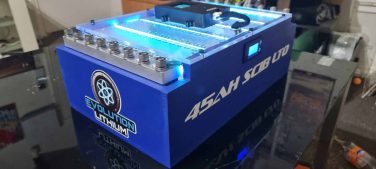
Evolution Lithium supplies SCiB LTO battery banks for high power car audio systems throughout New Zealand. If you know your amplifier RMS power, current alternator rating, charging voltage and intended use, we can help you match the lithium battery side of the system to the charging capacity you actually have.