No products in the cart.
No products in the cart.

No products in the cart.
No products in the cart.
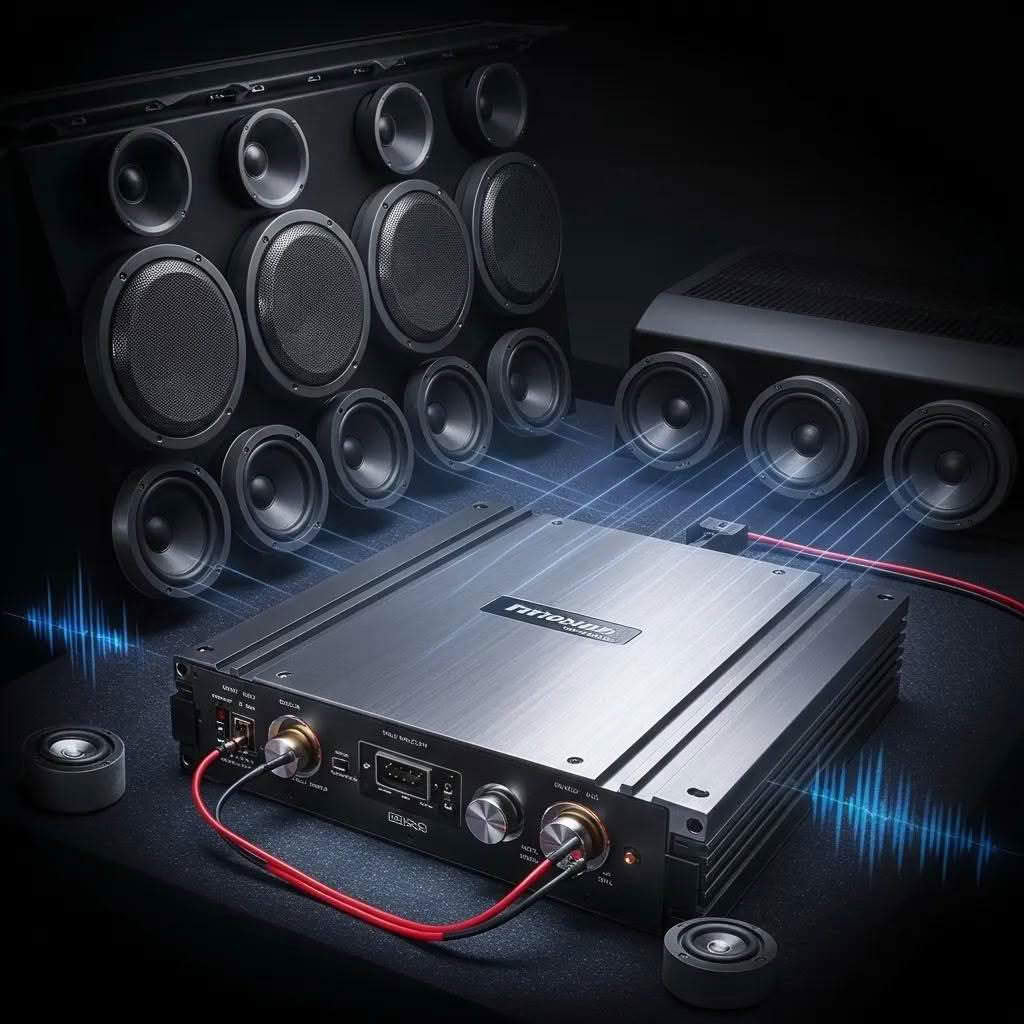
A car audio battery supports the amplifiers and electrical system when a factory starting battery and alternator cannot keep up with the current demand of a high-power audio setup. The right battery can reduce voltage drop, improve reserve capacity, and help the system stay stable during heavy bass passages, demos, or SPL use.
The battery is only one part of the electrical system. It stores energy; the alternator generates energy while the engine is running. If the alternator, wiring, grounds, fusing, or charging voltage are wrong, adding more battery capacity may hide the problem for a while but will not fix the root cause.
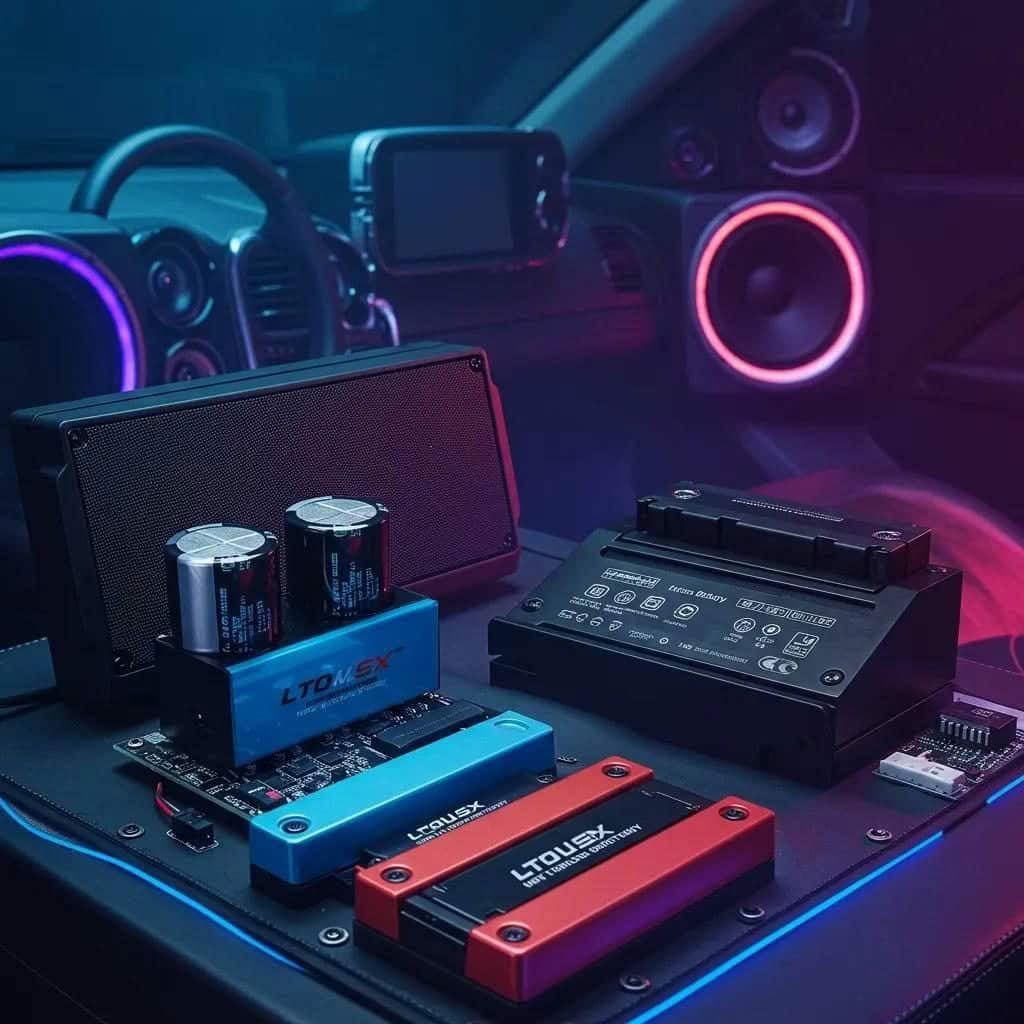
For New Zealand car audio builds, the practical choice is usually between AGM, LiFePO4/LFP, and Lithium Titanate Oxide batteries such as Toshiba SCiB LTO banks. Each chemistry suits a different type of system, charging setup, budget, and installation. Lithium banks should be installed in the rear cabin or boot area, not under the bonnet.
A car audio battery gives the amplifier a local energy reserve. It helps when the amplifier wants more current than the starting battery, alternator, and wiring can comfortably deliver at that moment.
In a small daily system, a healthy starting battery and clean wiring may be enough. In a larger system, a supplementary battery can help with:
A battery upgrade should not be treated as a substitute for alternator output. If the system draws more current than the alternator can replace during normal use, the battery bank will eventually discharge.
Common signs include:
Before buying a battery, measure voltage at the front battery, rear battery, and amplifier terminals. A multimeter or logging voltmeter is more useful than guessing from amplifier size alone.
| Battery role | Main job | Where it fits | Notes |
|---|---|---|---|
| Starter battery | Start the vehicle and stabilise the factory electrical system | Factory battery location | Usually not designed for repeated deep discharge |
| Supplementary car audio battery | Support amplifier current and reserve capacity | Rear cabin or boot | Must be fused, mounted, and charged correctly |
| Dedicated demo/SPL bank | Provide high current for large systems | Rear cabin or boot | Needs careful charging, wiring, fusing, and active balancer setup |
For Evolution Lithium builds, lithium banks should be treated as supplementary audio banks unless the full vehicle electrical system has been designed around the bank.
| Chemistry | Strengths | Limits | Best fit |
|---|---|---|---|
| AGM | Familiar, widely available, simple charging on most vehicles | Heavy, lower usable performance under large current demand, slower recovery than lithium options | Small to moderate daily systems and budget builds |
| LiFePO4/LFP | Lighter than AGM, good energy density, common in many 12 V lithium packs | Charging compatibility and current capability vary heavily by pack design | Moderate lithium upgrades where charging requirements are properly matched |
| SCiB LTO | Very high input/output capability, strong low-temperature behaviour, long cycle-life potential | Lower energy density than some lithium chemistries, needs correct voltage planning and active balancer setup | High-current car audio, SPL, demo, and serious daily systems |
Do not choose a chemistry on brand name or amp wattage alone. The real decision depends on current demand, alternator output, charging voltage, wiring, use case, available space, and how the bank will be protected and balanced.
Amplifier power ratings do not directly tell you the battery size you need. Real current demand depends on:
A useful planning estimate is:
current draw = amplifier electrical power / system voltage
If a 5,000 W amplifier were actually drawing 5,000 W electrically at 14.4 V, that is about 347 A before allowing for losses or changing voltage. Music is dynamic, so real draw changes constantly. This is why a good sizing process considers alternator output, battery reserve, chemistry, voltage target, and usage pattern together.
| Use case | Battery priority | Alternator priority | Notes |
|---|---|---|---|
| Small daily system | Healthy starter battery first | Factory alternator may be enough | Fix wiring and grounds before adding storage |
| 1,500-3,000 W daily | AGM or small lithium support may help | Check alternator output and voltage | Avoid relying on battery capacity alone |
| 3,000-5,000 W daily/demo | Lithium support becomes more useful | Alternator and Big 3 wiring matter | Measure voltage at amplifier terminals |
| 5,000-10,000 W demo | High-current lithium bank likely needed | High-output alternator often needed | Plan fusing, cable, active balancer, and charging |
| 10,000 W+ SPL/demo | Purpose-built bank and charging system | Alternator strategy is critical | Design as a system, not a battery swap |
These ranges are planning categories, not guarantees. A well-installed 5,000 W system may behave better than a badly wired 2,000 W system.
When the engine is running, the alternator is the main energy source. The battery fills gaps and supplies reserve. If the alternator cannot replace what the audio system uses, voltage will fall and the bank will discharge.
For LTO and SCiB banks, charging voltage must be matched to the bank design and the vehicle. Do not assume every vehicle or amplifier is safe at elevated voltage. Some builds need voltage-control changes, alternator regulation changes, or a DC-to-DC charging strategy.
Before changing charging voltage, confirm:
A capacitor can supply a very short burst of energy, but it does not create energy and it does not replace an undersized alternator, weak battery, poor ground, or inadequate cable. It is charged by the same electrical system that is already struggling.
For most serious car audio builds, fix the basics first:
Capacitors can have a place in a finished system, but they are not the first fix for major voltage drop.
High-current batteries need proper installation. Treat every cable and connection as a potential heat source if it is undersized, loose, or unfused.
Minimum checks:
Do not install lithium banks under the bonnet.
| Build type | Likely product path | Supporting parts |
|---|---|---|
| Compact daily system | 3Ah SCiB or 10Ah SCiB range where current demand is modest and space matters | Fuse holder, cable, lugs, and an active balancer where required |
| Strong daily/demo system | 10Ah SCiB or 20Ah SCiB range depending on amplifier current and alternator support | Cable, fusing, active balancer, and distribution hardware |
| Larger demo/SPL build | 20Ah SCiB or 24Ah Plannano LTO range after system design review | Larger cable, fusing, busbars, active balancer, and alternator planning |
| Install support | Accessories and electrical hardware | ANL/CNL fuse holders, CNL fuses, lugs, ferrules, and cable |
The right bank depends on current demand, charge voltage, alternator output, and how the vehicle is used. Browse the SCiB car audio lithium battery range as a starting point, then ask for sizing help when the system is above a simple daily-driver build.
Do not buy a lithium audio bank yet if:
Measure first. Upgrade once the root cause is clear.
For small systems, AGM may be enough. For high-current car audio, SCiB LTO can be a stronger fit when the charging system, wiring, fusing, and installation are designed correctly.
You may need a supplementary battery if the amplifier demand exceeds what the starting battery and alternator can support, or if you need reserve capacity for demo or engine-off listening. Measure voltage first.
Lithium can be lighter and stronger under high current, but it is not automatically better for every vehicle. Charging compatibility, installation quality, and safety planning matter.
LTO is often attractive for high-current car audio because of its input/output capability and long cycle-life potential. LiFePO4 can suit some moderate systems. The right answer depends on the pack design and charging setup.
Not always. Voltage drop can come from alternator limits, cable resistance, poor grounds, weak terminals, undersized fuse holders, or amplifier demand. Battery capacity is only one part of the system.
Install lithium banks in the rear cabin or boot area with secure mounting, fusing, protected cable routing, and the correct active balancer setup. Do not install lithium banks under the bonnet.
Start with the system details:
From there, size the electrical system as a whole rather than guessing from wattage alone.