 Skip to content

Car Audio Battery Comparison: Which Is Best for You?

Car audio performance hinges on stable, immediate power delivery: the right battery prevents voltage sag, reduces amplifier clipping, and keeps SPL and music fidelity consistent under heavy load. This guide explains how different battery chemistries — LTO (Lithium Titanate Oxide / SCiB), LiFePO4, AGM, and traditional lead-acid — behave in car audio systems and how those behaviors translate to real-world outcomes like recharge speed, cycle life, weight, and total cost of ownership. You will learn core technical differences, practical sizing and wiring advice, when alternator or Big 3 upgrades are necessary, and installation and maintenance best practices tailored for daily drivers, SPL competitors, budget builds, and long-term investors. The article compares LTO, LiFePO4, and AGM in a concise EAV table, maps battery types to common use cases, and closes with a focused product-application section highlighting Evolution Lithium Limited’s LTO SCiB offerings as real-world examples for each scenario. Read on to match battery chemistry and electrical upgrades to your system’s power profile and performance goals.
What Are the Main Types of Car Audio Batteries in 2025?
The primary battery chemistries used in car audio systems in 2025 are LTO (Lithium Titanate Oxide), LiFePO4 (lithium iron phosphate), AGM (absorbed glass mat), and traditional lead-acid; each has distinct electrical and mechanical traits that determine suitability for audio duty. LTO offers ultra-fast charge and high cycle life with excellent voltage stability under load, LiFePO4 balances energy density and durability, AGM and lead-acid remain cost-accessible and vibration-tolerant but suffer higher weight and lower cycle life. Understanding these differences matters because voltage stability and discharge capability directly affect amplifier headroom and distortion during heavy transients. Below are clearer breakdowns of each chemistry’s mechanism, benefits, and trade-offs to help you choose for your specific application.
How Do LTO Lithium Batteries Work and What Are Their Benefits?
LTO (Lithium Titanate Oxide) cells replace conventional graphite anodes with titanium-based anodes, which changes the electrochemical kinetics to allow very fast charge and discharge with low internal resistance. This mechanism delivers ultra-fast recharge, high maximum discharge rates, and exceptional cycle life, which suits frequent heavy-draw events like SPL bursts or repeated stage use. Measurable benefits for car audio include minimal voltage sag under transient amplifier demand, rapid recovery between peaks, and thermal tolerance that improves safety and longevity. These attributes make LTO a top choice for systems where repeated high-current draws and stable voltage are mission-critical, while the trade-offs typically include higher upfront cost and lower energy density than some other lithium chemistries.
What Are the Key Features of LiFePO4 Lithium Batteries for Car Audio?
LiFePO4 uses an iron-phosphate cathode chemistry that emphasizes safety, stable chemistry, and relatively high cycle life compared with lead-based batteries; its energy density is better than LTO in many pack designs. LiFePO4 typically charges slower than LTO but provides a favorable balance of cost, lifespan, and usable amp-hours for daily-driver audio systems and moderate aftermarket upgrades. For car audio, LiFePO4 offers reliable deep-cycle performance and predictable voltage delivery under sustained loads, although its slower recharge can be a downside for repeated short-interval peak demands. Overall, LiFePO4 is ideal when you want a durable lithium solution that trades some peak-rate performance for better energy-per-weight and a lower purchase price than LTO.
LiFePO4 Battery Life in PHEVs: Thermal Management and Driving Conditions
Plug-in hybrid electric vehicle LiFePO4 battery life implications of thermal management, driving conditions, and regional climate
What Are AGM and Lead-Acid Batteries and How Do They Compare?
AGM and traditional flooded lead-acid batteries store energy via lead plates and electrolyte, delivering high initial cranking power but lower usable deep-cycle capacity and marked voltage sag under heavy transient loads. AGM improves on flooded designs by sealing electrolyte in glass mats for vibration resistance and maintenance-free operation, making it a common budget choice in audio installations. The main trade-offs are greater weight, poorer voltage stability under repeated high discharge, and a much shorter cycle life compared with lithium options. AGMs remain viable for low-to-moderate power systems and strict budgets, but installers must design systems conservatively to avoid amplifier clipping and premature battery replacement.
- Common advantages of AGM and lead-acid:
Maintenance-free options available and generally lower upfront cost.
Good vibration resistance suitable for rough installations.
Widely available form factors for easy replacement. - Key limitations to plan for:
Heavier weight and installation constraints.
Significant voltage sag under heavy loads, risking amplifier clipping.
Shorter cycle life and higher long-term replacement frequency.
How Do LTO, LiFePO4, and AGM Batteries Compare for Car Audio Performance?

LTO, LiFePO4, and AGM differ most critically in voltage stability under load, maximum discharge capability, and lifecycle economics; these differences determine audible performance and long-term cost. Below is a comparison table that condenses the core electrical and practical attributes relevant to car audio designers: voltage stability, max discharge rate, cycle life, weight, cost, maintenance, and safety. After the table, we interpret what those numbers mean for system design choices and audible outcomes.
Different chemistries deliver distinct performance trade-offs for audio systems:
This comparison shows that LTO excels where rapid recovery and repeated extreme bursts matter, LiFePO4 offers a balanced lifetime and energy capacity for daily use, and AGM is a pragmatic choice for budget builds with modest power demands. Understanding voltage behavior under load is essential because amplifiers exposed to sag can clip, causing audible distortion and potential equipment stress; the table clarifies which chemistry reduces that risk most effectively.
What Are the Differences in Voltage Stability and Discharge Rates?
Voltage stability is the battery’s ability to maintain terminal voltage during sudden amplifier current draws; batteries with low internal resistance sustain voltage better and reduce clipping risk. LTO’s chemistry and cell design yield extremely low internal resistance, enabling very high discharge currents with minimal sag and fast voltage recovery between peaks; this benefits SPL systems and heavy transient playback. LiFePO4 maintains voltage well under sustained discharge but typically recovers slower than LTO after extreme short bursts, which can be acceptable for music-focused systems with less repetitive peak duty. AGMs show the most sag and slowest recovery, meaning designers should provision additional capacity, staging, or alternator support to avoid clipping during heavy use.
How Do Cycle Life, Weight, and Cost Affect Battery Choice?
Cycle life quantifies how many full charge/discharge cycles a battery can serve before capacity declines; higher cycle life reduces replacement frequency and total cost of ownership. LTO offers the highest cycle life among these options, often by a wide margin, which supports lower lifetime replacement costs despite higher upfront price. LiFePO4 balances cycle life and energy density, giving favorable weight-to-capacity ratios for installations where space and mass matter. AGMs are heavier and require more frequent replacement, which can inflate lifetime cost even if initial purchase is inexpensive; installers should assess cost-per-cycle rather than upfront price alone when planning long-term ownership.
How Does Maintenance and Safety Vary Among Battery Types?
Maintenance needs diverge sharply: AGMs are largely maintenance-free in daily use but can deteriorate with deep discharges; LiFePO4 and LTO require minimal routine maintenance but depend on correct charging practices and protective electronics for safety and longevity. LTO is intrinsically tolerant to thermal stress and fast charging, showing strong safety characteristics compared with many lithium types; however, all lithium installations should follow manufacturer guidance for fusing, mounting, and protective circuitry. For installers, prioritizing secure mounting, correct terminal protection, and adherence to charging profiles reduces risk and maximizes lifespan across chemistries.
Which Car Audio Battery Is Best for Your Specific Setup?
Selecting the best battery depends on your driving pattern, audio goals, and willingness to invest in long-term performance versus upfront cost. Below is a user-focused mapping that recommends battery chemistries by scenario, with a concise rationale for each choice and implementation notes that prioritize electrical compatibility and system reliability.
The table below maps common buyer scenarios to recommended battery types and the core reasons for those recommendations.
Start with the product-agnostic reasoning above, then consider concrete examples and practical tips for implementation, including capacity and mounting choices; after the next paragraph, Evolution Lithium examples follow to illustrate these recommendations.
What Battery Should Daily Drivers Choose for Balanced Performance?
Daily drivers typically benefit most from a chemistry that balances usable amp-hours, lifespan, and cost while playing nicely with stock charging systems; LiFePO4 often fits that role effectively. LiFePO4 delivers predictable voltage under moderate loads and good cycle life for owners who use audio frequently but without extreme peak duty, allowing reasonable pack sizing without large weight penalties. For drivers who frequently experience rapid recharge cycles (e.g., lots of short trips with heavy audio use), LTO is an upgrade option due to faster recharge and superior peak handling, albeit at higher cost. Consider capacity in amp-hours relative to your system draw and plan for secure mounting and proper fusing to protect both battery and vehicle electricals.
Which Batteries Are Ideal for SPL Competition and High-Power Systems?
SPL and competition systems demand batteries that minimize sag on subwoofer transients and recover quickly between hits — LTO SCiB chemistry meets those needs through very high discharge capability and rapid recharge kinetics. Systems in this class should pair LTO banks with upgraded alternators and heavy-gauge wiring to supply continuous and repeated currents without alternator overheat or voltage collapse. Practical considerations include modular battery banks to spread load, strategic placement to reduce cable length, and fusing that matches the system’s peak currents. When designing for SPL, prioritize low internal resistance and quick energy replenishment over pure energy density.
What Are the Best Budget-Friendly Battery Options for Enthusiasts?
For budget builds prioritizing cost, AGM batteries or entry-level lead-acid options remain the most accessible, especially when amplifier gains and system tuning are conservative. Budget users should accept reduced cycle life and increased weight, and mitigate risks by keeping amplifier settings conservative, adding supplemental capacitors or rock-solid grounding, and planning for earlier replacements. Evaluate cost-per-cycle to see if a slightly higher initial investment in a lower-tier LiFePO4 might deliver better long-term value. Careful system tuning and thermal management can extend usable life even on lower-cost chemistries.
How Do Long-Term Investors Benefit from Lithium Battery Lifespan and ROI?
Investors focused on long-term ownership should quantify total cost of ownership over a 5–10 year window: higher upfront cost for LTO or premium LiFePO4 often yields lower cost-per-cycle, fewer replacements, and reduced downtime. Durable chemistries minimize replacement labor and reduce the risk of mid-season failures for competition vehicles. Environmental considerations and potential resale value also favor longer-lived lithium options. When modeling ROI, include likely replacement intervals, expected cycle depth, and ancillary upgrade costs such as alternator or wiring work.
What Electrical System Upgrades Enhance Car Audio Battery Performance?
High-performance batteries can only deliver their potential if the rest of the vehicle electrical system supports increased currents and faster charging; appropriate alternator capacity, Big 3 wiring, and properly specified protective and charging electronics are the most impactful upgrades. Upgrades should be targeted based on measured system draw and symptoms like prolonged recharge or dimming. The following table clarifies upgrades, attributes, and when each is required so you can prioritize interventions.
Key electrical upgrades and when to consider them:
These upgrades reduce system impedance and help sustain voltage during heavy audio loads; the next paragraphs explain symptoms that indicate each upgrade and practical selection tips.
When and Why Are Alternator Upgrades Necessary for High-Performance Batteries?
Alternator upgrades become necessary when measured or estimated system draw exceeds the stock alternator’s safe continuous output, or when faster recharge of large lithium banks is required between short trips. Symptoms include persistent low charging voltage after heavy use, dashboard lights during high audio draws, or gradual battery depletion despite alternator operation. To match alternator output to system needs, estimate continuous and peak draw, then select an alternator with headroom for additional accessories and thermal limits; consult experienced installers for alternator selection and installation to avoid charging system conflicts. Proper alternator sizing prevents chronic undercharge and reduces long-term stress on both battery and alternator components.
How Does the ‘Big 3’ Wiring Upgrade Improve Power Delivery?
The Big 3 upgrade replaces three factory wires with larger-gauge conductors: alternator positive-to-battery, battery negative-to-chassis, and engine block-to-chassis ground, reducing resistance and improving current flow. Quantifiable benefits include lower voltage drop, cooler cable temperatures, and improved charging and transient response for high-draw audio systems; installers commonly observe more stable voltage at amplifiers and fewer dimming issues. Typical gauge recommendations vary by system but often move to 2–4 AWG for moderate systems and thicker for extreme draws; professional installation ensures secure terminations and correct fusing. Upgrading the Big 3 should be among the first electrical interventions for anyone increasing system power.
What Role Does a Battery Management System Play in Lithium Battery Safety?
Protective and charging electronics provide monitoring and automated protection against unsafe voltage, current, and temperature conditions that can degrade lithium batteries or cause failures; these functions differ in form and capability across manufacturers. At a high level, these systems monitor cell voltages and control allowable charging and discharging behavior to maintain battery health and safe operation; following manufacturer guidance on required protective electronics is essential for warranty and safety. Always reference the battery maker’s installation specifications when selecting protective or charging hardware, and use properly rated fuses and cabling to match the system’s peak current potential. Correctly specified protective systems enable the performance advantages of lithium chemistries without exposing the vehicle to undue risk.
How Should You Install and Maintain Your Car Audio Battery for Optimal Performance?
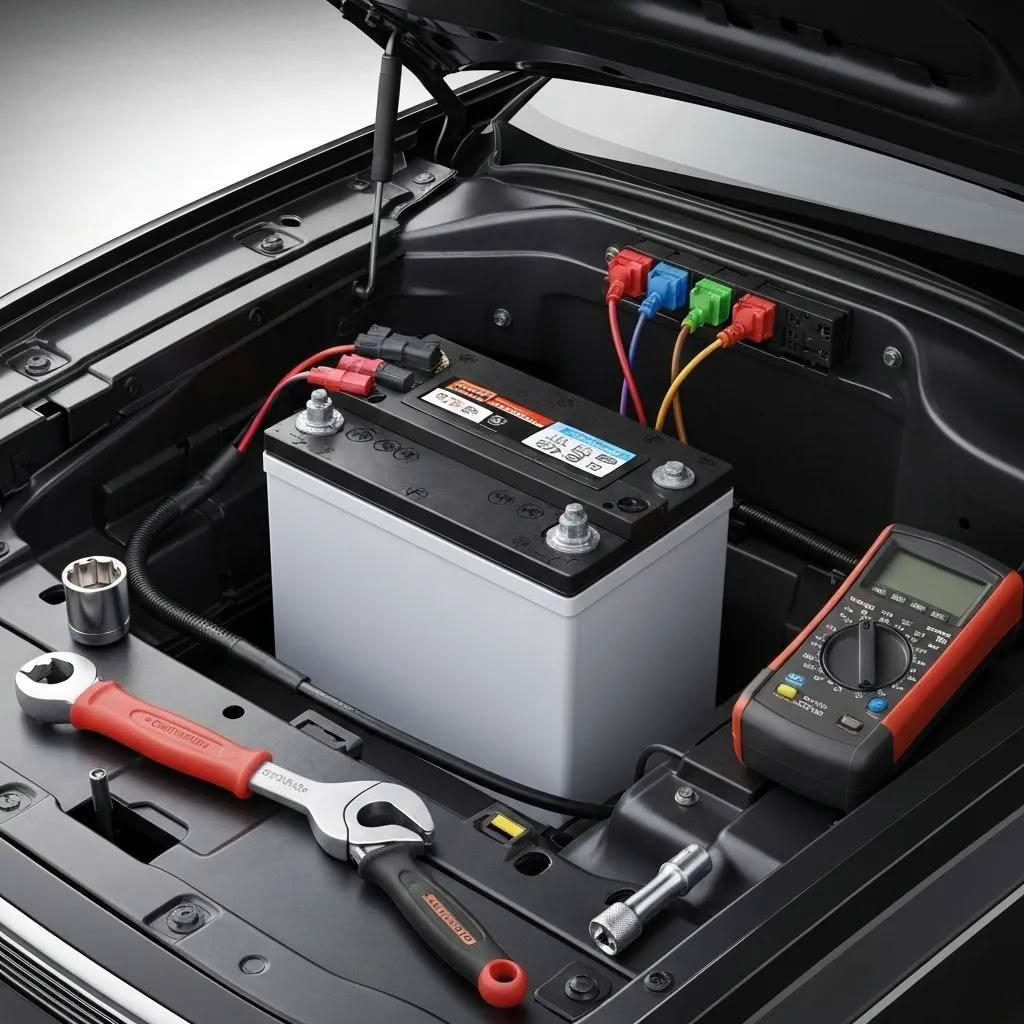
Proper installation and routine maintenance maximize battery life, maintain voltage stability, and reduce safety risks; this section provides actionable checklists and monitoring practices every installer and owner should follow. Read the installation checklist first, then review monitoring and lifecycle-preserving habits that protect your investment and maintain consistent audio performance.
Follow this stepwise installation checklist to reduce common installation errors:
- Securely mount the battery to minimize vibration and movement during driving.
- Use correct cable gauges and high-quality terminals with properly torqued connections.
- Install fusing close to battery terminals rated for expected peak currents.
- Provide recommended ventilation and follow manufacturer mounting orientation and clearances.
These steps reduce mechanical and electrical stress that can shorten battery life and lead to failures; the next subsection covers ongoing monitoring and care to extend lifespan.
What Are the Best Practices for Safe Lithium Battery Installation?
Safe lithium installation begins with following manufacturer-specified mounting, clearance, and terminal protection instructions and using appropriate fusing close to the battery. Ensure battery enclosures prevent abrasion and isolate terminals from accidental shorts, and secure the pack to prevent vibration-related cell damage; manufacturer guidance often includes torque specs and orientation limits. For vehicles with heavy draw, distribute battery weight to maintain handling and reduce strain on mounts; when in doubt, consult professional installers experienced with high-performance audio installs. Proper installation protects both the battery and the vehicle and underpins predictable audio performance.
How Can You Monitor and Extend Your Battery’s Lifespan?
Monitoring voltage, charge patterns, and environmental exposure helps catch issues early; establish a cadence of quick voltage checks after heavy sessions and periodic capacity or load tests to identify degradation. Charge the battery according to the chemistry-specific recommendations and avoid repeated deep discharges when possible to preserve cycle life; store batteries at moderate state-of-charge if the vehicle is unused for long periods. Use logging tools to capture voltage during playback sessions for tuning and troubleshooting; the collected data informs upgrades and validates that the chosen battery chemistry meets your performance needs.
Why Choose Evolution Lithium’s LTO SCiB Batteries for Your Car Audio System?
Evolution Lithium Limited produces LTO SCiB lithium battery banks specifically positioned for demanding car audio applications, offering product capacities such as 3AH, 10AH, and 20AH to match different installation footprints and power needs. Their stated unique value propositions include superior power output, ultra-fast charging, extreme safety, and an exceptionally long cycle life compared with traditional lead-acid or AGM batteries, all of which translate to reduced voltage sag and reliable repeatable performance for SPL and high-duty audio systems. Evolution Lithium emphasizes hand-assembly in New Zealand and responsive customer support as practical advantages for local installers and owners. The following points summarize the technical callouts and how they map to the scenarios discussed earlier.
- Ultra-fast recharge: Enables shorter recovery between high-current peaks and suits split-second SPL duty cycles.
- High cycle life: Lowers total cost of ownership for frequent users and competition vehicles.
- Voltage stability: Reduces amplifier clipping risk and preserves sound quality during demanding passages.
These product attributes make Evolution Lithium’s LTO SCiB batteries suitable examples for SPL competitors and long-term investors who prioritize repeatable peak performance and low lifecycle replacement frequency. For owners matching chemistry to use case, the Evolution Lithium capacities (3AH, 10AH, 20AH) provide modular options to scale banks for desired amp-hour capacity and spatial constraints.
How Do Evolution Lithium’s Batteries Prevent Voltage Sag and Amplifier Clipping?
Evolution Lithium’s LTO SCiB batteries combine low internal resistance and high instantaneous discharge capability to maintain terminal voltage during short, high-current subwoofer transients, directly reducing the instances of amplifier clipping. In practical terms, systems fitted with such LTO banks show faster voltage recovery between peaks, allowing amplifiers to deliver intended transient power without protective limiters engaging; this preserves dynamic range and SPL performance. The modular nature of available capacities (3AH, 10AH, 20AH) lets installers tailor bank size to the expected duty cycle and available vehicle space. When system design goals require consistent peak performance, the electrical characteristics of LTO chemistry address the core problem of sag and recovery.
What Makes Evolution Lithium’s LTO Batteries Superior in Durability and Safety?
Per available product descriptions, Evolution Lithium highlights exceptional cycle life, thermal tolerance, and manufacturing quality such as hand-assembly in New Zealand, which together contribute to long-term reliability and installation confidence. High cycle life reduces replacement frequency and associated labor, while robust thermal and charge acceptance traits improve operational safety under competition conditions. For buyers focused on longevity and minimized downtime, these durability and safety characteristics represent a quantifiable advantage over AGM and many other lithium solutions. Prospective buyers should request spec sheets and performance logs to verify cycle life claims and confirm suitability for their intended duty cycles.
Where Can You See Real-World Examples of Evolution Lithium Battery Installations?
Reviewing case studies and installation galleries helps validate performance claims by showing voltage logs, SPL gains, and real-world installation considerations across SPL and daily-driver contexts. Look for examples that include voltage traces during peaks, system configuration details (bank capacity, wiring gauge, alternator size), and remarks on installation challenges or outcomes; these metrics demonstrate how LTO performs under representative loads. For tailored advice on sizing and installation, contact local installers experienced with LTO systems and reference Evolution Lithium’s product documentation and example installs for planning. Practical validation through real-world examples is the final step before committing to a specific battery chemistry and installation plan.