No products in the cart.
No products in the cart.
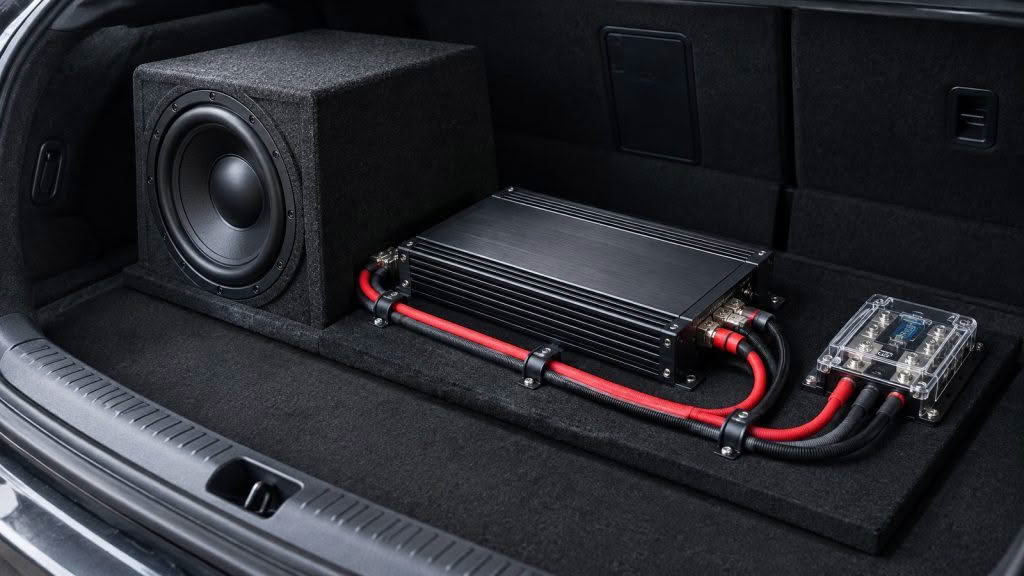
The best car battery for subwoofers is one that can support your amplifier’s current demand, maintain suitable operating voltage and provide enough reserve for how you actually use your system.
For a modest daily setup, a healthy AGM starting battery with adequate alternator support may be all you need. For higher-power systems, an appropriately configured LiFePO4 or Toshiba SCiB LTO battery bank can provide substantially greater current-delivery capability.
The right choice depends on your amplifier RMS power, charging voltage, alternator output and listening time—not simply the biggest amp-hour rating.
A subwoofer battery also needs to work with the rest of the electrical system. Oversized cables won’t repair an inadequate alternator, and adding battery capacity won’t eliminate a poor ground connection.
This guide compares the available battery types, explains how to estimate electrical demand and helps you select a suitable setup for daily listening, demos or SPL competition.
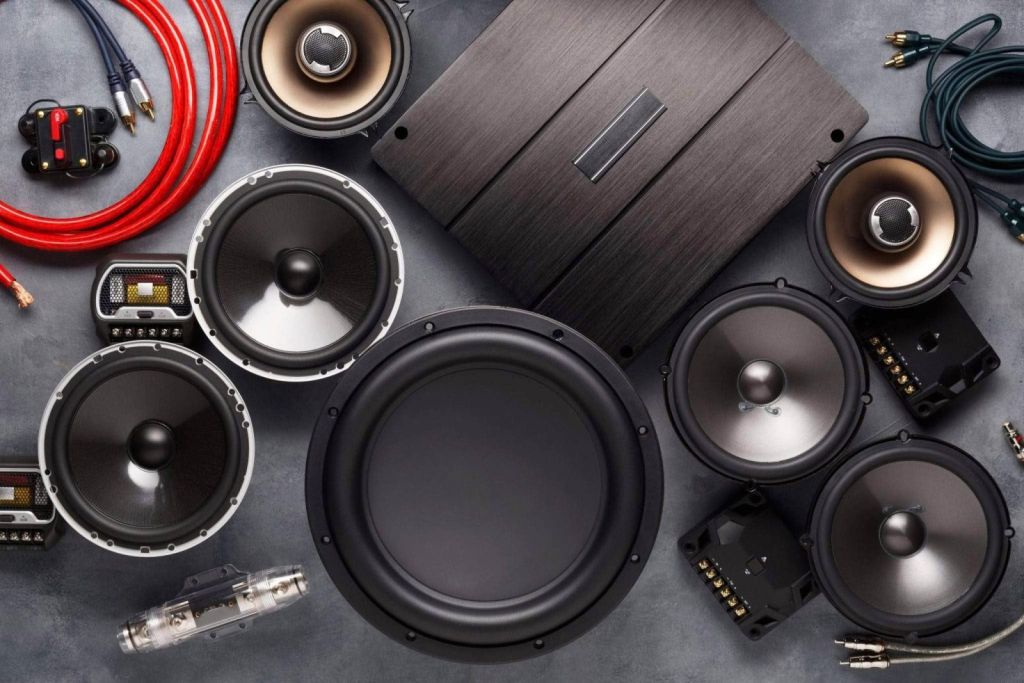
There isn’t one battery chemistry that suits every car-audio installation.
A daily driver running a modest subwoofer has different requirements from a 5,000 W RMS setup or a dedicated SPL vehicle.
The three main options are AGM, LiFePO4 and lithium titanate oxide (LTO), including Toshiba SCiB cells.
| Battery Type | Best Suited To | Main Advantages | Important Limitations |
|---|---|---|---|
| AGM | Modest daily systems and starting-battery duties | Familiar 12 V charging compatibility, widely available, relatively straightforward installation | Heavy, greater voltage sag under demanding loads, limited deep-cycle endurance |
| LiFePO4 | Daily and demo systems using a compatible lower-voltage charging arrangement | Good usable energy, low weight, capable current delivery with suitable cells | Charging must suit the exact bank; current capability varies significantly |
| Toshiba SCiB LTO | High-current daily, demo and SPL systems | High power capability, strong charge acceptance and excellent cycling characteristics | Higher initial cost, lower energy density and potentially significant charging-system modifications |
If you’re running a moderate subwoofer system and your charging voltage stays healthy during normal listening, you may not need lithium.
A quality AGM battery can handle starting duties and support modest additional audio demand.
Its main limitations become more noticeable as current demand and listening duration increase. Repeated heavy discharging can also shorten its service life.
An AGM battery shouldn’t be dismissed simply because lithium is available. The important question is whether the existing electrical system is genuinely limiting performance.
LiFePO4 is worth considering where its charging requirements match the vehicle and its finished-bank discharge capability suits the amplifier.
Evolution Lithium’s EVE 22Ah-cell LiFePO4 range uses four-cell series configurations suitable for correctly managed charging systems operating at or below 14.6 V.
Available finished-bank capacities include 44Ah, 88Ah, 132Ah, 176Ah and 220Ah.
Larger capacities provide additional stored energy, while the number of parallel cells also affects available discharge current.
Explore Evolution Lithium’s EVE LiFePO4 battery banks and compare finished configurations suited to compatible lower-voltage electrical systems.
Explore EVE LiFePO4 Battery BanksToshiba SCiB LTO is particularly relevant to high-output car audio because its cell technology is designed for demanding charge and discharge applications.
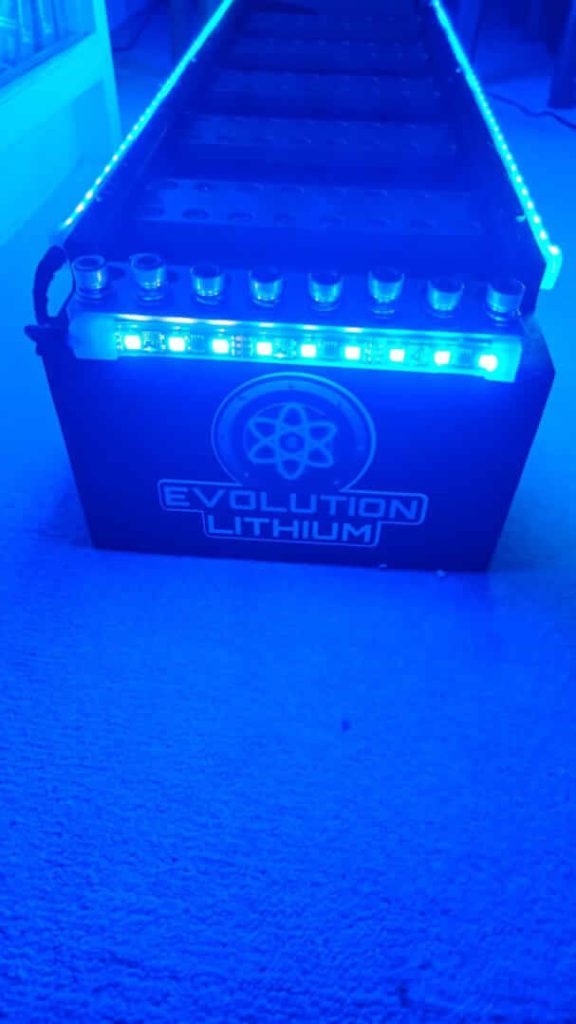
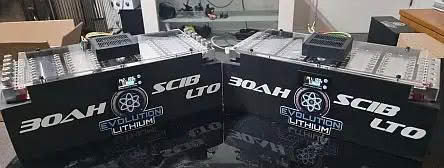
Evolution Lithium supplies SCiB banks using different cell sizes, allowing builders to prioritise high current delivery, additional reserve or a combination of both.
For example:
The exact performance depends on the finished bank, not just the cell chemistry.
Toshiba publishes separate SCiB high-power and high-energy cell specifications, illustrating why cell selection matters.
For correctly configured 6S SCiB applications, Evolution Lithium commonly targets approximately 15.6–15.9 V charging, provided the connected equipment and cell specifications permit it.
This is not a direct drop-in replacement for every standard 12 V vehicle.
The right battery depends on how heavily the system is used, not just the amplifier’s advertised power rating.
| System Type | Practical Starting Point | What Matters Most |
|---|---|---|
| Modest daily subwoofer setup | Healthy AGM and adequate factory charging system | Measured voltage, battery condition and wiring |
| Higher-power daily system | Suitable LiFePO4 or SCiB LTO bank if measurements justify it | Charging compatibility and current delivery |
| High-output daily or SPL build | High-current SCiB LTO configuration with appropriate charging support | Repeated bass demand, voltage stability and complete circuit design |
| Long demos and extended listening | Bank with adequate usable energy, current capability and replenishment | Average power demand and runtime |
These are application categories, not guaranteed wattage-to-battery-size recommendations.
For normal music use, amplifier demand varies continuously.
A 3,000 W RMS amplifier doesn’t necessarily draw its maximum rated electrical input throughout every track.
However, bass-heavy music, aggressive tuning and sustained high volume can increase average demand considerably.
Daily setups should therefore be sized for realistic listening conditions and sufficient charging recovery—not only their loudest short bass peak.
A demo system playing demanding music for extended periods places different requirements on the battery bank.
Short SPL burps may prioritise very high current delivery, while longer demos require substantially more usable energy.
Two banks with the same Ah rating can behave very differently if their cells have different discharge capabilities and internal resistance.
Explore Evolution Lithium’s 2.9Ah-cell SCiB LTO banks in 15Ah, 30Ah, 45Ah, 60Ah and 90Ah finished configurations.
The appropriate size still depends on amplifier load, alternator support and intended playing time.
View 2.9Ah SCiB LTO Battery BanksStart by estimating the amplifier’s electrical input demand.
Use credible RMS output rather than peak or maximum marketing ratings.
For a Class D amplifier, a useful planning equation is:
Estimated DC input current (A) = RMS output (W) ÷ [Operating voltage (V) × Amplifier efficiency]
For illustration, the following estimates assume 80% efficiency and continuous rated output.
| Amplifier RMS | Operating Voltage | Estimated DC Input Current |
|---|---|---|
| 1,000 W | 14.4 V | 87 A |
| 3,000 W | 14.4 V | 260 A |
| 5,000 W | 15.8 V | 396 A |
A 5,000 W RMS amplifier operating at 15.8 V would therefore require approximately:
5,000 ÷ (15.8 × 0.80) = 396 A
That is the estimated total amplifier input current under the stated conditions.
It is not the required battery-only discharge current, a recommended fuse rating or a prediction of continuous music consumption.
The alternator may provide part of the current while the battery supplies the difference. The vehicle also has its own electrical loads.
As an example, if the amplifier requires 396 A and the vehicle consumes another 40 A, total electrical demand is approximately 436 A at that operating point.
Whether the alternator can maintain voltage depends on its actual output at the engine speed and temperature involved.
Final impedance, amplifier efficiency, music duty cycle and tuning also affect the result.
Rather than buying a battery based solely on the RMS figure, calculate the likely electrical demand and compare it with your available charging support.
Use Evolution Lithium’s Car Audio Battery & Alternator Calculator to estimate current requirements, compare bank configurations and investigate runtime.
The calculation is a starting point. Final sizing should be checked against the bank specifications and real measurements.
Open the Battery & Alternator CalculatorAmp-hours describe electrical charge capacity. They don’t tell you how much current a completed bank can safely deliver, how strongly voltage will sag or how long it can support a specific amplifier.
You need to assess three related characteristics.
A cell’s C-rate relates allowable current to its amp-hour capacity.
As a basic calculation:
Continuous current (A) = Capacity (Ah) × Continuous C-rate
However, the continuous rating must be valid for the exact cells, temperature and operating conditions.
The finished bank’s actual capability also depends on its series/parallel arrangement, connections, protection and voltage behaviour.
A theoretical cell-current calculation is not a guarantee of sustained amplifier output.
Amp-hours alone cannot accurately compare banks operating at different voltages.
Stored energy is better considered in watt-hours:
Nominal energy (Wh) ≈ Capacity (Ah) × Nominal bank voltage (V)
Actual usable energy depends on permitted voltage limits, discharge current, temperature and operating conditions.
Higher capacity can extend playing time when the alternator cannot fully cover the load, but only until that usable reserve is depleted.
Internal cell resistance, connection resistance and discharge current affect voltage under load.
This is particularly important in high-output systems where significant current changes occur during bass passages.
A high-current bank may provide strong short-duration support despite having less stored energy than a larger capacity-focused option.
Explore Evolution Lithium’s 20Ah-cell SCiB LTO battery banks, designed with greater emphasis on stored energy and listening duration.
Confirm the finished bank’s continuous discharge limits and charging support before choosing a configuration.
Explore 20Ah-Cell SCiB Battery BanksA battery supplies stored energy. The alternator replaces energy while the engine is running.
That difference matters.
A larger bank can support demanding bass passages and extend the time available before voltage falls. It cannot indefinitely compensate for an alternator that produces less energy than the system consumes.
Also, a 250 A alternator may not deliver 250 A at idle.
Actual output depends on RPM, temperature, regulator behaviour and the alternator’s output characteristics.
When planning an upgrade, check:
If you’re regularly using more energy than the alternator replenishes, a larger battery alone isn’t the long-term solution.
Low voltage at the amplifier doesn’t automatically mean your battery bank is too small.
There may be unnecessary resistance between the battery and amplifier.
Measure voltage at the source battery or bank and directly at the amplifier during comparable loads. Ideally, take simultaneous measurements when the load is changing rapidly.
If source voltage remains stable but amplifier voltage falls significantly, investigate the positive cable, grounds, fuse holders, lugs and distribution connections.
If voltage falls at the source as well, assess the charging system, battery condition and energy reserve.
For the detailed testing procedure, use our car audio voltage-drop troubleshooting guide.
Fix electrical restrictions before adding more capacity. Lithium cannot repair an inadequate cable or loose connection.
Battery selection is only part of the job. A correctly specified bank can still be damaged or create safety risks if connected to an incompatible charging system.
For an appropriately configured 4S LiFePO4 bank, charging must remain within its specified upper voltage limit, typically 14.6 V or less.
For applicable 6S Toshiba SCiB systems, Evolution Lithium commonly works around 15.6–15.9 V, subject to the exact cell and bank requirements.
Do not raise the vehicle’s charging voltage without verifying the ratings of every connected amplifier, DSP, head unit, vehicle module and other sensitive component.
An active balancer helps maintain cell-group balance, but does not replace suitable charging control.
Do not directly parallel an AGM starting battery and a lithium bank simply because both are installed in the same vehicle.
Differences in resting voltage, charging behaviour and operating limits can create undesirable current flows.
A vehicle retaining a front starting battery and adding a rear lithium bank needs an engineered arrangement that accounts for those differences.
The bank should also be safely brought to the appropriate connection voltage before installation using the method specified for that system.
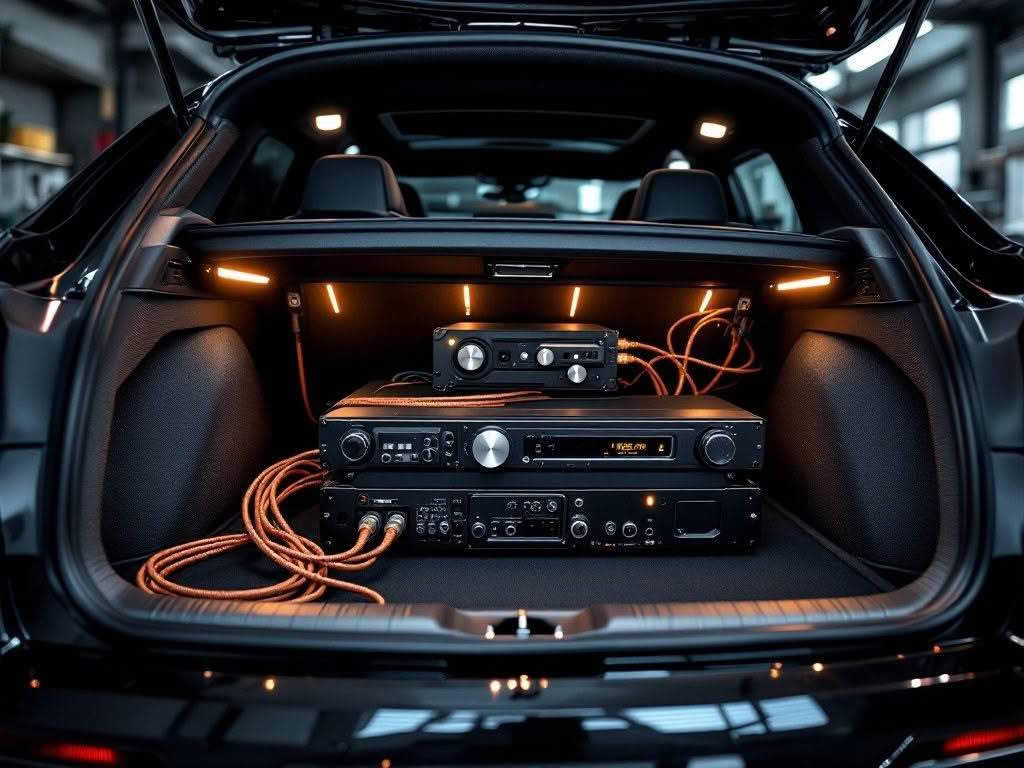
Evolution Lithium banks should be installed securely in the rear cabin or boot, not in the engine bay.
Essential requirements include:
For more detail, follow our rear lithium battery mounting and cable-routing guide.
High-current lithium installations should be designed and checked by someone competent in automotive electrical systems.
The best choice depends on amplifier RMS, electrical demand, charging voltage and listening time. AGM may suit a modest system, LiFePO4 can work well with compatible lower-voltage charging, and SCiB LTO is particularly useful for demanding high-current installations.
There is no reliable Ah-only recommendation. At 14.4 V and an assumed 80% amplifier efficiency, 2,000 W RMS requires approximately 174 A of DC input at continuous full output. Actual bank capacity must also account for discharge capability, alternator support and intended runtime.
Yes, provided the battery and charging system can adequately support the amplifier without unacceptable voltage sag or excessive discharge. Measure the system before assuming an upgrade is required.
It may improve current support and reserve if the existing battery is limiting performance. However, it won’t correct poor grounds, undersized wiring or an alternator that cannot replenish the energy used.
A properly selected lithium bank can offer advantages in discharge capability, weight and usable energy, depending on chemistry and configuration. AGM remains appropriate for many moderate systems. Charging compatibility, installation complexity and total cost should guide the decision.
Yes, when the vehicle’s complete electrical system is designed for the selected bank. High-current SCiB LTO isn’t limited to SPL competition, but its charging requirements and compatibility must be checked before installation.
The best subwoofer battery isn’t necessarily the largest or most expensive one.
A reliable setup starts with the amplifier’s real electrical demand, available alternator output, operating voltage and the amount of time you want to play music.
AGM can suit modest daily systems. EVE LiFePO4 provides an option for compatible lower-voltage installations, while Toshiba SCiB LTO banks offer strong choices for demanding current delivery and high-power builds.
Whichever chemistry you choose, the battery, alternator, cables, grounds, fuse protection and amplifier must work as one properly engineered system.
Not sure whether you need a 30Ah SCiB bank, a larger capacity-focused bank or LiFePO4?
Evolution Lithium supplies custom-configured battery banks for New Zealand car-audio enthusiasts, daily drivers and SPL competitors.
Send us your amplifier RMS power, final impedance, alternator output, normal charging voltage and intended use. Include your measured voltage under bass load if available.
We’ll use those details to help identify suitable bank options and any electrical-system requirements that need addressing before installation.
Get a Battery Bank Recommendationntended use through the configuration contact form for a bank recommendation matched to the completed build.