 Skip to content


Are Lithium Batteries Good for Car Audio? Benefits, Types, and Installation Guide
Lithium batteries are rechargeable battery packs that use lithium-based chemistries to deliver high discharge currents, stable voltage, and long cycle life—attributes that directly address common car audio power problems such as voltage sag and slow recovery between bass peaks. This guide explains whether lithium batteries are good for car audio by laying out how they work, which chemistries matter (LiFePO4 and lithium titanate/LTO), and the concrete performance gains you can expect in aftermarket and competition systems. Many installers and builders face clipping, dimming lights, or limited run times from traditional lead-acid systems; lithium batteries mitigate these by offering higher usable capacity and much lower internal resistance. You will learn the core benefits, chemistry trade-offs, side-by-side comparisons with AGM and lead-acid, step-by-step sizing and installation calculations, and practical safety and maintenance routines. The article maps each section clearly so you can move from understanding voltage stability to selecting the right battery type and wiring it safely for reliable audio performance.
What Are the Key Benefits of Using Lithium Batteries for Car Audio?
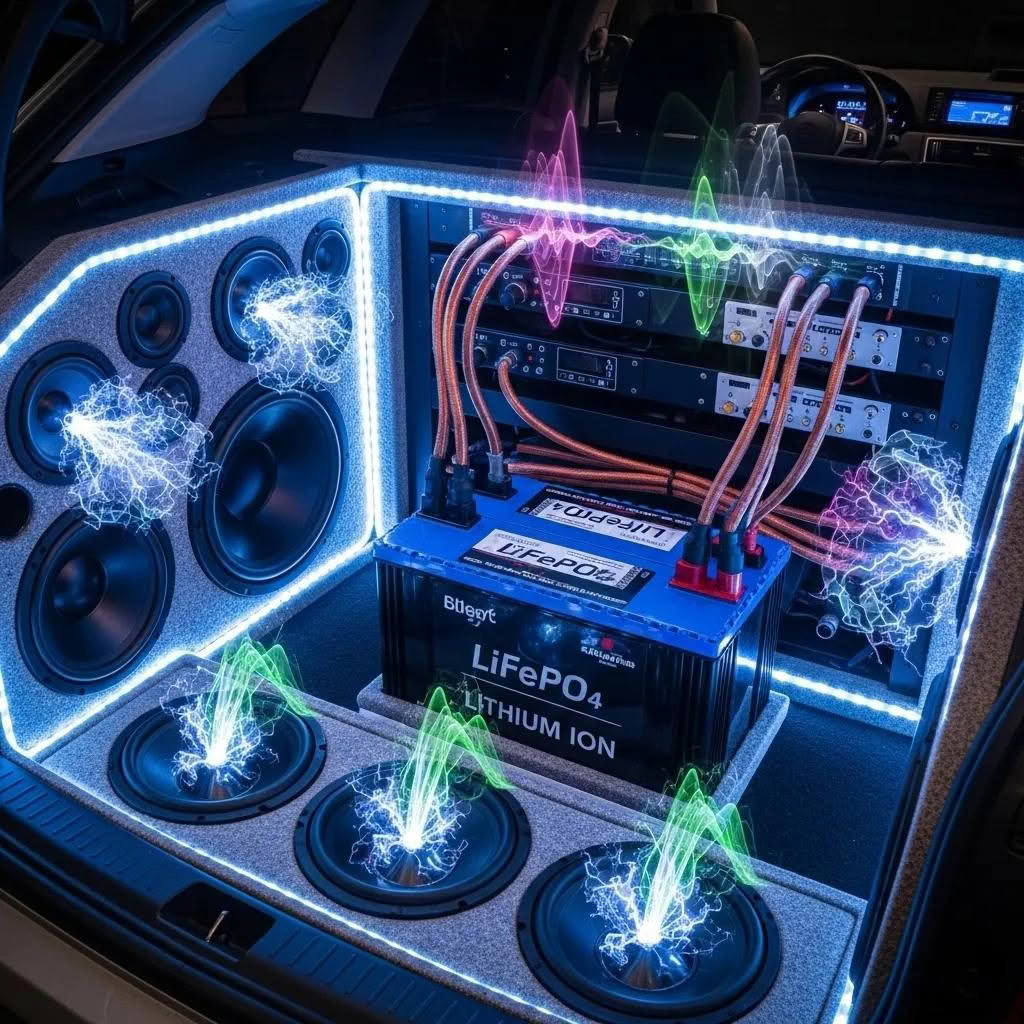
Lithium batteries deliver more usable energy, higher continuous and peak discharge rates, and a flatter voltage curve under load, which together improve amplifier headroom and reduce audible clipping during bass transients. Their low internal resistance and rapid recharge characteristics enable faster recovery between peaks, and their superior cycle life and lighter weight make them attractive for both daily use and competitive installs. The combination of high usable capacity and stable voltage means smaller lithium packs often outperform much larger lead-acid banks for car audio tasks, allowing installers greater flexibility in placement and vehicle weight management. Below are the main benefits explained and summarized for quick comparison.
- Stable Voltage Under Load: Low internal resistance minimizes voltage sag, preserving amplifier output during peaks.
- High Discharge Capability: Able to supply large continuous and burst currents for subwoofers and amplifiers.
- Lighter Weight and Smaller Size: Easier mounting and reduced vehicle load compared with lead-acid equivalents.
- Longer Cycle Life: More cycles translate to lower cost-per-cycle over the battery’s useful life.
These benefits make lithium batteries a high-performance option for car audio systems. Understanding the specific mechanisms—voltage stability and discharge capability—leads naturally to a deeper look at how lithium batteries preserve amplifier headroom and what weight savings mean for installation.
Lithium-driven voltage stability and low internal resistance reduce amplifier clipping and improve transient response, which we’ll examine in the next subsection.
How Do Lithium Batteries Improve Voltage Stability and Amplifier Performance?
Lithium batteries improve voltage stability by presenting much lower internal resistance (IR) than typical lead-acid or AGM cells, which reduces voltage drop when amplifiers draw heavy transient currents. When an amplifier demands a sudden burst—measured in hundreds of amps at the pack level—a low-IR battery maintains terminal voltage closer to nominal, preserving headroom and preventing the amplifier from hitting its clipping threshold. For example, a system that drops 1.5 volts under peak load with a lead-acid bank may drop less than 0.5 volts with a correctly-sized lithium pack, translating to several decibels of retained output before distortion. This improved voltage profile also reduces stress on alternators and minimizes the need for giant reserve banks, making lithium attractive for both SPL competition and high-fidelity mobile audio. The next section explains how this performance advantage connects to amplifier efficiency and overall system reliability.
Why Does Weight Reduction Matter for Car Audio Systems?
Weight reduction from switching to lithium battery technology matters for installation convenience, vehicle handling, and competition classes where weight is scored or penalized, but it also affects everyday usability because smaller, lighter batteries ease mounting and reduce trunk intrusion. A typical lithium pack with equivalent usable capacity can weigh 40–70% less than a comparable lead-acid setup, enabling more compact enclosures and simpler routing for high-current cables. Lighter battery banks lower the vehicle’s center of gravity and can improve fuel economy marginally, while making battery removal and servicing less strenuous for installers. For competition builds, weight savings can permit larger speaker arrays or additional components within weight limits, and for street cars, the smaller footprint allows more creative placement without cutting into cargo space. Knowing this, the next section will compare the primary lithium chemistries suitable for car audio and when each makes sense.
This table summarizes how each benefit translates into practical improvements for car audio systems, and the next major section compares specific lithium chemistries for those use cases.
Which Types of Lithium Batteries Are Best for Car Audio Systems?
For car audio, the two lithium chemistries most frequently considered are lithium iron phosphate (LiFePO4) and lithium titanate (LTO); each offers distinct strengths in cycle life, discharge capability, safety, and charging behavior. LiFePO4 is widely used because it balances safety, cost, and cycle life, offering strong continuous discharge and excellent thermal stability for automotive environments. LTO provides extreme charge/discharge rates and exceptionally long cycle life but at higher cost and lower energy density, making it a niche choice for extreme competition where rapid recovery and repeated high-rate bursts are required. Choosing between them depends on priorities: daily-use reliability and value (LiFePO4) versus ultra-high-rate competition performance (LTO). The following subsections dive into the features of each chemistry and practical selection guidance.
What Are the Features of LiFePO4 Batteries for Car Audio?
LiFePO4 batteries combine a strong safety profile with long cycle life and robust continuous discharge ratings, making them a practical primary recommendation for most car audio installations. Typical LiFePO4 packs used in audio provide thousands of cycles at moderate depth-of-discharge and tolerate elevated temperatures better than many lithium-ion chemistries, reducing risk in trunk or under-seat placements. Their energy density is lower than some high-energy lithium-ion types, but compared to AGM or flooded lead-acid they still offer superior usable capacity for the same volume and weight. LiFePO4 requires appropriate BMS integration and a charging profile matched to its voltage window, but with those protections in place it delivers reliable, predictable performance for daily and high-demand audio systems. Next we’ll contrast those characteristics with LTO to illustrate when the higher-cost option makes sense.
How Does Lithium Titanate Compare for High-Performance Audio?
Lithium titanate (LTO) excels in extreme-rate applications by offering very fast charge acceptance, very high continuous and pulse discharge capability, and an extraordinarily long cycle life that can exceed most other chemistries. These traits let LTO packs recover quickly between bursts in SPL competitions and sustain repeated extreme loads without significant degradation, making them attractive for specialist builders focused on performance over cost. The trade-offs are lower energy density and substantially higher upfront cost compared with LiFePO4 and AGM, which limits LTO’s use to niche high-rate scenarios where rapid recovery and near-indefinite cycle tolerance matter most. Installers choosing LTO must ensure the charging system are designed for its unique voltage and charge characteristics; the next section compares lithium to more traditional battery technologies for those evaluating overall value.
How Do Lithium Batteries Compare to Traditional Car Audio Batteries?
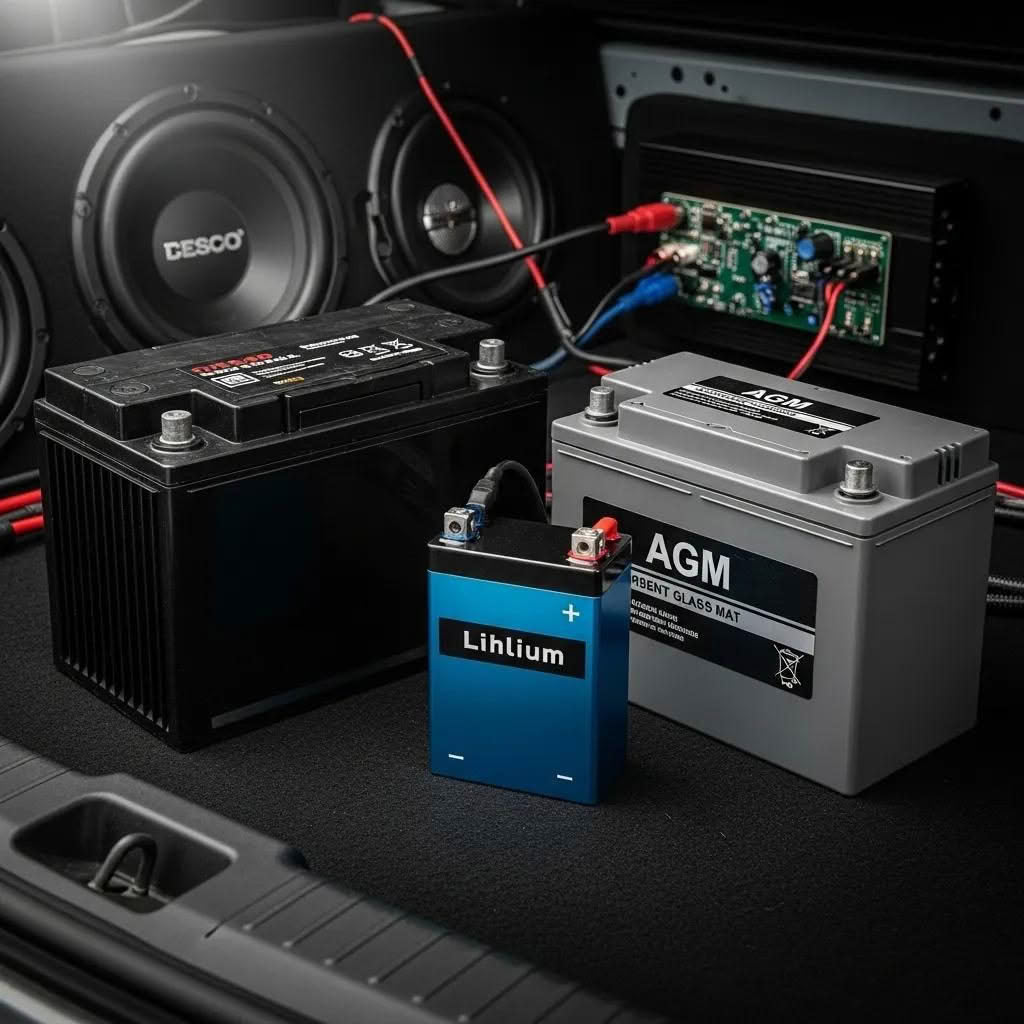
Lithium batteries typically outperform AGM and lead-acid across key performance metrics—usable capacity, weight, cycle life, and discharge behavior—while AGM and lead-acid retain advantages in lower upfront cost and simpler compatibility with many stock charging systems. From an operational standpoint, lithium systems provide more usable amp-hours at higher C-rates, meaning a smaller lithium pack can often replace a much larger AGM bank for equivalent run-time under heavy audio loads. Total cost of ownership for lithium often becomes favorable because cycle life is so much longer, although payback depends on usage profile and whether the vehicle’s charging system requires modification for safe long-term charging. Below are focused comparisons and ROI considerations that clarify when switching to lithium is justified.
What Are the Differences Between Lithium and AGM Batteries for Car Audio?
Compared with AGM, lithium (especially LTO) offers greater usable capacity per unit weight, superior discharge rates, and better cycle life, which improves audio stability and reduces replacement frequency. AGM batteries are simpler to integrate in systems that expect lead-acid charging voltages and often work with alternator-based charging without additional electronics, making them attractive for budget installations or vehicles where modifying charging behavior is impractical. Lithium requires a balancer and may need charging profile adjustments or a DC-DC charger/isolator to ensure alternator compatibility, but these steps increase overall reliability and allow full utilization of lithium’s advantages. In many cases, the practical trade-off is paying more up front for a lithium system that delivers consistent high performance and lower lifetime maintenance.
How Does Lithium Compare to Lead-Acid Batteries in Cost and Performance?
Lead-acid batteries (both flooded and sealed) remain the lowest up-front cost choice but suffer from much shorter cycle life, heavier weight, and greater susceptibility to sulfation and capacity loss under deep discharge. Lithium batteries reduce these lifecycle problems by tolerating deeper discharges with less degradation and delivering many more cycles before replacement, which reduces cost-per-cycle despite higher initial investment. For installations where weight, space, or frequent deep discharge are important—such as frequent long-run audio sessions or competition—lithium generally offers better value over time. Calculating ROI requires estimating cycles per year, replacement frequency for lead-acid, and the premium paid for lithium; when systems see heavy use, lithium often proves more economical within a multi-year horizon.
How Should You Size and Install Lithium Batteries for Car Audio Systems?
Sizing lithium batteries for car audio starts by converting amplifier RMS wattage into current draw and then translating current into amp-hours (Ah) for the desired runtime while including safety headroom and efficiency factors. Practical installation also requires correct cable gauge selection, source fusing near the battery, proper BMS integration, and verifying alternator or charger compatibility to ensure safe charging profiles. Before wiring, calculate maximum expected continuous and peak currents so you can choose a battery whose continuous discharge rating and BMS protection exceed those values. The following subsections give a worked calculation example and wiring/fusing best practices to apply on real installs.
To calculate power needs for an amplifier system, follow this step-by-step approach:
- Convert RMS Watts to Amps: Amps = Watts / Voltage; account for amplifier efficiency (e.g., 75%).
- Apply Headroom Multiplier: Multiply calculated current by 1.2–1.5 to cover peaks and inefficiency.
- Determine Ah for Desired Runtime: Ah = (Amps × Minutes of runtime) / 60, then add reserve margin.
- Select Battery Rating: Choose battery Ah and continuous discharge rating that exceed calculated values and match.
This numbered checklist outlines the calculation flow; next we’ll show a numeric example to make the math concrete and then cover wiring .
How Do You Calculate Power Requirements for Car Audio Amplifiers?
As a practical example, a system rated at 2000 W RMS running off a 14.4 V electrical bus with amplifier efficiency of 75% draws approximately 185 amps: Amps = 2000 / 14.4 / 0.75 ≈ 185 A. If you want sustained 10 minutes of runtime at that load, required Ah = (185 A × 10 minutes) / 60 ≈ 30.8 Ah; add a 30% safety margin and you’d target around 40 Ah of usable capacity. Because lithium batteries typically allow deeper discharge, a 40 Ah LTO pack with appropriate continuous discharge rating and balancer could meet that requirement where an AGM would need much higher nominal Ah and weigh substantially more. Keep in mind multiple amplifiers, peak vs RMS differences, and capacitor use will change these figures, and the next subsection addresses how to wire and protect such a pack.
What Are the Best Practices for Wiring, Fusing, and Battery Management Systems?
Proper wiring and protection are essential to translate battery capability into safe performance: use appropriately sized cable to limit voltage drop, install the main fuse within 18 inches of the battery positive terminal, and select a fuse rated slightly above the battery’s continuous current capability to protect against wiring faults. Recommended wire gauge depends on current and length—choose thicker cable for longer runs and higher currents to prevent voltage loss and heating. A balancer matching the battery chemistry is mandatory: it should provide cell balancing, overcurrent protection, over/under-voltage cutoffs, and temperature monitoring; mount the balancer with secure mechanical protection and good ventilation. Following these practices reduces the risk of short circuits, thermal issues, and premature battery wear, leading naturally into best-practice safety and maintenance routines.
- Wiring Checklist:
Use cable rated for continuous current plus safety margin. Route cables to avoid sharp edges and heat sources. Terminate correctly with crimped lugs and protective boots. - Fusing Checklist:
Install main fuse close to battery positive terminal. Use fuse type and rating compatible with cable and battery spec. Protect individual device feeds with branch fuses as needed.
What Are the Safety Considerations and Maintenance Tips for Lithium Car Audio Batteries?
Lithium batteries introduce specific safety considerations—correct BMS, charging profile adherence, secure mounting, and protection from mechanical damage are all essential to prevent failures and reduce fire risk. While LiFePO4 has a favorable thermal and chemical stability compared with many lithium-ion chemistries, improper charging, physical puncture, or incorrect fusing can still lead to hazardous conditions. Regular maintenance such as terminal inspections, periodic voltage checks, balance verification, and storage at recommended state-of-charge extends service life and reduces the chance of unexpected failure. The following subsections provide concrete risk mitigation steps and a maintenance schedule you can implement.
How Can You Mitigate Risks When Using Lithium Batteries in Cars?
Mitigating risks starts with selecting a battery with an appropriate balancer and ensuring the vehicle charging system provides a compatible voltage profile or that a DC-DC charger or alternator regulator is installed where needed. Secure mechanical mounting and physical protection in a vented enclosure reduce damage from road shock or accidental impact, and correctly sized fuses at the battery terminal prevent catastrophic wiring short circuits. Regular inspections should look for loose terminals, frayed cables, or abnormal heat signatures during charge/discharge cycles; if a balancer reports cell imbalance or temperature faults, remove the battery from service until inspected. Following these steps reduces the most common installer mistakes and improves long-term reliability.
What Maintenance Is Required to Maximize Lithium Battery Lifespan?
A simple maintenance schedule keeps lithium packs healthy: check terminal tightness and cable integrity monthly, verify resting voltages and balancer status quarterly, and store batteries at approximately 40–60% state-of-charge for extended storage periods to minimize capacity loss. Avoid exposing batteries to extreme temperatures; prolonged heat accelerates degradation while deep cold can affect charge acceptance—both conditions warrant storage or insulation strategies for off-season vehicles. If the balancer supports firmware updates or telemetry, periodically review logs to spot imbalance trends or abnormal cycle behavior; addressing these early prevents deeper issues. Implementing these routines ensures your lithium system maintains capacity and safety across many years of audio use.
- Maintenance Checklist:
Monthly terminal and cable inspection. Quarterly voltage and BMS status checks. Store at partial charge and moderate temperatures for long-term storage.
What Are the Future Trends and Advanced Applications of Lithium Batteries in Car Audio?
Lithium adoption in car audio continues to grow as costs decline and LiFePO4 becomes the de facto choice for durable, high-performance installs; advanced applications include large lightweight battery banks for SPL contests and telemetry-enabled BMS systems that provide real-time monitoring and predictive maintenance. Integration with vehicle electrification trends—hybrid and EV power systems—creates new opportunities for smart energy management that can prioritize audio loads and optimize charging strategies. Additionally, high-rate chemistries and modular battery architectures are enabling rapid recovery between bursts and easier scaling for competition rigs, while telemetry and logging from smart BMS units allow builders to tune systems based on measured performance rather than estimates. The next subsections illustrate competition uses and the value of modern BMS features for serious installers.
How Are Lithium Batteries Used in Competition Car Audio Setups?
In competition environments, builders use lithium batteries for their ability to supply extreme peak currents repeatedly without substantial voltage collapse, enabling higher SPL output and quicker recovery between runs. Lightweight battery banks reduce vehicle mass for classes where every kilogram matters, and modular packs make it easier to stage batteries for rapid service or to meet class rules. Organizers and competitors also expect predictable performance across multiple runs; the long cycle life and consistent voltage behavior of lithium mitigate variability that could otherwise affect scoring. With these advantages in mind, installers must ensure BMS and charging systems are engineered for the rigors of competition use.
What Role Do Smart Battery Management Systems Play in Car Audio Power Solutions?
Smart BMS units now provide essential protections—cell balancing, over/under voltage and temperature cutoffs—and increasingly offer telemetry, logging, and remote alerts that help diagnose issues before they escalate. Telemetry enables builders to track amp draw profiles, temperature excursions, and state-of-charge in real time, informing tuning decisions and preventative maintenance. When selecting a BMS, prioritize features such as accurate cell balancing, reliable overcurrent protection, temperature sensors, and data access for trend analysis; these capabilities transform a battery from a passive component into an active system that supports performance and safety. The evolution of smart BMS technology makes advanced lithium packs both safer and more serviceable for high-demand car audio applications.