
When Should You Upgrade Your Car Audio Battery? Step-by-Step Guide for Big Bass Systems
If your headlights dim, your amplifier goes into protect, or your bass gets weaker as the volume comes up, your car audio system may have outgrown the factory battery. As a practical rule, systems above roughly 1000W RMS should be checked for voltage drop, and systems in the 3000W+ range should be planned around proper battery support, alternator output, cable size, and grounding.
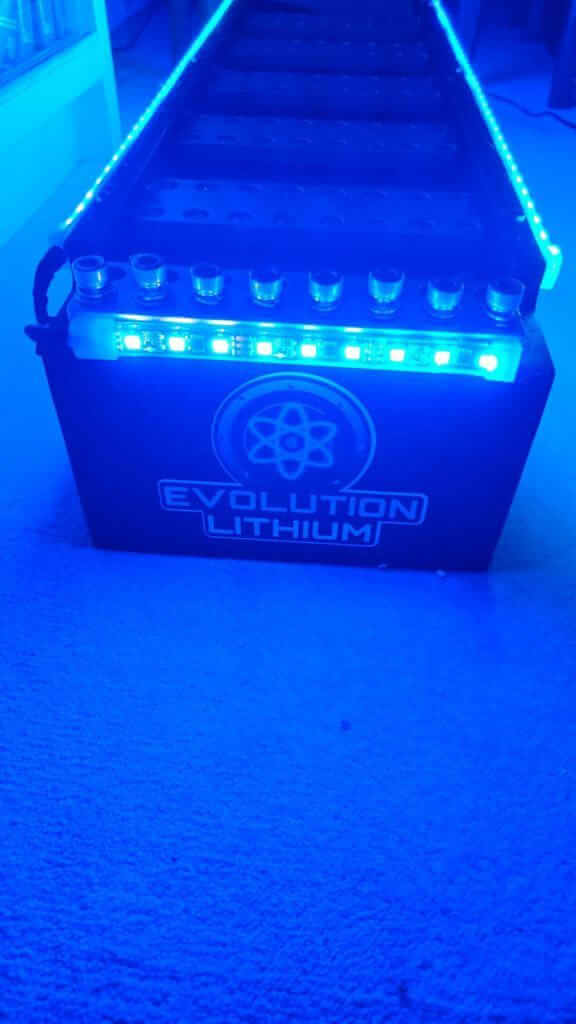
For mild builds, a quality AGM battery may still work. For hard daily systems, demo vehicles, and SPL-style builds, a rear-mounted SCiB LTO battery bank from Evolution Lithium is usually the stronger upgrade path because it supports high current, fast recharge, and stable voltage under bass load.
This guide explains when to upgrade your car audio battery, how to calculate real power demand, how your alternator affects battery choice, and which Evolution Lithium battery direction suits different power levels.
Quick answer: Upgrade your car audio battery when your amplifier demand is higher than the factory electrical system can support. The most common signs are voltage drop, dimming lights, amplifier protect mode, weak bass during loud playback, and poor voltage at the amplifier terminals. For serious car audio, the battery, alternator, cable, grounds, fuse holders, and charging voltage must be planned as one complete system.
Quick Answer: Do You Need a Car Audio Battery Upgrade?
You likely need a car audio battery upgrade if the system has moved beyond a basic subwoofer setup and is starting to stress the vehicle’s electrical system. The factory battery and alternator were not designed around large aftermarket amplifiers. They were designed to start the vehicle and run factory electronics.
You should strongly consider a battery upgrade if:
- your system is above roughly 1000W RMS and is played hard,
- your headlights or interior lights dim on bass hits,
- your amplifier shuts down or goes into protect mode,
- voltage drops heavily at the amplifier terminals,
- your bass sounds strong at first then weakens during a song,
- you play music with the engine off,
- you are building a demo or SPL-style vehicle,
- you are planning a 3000W+ RMS system.
A battery upgrade is not only about playing louder. It is about giving the amplifier clean electrical support so the system stays consistent and reliable.
Why Battery Capacity Matters in Car Audio
Your vehicle electrical system works as a partnership. The alternator creates current while the engine is running. The battery stores energy and supports sudden demand. The power cable, grounds, fuse holders, and connections move that current to the amplifier.
When a subwoofer amplifier hits hard, it can demand current faster than the alternator can instantly supply it. The battery steps in to fill that gap. If the battery is too small, too slow to recover, or connected through poor wiring, voltage drops. Once voltage drops, amplifier performance drops with it.
An undersized battery setup can cause:
- measurable voltage drop during bass-heavy tracks,
- dimming lights,
- amplifier clipping or protect mode,
- weak bass output,
- hot alternator operation,
- unstable vehicle electronics,
- shorter battery and alternator life.
A properly matched battery bank helps keep the amplifier supplied with stable voltage. That does not replace good wiring or alternator support, but it gives the system a much stronger foundation.
Signs Your Car Audio Battery Is Too Small
The easiest way to know your battery system is too small is to watch what happens under real bass load. Do not judge the system only by resting voltage. A battery can look fine at rest and still collapse when the amplifier demands current.
Common Warning Signs
- Lights dim on bass hits. This shows the electrical system is struggling to hold voltage.
- The amplifier goes into protect. Low voltage can trigger shutdowns or unstable operation.
- Bass gets weaker during a song. The system may be draining battery reserve faster than it recovers.
- Voltage is poor at the amplifier. The amp only sees the voltage delivered to its terminals, not the voltage at the front battery.
- The alternator runs hot. A weak charging system may be working near maximum output for too long.
- Engine-off play drains quickly. Capacity and usable voltage range may be too small for how the system is used.
If these symptoms show up after adding amplifier power, the battery is not the only part to check. Cable size, grounds, fuse holders, alternator output, and amplifier tuning all matter.
Step 1: Calculate Your Real Amplifier RMS Power
Every car audio battery upgrade should start with real RMS power. Do not size the electrical system from peak, max, dynamic, or marketing wattage. RMS is the only number useful enough for battery planning.
Add up the RMS wattage of every amplifier in the vehicle. If you have a 3000W RMS monoblock on subs and a 500W RMS amplifier on mids and highs, the system is roughly 3500W RMS. That number becomes the starting point for battery, alternator, and wiring decisions.
When checking amplifier ratings, use:
- manufacturer RMS specifications,
- ratings at realistic voltage,
- ratings at the actual impedance you plan to run,
- total RMS from all amplifiers, not only the sub amp.
Clipping also matters. If gain is set badly and the amplifier is forced into clipping, current draw and heat can increase while sound quality gets worse. Electrical planning cannot fully compensate for poor tuning.
Step 2: Convert Amplifier Power Into Current Draw
Once you know RMS power, you need to understand the current demand behind it. The simple relationship is:
Current = Power ÷ Voltage
For a traditional 12V-style car audio system, a 2000W RMS amplifier can pull heavy current quickly. At 12V, 2000W equals about 167A before amplifier efficiency and real-world load are considered. That is already more current than many factory alternators can spare for audio.
For SCiB LTO bank capability, Evolution Lithium commonly calculates around 15.8V because that sits in a strong working range for a 6S SCiB setup. A practical Class D amplifier efficiency estimate is around 80%.
The SCiB battery-side calculation is:
Bank Ah × C-rate = current capability
Current × 15.8V = electrical watts
Electrical watts × 0.80 = approximate Class D RMS support
This is why Ah alone can mislead people. A small high-discharge SCiB bank can sometimes support more amplifier demand than a larger battery with weaker discharge behaviour.
Step 3: Add Headroom for Real Music Use
Music is not a steady laboratory load. Bass tracks, impedance changes, amplifier efficiency, clipping, heat, and demo habits all affect current demand. That is why you should add headroom instead of sizing the system right on the edge.
Headroom helps cover:
- amplifier efficiency losses,
- dynamic bass peaks,
- low-impedance current demand,
- voltage drop through cable and connections,
- heat during repeated demos,
- future amplifier or subwoofer upgrades.
If your maths says the system needs 200A, building the electrical around exactly 200A leaves no safety margin. A stronger plan gives the battery and alternator room to work without being pushed to the edge every time the bass hits.
Step 4: Understand Your Alternator’s Real Output
The alternator rating is not the amount of current available for car audio. A 180A alternator does not leave 180A free for your amplifier. The vehicle is already using current for the ECU, lights, fuel pump, fans, HVAC blower, heated screens, infotainment, sensors, and factory electronics.
Many factory alternators only have a fraction of their rated output available after vehicle loads are covered. This is why a system can have a good battery and still slowly fall in voltage during hard play. The battery supplies the gap, but the alternator has to refill it.
As system power increases, alternator support becomes more important:
- mild systems may work with a healthy factory alternator,
- 1000W–3000W hard daily systems should be tested carefully,
- 3000W+ systems often need stronger battery support and improved charging,
- demo and SPL-style builds should be planned around alternator output from the start.
If you are planning an LTO setup, read Evolution Lithium’s guide to high-output alternator compatibility with LTO.
Step 5: Choose the Correct Battery Chemistry
There is no single chemistry that suits every car audio system. AGM, LiFePO₄, SCiB LTO, and Plannano LTO all have different strengths. The right choice depends on power level, runtime, budget, charging voltage, space, and how hard the system is played.
| Battery Type | Best Use | Strength | Weakness | Evolution Lithium View |
|---|---|---|---|---|
| AGM | Mild to moderate systems | Affordable, familiar, simple charging | Heavy, slower recovery, more voltage drop under heavy bass | Still useful for smaller systems but not ideal for serious power |
| LiFePO₄ | Auxiliary use and moderate lithium upgrades | Lightweight, good cycle life, good energy density | Not the same high-rate behaviour as LTO | Useful in the right context but not our preferred serious bass chemistry |
| SCiB LTO | Hard daily, demo, SPL-style builds | Fast charge, strong discharge, excellent voltage recovery | Higher upfront cost and lower energy density | Best fit for high-power car audio abuse |
| Plannano LTO | Larger-format LTO capacity setups | Useful packaging and capacity for bigger banks | Must be sized correctly for current demand | Good option where larger LTO capacity and packaging suit the build |
| Sodium-ion | Emerging high-power battery category | Good safety and high-current potential in some designs | Less established in Evolution Lithium’s current product focus | Worth watching, but SCiB and LTO remain our main recommendation path |
For a deeper chemistry explanation, see understanding LTO battery technology.
Evolution Lithium Product Recommendations by Build Type
The table below gives a practical starting point. It is not a fixed rule. The right bank still depends on alternator output, charging voltage, cable, grounding, amplifier efficiency, impedance rise, and how long the system is played hard.
| Build Type | Recommended Direction | Why |
|---|---|---|
| Mild system under roughly 1000W RMS | Healthy starter battery or AGM may still be enough | Current demand may not justify lithium yet |
| 1000W–3000W hard daily | 30Ah 2.9Ah SCiB bank or 40Ah 10Ah SCiB bank | Good starting point when voltage drop starts becoming obvious |
| 3000W–5000W RMS | 30Ah 2.9Ah SCiB or 40Ah 10Ah SCiB | Strong daily-driver support with proper wiring and charging |
| 5000W–10000W RMS | 30Ah–45Ah 2.9Ah SCiB or 40Ah–60Ah 10Ah SCiB | More current support and stronger recovery for serious bass use |
| 10000W–20000W RMS | 45Ah–60Ah 2.9Ah SCiB or 60Ah–80Ah 10Ah SCiB | Better matched to large amplifiers and hard demo use |
| 20000W–30000W RMS | 60Ah 2.9Ah SCiB or 80Ah–100Ah 10Ah SCiB | Requires serious battery, alternator, fusing, and cable planning |
| 30000W+ RMS or extreme SPL | 90Ah 2.9Ah SCiB, larger 10Ah SCiB banks, or custom LTO planning | Bank design must match current demand, runtime, and charging support |
| Longer demo or engine-off play | 20Ah SCiB capacity-focused banks or 24Ah Plannano LTO banks | Capacity and runtime become more important than short-burst current alone |
If you want a faster starting point, use the car audio lithium battery calculator. For current product options, explore the SCiB LTO lithium battery bank range.
AGM vs Lithium vs Sodium-Ion: What Should You Actually Consider?
The original online car audio market often frames the choice as AGM vs lithium vs sodium-ion. That can be useful, but it can also become distracting. The real question is not which chemistry sounds most advanced. The real question is which chemistry suits your system’s current demand and charging environment.
When AGM Still Makes Sense
AGM still makes sense for mild systems, simple daily drivers, and budget-first installs. It is easy to charge with factory systems and is familiar to most installers. The downside is weight and recovery speed. Once the system is played hard, AGM can struggle to hold voltage and recover between bass-heavy tracks.
When LiFePO₄ Makes Sense
LiFePO₄ can suit auxiliary loads and moderate lithium upgrades. It has good cycle life, lower weight than AGM, and a strong safety reputation. It is not automatically the best choice for repeated high-current bass hits though. For serious car audio, SCiB LTO is normally the stronger match.
When SCiB LTO Makes Sense
SCiB LTO makes sense when the system is hard on batteries. High-RMS daily drivers, demo vehicles, and SPL-style builds all benefit from strong current delivery and fast voltage recovery. This is where Evolution Lithium focuses because car audio is not only about stored energy. It is about how the battery behaves under repeated amplifier load.
Where Sodium-Ion Fits
Sodium-ion is an emerging category in high-power battery discussions. It may become more common in car audio, but it is not the main Evolution Lithium product path. For now, the core recommendation remains SCiB LTO and larger-format LTO banks where the build calls for high-current support, stable voltage, and long cycle life.
Step 6: Real-World Example — 6000W Daily/Demo Build
Let’s use a realistic 6000W RMS daily/demo system. This is the range where many people discover that the factory electrical system is nowhere near enough.
Using SCiB-style calculation logic at 15.8V and roughly 80% amplifier efficiency:
- 6000W ÷ 0.80 = 7500W electrical demand
- 7500W ÷ 15.8V = about 475A battery-side current demand
This is a simplified estimate. Real-world current can be higher depending on impedance, clipping, music type, amplifier design, wiring loss, and how long the system is played hard.
For this kind of build, the upgrade path should usually include:
- a rear-mounted SCiB LTO bank,
- high-output alternator support where needed,
- proper OFC cable runs,
- strong chassis or dedicated ground paths,
- quality CNL or ANL fusing,
- voltage monitoring at the battery and amplifier,
- an active balancer where relevant.
For a 6000W daily/demo system, Evolution Lithium would usually start the conversation around a 30Ah or 45Ah 2.9Ah SCiB bank, or a 40Ah or 60Ah 10Ah SCiB bank depending on alternator output, voltage target, runtime needs, and whether the vehicle is daily-driven or demoed hard.
Step 7: Test Voltage the Right Way
Voltage testing under load is the only way to confirm whether your car audio battery upgrade is actually working. Resting voltage is useful, but it does not tell the full story.
Test voltage like this:
- Use a reliable digital voltmeter or multimeter.
- Measure at the battery and at the amplifier terminals.
- Test with the engine running.
- Turn on normal vehicle loads such as headlights and fans.
- Play bass-heavy music at the volume you actually use.
- Watch the lowest voltage during sustained bass passages.
If voltage is good at the battery but poor at the amplifier, the issue is usually cable, fuse hardware, grounding, or connections. If voltage is poor everywhere, the battery bank, alternator, or charging setup may be too small for the system.
For SCiB LTO systems, staying mainly above 15.0V during hard use keeps the system in the stronger part of the operating range. If the bank is constantly falling into the mid-14V range or lower during demos, it may need more charging support, more bank capacity, or improved wiring.
Installation and Safety: Doing the Upgrade Properly
A car audio battery upgrade can only perform as well as the installation allows. A strong LTO bank connected through weak hardware will not deliver its potential and can become unsafe.
Mount Lithium in the Boot or Rear Cabin
Evolution Lithium does not recommend mounting lithium car audio banks under the bonnet. The engine bay is hot, exposed, wet, dirty, and full of vibration. Mount the bank in the boot or rear cabin, secure it properly, and keep it protected from cargo and movement.
Use Correct Cable and Fusing
Large amplifiers need cable sized for real current demand. Use OFC cable, quality lugs, proper crimps, and safe fuse placement. Fuses should be close to the battery source and rated to protect the cable, not just the amplifier.
Use an Active Balancer Where Relevant
For multi-cell lithium banks, an active balancer helps keep the bank consistent over time. Do not ignore cell balance just because the bank appears to work. A well-managed bank is more reliable and easier to monitor.
Recommended Supporting Accessories
Depending on the build, useful Evolution Lithium accessories may include copper cable lugs, ferrules, ANL or CNL fuse holders, CNL fibreglass fuses, voltage monitoring tools, and a Heltec 5.5A 6S active balancer. The stronger the battery bank, the more important the supporting hardware becomes.
For layout and wiring guidance, read wiring SCiB LTO lithium banks and the lithium battery trunk install guide.
Understanding Ah vs Wh for Car Audio Batteries
Amp-hours can be useful, but Ah alone does not tell the full story. This is especially true when comparing AGM, LiFePO₄, SCiB LTO, and other chemistries.
The basic energy formula is:
Watt-hours = Amp-hours × Voltage
For example, a 100Ah battery at 12.8V has about 1280Wh of energy on paper. But in car audio, the usable result depends heavily on discharge rate and voltage behaviour. A lead-acid or AGM battery can lose useful capacity under high current demand. A lithium bank can often hold a more useful voltage under load.
For SCiB LTO, Ah must be viewed alongside discharge rate. A 30Ah SCiB bank with high discharge capability can behave very differently from a larger lower-current battery. That is why Evolution Lithium sizing focuses on current capability, voltage range, alternator support, and use style rather than Ah alone.
When to Choose AGM, SCiB LTO, or Plannano LTO
Use the following as a practical decision guide.
| System Level | Best Direction | Reason |
|---|---|---|
| Under 1000W RMS | AGM or healthy factory electrical | Battery upgrade may be simple if voltage is stable |
| 1000W–3000W RMS | Entry SCiB LTO planning if played hard | This is where voltage drop often starts showing up |
| 3000W–10000W RMS | 2.9Ah or 10Ah SCiB LTO banks | Strong current support and recovery matter more |
| 10000W–30000W RMS | Larger SCiB LTO banks with alternator upgrades | Battery, alternator, and wiring need to be designed together |
| Long demo or runtime-focused use | 20Ah SCiB or 24Ah Plannano LTO | Capacity and endurance become more important |
For a full electrical-system view, see complete power setup for car audio. For deeper bank sizing, see a complete guide to sizing lithium batteries for car audio systems.
Frequently Asked Questions
When should I upgrade my car audio battery?
Upgrade when your system shows voltage drop, dimming lights, amplifier protect mode, weak bass during loud playback, or poor voltage at the amplifier terminals. Systems above roughly 1000W RMS should be checked carefully, and systems above 3000W RMS should be planned around proper battery support.
Do I need a second battery for car audio?
You may need a second battery if your amplifier demand is higher than the factory battery and alternator can support. In serious systems, a rear-mounted lithium bank near the amplifiers can provide stronger current support and reduce voltage drop.
Should I upgrade my alternator or battery first?
It depends on the system. If voltage drops only during short bass hits, battery support may help. If voltage steadily falls during longer play, alternator output may be the limit. In serious builds, battery and alternator upgrades should be planned together.
Is AGM enough for 1000W RMS?
A quality AGM can be enough for around 1000W RMS if the alternator, wiring, and grounds are healthy. If the system is played hard or voltage is already dropping, lithium may be worth considering.
What Evolution Lithium bank suits a 3000W to 5000W system?
A 30Ah 2.9Ah SCiB bank or 40Ah 10Ah SCiB bank is a common starting point for this range, depending on alternator output, charging voltage, wiring, and how hard the system is used.
What battery support do I need for 6000W RMS?
A 6000W RMS system normally needs a proper rear battery bank, strong cable, good fusing, clean grounds, and alternator support. Evolution Lithium would usually look at 30Ah–45Ah 2.9Ah SCiB or 40Ah–60Ah 10Ah SCiB as a starting conversation.
Can I mix AGM and lithium?
Mixing battery chemistries is not something to do casually. Different resting voltages, charge behaviour, and discharge behaviour can cause problems. If a mixed setup is being considered, it needs proper planning, monitoring, and charging strategy.
Can I mount lithium under the bonnet?
No. Evolution Lithium does not recommend mounting lithium car audio banks under the bonnet. Use the boot or rear cabin, secure the bank properly, and protect the terminals and cable runs.
How do I know if voltage drop is caused by the battery or wiring?
Measure voltage at both the battery and amplifier under load. If battery voltage is strong but amplifier voltage is low, the issue is likely cable, grounds, fuse holders, or connections. If voltage is low everywhere, the battery bank or alternator may be too small.
Is sodium-ion better than LTO for car audio?
Sodium-ion is an emerging battery category and may suit some high-power applications, but Evolution Lithium’s main recommendation path is SCiB LTO and LTO-based banks because of their proven fast charge, high-current, and long-cycle behaviour in car audio.
What accessories do I need with a lithium car audio bank?
Common supporting parts include OFC cable, quality lugs, ferrules, ANL or CNL fuse holders, correct fuses, secure mounting hardware, voltage monitoring, and an active balancer where relevant.
How do I future-proof my car audio battery upgrade?
Plan around where the system is going, not only where it is today. If you expect to move from 3000W to 8000W RMS later, choose a battery and alternator path that can scale instead of buying the smallest setup that only just works now.
Conclusion: Upgrade the Battery When the System Outgrows the Factory Electrical
A car audio battery upgrade becomes necessary when amplifier demand exceeds what the factory electrical system can support. Dimming lights, voltage drop, amplifier protection, weak bass, and slow recovery are all signs that the battery, alternator, cable, or grounds are no longer keeping up.
AGM can still work for mild systems. LiFePO₄ can suit some moderate lithium upgrades. But for high-power daily drivers, demo vehicles, and SPL-style systems, SCiB LTO is the stronger Evolution Lithium recommendation because it is built around high current, fast recharge, and stable voltage under repeated bass load.
The right battery is not chosen by Ah alone. It is chosen by RMS power, discharge capability, charging voltage, alternator output, wiring quality, runtime goals, and how hard the system is actually played.
Use the car audio lithium battery calculator, compare the SCiB LTO lithium battery banks, or contact Evolution Lithium for help matching the correct bank to your amplifier system.