

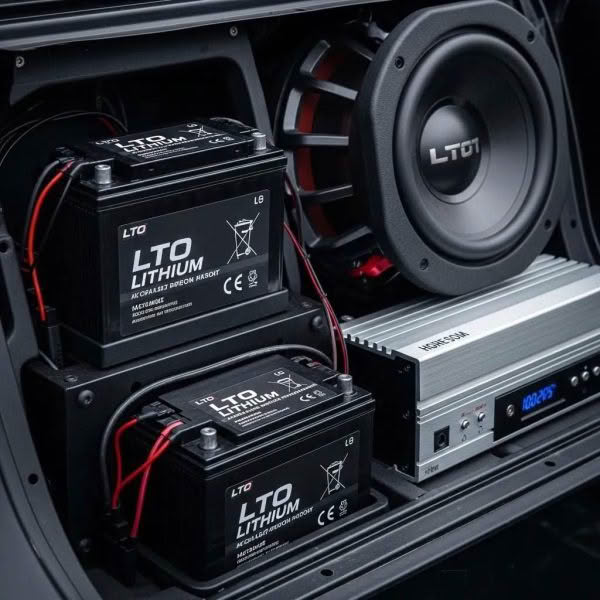
What Makes a Good Car Audio Battery? The Technical Guide to SCiB LTO Power
You have spent thousands on high-excursion subwoofers and high-efficiency Class D amplifiers, yet your lights dim on every kick drum, and your amplifiers are clipping well below their rated output. This isn’t a problem with your gear; it is a failure of your electrical foundation. In the world of high-SPL (Sound Pressure Level) builds and daily ground-pounders, the battery is no longer just a storage device—it is a high-speed discharge component that must bridge the gap between your alternator’s output and your amplifier’s instantaneous demand.
TL;DR: A good car audio battery provides extremely low internal resistance and high C-rates to maintain stable voltage under heavy transient loads. For modern enthusiasts in New Zealand, a 6S SCiB LTO (Lithium Titanate Oxide) bank is the superior choice, offering a 16.8V maximum charge limit and the ability to deliver thousands of amps without the massive voltage sag associated with traditional AGM batteries.
Defining the Modern Car Audio Battery
In the early days of car audio, “upgrading the battery” meant swapping a flooded lead-acid unit for an AGM (Absorbed Glass Mat) battery. While AGM was an improvement, it fundamentally lacks the discharge speed required for modern high-wattage systems. A “good” car audio battery today is defined by its chemistry and its ability to interact with high-output alternators.
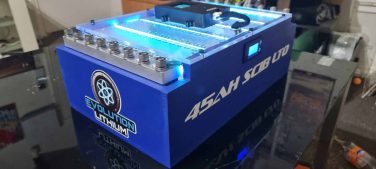
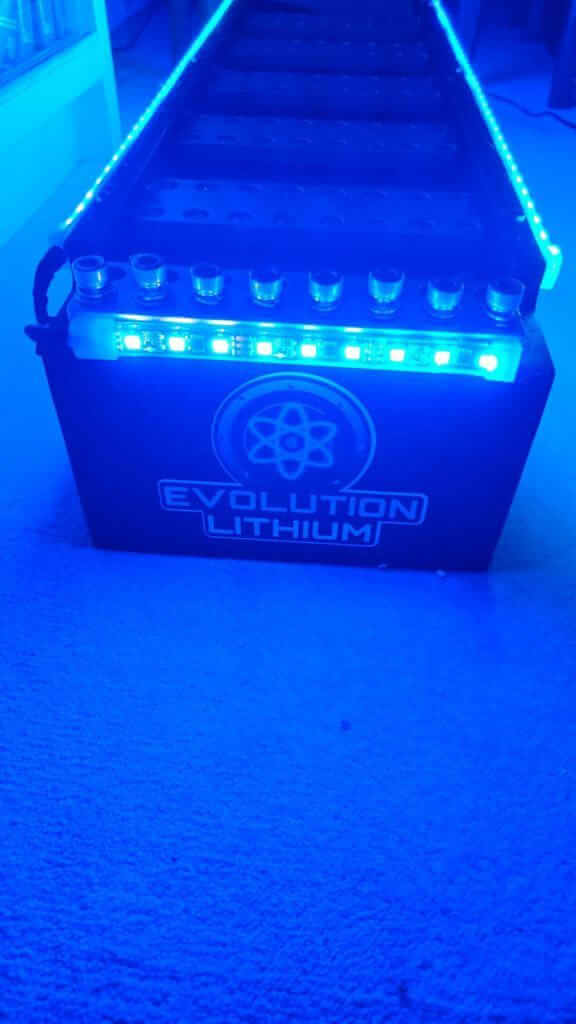
At Evolution Lithium, the focus has shifted entirely toward SCiB (Super Charge Ion Battery) LTO technology. Unlike standard Lithium-Ion or LiFePO4, LTO chemistry is designed for extreme heavy-duty cycles and massive current delivery. In a car audio context, these are typically wired in a 6S configuration (six cells in series). This configuration aligns perfectly with automotive charging systems, providing a nominal voltage of 14.4V and a peak of 16.8V, allowing enthusiasts to take full advantage of high-voltage alternators.
The Shift from AGM to SCiB LTO
The primary limitation of AGM batteries is internal resistance. As demand increases, the internal chemistry cannot move ions fast enough, causing the voltage to “sag.” When voltage drops, your amplifier has to draw more current to produce the same wattage, creating a cycle of heat and inefficiency. SCiB LTO cells, such as those found in the Evolution Lithium shop, feature a much higher surface area for ion exchange, resulting in near-instantaneous current delivery.
Why Battery Quality Dictates System Performance
The relationship between your battery and your amplifier is governed by Ohm’s Law. If your battery cannot maintain voltage, every other component in your signal chain suffers. Here is the technical breakdown of why battery quality is the most critical factor in your build.
Voltage Drop and Amplifier Clipping
Most high-end Class D amplifiers are designed to produce their rated power at 14.4V or higher. If your battery bank sags to 12.0V during a bass note, the amplifier’s internal rail voltage drops. To compensate and maintain the output wave, the amplifier begins to “clip” the signal. Clipping isn’t just a sound quality issue; it generates massive amounts of heat in the voice coils of your subwoofers, leading to premature failure. A good LTO bank keeps the voltage in the “sweet spot” (typically 15.0V–16.2V in a 6S system), ensuring the amplifier stays within its most efficient operating range.
Internal Resistance: The Silent Performance Killer
Internal resistance (measured in milliohms) determines how much of the battery’s energy is turned into heat rather than electricity for your amps. Low internal resistance leads to:
- Less voltage drop under load.
- Faster recharge times between bass hits.
- Lower operating temperatures for the battery bank itself.
- Cleaner amplifier output with less ripple current.
“In a competition lanes environment, the difference between a 150dB and a 151dB score often comes down to the last 0.5 volts of stability. If your battery bank can’t hold 15V+ through the 30-second average, you’ve already lost.” — Senior SPL Competitor & Installer.
Technical Specifications: Understanding the 6S LTO System
When selecting a battery from Evolution Lithium’s technical range, you must understand the 6S system. A 6S LTO bank consists of six 2.4V nominal cells wired in series.
Voltage Ranges for 6S LTO
- Nominal Voltage: 14.4V (2.4V per cell). This matches the standard output of most modern factory alternators.
- Maximum Charge Voltage: 16.8V (2.8V per cell). This is the ceiling for high-output, adjustable alternators.
- Usable Performance Range: 15.0V – 16.2V. This is where LTO provides the most stable current delivery for high-power bursts.
C-Rates and Current Delivery
The “C-rate” is a measure of how fast a battery can be discharged relative to its maximum capacity. For car audio, we look at both continuous and burst rates. Evolution Lithium utilizes cells with specific C-rate profiles to match different build sizes:
- 2.9Ah Cells: 40C Continuous / 75C Burst. Ideal for smaller builds or as a “supplemental” bank near the amps.
- 6Ah Cells: 45C Continuous / 80C Burst. The “workhorse” for medium-sized SPL builds.
- 10Ah Cells: 35C Continuous / 75C Burst. Perfect for sustained demoing and high-current daily use.
- 20Ah Cells: 15C Continuous / 30C Burst. Best for very large banks where total capacity (Ah) is needed for long demos.
Calculating Your Power Needs
Don’t guess how much battery you need. Use the math to ensure your electrical system can support your RMS wattage. To find the potential current of a bank, use the formula: Amps ≈ Ah × C-rate.
For example, a 12Ah bank made of 6Ah cells (2P6S configuration) has a burst rating of 80C.
12Ah x 80C = 960 Amps of burst current.
To translate this to wattage, use the formula: Watts ≈ Amps × Voltage × 0.8 (Class D Efficiency).
960A x 14.4V x 0.8 = 11,059 Watts.
This calculation shows that a relatively small LTO bank can support massive bursts of power that would require hundreds of kilograms of AGM batteries to match. For more detailed guides on sizing, check the Evolution Lithium articles section.
Integration with the Vehicle Charging System
A car audio battery does not work in isolation; it is part of a closed-loop system with your alternator. A common mistake is adding a massive lithium bank while keeping a tiny factory alternator.
The 75% Alternator Rule
In a real-world car audio environment, your alternator typically provides about 75% of the usable current for your amplifiers during sustained play, with the battery bank covering the peaks. If your total RMS draw is 300A and your alternator only produces 100A, your battery bank will eventually deplete, regardless of how “good” it is. A good car audio battery should be sized to handle the 25-30% deficit during peaks while being able to accept a high-current charge from the alternator as soon as the load drops.
Alternator Voltage Matching
Because SCiB LTO cells can handle up to 16.8V, they are the only lithium chemistry that safely allows enthusiasts to run “voltage boosted” systems. Many SPL competitors in New Zealand and Australia use external regulators to pin their alternators at 15.5V or 16V. Standard LiFePO4 batteries would be damaged at these levels, but LTO thrives here, providing even more headroom for the amplifiers.
Installation Best Practices for High-Current Lithium
Even the best battery will perform poorly if the installation is choked by high resistance. When installing an LTO bank from Evolution Lithium, follow these strict technical standards.
Cable Sizing and Fusing
Current travels on the surface of the wire (skin effect is less relevant here than pure cross-sectional area). For banks capable of 500A+ bursts, 0-gauge (AWG) or 2/0-gauge pure copper (OFC) cable is mandatory. Never use Copper Clad Aluminum (CCA) in a high-current lithium setup; the resistance is too high, and it will become a bottleneck.
- Fusing: Fuse according to the cable’s current-carrying capacity, not the battery’s burst rating. Use high-quality ANL or Class T fuses.
- Grounding: The “Big Three” upgrade (alternator positive to battery, battery negative to chassis, engine block to chassis) is non-negotiable. Your ground path must be as efficient as your positive path.
Secure Mounting
LTO banks are lighter than AGM, but they still require secure mounting. In the event of a collision, a loose battery bank becomes a projectile. Use non-conductive mounting brackets and ensure the bank is located in a well-ventilated area, away from direct engine heat.
Comparison Table: LTO vs. Traditional Options
| Feature | AGM (Lead Acid) | LiFePO4 | SCiB LTO (Evolution Lithium) |
|---|---|---|---|
| Internal Resistance | High (Sags under load) | Medium | Ultra-Low |
| Max Charge Voltage | 14.7V | 14.6V | 16.8V |
| Cycle Life | 300 – 500 | 2,000 – 5,000 | 20,000+ |
| C-Rate (Discharge) | 1C – 3C | 3C – 10C | 30C – 80C |
| Weight | Heavy (30kg+) | Light (10kg) | Very Light (5-8kg) |
| Cold Weather Perf. | Poor | Very Poor (Can’t charge) | Excellent (Down to -30°C) |
The Evolution Lithium Advantage
Based in New Zealand, Evolution Lithium specializes in SCiB LTO solutions specifically tailored for the AU/NZ car audio market. Unlike generic lithium resellers, Evolution Lithium understands the specific needs of “bassheads” and SPL competitors. Their products are designed to handle the high-vibration environment of a 150dB+ vehicle while providing the electrical stability required for daily driving.
Whether you are looking for a compact 2.9Ah bank for a 2000W daily setup or a massive 100Ah array for an extreme SPL build, the focus remains on electrical integrity. By using 6S LTO technology, Evolution Lithium provides a solution that is safer, faster, and more durable than any other chemistry on the market.
“The move to LTO isn’t just a trend; it’s a fundamental correction in how we power mobile electronics. We are finally moving away from 150-year-old lead-acid technology toward something that can actually keep up with modern silicon.” — Electrical Engineer & Audio Consultant.
Key Takeaways for Your Build
- Voltage is King: Maintain 14.4V–16.0V to keep your amplifiers efficient and your subwoofers safe.
- C-Rate Matters: Choose a battery with a burst rating (75C+) that matches your amplifier’s peak demand.
- 6S is the Standard: Use a 6S LTO configuration to ensure compatibility with 14V-16V charging systems.
- Quality Wiring: Don’t bottleneck your lithium bank with small or low-quality cables.
- Sustainability: LTO lasts 20,000+ cycles, making it the last battery you will ever need to buy for your car.
Frequently Asked Questions
Do I need a special alternator for LTO?
While a 6S LTO bank will work with a factory 14.4V alternator, you will get the best performance from a high-output alternator with an adjustable regulator. This allows you to charge at 15.5V or 16V, where LTO and high-end amplifiers perform best.
Can I mix LTO with my factory AGM battery?
It is generally not recommended to mix chemistries directly in parallel without a high-current isolator. The different resting voltages (LTO rests higher than AGM) will cause the batteries to “fight” each other, leading to the AGM battery being constantly overcharged or the LTO bank being drained.
Is SCiB LTO safe for daily driving?
Yes. SCiB LTO is one of the safest lithium chemistries available. It is extremely resistant to thermal runaway and can handle physical impacts and overcharging much better than standard Lithium-Ion or LiFePO4 batteries.
How many Ah do I need for 5000 Watts?
For a 5000W RMS system, a 12Ah to 20Ah bank of high-C-rate LTO (like the Evolution Lithium 6Ah or 10Ah cells in a 2P6S or 3P6S config) is usually sufficient, provided you have adequate alternator support.
Ready to Level Up Your Electrical?
Stop settling for dimming lights and clipping amps. Upgrade your build with the power of SCiB LTO. Explore the full range of high-performance banks and cells at the Evolution Lithium Shop and give your system the current it deserves.