 Skip to content


Best Car Audio Battery and Setup Guide
Is your sound system falling flat or your headlights dimming during every bass drop? The right car battery for car audio can transform your listening experience, letting you enjoy crystal-clear sound without interruptions.
This expert guide will walk you through everything you need to know about choosing, installing, and maintaining the perfect power source for your setup. We’ll cover the latest battery tech, sizing methods, installation tips, and maintenance tricks for 2025 and beyond.
Ready to leave weak power behind and unleash the true potential of your car audio system? Let’s dive in.
Understanding Car Audio Power Demands
Unlocking the true potential of a high-performance audio system starts with understanding the unique demands it places on your vehicle’s electrical system. Many enthusiasts underestimate how crucial the car battery for car audio is until they face frustrating issues like dimming headlights or distorted sound. It’s not just about playing music louder—it’s about delivering consistent, clean power so your system performs at its peak. If you’re curious about how these systems draw power and why the right battery matters, this overview on car audio power demands offers valuable insights.
The Role of the Battery in Car Audio Systems
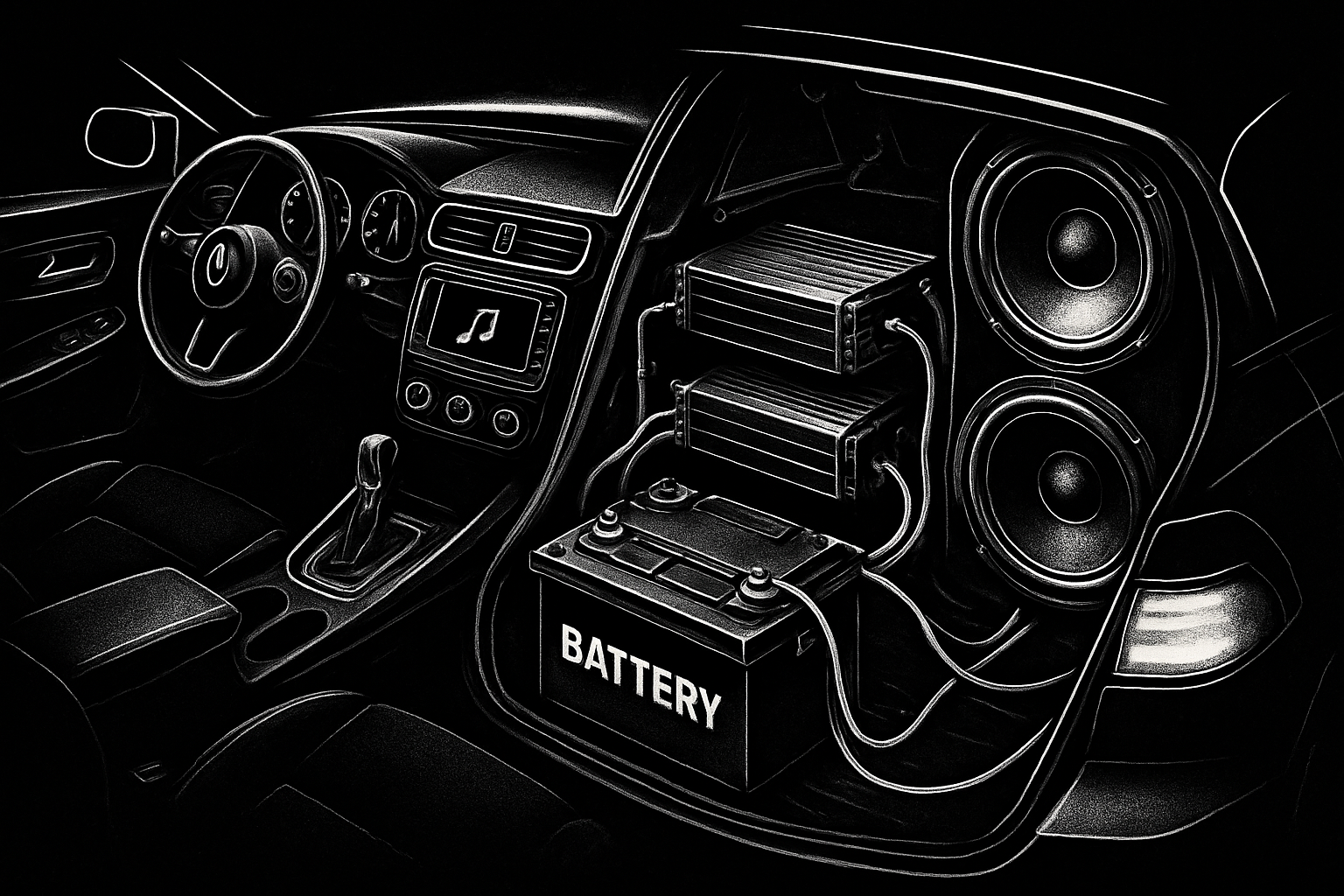
Every time you turn up the volume, your amplifiers draw a surge of current to deliver those bass-heavy beats. The car battery for car audio acts as a reservoir, feeding this power on demand, especially when the alternator can’t keep up. In most factory setups, the alternator is sized for basic electrical loads, not for powering a 2000W or 5000W audio system.
When your system outpaces what the alternator and OEM battery can deliver, voltage drops occur. This leads to sound distortion, amplifier shutdowns, or even resets of your head unit. Show cars and SPL builds often push their systems much harder than daily drivers, making an upgraded battery essential.
Let’s compare typical power draws:
| System Type | Amplifier Power | Typical Current Draw |
|---|---|---|
| Stock | 100W | ~8A |
| Daily Upgrade | 500W | ~42A |
| SPL/Show Car | 5000W | ~417A |
Selecting the right car battery for car audio is the foundation for sound quality, reliability, and protecting your investment.
Calculating Your System’s Power Needs
To size the car battery for car audio correctly, start by listing your total amplifier RMS wattage. For example, a 2000W RMS system. Next, convert watts to amps using the formula:
Amps = Total Watts / System Voltage
For a 12V system: 2000W / 12V = 167A.
Consider amplifier efficiency. Class D amps are about 80% efficient, while Class AB might be closer to 60%. Adjust your calculation accordingly:
Adjusted Amps = Amps / Efficiency
So, 167A / 0.8 = 209A for Class D.
Don’t forget to factor in peak vs. continuous power—the system might spike above its RMS rating during heavy bass hits. The alternator’s output and the battery’s reserve capacity both matter. Ideally, size your battery a bit larger to accommodate future upgrades and unexpected power needs.
A well-sized car battery for car audio ensures your system gets the juice it needs without stressing your alternator or causing voltage drops.
The Consequences of Insufficient Power
Running a powerful audio system on an under-specced battery quickly reveals its limitations. Common symptoms include flickering headlights, amplifier clipping, and sudden audio dropouts. Over time, these issues can cause battery sulfation, alternator overheating, or even permanent damage to your audio components.
Real-world forums are filled with stories of users who ignored these warning signs. For instance, a voltage drop from 12.6V to 11.5V can cut amplifier output by nearly 30%, leading to noticeable loss in sound quality and speaker performance.
Here’s a quick reference:
| Voltage Drop | Amplifier Output Loss | Risk |
|---|---|---|
| 0.5V | ~10% | Mild distortion |
| 1.0V | ~20% | Amplifier shutdowns |
| 1.5V+ | ~30%+ | System failure |
Investing in the right car battery for car audio not only safeguards your system but also prevents expensive repairs and ensures every listening session is as powerful as you intended.
Types of Car Batteries for Audio Systems
Choosing the right car battery for car audio is crucial for unleashing the full power of your sound system. With so many battery types available, understanding their differences will help you make the best decision for your performance needs and budget.
Lead-Acid vs. AGM vs. Lithium: Key Differences
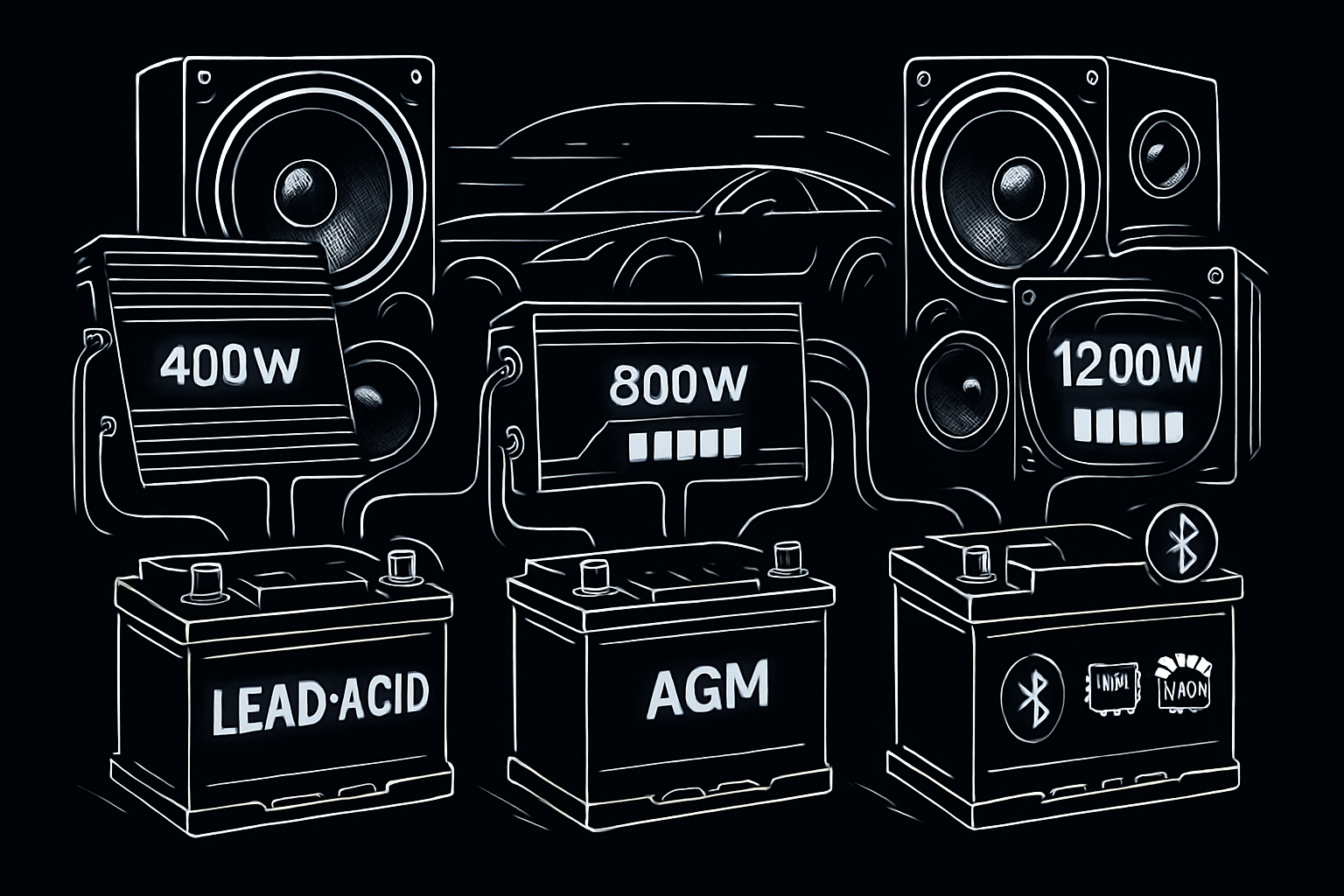
The three main battery chemistries you’ll encounter for a car battery for car audio are lead-acid, AGM (Absorbent Glass Mat), and lithium (including LiFePO4 and LTO). Each brings unique advantages and limitations.
Lead-acid batteries are the oldest and most affordable choice. They’re heavy and require periodic maintenance, but they still power countless daily drivers and budget builds.
AGM batteries step up performance with improved vibration resistance, sealed construction, and better deep discharge ability. They’re heavier than lithium but offer more reliability and less maintenance than flooded lead-acid, making them a popular car battery for car audio upgrades.
Lithium batteries, especially LiFePO4 and LTO, have revolutionized high-performance audio. They deliver lightweight construction, ultra-high discharge rates, rapid charging, and exceptional cycle life. Their compatibility with modern charging systems and safety features make them a top pick for anyone serious about maximizing their car battery for car audio system output.
For a deeper dive into these options, check out this Types of Car Batteries for Audio Systems guide, which compares each chemistry in detail.
Pros and Cons of Each Battery Type
Every car battery for car audio has its strengths and weaknesses. Here’s a quick breakdown:
| Type | Pros | Cons |
|---|---|---|
| Lead-Acid | Low cost, widely available, simple tech | Heavy, short life, high maintenance |
| AGM | Better discharge, sealed, less maintenance | Heavier, more expensive, limited cycles |
| Lithium | Lightweight, high output, long life, fast charge | High upfront cost, needs BMS |
Lead-acid batteries are great for basic setups but struggle with high-wattage demands. AGM batteries shine in mid-level and enthusiast builds, handling moderate power with fewer headaches. Lithium batteries, while pricier, deliver unmatched performance, especially in competition-level or future-proof car battery for car audio systems.
Innovations and Trends in 2025 Battery Technology
The car battery for car audio landscape is evolving fast in 2025. Lithium chemistry, particularly LTO and LiFePO4, is gaining traction for its safety, cycle life, and discharge power. Advanced battery management systems (BMS) now offer real-time monitoring, protecting your investment and simplifying maintenance.
Smart batteries with Bluetooth connectivity are becoming mainstream, allowing you to track voltage, temperature, and state of charge from your phone. Market data shows lithium adoption rates are climbing rapidly, especially among car audio competitors and tech-savvy enthusiasts looking for the ultimate car battery for car audio.
Choosing the Right Battery Chemistry for Your Build
Selecting the ideal car battery for car audio depends on your goals. Daily drivers may favor AGM for reliability, while SPL competitors or high-power builds often choose LTO or high-discharge lithium for their robust output and safety.
Consider your local climate, space constraints, and compatibility with existing charging systems. Never mix battery chemistries in the same bank. For extreme setups, LTO’s high discharge and cycle life are hard to beat, but AGM remains a strong, cost-effective choice for most moderate systems.
By matching your battery chemistry to your specific needs, you’ll avoid costly mismatches and ensure your car battery for car audio setup runs flawlessly.
Sizing and Selecting the Ideal Car Audio Battery
Choosing the perfect car battery for car audio is a critical step if you want reliable power and maximum sound quality. The right battery ensures your amps and speakers get the juice they need, whether you’re daily driving or chasing SPL trophies. Let’s break down exactly how to size and select the best option for your system.
Key Specifications: What to Look For
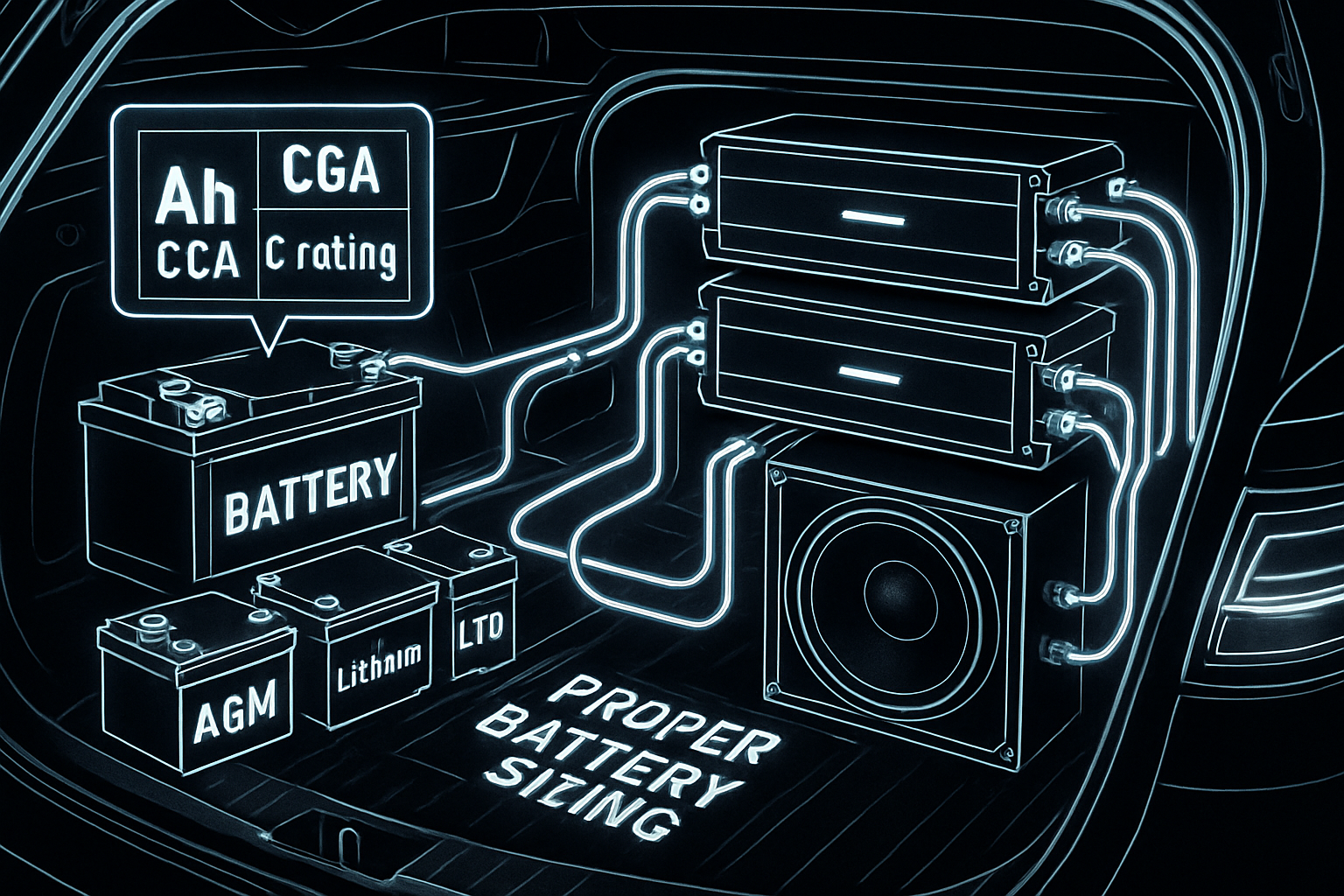
Before buying a car battery for car audio, it’s vital to understand the key specs that impact performance.
- Amp-hour (Ah) Rating: Indicates how much energy the battery can provide over time. Higher Ah means longer playtime at high volume.
- Cold Cranking Amps (CCA): More important for starting, but can indicate output capability. For audio, maximum discharge rate (C rating) is often more relevant.
- Maximum Discharge Rate: Shows how quickly the battery can deliver power to your amps during bass hits.
- Physical Size and Fitment: Check group size and terminal layout to ensure a proper fit in your vehicle.
- Brand Reliability and Warranty: Choose reputable brands with strong warranties for peace of mind.
Here’s a quick table summarizing typical specs:
| Spec | Lead-Acid | AGM | Lithium (LTO) |
|---|---|---|---|
| Ah Rating | 40-80 | 60-120 | 20-60 |
| CCA | 400-800 | 500-1000 | 400-900 |
| Max Discharge | Low | Medium | Very High |
| Weight (kg) | 12-25 | 15-30 | 6-15 |
| Cycle Life | 200-400 | 400-800 | 2000+ |
Understanding these specs helps you match your car battery for car audio to your system’s true demands.
Step-by-Step: How to Size Your Battery for Car Audio
Sizing your car battery for car audio doesn’t have to be a mystery. Here’s a proven, step-by-step approach:
- List Total Amplifier RMS Wattage: Add up the RMS ratings of all your amplifiers for an accurate power baseline.
- Calculate Current Draw: Use the formula
Amps = Watts / 12V. For example, a 2000W RMS system draws roughly 167 amps at full tilt. - Factor in Amplifier Efficiency: Class D amps are about 80% efficient, while Class AB may be 50-60%. Adjust your current draw accordingly (e.g., 2000W / 0.8 / 12V).
- Determine Reserve Capacity: Consider how long you want to play music with the engine off. Multiply your current draw by desired playtime (in hours) for required Ah.
- Account for Alternator Output: Your alternator may not keep up during peak demands. Ensure your battery can bridge the gap without voltage sag.
- Choose a Battery or Bank: Select a battery with adequate Ah and discharge rate. For large systems, multiple batteries may be needed.
- Verify Physical Fit: Ensure your choice fits your car’s battery tray and has compatible terminals.
For more in-depth guidance on sizing, especially for lithium setups, check out this sizing lithium batteries for audio guide.
Example: For a 5000W SPL build, current draw could exceed 400 amps at peak. You might need a 100Ah lithium bank (with high C rating) or multiple AGMs, depending on your alternator’s output and playtime goals.
Getting the sizing right is essential to avoid power dropouts and keep your car audio system performing at its best.
Matching Multiple Batteries and Alternators
When your car audio system needs more power than a single battery can provide, adding more batteries or upgrading your alternator is the next step.
- Chemistry Matching: Always use the same battery type (AGM with AGM, Lithium with Lithium) to avoid charging issues and premature wear.
- Parallel vs. Series: Most car audio setups use parallel wiring to increase capacity at the same voltage.
- Upgrading Alternators: High-output alternators help maintain battery charge during heavy use.
- Isolators and Relays: These allow safe dual battery setups, protecting your starting battery from deep discharges.
Example: SPL competitors often run dual lithium banks with a 300A alternator. For a daily driver with moderate upgrades, a secondary AGM or lithium battery can provide the extra reserve needed for longer playtime.
Matching your batteries and alternator correctly ensures your car battery for car audio delivers stable, reliable power—no matter how hard you push your system.
Common Mistakes to Avoid When Choosing a Battery
Even experienced enthusiasts make mistakes when selecting a car battery for car audio. Watch out for these pitfalls:
- Underestimating Power Needs: Many users choose batteries too small for their system’s demands, leading to voltage drops and poor performance.
- Mixing Battery Chemistries: Combining AGM and lithium batteries can create charging and safety issues.
- Ignoring Alternator Limitations: If your alternator can’t keep up, even the best battery will struggle.
- Choosing Solely on Price or Brand: The cheapest or most hyped battery isn’t always the best fit for your setup.
Real-world example: Forum users often report dimming lights and amplifier clipping after upgrading their amps, only to realize their original battery wasn’t up to the task.
Investing in the right car battery for car audio from the start saves you money, hassle, and disappointment in the long run.
Installation and Integration Best Practices
Proper installation is essential to get the most from your car battery for car audio. Even the best battery won’t deliver top performance if installed incorrectly. Let’s break down the best practices for a safe, efficient, and reliable setup.
Preparing for Installation: Safety and Tools
Safety should always come first when handling a car battery for car audio. Before you begin, gather essential tools: insulated gloves, eye protection, a voltmeter, wrench set, cable lugs, and heat shrink tubing.
Always disconnect the negative terminal before removing or installing a battery. Double-check the battery voltage with a voltmeter to ensure it’s fully charged and ready for use. For DIY installers, a safety checklist is a must:
- Wear protective gear at all times.
- Remove metal jewelry to avoid accidental shorts.
- Keep a fire extinguisher nearby.
- Work in a well-ventilated area.
- Secure the vehicle on a flat surface.
Following these steps helps prevent injury and protects your investment in a car battery for car audio.
Proper Wiring and Connections for Maximum Performance
Wiring is the backbone of any high-performance car battery for car audio. Use the correct gauge wire for both power and ground—thicker cables minimize voltage drop and keep your system running strong.
A solid ground connection is vital. Ground the battery directly to a clean, bare metal spot on the chassis. Keep cables as short as possible to reduce resistance. Secure all terminal connections tightly to prevent arcing or loose connections.
Here’s a quick reference table for recommended wire gauges:
| Amplifier Power (W) | Recommended Wire Gauge |
|---|---|
| Up to 500 | 8 AWG |
| 500–1000 | 4 AWG |
| 1000–2000 | 2 AWG |
| 2000+ | 0/1 AWG |
For more in-depth guidance on safe wiring practices and integration, check out these Installation and Integration Best Practices.
Integrating with Stock and Aftermarket Charging Systems
Integrating a car battery for car audio with your vehicle’s charging system requires careful planning. First, verify that your alternator is compatible with your chosen battery chemistry—especially if you’re upgrading to AGM or lithium.
High-output systems often need an upgraded alternator to keep up with demand. Consider adding voltage regulators or battery isolators for multi-battery setups. For lithium batteries, smart chargers are recommended to ensure safe and efficient charging.
If you’re adding a lithium bank to a stock vehicle, double-check the voltage compatibility and always follow manufacturer guidelines. This ensures your car battery for car audio delivers its full potential without straining your electrical system.
Troubleshooting Common Installation Issues
Even with careful planning, installation hiccups can occur. Watch for signs like flickering lights, system shutdowns, or persistent voltage drops—these often point to wiring or ground issues.
Diagnose problems by checking all connections and using a voltmeter to measure voltage at key points. Look for ground loops or parasitic draws that can drain your car battery for car audio even when the system is off.
Common fixes include re-terminating loose cables, upgrading ground wires, or replacing damaged connectors. Learning from real-world troubleshooting helps you avoid common pitfalls and keep your audio system running smoothly.
Maintenance, Monitoring, and Longevity Tips
Keeping your car battery for car audio in top shape is essential if you want your system to deliver powerful, distortion-free sound over the long haul. Good habits around maintenance, active monitoring, and knowing when to upgrade will help you avoid power issues, protect your investment, and get the most from your audio setup.
Battery Maintenance for Different Chemistries
Each car battery for car audio demands unique care depending on its chemistry. AGM batteries need periodic full charging and terminals checked for corrosion. Lithium batteries, especially those with integrated BMS, require cell balancing and app-based status checks. Lead-acid types need electrolyte levels topped up and regular cleaning to prevent buildup.
Here’s a quick maintenance comparison:
| Battery Type | Maintenance Tasks | Frequency |
|---|---|---|
| AGM | Charge, clean terminals | Monthly |
| Lithium | Monitor BMS, balance cells | Every 2–3 months |
| Lead-Acid | Check fluid, clean posts | Monthly |
For vehicles stored off-season, disconnect the battery or use a smart maintainer. Show cars may need more frequent checks due to extended playtime. Following a schedule keeps your car battery for car audio performing at its best.
Monitoring Battery Health and Performance
Proactive monitoring is the secret to extending the life of your car battery for car audio. Use a quality voltmeter to check resting and under-load voltages. Bluetooth-enabled monitors and BMS apps make it easy to track battery health from your phone, providing real-time data like voltage, temperature, and charge cycles.
Set up low-voltage alarms to prevent accidental deep discharges, which can be devastating to both AGM and lithium batteries. Monitoring key metrics such as voltage drops during heavy bass hits or system peaks ensures your car battery for car audio is never pushed past its limits.
Maximizing Battery Lifespan
To maximize the lifespan of your car battery for car audio, avoid deep discharges and keep charge levels within the recommended range. Never let your battery fully drain, as this accelerates wear, especially for AGM and lead-acid units. Use a smart charger with temperature compensation for lithium batteries to prevent overcharging.
Regularly inspect all connections, grounds, and alternator output. Here’s a quick look at typical cycle life:
| Battery Type | Expected Cycles |
|---|---|
| AGM | 300–500 |
| Lithium | 2,000+ |
Routine checks and mindful charging habits keep your car battery for car audio running strong for years.
When and How to Upgrade or Replace Your Battery
Knowing when to upgrade your car battery for car audio is just as important as maintaining it. Signs like slow cranking, voltage sag under load, and struggling to power your amps signal it’s time for a replacement. If you’re expanding your audio system or want more playtime, upgrading to a higher-capacity or advanced chemistry battery is a smart move.
When choosing a replacement, always recycle your old battery responsibly. For help comparing models and finding the right fit, check out the Best car stereo battery options for expert recommendations tailored to car audio needs.
Evolution Lithium: Advanced LTO Solutions for Car Audio
Unlock the next level of car audio power with Evolution Lithium, New Zealand’s specialist in advanced LTO batteries. If you’re searching for a car battery for car audio that delivers unmatched reliability, rapid charging, and extreme performance, Evolution Lithium’s custom-built solutions are engineered just for you.
Why Choose LTO for Car Audio?
Lithium Titanate Oxide (LTO) chemistry is quickly becoming the gold standard for high-performance car battery for car audio setups. LTO batteries feature ultra-high discharge rates—meaning they can handle the huge current demands of competition-level amplifiers without breaking a sweat. They also boast rapid charging, exceptional cycle life (often over 10,000 cycles), and enhanced safety, thanks to thermal stability and robust cell construction.
Unlike lead-acid or even standard lithium batteries, LTO can deliver stable voltage even under massive loads. This translates to louder, cleaner sound with zero voltage sag or distortion, whether you’re at an SPL event or just enjoying your daily drive.
LTO vs. AGM and LiFePO4: A Quick Comparison
When comparing car battery for car audio options, LTO stands out for its sheer performance and reliability. Let’s break down the key differences:
| Feature | AGM | LiFePO4 | LTO (SCiB) |
|---|---|---|---|
| Discharge Rate | Moderate | High | Ultra-High |
| Cycle Life | 400–800 | 2000–4000 | 10,000+ |
| Charging Speed | Slow-Moderate | Fast | Ultra-Fast |
| Weight | Heavy | Light | Light |
| Safety | Good | Very Good | Exceptional |
Curious about real-world numbers and cost/lifespan comparisons? Check out this AGM vs. LTO battery comparison for a deep dive into how LTO outperforms traditional chemistries in demanding car audio builds.
Custom Solutions for Every System
Evolution Lithium crafts each car battery for car audio using genuine Toshiba SCiB LTO cells, tailored to your exact needs. Whether you’re building a daily driver, a show car, or a full-blown SPL monster, their custom banks are engineered for seamless compatibility with advanced audio systems and pro installations.
Beyond batteries, you’ll find Class D amplifiers, high-quality wiring accessories, expert consultation, and flexible payment options—all backed by local support and a top-rated reputation in the NZ car audio community.
Real-World Performance and Support
Car audio enthusiasts across New Zealand are seeing dramatic improvements in reliability and output after upgrading to an Evolution Lithium car battery for car audio. From competition winners to daily drivers, users report stable voltage, faster charging, and less wear on alternators—even with the most power-hungry amplifier setups.
With custom assembly, comprehensive after-sales support, and a focus on safety, Evolution Lithium is the trusted partner for anyone serious about car audio power in 2025 and beyond.
Future-Proofing Your Car Audio Power Setup for 2025 and Beyond
Staying ahead in the world of car audio isn’t just about louder sound or flashier installs. It’s about making sure your car battery for car audio can support tomorrow’s power-hungry systems, new technologies, and evolving safety standards. With 2025 on the horizon, let’s dive into the trends and strategies that will keep your setup future-ready.
Emerging Battery Technologies and Trends
The car battery for car audio landscape is rapidly changing. Next-generation lithium chemistries, like solid-state cells and advanced LTO (Lithium Titanate Oxide), are making waves for their ultra-fast charging and long lifecycle. These batteries offer higher energy density and improved safety compared to traditional options.
Smart batteries are another major trend. With built-in diagnostics and Bluetooth connectivity, you can check battery health, voltage, and temperature right from your phone. Modular battery banks are on the rise, letting you add or remove power as your system grows.
Integration with vehicle energy management systems is becoming standard. Expect more car audio batteries that automatically balance loads and optimize charging, especially in vehicles with hybrid or start-stop technology. Data shows lithium battery adoption rates in car audio have doubled over the past three years, signaling a clear shift toward smarter, more adaptable solutions.
Preparing for Upgrades and System Expansion
When planning a new car battery for car audio, think beyond your current setup. Design your power system to handle future upgrades, whether it’s a bigger amplifier or more speakers. Modular or expandable battery solutions make it easy to scale up without a complete overhaul.
Adding a secondary battery is a proven way to support high-powered audio systems and prevent voltage drops during peak demand. If you’re considering this route, check out Adding a secondary battery for a detailed guide on benefits and installation tips.
For SPL competitors or anyone eyeing system expansion, building a flexible battery bank now saves time and money later. Plan your wiring, mounting, and charging system to accommodate growth, so you can upgrade effortlessly as your audio ambitions evolve.
Environmental and Safety Considerations
Choosing the right car battery for car audio isn’t just a performance decision—it’s also about safety and environmental impact. Proper disposal and recycling of old batteries are essential to reduce hazardous waste. Many modern batteries, like LTO and LiFePO4, offer lower environmental impact due to their longer lifespan and safer chemistries.
Safe installation is critical. Always use proper fusing, secure mounting, and fire-resistant enclosures to prevent accidents. Regulatory trends for 2025 emphasize battery safety, requiring better labeling, thermal protections, and recycling programs.
If you want to minimize your environmental footprint, select batteries with RoHS compliance or eco-friendly certifications. These choices not only protect your vehicle but also the planet.
Expert Tips for Staying Ahead in Car Audio Power
To keep your car battery for car audio setup at peak performance, consult with specialists for complex builds. Stay updated on the latest advancements in battery technology—forums, blogs, and manufacturer updates are goldmines of information.
Invest in quality components: reliable batteries, oversized wiring, and smart charging systems. Join car audio communities to swap tips and learn from real-world success stories. Many top-performing setups in 2025 share one thing in common: careful planning and the right battery.
For more guidance on choosing and sizing the right battery, check out Sizing and Selecting the Ideal Car Audio Battery. The right knowledge now means fewer headaches and better sound in the future.
Now that you know what it takes to power up your car audio system for 2025 and beyond, it’s time to put that knowledge into action. Whether you’re aiming for competition-level sound or just want more reliable performance every day, choosing the right battery makes all the difference. If you’re curious about high-performance options like LTO batteries that can truly unlock your system’s potential, you can explore some of the best battery banks available right here:
Check out of battery banks here
Take the next step toward better sound and peace of mind for your build!