Car Audio NZ: The Ultimate Guide to Building Your Perfect System
Navigating the world of car audio NZ can feel overwhelming. You know you want powerful, crystal-clear sound and bass that hits hard, but the endless options in head units, amplifiers, and speakers—not to mention the technical jargon like RMS and impedance—can stop a project before it even starts. You’re left wondering where to begin, how to budget, and what components are actually compatible without creating new problems like voltage sag.
This is where the confusion ends. We’ve built the definitive guide to demystify the entire process, step-by-step. Whether you’re planning a simple speaker upgrade for your daily driver or a full-blown SPL build, we’ll walk you through every critical component. From selecting the right head unit and matching amplifiers to your speakers, all the way to engineering a robust power system that can handle serious demand, this guide provides the technical clarity you need to build your perfect car audio system with confidence.
Step 1: Planning Your System – The Foundation of Great Sound
Building a high-performance car audio system begins long before you purchase any components. A well-defined plan is the single most critical factor in achieving your desired sound, ensuring every dollar is invested effectively. Before diving into the specifics of amplifiers or subwoofers, it’s essential to understand the fundamentals of modern Vehicle audio systems and establish clear goals. This strategic approach separates a mediocre setup from a truly exceptional one, delivering powerful, reliable performance for your daily driver or competition build.
Defining Your Audio Goals
Your end goal dictates every component choice. Are you chasing pristine sound clarity, earth-shaking volume, or a versatile mix of both? Your music preference is a key indicator; bass-heavy genres like hip-hop or EDM lean towards an SPL focus, while acoustic or classical music shines in a system built for SQ.
- Sound Quality (SQ): The primary focus is on accuracy, detail, and faithful sound reproduction. The goal is to make it feel like the artist is performing right there in your vehicle.
- Sound Pressure Level (SPL): This is all about raw power and maximum loudness. SPL builds are engineered to move massive amounts of air and produce deep, impactful bass.
- The SQ/SPL Hybrid: The most common goal for enthusiasts, this approach finds a balance between clarity and power, creating a dynamic and engaging listening experience for all types of music.
Budgeting for Your Build in NZ
Setting a realistic budget is crucial for any car audio NZ project. Costs can range from a few hundred dollars for a basic upgrade to tens of thousands for a competition-level system. Remember to factor in professional installation, high-quality OFC wiring, and accessories, which are vital for system reliability and performance.
- Entry-Level (NZ$500 – NZ$1,500): Typically includes a new head unit and upgraded front/rear speakers for a significant improvement over factory sound.
- Mid-Tier (NZ$1,500 – NZ$4,000): A balanced system featuring an amplifier, a subwoofer, component speakers, and sound deadening for a powerful, full-range experience.
- High-End/Competition (NZ$4,000+): Involves multiple high-power amplifiers, advanced digital sound processors (DSPs), premium components, and critical electrical upgrades like a high-output alternator or an LTO lithium battery bank.
Finally, consider your vehicle’s limitations—a small hatchback has different space constraints than a ute—and map out a logical upgrade path. A common route is starting with speakers and a head unit, then adding a subwoofer and amplifier, and finally optimising your power system and acoustics. This staged approach allows you to build a phenomenal system over time.
Step 2: The Core Components – Head Unit & Speakers
Every high-performance car audio system is built on two fundamental components: the head unit and the speakers. Think of the head unit as the ‘brain’ of the operation—it processes the source audio, manages controls, and sends a clean signal downstream. The speakers are the ‘voice,’ tasked with the critical job of converting that electrical signal into the sound waves you actually hear. For enthusiasts starting their car audio NZ journey, upgrading these two elements delivers the most dramatic and satisfying improvement over any factory-installed system.
The technology inside these components has advanced significantly over the decades. The modern head unit is a world away from the basic AM/FM receivers of the past, now functioning as a complete digital command centre. This rapid change, detailed in historical overviews like The Evolution of Car Audio, has made the head unit a central part of the driving experience.
Choosing the Right Head Unit
Selecting the correct head unit is about matching your vehicle’s physical constraints and your personal connectivity needs. Here’s what to focus on:
- Fitment: Single-DIN vs. Double-DIN. This refers to the size of the chassis. Single-DIN units are the traditional, smaller rectangular size, while Double-DIN units are twice as tall, often accommodating large touchscreens. Check your vehicle’s specifications to see what fits your dashboard.
- Modern Connectivity. A modern unit should offer seamless integration with your devices. Key features include Bluetooth for wireless audio streaming and hands-free calls, USB inputs for charging and media playback, and—most importantly for many—Apple CarPlay and Android Auto for a safe, intuitive interface.
- Pre-out Voltage. If you plan to add amplifiers later (and you should for serious performance), check the pre-out voltage. A higher voltage (4V or more) sends a stronger, cleaner signal to your amps, resulting in better sound quality and less potential for noise.
Selecting Your Speakers
Factory-installed speakers are almost always the weakest link in a stock system, built with cheap paper cones and small magnets. Upgrading them is non-negotiable for achieving clarity and power. The main choice you’ll face is between coaxial and component speakers.
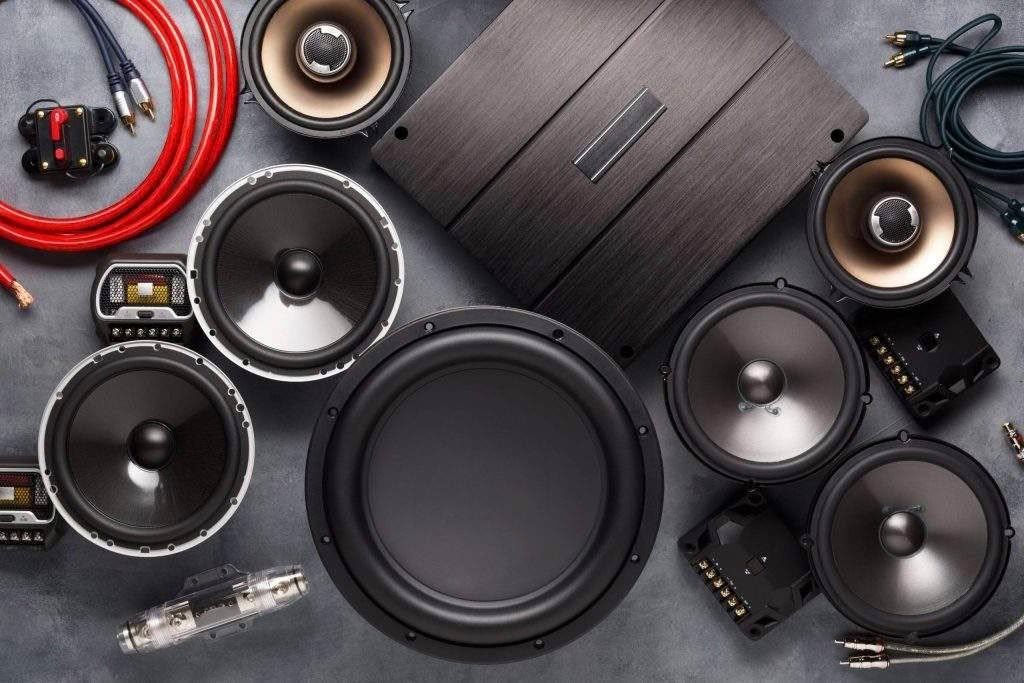
- Coaxial Speakers: These are an all-in-one solution where the tweeter is mounted directly in front of the woofer. They are designed as a direct, drop-in replacement for factory speakers, making for a simple and cost-effective upgrade.
- Component Speakers: For superior audio performance, component systems are the answer. They feature separate drivers—a woofer, tweeter, and an external crossover. This separation allows for optimal placement, creating a more accurate and immersive soundstage with precise stereo imaging.
When selecting, ensure you match the speaker size (e.g., 6.5-inch, 6×9-inch) to your car’s factory locations for an easy installation. Pay close attention to the RMS power rating, which indicates the continuous power a speaker can handle, rather than the misleading ‘peak power’ figure.
Step 3: Adding Power & Bass – Amplifiers & Subwoofers
While a new head unit and speakers improve clarity, your system’s true potential is unlocked with dedicated power. Your head unit’s built-in amplifier is designed for convenience, not performance, typically delivering only 15-20 watts RMS. An external amplifier provides the clean, stable power that high-performance speakers and subwoofers demand to operate without strain. This crucial upgrade is the difference between sound that is simply loud and sound that is loud, dynamic, and crystal clear. A well-powered system drastically reduces distortion at high volumes, protecting your speakers from damaging signals and ensuring longevity.
Demystifying Car Amplifiers
An amplifier’s job is to take a low-level signal from your head unit and boost it into a powerful signal capable of physically moving your speakers and subwoofers. They are categorised by channels and power:
- Channels: A monoblock (1-channel) is for subwoofers, a 2-channel for a pair of speakers, a 4-channel for front and rear speakers, and a 5-channel offers a complete single-amp solution.
- Power Matching (RMS): The most critical specification is RMS (Root Mean Square) wattage, which indicates continuous power handling. You must match your amplifier’s RMS output to your speaker’s RMS handling. Underpowering a speaker can cause clipping—a distorted signal that generates excessive heat and can destroy a voice coil faster than overpowering it. Adhering to these engineering principles, as outlined by bodies like the Audio Engineering Society (AES), is fundamental to building a reliable system.
- Amplifier Class: Most modern, high-performance amps are Class D. They are incredibly efficient, generate less heat, and can be built into a much smaller chassis, making them perfect for today’s space-conscious vehicles.
All About Subwoofers
Subwoofers are specialised drivers engineered exclusively to reproduce low-frequency bass notes—the sound you can feel. They are the heart of an impactful car audio NZ system, adding depth and richness that regular speakers cannot replicate. Subwoofers, their enclosure, and the amplifier work as a tightly integrated system.
Common sizes range from punchy 8-inch and 10-inch models to the more powerful 12-inch and 15-inch drivers favoured in SPL (Sound Pressure Level) builds. A subwoofer’s voice coil (Single or Dual) configuration dictates its wiring options, allowing you to present a specific impedance (ohm load) to your amplifier for optimal power delivery. The enclosure is just as vital:
- Sealed Enclosures: Produce tight, accurate, and musical bass. Ideal for listeners who prioritise sound quality and a responsive low-end.
- Ported Enclosures: Use a vent (port) to increase output at specific frequencies, resulting in louder, more booming bass. Perfect for those wanting maximum impact.
Step 4: The Unsung Hero – Your Car’s Electrical System
You can have the most powerful amplifiers and subwoofers, but a high-performance audio system is only as good as its electrical foundation. For many enthusiasts in the car audio NZ scene, upgrading the electrical system is an afterthought, yet it’s the single most critical factor in achieving clean, consistent, and powerful sound. Your car’s stock battery and wiring were designed to run the factory equipment, not to handle the immense, instantaneous current demands of a multi-thousand-watt sound system.
This power starvation leads to voltage drop—the enemy of performance and sound quality. When a heavy bass note hits, your amplifier draws a massive amount of current. If the electrical system can’t supply it fast enough, the voltage plummets. This “sag” forces your amplifier to work harder, generating more heat, clipping the audio signal (causing distortion), and ultimately reducing its real-world power output. The battery’s role is not just starting the car; it’s to act as a crucial power reservoir, sustaining amplifier demand when the alternator can’t keep up.
Beyond the Factory Setup
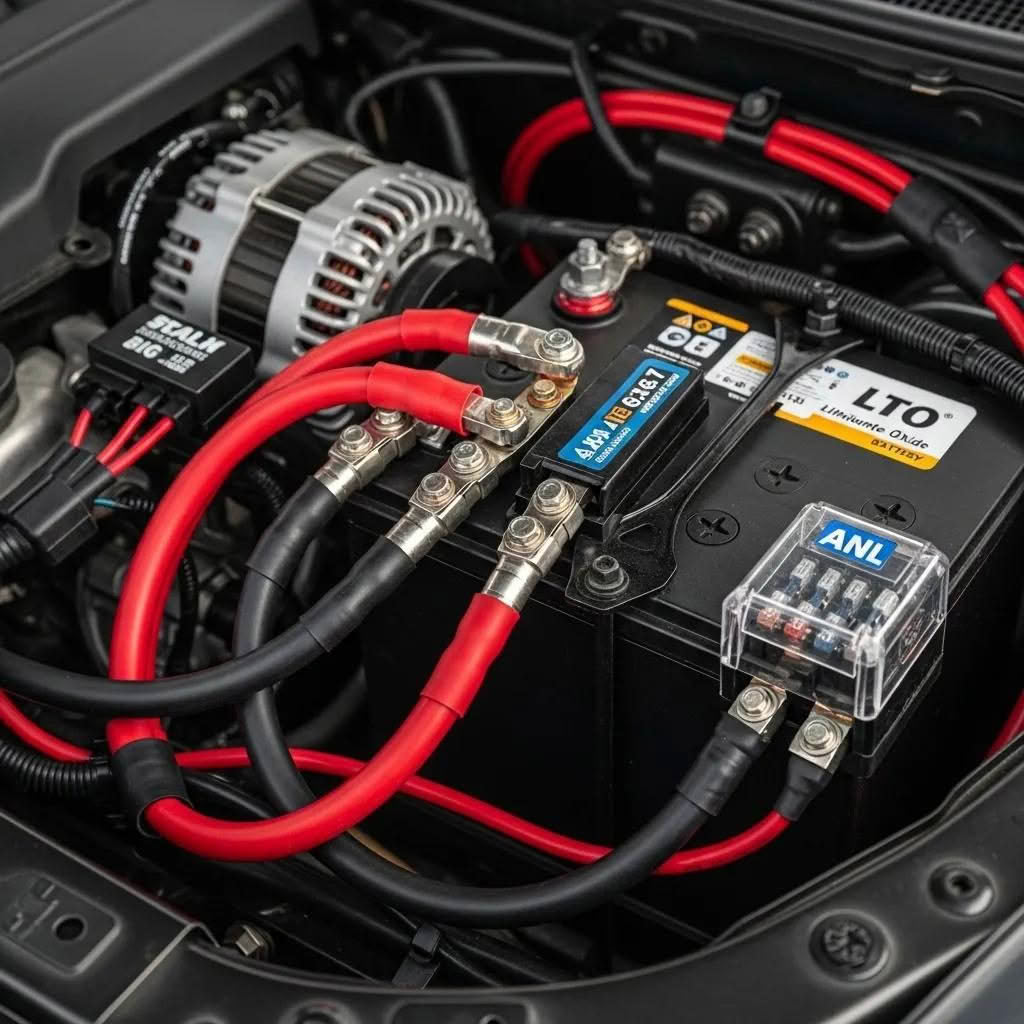
The first step in building a reliable electrical system is the ‘Big 3’ upgrade. This involves replacing three key wires with heavy-gauge OFC (Oxygen-Free Copper) cable: the alternator positive to the battery positive, the battery negative to the chassis, and the engine block to the chassis. This simple upgrade significantly improves current flow throughout your vehicle. A solid, bare-metal ground connection is non-negotiable for noise-free performance and is often the solution to frustrating alternator whine.
The Power Source: Why Your Battery Matters Most
While an AGM battery is a significant improvement over a standard lead-acid battery, Lithium technology is the ultimate solution for demanding car audio systems. Specifically, LTO (Lithium Titanate Oxide) batteries are engineered for extreme power delivery. They offer benefits that are simply unmatched by other chemistries:
- Rapid Discharge/Recharge: LTO banks can deliver and absorb huge amounts of current instantly, eliminating voltage sag and keeping your amplifiers fed.
- Stable Voltage: They maintain a higher, more stable voltage under heavy load, allowing your amps to produce their rated power more efficiently.
- Exceptional Lifespan: LTO cells are rated for tens of thousands of cycles, offering incredible durability and long-term value for any serious car audio NZ build.
For serious builds, a stock battery isn’t enough. To eliminate voltage sag and unlock your system’s true potential, explore our LTO battery banks and give your amplifiers the clean, stable power they crave.
Step 5: Installation & Tuning – Bringing It All Together
You’ve selected high-performance components; now it’s time to unlock their true potential. A meticulous installation is non-negotiable for achieving peak performance, electrical safety, and long-term reliability. This stage isn’t just about wiring; it includes critical acoustic treatments like sound deadening. Applying deadening material to doors and panels reduces vibration and road noise, dramatically improving mid-bass response and overall sonic clarity before you even turn the system on.
DIY vs. Professional Installation
For enthusiasts with solid 12V electrical knowledge and the right tools (multimeter, quality crimpers, trim removal kit), a DIY install can be a rewarding project. However, for complex systems or to guarantee a flawless result, a professional is an invaluable asset. Pro installers possess the experience to troubleshoot unexpected issues and have access to specialised diagnostic equipment. When searching for the best car audio NZ installers, check online reviews, ask to see portfolios of their work, and ensure they have a trusted reputation for quality craftsmanship.
The Basics of System Tuning
Tuning is the final, crucial process that harmonises all your components. It’s a methodical process, not a matter of simply turning everything to maximum. The fundamental steps include:
- Setting Amplifier Gains: This is not a volume knob. The gain matches the amplifier’s input sensitivity to the head unit’s output voltage. Setting it correctly with a multimeter or oscilloscope prevents clipping—a destructive form of distortion that can quickly destroy speakers and even amplifiers.
- Configuring Crossovers: Crossovers act as traffic directors for audio frequencies. You’ll set high-pass filters (HPF) for your tweeters and midrange speakers to block damaging low bass, and a low-pass filter (LPF) for your subwoofer to ensure it only reproduces the frequencies it was designed for.
- Basic Equalization (EQ): Once gains and crossovers are dialled in, use your EQ to fine-tune the sound. This is where you can gently boost or cut specific frequencies to compensate for your vehicle’s unique acoustics and tailor the final sound to your personal preference.
A well-installed and precisely tuned system, powered by a stable electrical foundation from an Evolution Lithium LTO battery bank, will deliver an audio experience that far exceeds the sum of its parts. It’s the difference between just loud noise and high-fidelity, immersive sound.
Your Journey to Audio Excellence Starts Now
You’ve now walked through the essential steps to building a truly exceptional car audio NZ system. The key takeaways are clear: success lies in careful planning, balancing your components, and recognising that your car’s electrical system is the true foundation of powerful, clean sound. As you add high-draw amplifiers and subwoofers, the demand on your electrical system skyrockets. A standard battery simply can’t keep up, leading to voltage sag that chokes your performance and puts your gear at risk.
As New Zealand’s LTO battery specialists, we provide the ultimate solution. Our power banks are hand-assembled with genuine SCiB cells, engineered specifically for SPL competitors and serious enthusiasts who refuse to compromise. Don’t let a weak power source be the bottleneck in your build. Give your system the stable, high-current power it was designed for.
Ready to power your system? View our hand-assembled LTO battery banks.
Build it right, power it properly, and enjoy the incredible sound you’ve created.
Frequently Asked Questions
How much does a good car audio system cost in NZ?
The cost for a quality car audio system in New Zealand varies significantly based on your performance goals. An entry-level upgrade with a new head unit and better speakers might cost between NZ$600 and NZ$1,500. A more serious setup including an amplifier and subwoofer typically ranges from NZ$1,800 to NZ$4,500. For high-performance or competition-grade systems with digital sound processors and electrical upgrades, costs can easily exceed NZ$5,000, plus installation.
Do I really need an amplifier for my new speakers?
Yes, for optimal performance, an amplifier is essential. Your factory or aftermarket head unit only produces about 15-22 watts RMS of power, which is not enough to drive quality speakers effectively. An external amplifier provides clean, dedicated power, allowing your speakers to play louder without distortion and reveal their full dynamic range and bass response. Underpowering good speakers can lead to poor sound quality and even damage them at high volumes.
What’s the difference between RMS and Peak power?
RMS (Root Mean Square) power is the most critical rating. It measures the continuous, real-world power an amplifier can deliver or a speaker can handle consistently. Peak power, on the other hand, is the maximum power a component can handle in a very brief burst. Always match your components using their RMS ratings. Relying on peak power ratings can lead to mismatched equipment, distortion, and potential damage to your audio gear.
Can I install a car audio system myself?
Basic installations like swapping speakers or a head unit can be a DIY project if you have the right tools and vehicle-specific wiring adapters. However, installing amplifiers, subwoofers, and running new power cables requires a solid understanding of your vehicle’s electrical system. Incorrect wiring can cause poor performance, damage components, or create a fire hazard. For any complex car audio NZ setup, we strongly recommend professional installation for safety and reliability.
Why do my headlights dim when the bass hits?
This is a classic symptom of voltage sag. Powerful bass notes demand a huge, instantaneous draw of electrical current from your system. If your car’s alternator and battery cannot supply this current fast enough, the vehicle’s overall voltage temporarily drops, causing your headlights and dash lights to dim. It’s a clear sign that your electrical system is a bottleneck and requires an upgrade, such as the ‘Big 3’ wiring and a high-performance battery to maintain stable voltage.
Is an expensive LTO lithium battery worth it for a daily driver?
For a daily driver with a high-performance audio system (typically over 1500W RMS), an LTO lithium battery is a worthwhile investment. While a good AGM battery suffices for modest systems, an LTO bank provides immense current on demand, completely eliminating voltage sag and headlight dimming. This ensures your amplifiers receive stable, clean power to operate at peak efficiency, delivering tighter bass and clearer sound, even during demanding daily use.