 Skip to content


Mastering Voltage Drop in Car Audio: Unleash Peak Power and Crystal-Clear Sound
Are your car’s headlights dimming with every bass note, or is your audio sounding muddy and distorted? These are classic signs that voltage drop is stealing power from your car audio system. Voltage drop is essentially a loss of electrical pressure as current travels through your wiring and components, leading to weaker amplifier performance, audio distortion, and an unstable system. In this comprehensive guide, we’ll dive deep into what voltage drop is, why it happens, how it sabotages your sound quality and vehicle’s health, and the ultimate solutions—from beefing up your wiring and upgrading your alternator and battery to smart monitoring techniques, all tailored for Kiwi car audio enthusiasts. Get ready to unlock consistent, clean power and experience your music like never before.
What Exactly Is Voltage Drop and Why Is It Crucial for Car Audio?
Voltage drop is the reduction in electrical potential that occurs along a circuit due to resistance in the wires, connections, or components. This loss means less current reaches your amplifier, compromising its stability and the clarity of your audio. Think of it like a garden hose: a kink or a narrow section restricts water flow, just as undersized wires or poor connections restrict electrical flow, leading to power loss where it matters most. Understanding voltage drop is vital because modern car audio systems crave high current for those deep, impactful bass notes, and even a small voltage dip can trigger clipping, distortion, and protective shutdowns.
How Does Voltage Drop Mess With Your Car Audio Performance?
When voltage drops, your amplifiers are starved of a consistent power supply. This forces them into clipping mode when the demand for output power exceeds what’s available, resulting in harsh distortion and a loss of dynamic range. This instability can particularly affect low-frequency output, making your bass sound choked and your midrange lose its clarity. Keeping your voltage stable is the key to ensuring your amplifiers deliver clean, undistorted sound across the entire frequency spectrum.
Which Key Components Are Most Vulnerable to Voltage Drop?
- Amplifiers: They can clip or shut down entirely when the voltage dips below their operational requirements.
- Head Units & Processors: These can reset or glitch unexpectedly due to unstable power.
- Lights: Headlights and interior lights will dim as the alternator struggles to keep up with the demand.
- Batteries: They endure deeper discharge cycles and wear out faster with fluctuating voltage.
Recognising these vulnerabilities highlights why a robust electrical system—featuring the right wiring, solid grounding, a capable alternator, and a healthy battery—is non-negotiable for reliable, high-fidelity audio.
How Can You Detect and Measure Voltage Drop?
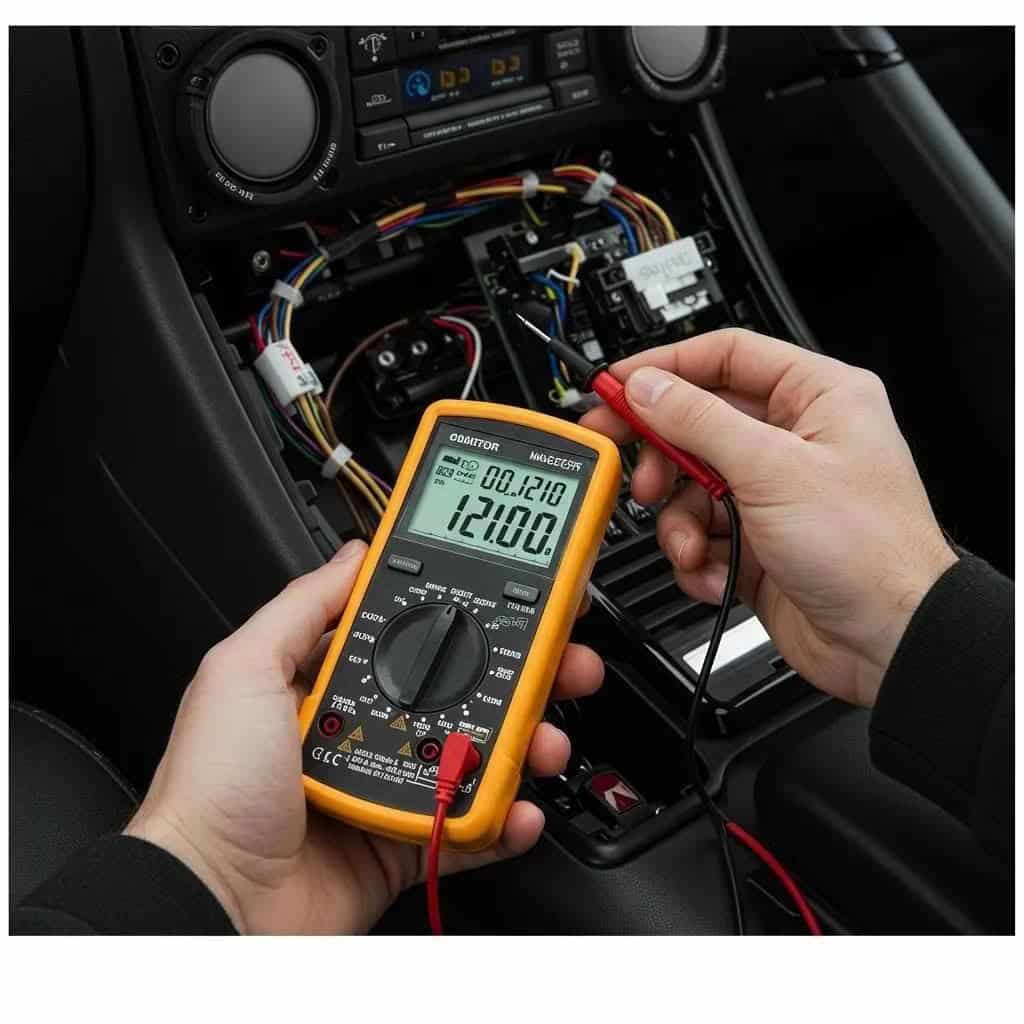
To measure voltage drop, you’ll compare the voltage readings at your battery terminals and at your amplifier’s power and ground connections while the system is under load, using a multimeter. If you see a difference greater than 0.5 volts on either the power or ground circuit, you’ve got excessive resistance. Common tell-tale signs include flickering lights, amplifiers entering protection mode, and audible distortion even at moderate volumes. Regularly checking your system’s voltage during playback can reveal instability before it causes component damage, prompting timely fixes.
Diagnosing and Mitigating Voltage Drop in Automotive Electrical Systems
Voltage drop, a reduction in electrical potential due to resistance, can significantly impair the performance of automotive components, leading to issues like sluggish operation or distortion in audio systems. Experts recommend measuring voltage drop across circuits under load using a multimeter, with a drop exceeding 0.1V to 0.3V often indicating a problem that requires corrective action.
This information verifies the definition, measurement techniques, and impact of voltage drop on vehicle electrical and audio performance, aligning with the article’s diagnostic advice.
What Are the Primary Culprits Behind Voltage Drop in Car Audio?
Voltage drop is fundamentally caused by excessive resistance, which most commonly stems from using wiring that’s too thin, an alternator that can’t keep up, a weak battery, poor grounding connections, and high current demands from powerful amplifiers.
How Does Using the Wrong Wire Gauge Worsen Voltage Drop?
Thinner wires have higher resistance for every metre of length, meaning they convert electrical energy into heat instead of delivering usable power. When high current flows through undersized wiring, the voltage at your amplifier’s terminals drops significantly, directly proportional to the wire’s resistance and length. For instance, running 8 AWG wire to a 200W amplifier over a long distance can easily result in a voltage loss exceeding 0.2V, and this loss only increases with distance. Choosing the correct wire gauge based on your current demand and cable run length is crucial for minimising voltage drop and preventing heat buildup.
Why Does a Struggling Alternator Lead to Voltage Drop?
A factory or underperforming alternator has a limited maximum current output. When your audio system’s amplifiers demand peak current, the alternator simply can’t replenish the battery’s supply fast enough, causing the system voltage to sag. This voltage sag can trigger protective circuits in your amplifiers and reduce your system’s overall headroom. Upgrading to a high-output alternator significantly boosts your vehicle’s power generation capacity, helping to maintain stable voltage even during intense bass passages.
How Do Underperforming Batteries Contribute to Voltage Drop?
Car batteries act as a reserve for those sudden, high-current demands. Traditional lead-acid and AGM batteries have internal resistance that limits their instantaneous discharge capability. Under heavy audio loads, these batteries struggle to deliver maximum current and experience a significant internal voltage drop. In stark contrast, LTO lithium batteries boast incredibly high discharge rates and minimal internal resistance, ensuring consistent voltage delivery during those demanding bass transients and protecting your audio system from clipping.
This comparison clearly shows that LTO lithium chemistry provides the most stable voltage under extreme loads, directly combating audio distortion and enhancing system longevity.
How Does Voltage Drop Impact Your Car Audio Sound Quality and System Health?
Voltage drop doesn’t just affect sound quality; it also puts unnecessary strain on your electrical components, increasing the risk of premature failure.
What Are the Hallmarks of Audio Distortion and Clipping Caused by Voltage Drop?
Audio clipping manifests as a harsh, fizzy distortion, a noticeable loss of bass extension, and a flattened waveform at the amplifier’s output. A clipped signal not only strains your speakers but also degrades the precision of your soundstage. Interestingly, clipping often occurs during mid-level volume peaks rather than at maximum volume, signalling insufficient power reserves rather than speaker limitations.
Can Voltage Drop Actually Damage Amplifiers and Speakers?
Yes, persistent voltage sag forces amplifiers to operate outside their safe voltage parameters, leading to excessive heat buildup in the output transistors and triggering thermal protection circuits. Repeatedly cycling through protection mode can significantly shorten an amplifier’s lifespan. Similarly, speakers subjected to clipped waveforms endure voice-coil overheating and mechanical stress, drastically reducing their usable life.
How Does Voltage Drop Affect Your Vehicle’s Electrical Systems?
When your car audio demands outstrip the alternator’s capacity, your vehicle’s lights and other electronics are forced to draw power directly from the battery. This leads to dimming headlights, flickering dashboard lights, and potentially even ECU resets. This constant electrical strain can shorten your battery’s life and compromise the function of safety-critical systems like your brakes or power steering, which rely on stable voltage.
What Are the Safety Risks Associated with Voltage Drop?
Electrical instability can increase the risk of fire if undersized wiring overheats. Voltage fluctuations can also trigger malfunctions in your vehicle’s control modules. Ensuring consistent grounding and proper fuse protection is paramount to prevent short circuits or arcing that can result from excessive resistance points or loose connections.
What Are the Top Solutions to Prevent and Fix Voltage Drop in Car Audio?
Effectively tackling voltage drop requires a comprehensive strategy: upgrading your wiring, boosting your alternator’s output, choosing high-performance batteries, and implementing meticulous connection practices.
How Does the Big 3 Wiring Upgrade Combat Voltage Drop?
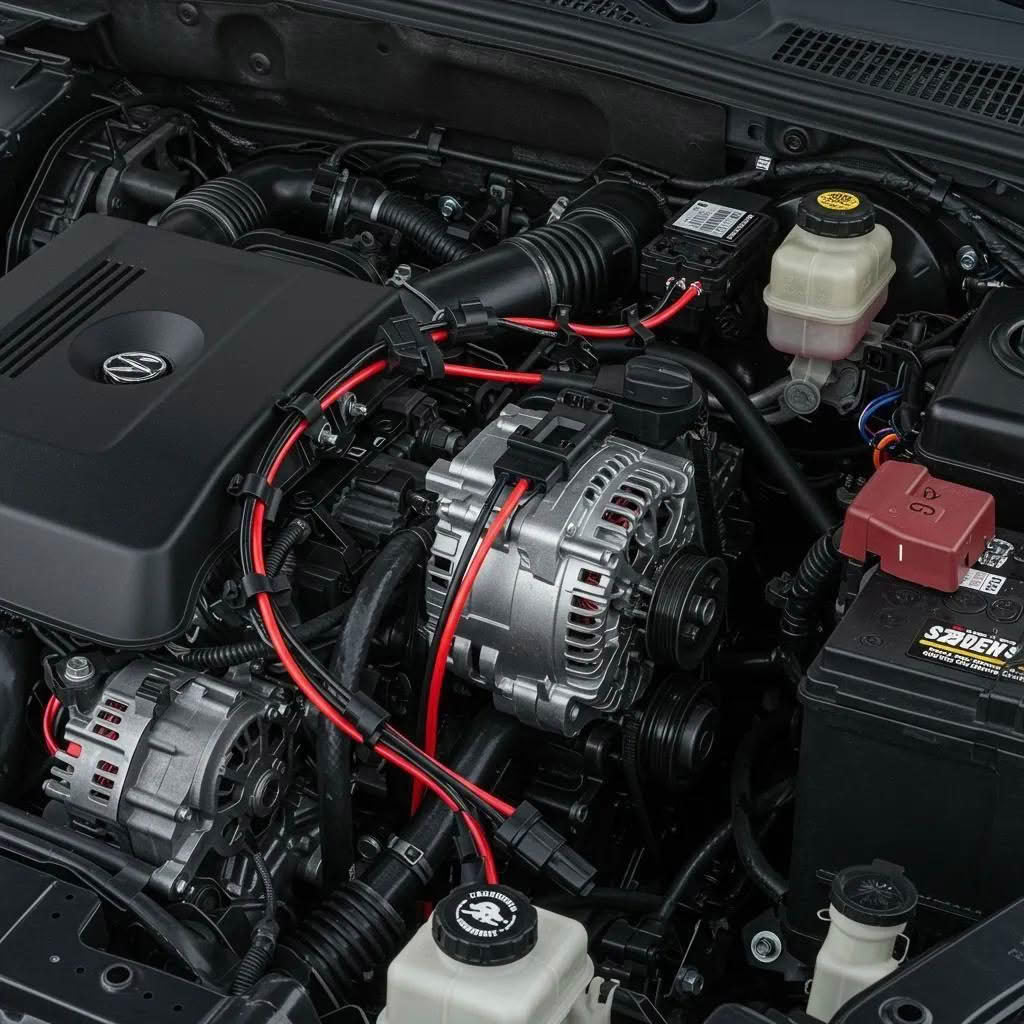
The Big 3 Upgrade involves replacing three key factory cables with much thicker gauge wires to dramatically improve current flow:
- Alternator positive to battery positive
- Engine block ground to chassis ground
- Battery negative to chassis ground
By using these larger conductors, you minimise resistance and ensure that power is delivered efficiently under load. Performing this upgrade is fundamental to restoring voltage stability and preventing issues like dimming lights and amplifier shutdowns.
Enhancing Automotive Electrical Systems: The Big 3 Upgrade and High-Output Alternators
Upgrading an automotive electrical system with the “Big 3” wiring modification—replacing the alternator positive, battery negative, and engine block ground cables with thicker gauges—is crucial for improving current flow and reducing voltage drop. This, combined with a high-output alternator, ensures stable power delivery, especially for high-demand applications like powerful car audio systems, preventing strain on the battery and other electrical components.
This research supports the article’s recommendations for the Big 3 wiring upgrade and the installation of high-output alternators as effective solutions for preventing voltage drop and ensuring stable power for car audio.
When Is It Time to Upgrade to a High-Output Alternator?
A high-output alternator becomes essential when your total audio system RMS power exceeds 1,000 W, or if you have numerous auxiliary accessories drawing significant current. Increasing your alternator’s output by 50–100 A above the factory rating will ensure a sufficient charge rate and maintain system voltage during prolonged, demanding audio playback.
Why Are LTO Lithium Batteries the Ultimate Choice for Stable Car Audio Power?
LTO lithium batteries are engineered with ultra-low internal resistance, allowing them to deliver massive current without significant voltage loss. Their chemistry enables rapid recharging, offers an exceptionally long cycle life, and provides superior thermal stability, guaranteeing continuous, clean power delivery even during the most demanding audio sessions. Compared to traditional lead-acid and AGM batteries, LTO batteries maintain much tighter voltage rails during deep bass transients.
Advantages of Lithium Titanate (LTO) Batteries in High-Performance Applications
Research indicates that Lithium Titanate (LTO) batteries offer significant advantages for demanding electrical systems, including exceptional cycle life, rapid charge and discharge capabilities, and stable performance across a wide temperature range. These characteristics stem from their unique “zero-strain” property and high lithium-ion diffusion rates, allowing for consistent power delivery and extended longevity compared to other lithium-ion chemistries.
This research directly supports the article’s claims regarding the superior performance, cycle life, and thermal stability of LTO lithium batteries for car audio systems.
What Are the Best Practices for Wiring to Minimise Voltage Drop?
To ensure your wiring setup is as efficient as possible, follow these best practices:
- Route power cables away from heat sources and sharp edges.
- Keep cable runs as short as practical.
- Secure cables firmly using non-conductive clamps.
- Install appropriately sized inline fuses as close to the battery as possible.
- Opt for oxygen-free copper (OFC) conductors to minimise resistance.
Adhering to these guidelines will minimise resistive losses, maximise safety, and ensure the reliability of your system.
How Do Capacitors Stack Up Against Lithium Batteries for Voltage Stability?
Capacitors are designed to store energy briefly, acting as a small buffer to smooth out voltage dips by delivering short bursts of current during peak demands. However, capacitors deplete very quickly and require frequent recharging from the alternator. LTO lithium batteries, on the other hand, provide sustained high-current output over much longer durations without significant voltage sag, making them a far superior primary power solution for extended, high-demand listening sessions.
How Do Evolution Lithium’s LTO Batteries Elevate Car Audio Voltage Stability?
Evolution Lithium’s LTO batteries deliver unparalleled performance, meticulously engineered for the most demanding car audio environments.
What Makes LTO Lithium Batteries the Superior Choice for Car Audio Systems?
LTO batteries masterfully combine an exceptionally long cycle life, incredibly high discharge rates, and outstanding thermal stability to maintain clean, unwavering voltage even during the most intense bass-heavy tracks. Their remarkably low internal resistance means minimal voltage drop, while advanced safety features actively prevent thermal runaway and overcurrent damage, offering ultimate peace of mind for high-performance installations.
How Do LTO Batteries Compare to Other Lithium Chemistries?
When compared to LiFePO₄ and conventional Li-ion batteries:
- LTO batteries recharge significantly faster under high current.
- LTO batteries excel in extreme temperature ranges.
- LTO batteries support over 5,000 cycles, compared to 2,000–3,000 for LiFePO₄.
These distinct advantages translate into consistently reliable power delivery, whether for your daily driver or a competition SPL setup, minimising performance degradation over the long haul.
What Are the Best Practices for Installing and Maintaining LTO Batteries?
To ensure optimal longevity and performance:
- Mount batteries in a well-ventilated, secure enclosure.
- Utilise dedicated wiring and fuse protection sized appropriately for the battery’s capacity.
- Verify your charging system voltage is within the LTO specification range (typically 13.8–14.6 V).
- Conduct periodic voltage and load testing to identify any potential issues early on.
Consistent maintenance checks guarantee unwavering voltage stability and maximise the battery’s service life.
What Real-World Benefits Have Customers Experienced with LTO Batteries?
Our customers consistently report:
- Complete elimination of clipping and distortion, even at extreme volumes.
- Headlights remaining bright and steady during intense audio peaks.
- Extended system uptime without triggering amplifier protection modes.
- Longevity that far surpasses multiple replacements of traditional AGM batteries.
These firsthand accounts powerfully illustrate the transformative impact of LTO technology on both sound quality and overall system reliability.
How Can You Effectively Troubleshoot and Monitor Voltage Drop in Your Car Audio System?
Mastering voltage drop troubleshooting involves recognising common symptoms and employing targeted measurement tools.
What Are the Common Symptoms Indicating Voltage Drop Issues?
Keep an eye out for these frequent indicators:
- Amplifier protection lights activating unexpectedly.
- Headlights dimming noticeably during bass-heavy tracks.
- Fluctuating amplifier gain settings.
- Audible distortion and a loss of bass impact.
Identifying these early signs helps you focus your diagnostics on potential issues with your wiring, grounding, alternator, or battery.
How to Use a Voltage Drop Calculator for Your Wiring Setup?
A voltage drop calculator requires your wire gauge, length, and the current draw of your system to estimate potential voltage loss. Input your conductor size and run distance, then adjust the wire gauge until the calculated voltage drop is below 0.5 V at peak current. This ensures your chosen wiring is adequate for your power delivery needs and prevents performance compromises.
When Should You Seek Professional Help for Electrical Upgrades?
It’s wise to consult an expert installer when:
- You’re planning a Big 3 upgrade or alternator replacement.
- You’re integrating multiple high-power amplifiers.
- You need to reconfigure your vehicle’s entire electrical architecture.
- You want to ensure full compliance with safety and roadworthiness standards.
Professional technicians can verify correct installation, ensure proper fuse protection, and establish reliable grounding to safeguard your valuable components and vehicle systems.
What Local Considerations Should New Zealand Car Audio Enthusiasts Be Aware Of Regarding Voltage Drop?
In New Zealand, specific regulations and environmental factors can influence your upgrade choices and component selections.
Are There Specific Regulations or Standards for Car Audio Electrical Upgrades in NZ?
NZTA guidelines mandate that all modifications must maintain the vehicle’s electrical safety and not compromise the integrity of the factory wiring. All installations must comply with AS/NZS wiring standards, and fuses must be correctly rated and securely mounted to ensure roadworthiness.
Where Can You Find Evolution Lithium Products and Support in New Zealand?
Evolution Lithium’s complete range of LTO batteries and expert technical support are readily available through our authorised distributors across New Zealand. They can provide tailored advice on selecting the right models and implementing installation best practices for both daily drivers and extreme SPL competitors.
How Do NZ SPL Competitions Influence Voltage Drop Solutions?
Sound Pressure Level (SPL) competitions demand extreme current bursts to achieve maximum decibel output, which ruthlessly exposes any weaknesses in a car audio system. Consequently, upgrades like the Big 3 wiring, high-output alternators, and LTO lithium batteries are standard equipment among top NZ competitors aiming to maintain unwavering voltage under the most punishing audio loads.
Voltage drop is the enemy of pristine audio fidelity and places undue stress on your vehicle’s electronics. However, by understanding its causes, impacts, and the most effective solutions—including mastering wiring practices, optimising alternator capacity, and embracing advanced LTO lithium batteries—you can achieve stable power delivery and unlock superior sound quality. Adopt these strategies to protect your car audio investment and immerse yourself in distortion-free performance on every drive.
Conclusion
Understanding and addressing voltage drop is essential for maintaining optimal sound quality and protecting your vehicle’s electrical systems. By implementing effective solutions such as upgrading wiring, enhancing alternator output, and utilizing advanced LTO lithium batteries, you can ensure stable power delivery and an immersive audio experience. Don’t let voltage drop compromise your car audio investment; take proactive steps to enhance your system’s performance today. Explore our range of high-performance products and expert support to elevate your car audio setup.