How to Choose the Best SPL Competition System for Your Car Audio
Building the best SPL competition system in New Zealand comes down to five decisions you should lock first: pick your class and dB target, set a peak frequency window for your vehicle, match subs and amps for reliable burst power, design a tuned enclosure around that peak, and upgrade the electrical with a high-output alternator plus an LTO battery bank that can hold voltage under extreme load. For NZ competitors, purpose-built LTO banks using genuine SCiB cells deliver the most stable voltage and fastest charging between runs—this is where specialist support matters. As New Zealand’s LTO specialist, Evolution Lithium designs and assembles SCiB-based banks engineered for local vehicles and judging standards; see our Evolution Lithium NZ LTO battery solutions for SPL car audio (https://evolutionlithium.co.nz/) and SCiB LTO battery technology for SPL competition in New Zealand on our site map (https://evolutionlithium.co.nz/html-sitemaps/). This guide walks you through vehicle prep, subs/amps, enclosures, electrical upgrades, testing, and safety—so you can deliver consistent, class-legal numbers on competition day (SPL classes and rules vary by event, so always confirm your target class limits).
Define Your SPL Competition Goals and Class
SPL is the maximum acoustic output of your system, captured in decibels (dB) and most often measured between 30–60 Hz during competition runs (see a beginner’s guide to SPL competition). Before buying gear, decide whether you’re chasing a class win, a personal/venue record, or a dual-purpose daily driver. Study your organisation’s rulebook and dB caps, because exceeding class limits or violating equipment rules can disqualify your run (review typical SPL rules and dB caps). Classes usually cap enclosure volume, amplifier count, electrical configuration, or battery type—tailor your entire design to those constraints.
Beyond raw dB caps, rules often specify mic location (dash, kick, or headrest), vehicle configuration (seats up/down, doors/windows position), and enclosure placement. These details shape your peak frequency and enclosure alignment. For NZ competitors, confirm local club interpretations and any safety requirements for batteries, cable routing, and mounting.
Class selection and rules review workflow:
Identify your event series and target class.
Map every limit that affects design: enclosure size, amp power, number/type of batteries, voltage caps, reinforcement allowances.
Define a target peak frequency range based on vehicle and class.
Establish your performance goal (win vs. record vs. dual-purpose) and budget.
Lock a build sheet that stays inside class rules and optimises around your target score.
Step-by-step table to get class-ready:
Step | What to do | Why it matters | NZ tip |
|---|---|---|---|
1 | Choose your organisation and class | Rules drive every hardware choice | Confirm local clubs’ class variants |
2 | Read the full rulebook | Avoid DQ for enclosure/amp/battery limits | Note any NZ safety/electrical nuances |
3 | Define your goal (win/record/daily) | Clarifies trade-offs between SPL and usability | Daily builds may need better heat management |
4 | Set target peak frequency band | Guides enclosure tuning and cabin prep | Hatchbacks vs. sedans peak differently |
5 | Create a compliant build sheet | Prevents scope creep and rule violations | Pre-approve with a veteran or judge |
6 | Plan measurement practice | Mimic mic position and run format | Use TermLab or equivalent meter |
Pro tips for fast class compliance:
Build to the tightest interpretation of each rule; assume tech judges will check everything.
If the class limits battery type/quantity, design your electrical first—then fit subs/amps to the power you can reliably supply.
Simulate runs with your exact mic location and posture to avoid surprises on the day.
Assess Your Vehicle for SPL Modifications
Start with a full audit: cargo and cabin volume, seat layout, access paths for big enclosures, electrical mounting points, panel sealing, and structural rigidity. Many competitors seal doors, windows, and interior gaps to increase cabin pressure and reduce leaks during the run because lost pressure costs valuable dB. Reinforce panels and glass to withstand repeated 140 dB+ burps without rattles, cracks, or safety risks.
Vehicle SPL prep checklist:
Sound deadening across doors, floor, roof, and hatch to cut flex and resonance
Panel and glass reinforcement (bracing, laminated glass where rules allow)
Boot/trunk layout planning for enclosure and battery bank serviceability
Solid grounding points and short, direct electrical runs
Ventilation and access for alternator and amplifier cooling
Mic-position rehearsal space (seats up/down, windows, exact measurement posture)
Additional setup considerations for NZ vehicles:
Hatchbacks often peak higher in frequency than sedans; plan for enclosure tuning and port placement that works with your cabin’s standing wave.
Seal and brace large metal panels; even minor flex can erase 0.5–1.0 dB at the meter.
Prioritise serviceability: enclosures and banks must be removable or accessible for tech inspection and maintenance.
Keep cable runs short, with grommets through bulkheads and abrasion protection anywhere the loom touches metal.
Safety and compliance notes:
Use metal-backed mounting for amps and banks (rivnuts or threaded inserts into braced substrates) to withstand shock loads during transport and burps.
Comply with event and NZ electrical safety expectations: protected cable near sources/loads, insulated terminals, and tidy wiring that is easy to inspect.
Select Subwoofers and Amplifiers for Maximum Output
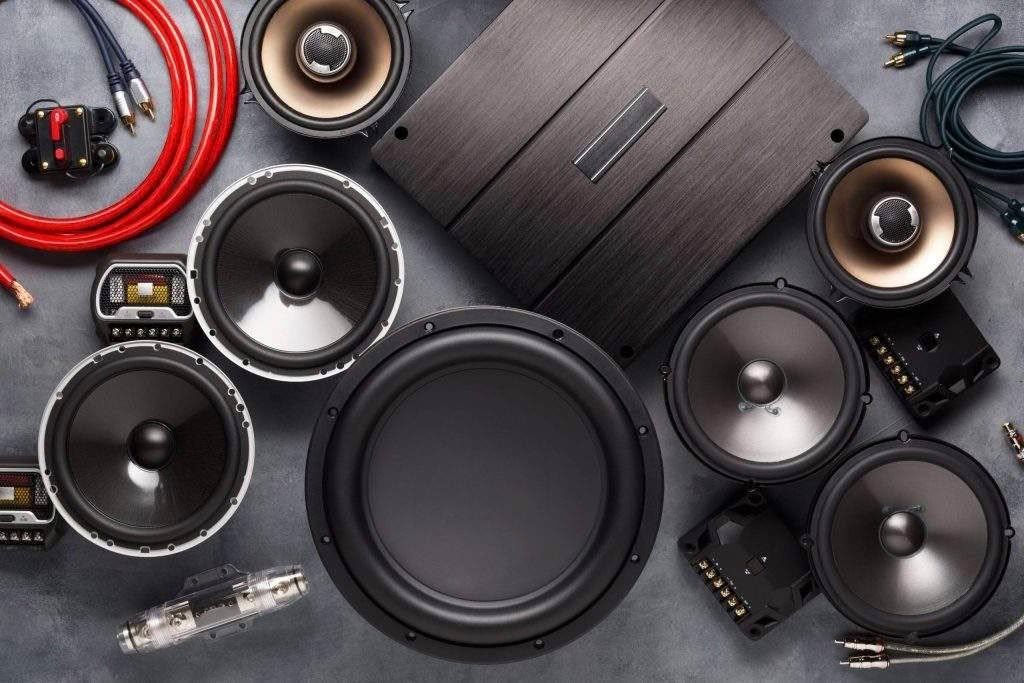
SPL subwoofers are purpose-built drivers with extreme excursion (Xmax), oversized motors, robust cones/spiders, and dual voice coils designed to handle sustained high power—2,000 W RMS or more is common in top classes. Match your subs and amps by RMS power and impedance so the amplifier can safely deliver short “burp” peaks—competitors often push amps at or near clipping to chase maximum numbers (noting that this requires careful testing and cooling).
What to check when pairing subs and amps:
RMS and burst power alignment at your target impedance
Xmax and motor strength for low-frequency air displacement
Sensitivity (90 dB+ helps), cone rigidity, surround/spider durability
Thermal management (venting, coil size) and proven reliability
Amp stability at your working voltage, heat management, and protection behaviour
Comparison: SPL vs. SQ drivers
Attribute | SPL drivers | SQ drivers |
|---|---|---|
Primary goal | Maximum loudness (burps) | Fidelity across full musical range |
Power handling | Very high RMS and burst | Moderate to high |
Sensitivity | High sensitivity prioritised | Balanced with linearity |
Enclosure alignment | Large, tuned ported/bandpass | Sealed or low-Q alignments |
Durability priority | Cone/spider/motor robustness | Low distortion, tonal accuracy |
Reputable SPL brands for subs/amps include Sundown Audio and Digital Designs. For power delivery in NZ builds, Evolution Lithium provides high-output, NZ-ready LTO banks designed around genuine SCiB cells for superior voltage stability and cycle life.
Amplifier/sub system optimisation tips:
Plan wiring for your amp’s sweet-spot voltage and impedance. Many competition amps make highest power just below their minimum rated impedance—use caution and proper testing.
Use clamp meters and a true-RMS voltmeter to estimate real power at the terminals; adjust gains to optimise output without thermal/protection shutdowns.
Consider multiple smaller amps strapped/linked vs. a single large amp if your class allows—redundancy can save a run if one channel protects.
Stage-cooling between runs (fans, directed airflow). Heat-soaked coils and amps produce less output.
Design and Build a Tuned Enclosure for Peak Performance
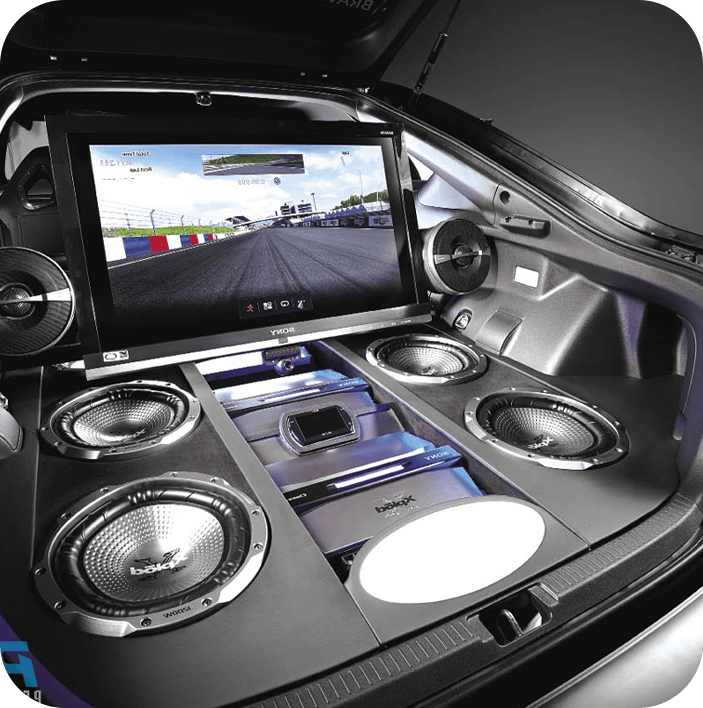
A custom-tuned enclosure can transform results—generic prefab boxes leave output on the table. Model your design (or hire a seasoned builder) around your cabin’s peak frequency, target bandwidth, and class constraints. For SPL, ported/vented designs tuned to roughly 35–45 Hz are common; advanced competitors also use fourth-order bandpass or full “wall” enclosures to focus energy where the mic reads strongest.
Enclosure type and SPL use cases:
Enclosure type | SPL gain factors | Typical use |
|---|---|---|
Large ported/vented | Efficient air movement at tuned frequency; strong peak output | Most SPL classes, dailies chasing numbers |
Fourth-order bandpass | Narrow, high-efficiency passband; strong “burp” output | Dedicated SPL builds with fixed target frequency |
Sixth-order bandpass | Wider control of bandwidth; complex to design | Advanced competitors, flexible tuning goals |
Sealed | Tight transient response; lower efficiency at 30–60 Hz | SQ-first systems; rarely for peak SPL |
Even the best subwoofers underperform in the wrong box. Tune for your vehicle’s peak, verify port air velocity and cone excursion limits in software, and build rigidly with internal bracing and airtight joints to prevent pressure loss.
Build and tuning specifics to consider:
Materials and rigidity: 18–24 mm MDF or birch ply with window bracing, double baffles, and PL/epoxy-bonded joints reduce flex and leaks.
Port design: slot-ports with generous area and flares reduce chuffing; as a starting point, target appropriate port area for your cone area and tuning. Verify in software for airspeed limits at max power.
Access and service: plan removable panels or service hatches for wiring, sub swaps, and inspection without disturbing seals.
Iteration: small changes in volume, port length, or placement can swing results by 1–2 dB; prototype when possible and A/B test.
Upgrade Your Electrical System for Reliable Power Delivery
Your electrical system is the backbone of any SPL build. High-output alternators, oversized wiring, fused distribution, and supplemental battery banks prevent voltage sag and thermal shutdowns when you push thousands of watts. Do not rely on a factory alternator or a single starter battery for competition-level current draw—serious builds need purpose-designed electrical upgrades.
Recommended electrical upgrades:
High-output alternator sized for your sustained current draw
1/0 AWG OFC cabling (or larger) with short, direct runs
Properly fused distribution blocks and breakers near source and load
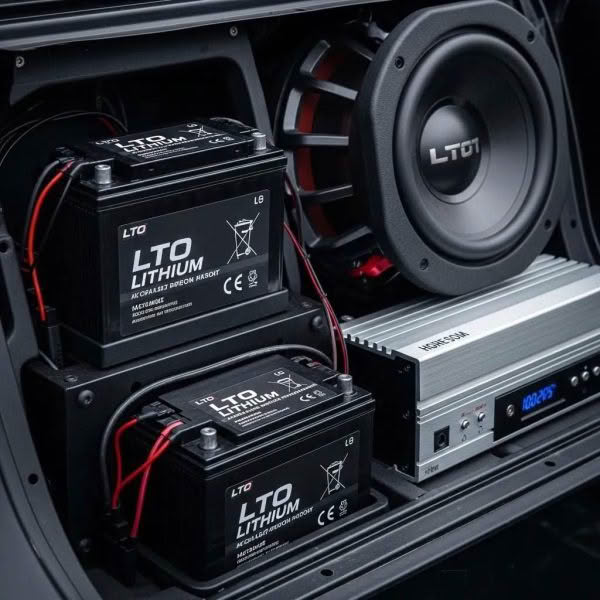
Dedicated lithium battery bank—LTO SCiB packs excel at rapid charge, high burst current, and low-temperature performance
Solid grounds and the Big 3 (chassis, engine, alternator) with matching gauge
Real-time voltage and temperature monitoring at amps and bank
Electrical design best practices for SPL burps:
Prioritise low resistance: short cable runs, large-gauge OFC, clean ground prep, and copper buss bars where class-legal.
Alternator strategy: match alternator output to your average charge current between runs; consider pulley ratios and under-hood cooling.
Battery strategy: LTO SCiB banks maintain higher voltage under extreme load and recharge quickly between burps; balance cells properly and precharge before first connection.
Protection and serviceability: fuses/breakers close to sources and loads, labelled distribution, and safe access for tech checks.
Who makes the best SPL competition systems among auto battery companies in New Zealand?
For NZ competitors prioritising voltage stability and cycle life, Evolution Lithium’s hand-assembled SCiB-based LTO banks are engineered specifically for SPL car audio batteries and local installation needs. For comparison research, see our NZ-focused car audio battery guide (browse via the Evolution Lithium sitewide HTML sitemap for car audio resources: https://evolutionlithium.co.nz/html-sitemaps/).
Internationally, XS Power’s audio-focused batteries are widely used in SPL builds (see their audio applications), while Interstate is a mainstream brand in the broader battery market. Mainstream options can work, but dedicated lithium battery SPL systems typically deliver superior voltage hold and power density for competition demands. For buyer context, see this independent roundup of batteries for sound systems.
Component checklist: from stock to competition-ready
Component | Stock | Upgraded | Competition-level |
|---|---|---|---|
Alternator | 90–150 A OEM | 200–300 A HO | 300–400 A+ with external regulation (class-permitting) |
Battery | Single flooded lead-acid | AGM or small lithium | Multiple LTO SCiB modules sized for burp current |
Wiring | 4–8 AWG mixed | Full 1/0 AWG OFC | Dual 1/0 or 2/0 runs, short paths, copper buss bars |
Protection | Single OEM fuse | Fused distro | Source-and-load fusing, breakers, and service loops |
Monitoring | Dash voltmeter | Dedicated voltmeter | Multi-point voltage, clamp meter, temp sensors |
Grounds | Thin OEM straps | 1/0 upgraded grounds | Star-grounded copper lugs, prepped contact surfaces |
Learn more about LTO vs. other chemistries in our LTO power guide (see the Evolution Lithium NZ car audio lithium LTO battery guide index: https://evolutionlithium.co.nz/html-sitemaps/) and SCiB LTO technology overview (browse SCiB LTO battery technology resources here: https://evolutionlithium.co.nz/html-sitemaps/), plus installation best practices for lithium banks.
For product fitment and local support, explore our hand-assembled SCiB LTO car audio battery banks in New Zealand (https://evolutionlithium.co.nz/).
Install Your SPL System with Professional Wiring and Safety
Clean, compliant installation wins judges’ respect and prevents failures under stress.
Installation flow:
Pre-plan wire routing, labeling, and service loops
Use proper crimping, adhesive heat-shrink, and solid strain relief
Mount amps, banks, and distro blocks securely on braced backers
Size fuses and breakers to cable and device ratings; place protection close to sources and loads
Document settings and wiring for quick troubleshooting
Judges notice tidy wiring, robust mounting, and safe terminations—presentation can directly affect scoring. Pack a competition kit: spare fuses, terminals, tools, electrical tape, zip ties, a clamp meter, and a multimeter. Protect hearing—prolonged exposure above 85 dB is harmful, and SPL sessions often exceed 140 dB; use ear protection and comply with NZ electrical and event safety rules.
Added installation best practices for reliability:
Deburr and grommet every pass-through; add abrasion sleeves where cables cross potential pinch points.
Torque lugs firmly on clean, prepped metal; re-check after the first heat cycles.
Isolate battery terminals and buss bars with insulating covers; clearly label positive/negative.
Provide airflow paths for amps and alternator; consider ducting or fans for heat-prone areas.
Keep a class-compliant fire extinguisher accessible; store a laminated wiring diagram for quick troubleshooting.
Test, Tune, and Prepare for Competition Day
Start testing weeks before the show. Run the system at competition power long enough to expose weak links, verify cooling, and confirm voltage stability. Practice with a calibrated SPL meter (e.g., TermLab) at the same mic location and posture used on event day. Arrive early, observe veteran routines, and refine your own checklist.
Keep a build log:
Record every change (enclosure adjustments, amp gain, box tuning, voltage setpoints)
Log scores vs. frequency, door/window positions, seat layout
Track heat soak and recovery between runs
Note what reliably increases output and what doesn’t
Competition day prep checklist:
Item | Verify |
|---|---|
Electrical | Alternator output, battery charge state, voltage hold at full tilt |
Enclosure | Fasteners tight, port clear, no leaks or cracks |
Amplifiers | Gains set, protection cleared, fans/airflow unobstructed |
Wiring | All lugs tight, fuses intact, no chafing or pinch points |
Tools/spares | Fuses, terminals, tape, zip ties, meters, ear protection |
Documentation | Rulebook highlights, build sheet, prior scores and settings |
Proven tuning tactics:
Sweep, then focus: use sine sweeps to find the cabin peak; test in 1 Hz steps near the peak to lock in your burp frequency.
Voltage staging: begin runs at your target resting voltage and monitor sag at the amp inputs; adjust bank size or wiring if sag is excessive.
Window/seat posture: micro-changes here can net 0.2–0.5 dB; standardise your routine.
Cool-down cadence: plan heat management between runs to keep amps and coils in their efficient zone.
For deeper planning and product context, see the NZ-focused car audio battery guide and SPL resources via our site map (https://evolutionlithium.co.nz/html-sitemaps/).
Frequently Asked Questions About SPL Competition Systems
What is SPL and how does it affect subwoofer selection?
SPL is the measure of how loud your system gets in dB inside the vehicle; for competition, choose subs that can move a lot of air and handle extreme power in the 30–60 Hz range. In practice, that means high Xmax, strong motors, and rugged suspensions. Pair those subs with an enclosure tuned to your vehicle’s cabin peak and an electrical system that holds voltage under load, or the best driver on paper will still underperform.
How do SPL subwoofers differ from sound quality subwoofers?
SPL subs prioritise maximum output and power handling, while SQ subs focus on accurate, low-distortion response across a wider band. SPL drivers often have stiffer suspensions, heavier cones, larger coils, and cooling features to survive short, high-power burps. SQ drivers aim for linearity and low distortion, which can trade away some raw sensitivity and burst output compared to SPL units.
Can SPL competition systems be used for daily music listening?
They can, but SPL-first builds are optimised for short, loud bursts and often sacrifice sound quality and bandwidth compared to SQ systems. If you want dual-purpose use, consider a slightly wider passband (e.g., a vented box with a moderate tuning) and thermal management for longer sessions, accepting a small trade-off in peak score.
What enclosure types work best for SPL competitions?
Large ported or bandpass enclosures tuned to the target peak (often 35–45 Hz) typically produce more output than sealed boxes for SPL runs. Fourth-order bandpass designs can deliver very high efficiency over a narrow band—ideal for dedicated burps—while sixth-orders allow more bandwidth control but are more complex to design and build.
How important is upgrading the electrical system for SPL setups?
It’s critical—high-output alternators, oversized wiring, and a robust lithium battery bank ensure voltage stability and prevent power loss during competition. LTO SCiB banks, in particular, excel at high burst currents and recharge speed between runs, making them a strong choice for NZ competitors who want consistent numbers.
How many batteries do I need for a given amplifier power?
It depends on your amplifier efficiency, target voltage hold, and burp duration. As a rough approach, size your LTO bank to support your average current draw during the burp (amps = watts/volts/efficiency), then add headroom for voltage stability. Many competitive builds size for several hundred amps of instantaneous current with enough capacity to keep sag minimal across repeated attempts—test with clamp meters and adjust.
Is 12 V or 16 V better for SPL competitions?
Rules and equipment dictate your choice. Some classes cap voltage at “12 V” systems; others allow higher voltages. Higher voltage can improve amplifier power and reduce current for the same wattage, but it requires compatible amps and charging. If your class permits, compare the gains vs. the cost/complexity. Many NZ builds deliver excellent results with strong “12 V-class” LTO SCiB banks that hold voltage very flat.
What’s the safest way to set gains for an SPL build?
Use a methodical process: disable EQ/bass boost, play test tones near your target frequency, and increase gain until just before clipping using a scope or reliable distortion indicator. Then confirm under load with clamp/voltage measurements, checking thermal behaviour. Document the final settings and don’t rely solely on head-unit volume numbers; validate on the meter.
Which matters more for SPL: more power or a better enclosure?
A well-designed enclosure usually yields larger, more reliable gains than simply adding power. If the box is mismatched to your cabin peak or chokes airflow, extra wattage often turns into heat rather than dB. Prioritise modelling, prototyping, and rigid construction; then scale amplifier power once the enclosure is efficient.
How do I reduce port noise (chuffing) at high output?
Increase effective port area, add generous flares, and ensure a smooth airflow path. Verify port air velocity in modelling software and aim to keep it within acceptable limits at your maximum power. If space is tight, consider a bandpass alignment that allows a larger effective port or multiple smaller ports with flares.
What maintenance do SPL systems require between events?
Inspect all fasteners and lugs, re-torque as needed, check fuses/breakers, and scan for abrasion or heat damage on cables. Test alternator output and battery resting voltage, and confirm balance on lithium banks. Keep vents and fans clear, and re-verify gain settings after major changes.
How do LTO SCiB batteries compare to LiFePO4 for SPL?
Both are far superior to traditional lead-acid for competition, but LTO SCiB packs excel at ultra-fast charge acceptance, very high burst current, and stable voltage under extreme load—advantages that show up on the meter. LiFePO4 can offer high energy density but may not match LTO SCiB’s abuse tolerance and recharge speed between runs. Class rules and budget also influence the choice.
Do cold NZ temperatures affect SPL performance?
Yes—air density increases in the cold (potentially helping output), but electronics and batteries behave differently. LTO SCiB chemistry performs well at low temperatures compared to many alternatives, and proper warm-up of amps/sub cones can stabilise results. Always test in conditions similar to your event.
What’s the best way to transport and secure my enclosure and bank?
Use braced mounting surfaces with through-bolting or threaded inserts; add lock washers or threadlocker on critical fasteners. Isolate banks in enclosures or with covers to prevent accidental shorts, and protect cables from abrasion during loading/unloading. Judges value safe, professional mounting.
Conclusion
Choosing the best SPL competition system for your car audio in New Zealand is a focused, five-step process: lock your class and dB goal, identify your cabin’s peak, pair subs/amps for reliable burst power, build a tuned and rigid enclosure, and fortify your electrical with a high-output alternator plus a class-compliant LTO SCiB bank that holds voltage when it counts. Test early, iterate intentionally, and standardise your run routine. When you’re ready for stable, NZ-proven electrical performance, explore Evolution Lithium car audio lithium battery experts in NZ (https://evolutionlithium.co.nz/) and use our Evolution Lithium sitewide HTML sitemap for car audio resources (https://evolutionlithium.co.nz/html-sitemaps/) to plan your next upgrade. With the right prep and power foundation, you’ll deliver consistent, class-legal numbers on competition day.