3Ah SCiB LTO Battery Banks for High-Performance Car Audio Systems
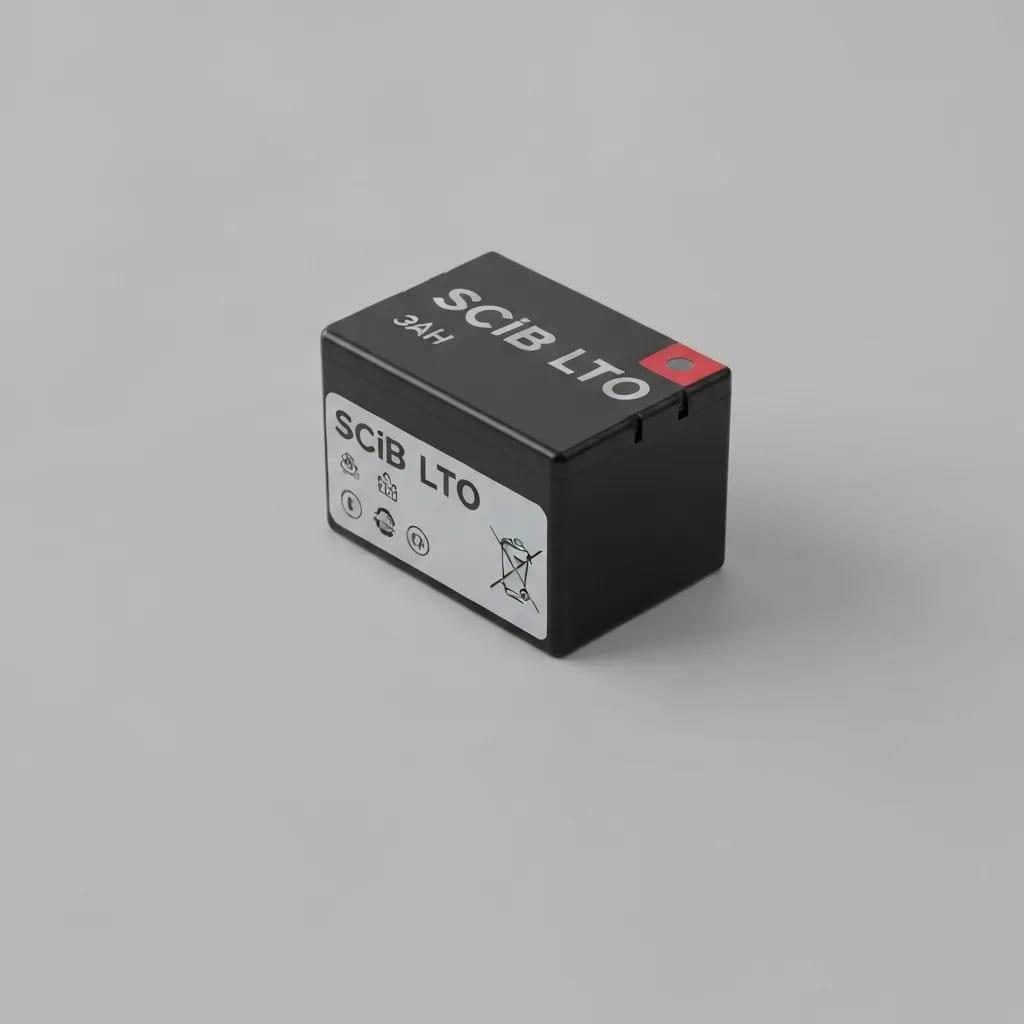
In car audio lithium discussions, few terms are misunderstood as badly as “3Ah SCiB battery.”
Many people assume it refers to a tiny auxiliary pack suited only for light electrical support. In reality, that assumption is fundamentally wrong and often leads to poor system design decisions.
A 3Ah SCiB LTO battery bank is not a 3Ah battery.
It is a battery bank constructed from 3Ah Lithium Titanate Oxide (LTO) cells, arranged in series and parallel to achieve real-world capacities ranging from 15Ah through to 90Ah and beyond. The “3Ah” figure describes the individual cell size, not the usable capacity of the finished bank.
When correctly configured and installed in a thermally stable location, banks built from 3Ah SCiB cells can function as:
Primary vehicle electrical energy storage
Primary car audio batteries
High-current charging-system stabilisation
Long-term replacements for AGM systems
This article explains what a 3Ah SCiB LTO battery bank actually is, why experienced builders deliberately choose this cell format, how capacity scaling works electrically, and how these banks should be installed correctly for long-term reliability in real car audio systems.
What “3Ah SCiB” Actually Means
SCiB (Super Charge ion Battery) refers to Toshiba’s Lithium Titanate Oxide technology.
The 3Ah rating applies to the individual cell only, not the completed battery bank.
Each 3Ah SCiB cell:
Nominal voltage of ~2.4 V
Extremely low internal resistance
Very high allowable charge and discharge rates
Exceptional cycle life under aggressive current use
To operate in a vehicle, these cells are assembled into 6-series (6S) strings to match automotive voltage. Capacity is then increased by paralleling multiple strings.
Common Real-World Configurations
| Configuration | Cell Count | Approx. Capacity |
|---|---|---|
| 6S5P | 30 cells | ~15Ah |
| 6S10P | 60 cells | ~30Ah |
| 6S15P | 90 cells | ~45Ah |
| 6S20P | 120 cells | ~60Ah |
| 6S30P | 180 cells | ~90Ah |
All of these are correctly described as 3Ah SCiB LTO battery banks, because the cell format remains the same. Only the parallel count changes.
You can see this architecture reflected directly in Evolution Lithium’s product range, including the
3Ah SCiB LTO battery and higher-capacity options built on the same platform.
Why Builders Choose 3Ah SCiB Cells Over Larger Cell Formats
Choosing 3Ah SCiB cells is not about reducing capacity. It is about electrical behaviour under high current, which matters far more in car audio than headline amp-hour numbers.
Smaller cells paralleled in large numbers provide:
More current pathways
Lower effective internal resistance
Better thermal distribution
More uniform current sharing under load
This behaviour is one of the key reasons SCiB cells are favoured in serious lithium bank car audio builds where voltage consistency matters more than marketing specs.
Current Sharing and Electrical Maths
When a battery bank delivers current, that current is divided across all parallel strings.
If a system demands 600 A:
6S5P (15Ah)
600 A ÷ 5 ≈ 120 A per string6S15P (45Ah)
600 A ÷ 15 ≈ 40 A per string
Lower current per string results in:
Reduced voltage drop
Lower heat generation
Improved efficiency
Longer usable service life
This is why large banks built from many smaller cells outperform banks built from fewer large cells at the same total capacity.
Internal Resistance Scaling
Total internal resistance of a parallel group follows:
Doubling the number of parallel strings halves resistance. Tripling reduces it to one-third.
Voltage sag in car audio systems is driven primarily by resistance under load, not by lack of stored energy. Banks built from many 3Ah SCiB cells excel because they minimise resistance at scale.
Time-Domain Behaviour in Car Audio Systems
Car audio loads are not continuous. They occur in milliseconds, not minutes.
A typical bass transient:
Duration: ~20–200 ms
Alternator response: significantly slower
Local energy storage must supply current instantly
Energy required for a 200 ms, 600 A burst at 14 V:
1680 J is a small amount of energy, but delivering it without voltage collapse requires low resistance and fast ion movement, not massive capacity.
This is why LTO chemistry behaves so differently from AGM or conventional lithium in high-power audio use. A deeper breakdown of this behaviour is covered in
how LTO batteries behave in car audio.
Can a 3Ah SCiB LTO Bank Be a Primary Battery?
Yes — when installed in a thermally appropriate location.
A properly sized 3Ah-cell SCiB LTO bank (typically 30Ah–90Ah) can function as the primary electrical energy store for both the vehicle and the audio system.
“Primary” refers to electrical role, not physical placement.
Thermal Reality (Critical)
No lithium battery — including LTO — should be installed in the engine bay. Sustained under-bonnet temperatures accelerate chemical aging and reduce long-term capacity retention, even with thermally robust chemistries.
For this reason, Evolution Lithium designs and recommends SCiB LTO banks to be installed in:
Rear cabin areas
Boot / cargo spaces
Interior compartments with stable ambient temperatures
When installed correctly, a rear-mounted SCiB LTO bank can replace traditional lead-acid systems entirely while offering far superior electrical behaviour.
Is a 3Ah-Cell SCiB LTO Bank a Charging-System Upgrade?
In many systems, yes.
A charging-system upgrade is defined by system response, not alternator size alone.
Compared to AGM batteries, a SCiB LTO-based car audio lithium battery:
Accepts charge far more rapidly
Recovers voltage faster after high-current events
Reduces sustained alternator stress
Compared to LiFePO₄, SCiB LTO maintains more consistent voltage under extreme current and tolerates aggressive cycling far better over time.
For readers weighing chemistry options, this comparison is explored further in
best lithium battery options for car audio.
Real-World Installation Scenarios (Heat-Safe)
Scenario 1: Rear-Mounted Primary Electrical Bank (45Ah)
Vehicle: Daily driver, 6–8 k RMS
Configuration: 6S15P (~45Ah using 3Ah SCiB cells)
Location: Rear cabin / boot
Outcome:
Stable voltage during bass transients
Rapid recovery after engine start
Dramatically improved electrical consistency vs AGM
Scenario 2: Rear High-Capacity Audio Bank (90Ah)
Vehicle: Demo or SPL build, 15 k+ RMS
Configuration: 6S30P (~90Ah)
Location: Rear, close to amplifiers
Outcome:
Sustained output capability
Minimal voltage fluctuation during long demos
Predictable thermal behaviour
Scenario 3: Dual Rear-Mounted Bank System
Bank A: 30Ah SCiB LTO (vehicle loads)
Bank B: 60Ah SCiB LTO (audio-dedicated)
Outcome:
Electrical segmentation
Reduced interaction between vehicle and audio demand
Extremely low system impedance
Why 3Ah SCiB LTO Banks Replace Capacitors
Capacitors store charge, not usable energy. They discharge instantly and cannot recover meaningfully under repeated load.
A SCiB LTO bank for car audio stores real energy, recharges immediately, and maintains identical behaviour thousands of cycles later — making it a true replacement for capacitors in modern high-power systems.
Why Evolution Lithium Uses 3Ah SCiB Cells
Evolution Lithium focuses exclusively on real-world car audio electrical systems.
3Ah SCiB cells allow:
Precise capacity scaling
Superior current sharing
Flexible enclosure design
Long-term reliability under abuse
Rather than forcing vehicles to suit batteries, banks are built to suit the vehicle and the system. You can learn more about this approach on the
About Evolution Lithium page.
Frequently Asked Questions
Is a 3Ah SCiB bank too small for car audio?
No. Capacity is defined by configuration, not cell size.
Can it replace AGM batteries?
Yes. When sized correctly and installed away from sustained heat, SCiB LTO banks outperform AGM electrically and last far longer.
Do I need an alternator upgrade?
Not always. Many systems stabilise simply by moving to LTO.
Conclusion
A 3Ah SCiB LTO battery bank is defined by configuration, current sharing, and installation environment — not by the cell’s amp-hour rating.
When correctly sized and installed in a thermally stable location, banks built from 3Ah SCiB cells can function as:
Primary electrical energy storage
High-current car audio foundations
Long-term replacements for AGM systems
Misunderstanding arises when cell capacity is confused with system capability. Once that distinction is clear, the advantages of SCiB LTO architecture become obvious.
For guidance on selecting the right configuration for your system, you can explore the product range or contact Evolution Lithium directly.